

The bath is running, the bedroom light is still bright, and your child is negotiating for one more story. You're tired, they're restless, and an advert for “calm magnesium gummies” appears just as you're wondering whether the evening could feel less like a tug-of-war.
That search makes sense, but the most useful question isn't whether a gummy can switch sleep on. It's whether magnesium can support a predictable wind-down routine when a child's diet may not provide enough of this important mineral. The honest answer sits between hype and dismissal. Magnesium has real roles in nerve and muscle function, but a gummy isn't a guaranteed sleep medicine.
Table of Contents
- Why Parents Are Looking at Calm Magnesium Gummies
- How Magnesium Actually Supports a Calmer Child
- What Calm Magnesium Gummies Can Realistically Support
- Dosing Guidance for Children by Age
- Best Time of Day to Take a Magnesium Gummy
- What the Evidence Does Not Support Yet
- Safety, Tolerability, and Label Checks
- Building a Calm Routine That Actually Sticks
Why Parents Are Looking at Calm Magnesium Gummies
A child may be eating reasonably well, yet evenings can still become unsettled. An after-school energy dip, bright screens, a late activity, an irregular bedtime, or worry about a new school term can keep the body alert. After a long day, a gummy may seem easier to offer than another negotiation.
The useful question is what role the gummy should play. It can sit within one part of a calming sequence, alongside dinner, a bath, dimmer lighting, a short book, and the same final phrase each night. That repeated pattern gives the child clear signals that the day is slowing down. A supplement may support the routine, but it cannot explain every successful bedtime.
A useful expectation: magnesium may support a child's nutritional foundations and relaxation habits, but it should not carry the whole bedtime routine.
Australian intake guidance helps set a realistic frame. The Australian nutrient reference values list an estimated average requirement of 110 mg per day and a recommended dietary intake of 130 mg per day for children aged 4–8. For ages 9–13, the figures rise to 200 mg per day and 240 mg per day, respectively, as outlined by Australia's nutrient reference values for magnesium. These figures describe total daily intake from food and supplements, not an automatic gummy dose.
Australian Bureau of Statistics data reported that 31.3% of Australians aged 2 years and over, or 7.7 million people, had inadequate magnesium intake from food and beverages in 2023. The rate was higher in males than females, at 35.2% compared with 27.3%, and stayed under 5.0% among children aged 2–11 years, according to the ABS nutrient intake release. For children, that lower rate offers useful context. It does not show that a particular child needs a supplement.
Calm magnesium gummies therefore deserve a middle-ground view. Magnesium has genuine nutritional roles, while claims that a gummy guarantees sleep go beyond what this information supports.
How Magnesium Actually Supports a Calmer Child
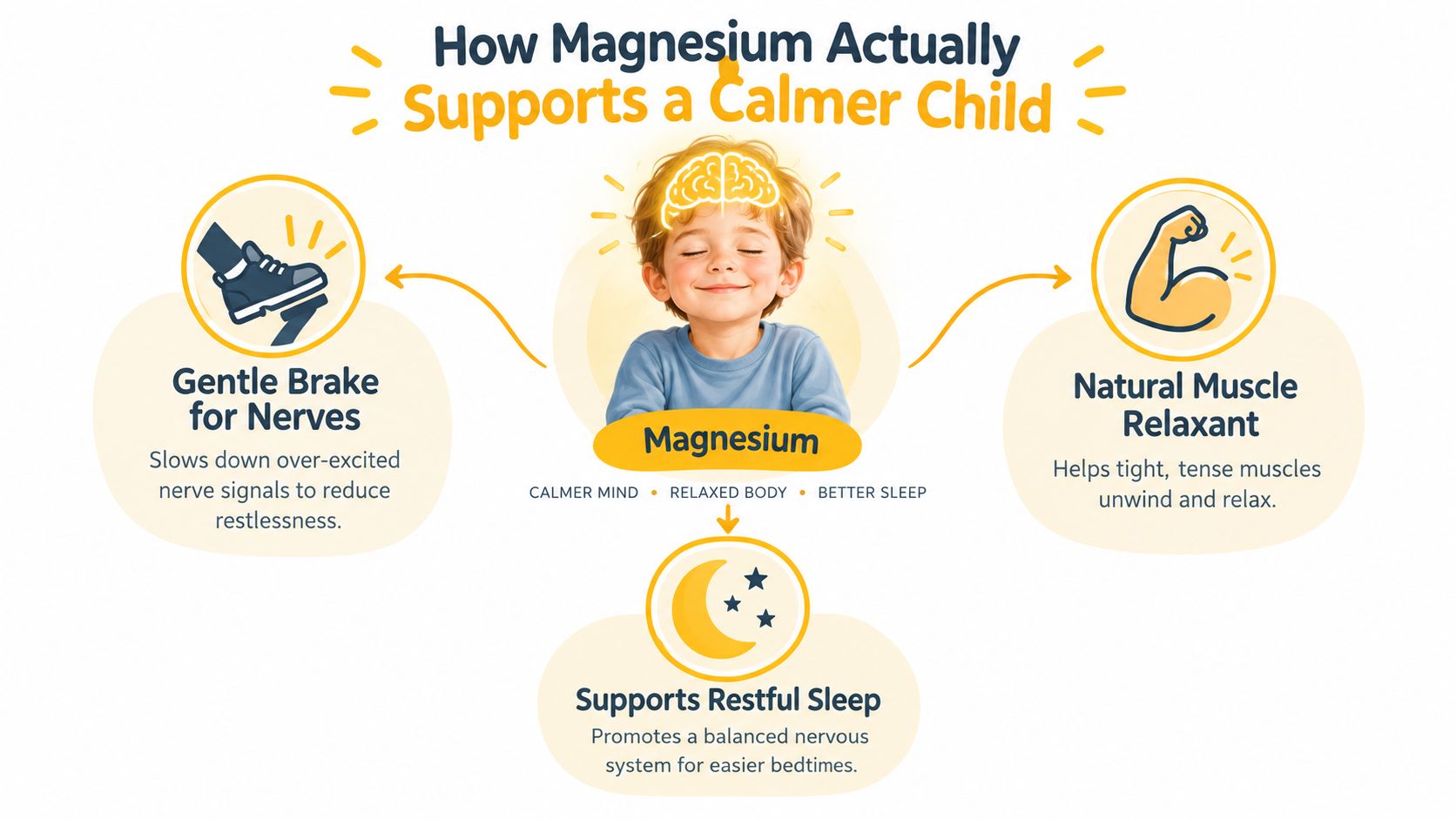
Think of the nervous system as a car. Excitatory signals press the accelerator, while calming signals help the body slow down. Magnesium isn't a sleeping tablet, but it contributes to normal nerve and muscle function, so it's reasonable to describe it as part of the body's braking and recovery system.
Three ideas help make the biology easier to understand.
Nerves need balance
Magnesium interacts with systems involved in nerve signalling, including pathways associated with GABA, a neurotransmitter that helps the brain reduce alertness. That doesn't mean a magnesium gummy directly makes a child drowsy. It means adequate magnesium supports the conditions in which normal nervous-system regulation can take place.
Magnesium also contributes to the balance between the sympathetic nervous system, associated with alertness, and the parasympathetic nervous system, associated with rest and digestion. If a child is already well nourished, adding more magnesium may not produce a noticeable behavioural change. If intake is low, correcting that gap may be more relevant.
Muscles must release after they contract
A child who has spent the afternoon running, climbing, swimming, or playing sport may feel physically wound up. Magnesium helps muscles function normally, including the transition from contraction to release. Parents might notice this as easier body stillness or less physical tension, but those observations aren't guaranteed outcomes.
The form matters less than the label's elemental magnesium figure. Magnesium citrate and glycinate are common forms, while magnesium oxide is generally less well absorbed and can be more noticeable for its laxative effect. The compound weight doesn't tell you how much magnesium the child receives.
For example, Calm lists magnesium citrate, 30 mg of elemental magnesium per daily serving, vitamin B6, zinc, and prebiotic fructooligosaccharides. Its catalogue information also describes a sugar-free, vegan gummy with no artificial colours or flavours. Those product features describe what is in the gummy, not proof that it will resolve a child's sleep or emotional difficulties.
What Calm Magnesium Gummies Can Realistically Support
A child may arrive at bedtime physically tense, emotionally reactive, overtired, or worried about the next day. “Calm” describes several different experiences, so a gummy should not be treated as a universal answer. Magnesium can provide nutritional support, especially when intake is low, but it cannot address every reason a child struggles to settle.
Support during the wind-down window
The clearest benefit is support for normal nerve and muscle function. If a child is not getting enough magnesium from food, a suitable supplement may help address that gap. Any change is likely to be modest rather than an instant switch to calm. It might appear as an easier move from active play to pyjamas, or less resistance once the bedtime routine starts.
A predictable bedtime cue
A gummy may also become one part of a consistent sequence. Taking it after dinner, then brushing teeth and reading, gives the child a familiar pattern. A smoother transition may reflect the ritual, lower stimulation, and clearer expectations as well as the magnesium itself.
Keep other changes limited while assessing the routine. Introducing a gummy at the same time as a later bedtime, more screen use, and a new relaxation audio makes it difficult to identify which change influenced the child.
Mood and behaviour
Australian research from the Raine Study found an association between higher magnesium intake and fewer externalising behavioural problems in adolescents. This describes a relationship between intake and behaviour patterns. It does not prove that magnesium directly creates calm or improves sleep, and it does not establish the same result for younger children or a commercial gummy.
Physical comfort after active days
Magnesium supports normal muscle function, so it may be a reasonable nutritional consideration for children whose meals are inconsistent or who have active days. Persistent pain, repeated cramps, weakness, or unusual fatigue should not be explained away with a gummy. Those symptoms warrant medical advice.
The practical interpretation: Calm magnesium gummies are best viewed as daily nutritional support alongside a steady wind-down routine. The evidence does not justify promises of longer sleep, instant tranquillity, or a cure for difficult behaviour.
Dosing Guidance for Children by Age
A child asking for a “calm” gummy still needs an age-appropriate serving. Begin with the label and find elemental magnesium per serving. Magnesium citrate, glycinate, and oxide contain different proportions of the mineral, so the compound's total weight is not the figure to compare with daily intake.
Australian recommended dietary intakes include magnesium from food and supplements. For children aged 4–8, the RDI is 130 mg per day. For children aged 9–13, it is 240 mg per day. These figures describe total daily needs, not automatic gummy doses.
| Age | RDI per day | How a 30 mg serving fits |
|---|---|---|
| 4–8 years | 130 mg | 30 mg is one part of the daily target, with the remainder coming from food and any other supplements |
| 9–13 years | 240 mg | 30 mg is a smaller part of the daily target, with total intake still needing consideration |
A 30 mg elemental magnesium serving may represent only part of either age group's daily intake. That does not make repeating it automatically appropriate. Check the child's food intake and every other product they use, including multivitamins, sleep products, electrolyte products, and supplements. Read the serving directions closely, because one gummy may not equal one labelled serving. Adult products are not formulated around children's needs.
For a younger child, professional review is especially helpful. Ask a pharmacist or paediatrician to check the product and dose if the child takes medication, has kidney disease, ongoing digestive symptoms, or another health concern. A practical guide to magnesium supplements for kids may help you prepare questions, but the label should still be checked with a pharmacist when anything is unclear.
A gummy is a small part of the intake picture. More magnesium isn't more calming, and increasing the amount can make loose stools or stomach discomfort more likely.
Best Time of Day to Take a Magnesium Gummy
There's no established hour when magnesium suddenly “turns on” calm. A practical time is the point at which your household already starts slowing down, such as after dinner, while the bathroom is being prepared, or before brushing teeth.
The timing should support the routine, not compete with it. Giving a gummy while a child is watching a stimulating programme or rushing between activities sends a mixed signal. Offering it during a quieter transition makes it easier for the child to connect the supplement with the evening sequence.
Pair it with an existing cue
A simple pattern could look like this:
- Dinner ends and the kitchen is cleared.
- The child takes the labelled serving with water.
- Screens go away and the lights become softer.
- Bath, pyjamas, teeth, and quiet reading follow.
Magnesium can generally be taken with or without food, but a child who feels queasy may tolerate it better with a small meal or snack. There's no need to add a large mineral-rich meal just to take the gummy. If a dose is forgotten, don't double the next one.
An after-school time may suit a child whose main difficulty is late-afternoon irritability, provided the gummy doesn't become a reward or replace a proper snack. Keep food, movement, daylight, and a consistent sleep schedule in place.
Keep bedtime independent: the child should learn that the routine creates the transition, while the gummy is only one optional part of it.
Change one or two elements at a time. Otherwise, you won't know whether the meaningful shift came from the supplement, less screen exposure, an earlier dinner, or a calmer parent-child handover.
What the Evidence Does Not Support Yet
Magnesium gummies aren't proven sleep medicines for children. Australian paediatric sleep experts cited by the ABC in its coverage of magnesium sprays and children's sleep have cautioned that there's no evidence sprays or similar products improve children's sleep, and that perceived benefits may reflect placebo effects.
That caution applies to how parents interpret a calm gummy. Studies involving magnesium may focus on deficiency, specific medical groups, adults with insomnia, or outcomes that don't match a healthy child taking a commercial product. Correcting low intake could support normal function, but it doesn't demonstrate that an already well-nourished child will fall asleep faster or sleep longer.
The gummy also arrives with a ritual. A child may respond to the attention, the predictable order of events, the flavour, or a parent's more confident bedtime manner. Those factors can be valuable, but they shouldn't be mistaken for proof of a direct sleep effect.
Don't use a gummy to hide a sleep problem
Magnesium isn't a substitute for assessment of:
- Breathing concerns: persistent snoring or pauses in breathing need medical attention.
- Marked daytime effects: unusual sleepiness, learning difficulty, or major mood changes shouldn't be attributed to ordinary bedtime resistance.
- Ongoing discomfort: pain, reflux symptoms, or restless sleep may have a cause that requires diagnosis.
- Developmental or emotional concerns: anxiety, ADHD-related difficulties, or persistent distress need appropriate professional support.
Behavioural bedtime strategies remain the more appropriate starting point for common settling problems. A supplement may complement a calm household routine, but it shouldn't delay a GP appointment when sleep disruption is persistent, severe, or affecting daytime life.
Safety, Tolerability, and Label Checks
Magnesium's safety profile depends heavily on dose, total intake, and the child's health. Unabsorbed magnesium can draw water into the bowel, which may cause loose stools, urgency, cramps, or nausea. Citrate can be particularly relevant for families whose children already have sensitive digestion, while glycinate may be better tolerated by some children. Neither form is automatically right for every child.
Australian guidance sets an upper level for supplemental magnesium of 250 mg per day for ages 1–3 and 350 mg per day for ages 9–13, as shown in the Royal Children's Hospital clinical guidance on hypomagnesaemia. That ceiling is not a target. It's a prompt to review the total amount from supplements, especially when products are combined.
Read beyond the front of the pack
Before buying, check:
- Elemental magnesium: Find the amount in milligrams per gummy and per stated serving.
- Other supplements: Add magnesium from multivitamins, sleep blends, powders, and electrolyte products.
- Sweeteners: Sugar-free products may use maltitol or sorbitol, which can still cause digestive symptoms in some children.
- Allergen information: Look for clear declarations and manufacturing details.
- Testing information: Check whether the manufacturer provides credible quality or third-party testing details.
- Texture and size: A child must be able to chew the product safely and comfortably, particularly if sensory sensitivities affect food acceptance.
A sugar-containing format may matter for families managing everyday intake, while sugar-free options can still be unsuitable if their sweetener system triggers diarrhoea or bloating. Vegan status and the absence of artificial colours or flavours may also matter, but those features don't replace dose evaluation.
For a closer look at what may appear in a product, use this guide to calm magnesium gummy ingredients. Stop the product and seek advice if side effects appear, rather than treating them as evidence that the gummy is “working”.
Building a Calm Routine That Actually Sticks
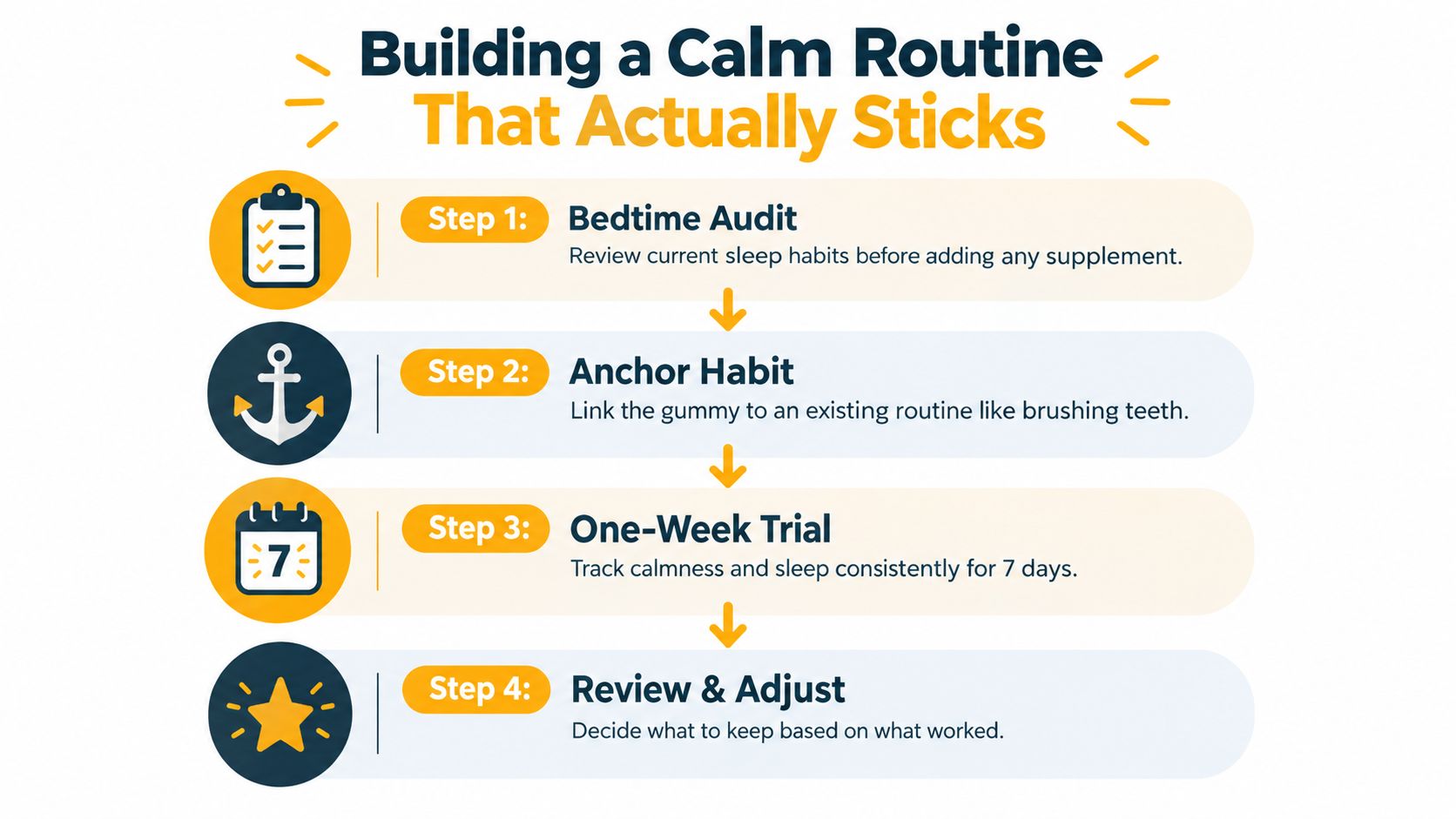
Start with a bedtime audit before introducing anything. Write down when screens end, when the child gets into bed, how long settling usually takes, whether they wake overnight, and how their morning mood looks. You're looking for a repeatable pattern, not a perfect night.
Choose one anchor habit. The kitchen bench after dinner, the pyjama routine, or toothbrushing can all work. The gummy should follow the anchor, not lead it. Keep the product stored out of reach, use the labelled serving, and avoid presenting it as a special treat or a cure for “big feelings”.
A simple review process
For the first week, keep the routine boring and consistent. Track only useful observations:
- Settling: Did the child move through the bedtime steps with less resistance?
- Sleep: Did the time spent settling appear different?
- Morning: Was waking and morning mood easier, unchanged, or worse?
- Tolerance: Were there loose stools, cramps, nausea, or other symptoms?
If you want more practical sleep-routine ideas, see how to get kids to sleep. Don't keep changing the routine every night. A fair trial requires consistent conditions, while persistent problems require professional assessment rather than endless supplement adjustments.
Use a clear stop rule. If there's no perceived shift after three weeks at the labelled serving, continue the helpful routine without assuming the gummy is necessary, or speak with your GP about other supports. The one-week framework can begin the observation process, but the longer review prevents a single difficult evening from deciding the outcome.
The accompanying video offers another way to think about building repeatable habits:
The most realistic calm magnesium gummies benefits are therefore modest and practical. A suitable product may help families support magnesium intake and establish a calmer wind-down cue, but the household routine remains the main structure.
Daily Powers offers children's gummy supplements designed around everyday routines, including Calm, a magnesium citrate formula with vitamin B6, zinc, and prebiotics. If you're comparing options for a consistent, sugar-free, vegan family habit, visit Daily Powers and review the ingredient and serving information with your pharmacist or healthcare professional.