

The most common side effect of calm magnesium gummies is mild digestive upset, such as loose stools, while serious toxicity is rare in healthy children. For Australian children aged 4–8, the supplemental upper limit is 110 mg per day, and for ages 9–13 it is 350 mg per day.
It's often after dinner that questions arise. Your child has had a magnesium gummy as part of a calming routine, then complains of a rumbling tummy or needs the toilet more than usual. You may wonder whether this is a harmless adjustment, a sign the dose is too high, or something that needs urgent medical attention.
For Australian families, the safest way to assess calm magnesium gummies side effects is to look at elemental magnesium, the child's total supplemental intake, their age, kidney health and any medicines they take. The practical distinction is reassuring: digestive symptoms are the expected concern, while severe toxicity is uncommon in healthy children.
Table of Contents
- Understanding Calm Magnesium Gummies
- How to Read the Label Correctly
- Australian Dosing Guidelines for Kids
- Common Digestive Side Effects
- Recognizing Warning Signs and Interactions
- Creating a Safe Supplement Routine
Understanding Calm Magnesium Gummies
The evening has been difficult. Homework ran late, the bath became an argument, and your child is still bouncing around when everyone else is ready for bed. A gummy may feel like a simple addition to the wind-down routine, but it's important to understand what it is intended to provide.
Magnesium is a mineral involved in normal nerve and muscle function. A useful analogy is to think of it as part of the body's regulation toolkit. It doesn't act like an instant off-switch for big emotions or energy. Instead, it contributes to the background processes that help the nervous system and muscles work normally.
That makes magnesium appealing to parents building a calmer evening ritual, especially when the gummy is offered alongside predictable habits such as dimmer lights, a story and a regular bedtime. The routine matters too. A child who knows what happens next may find the transition easier than a child facing a rushed, unpredictable evening.

What the gummy can and cannot do
A magnesium gummy is a supplement, not a diagnosis or a replacement for sleep, food, emotional support or medical care. If a child is persistently anxious, unusually restless, struggling to sleep or experiencing frequent physical symptoms, speak with a GP or another qualified health professional rather than relying on a gummy alone.
Some children tolerate supplemental magnesium without difficulty. Others develop a softer bowel movement or stomach discomfort, particularly if the product provides more supplemental magnesium than they need or if other products are contributing to the total. The aim is not to chase a stronger effect. It's to use the smallest appropriate routine, follow the label and observe how the child responds.
How to Read the Label Correctly
The number that matters most is elemental magnesium, not just the weight of the magnesium compound. Magnesium citrate, glycinate and other forms are compounds that contain magnesium, but the compound's total weight isn't the same as the amount of magnesium itself.
Use this label-reading sequence before giving the first gummy:
- Find the serving size. Check how many gummies make up the stated daily serve. A bottle may describe nutrients for the full serving rather than for one gummy.
- Locate elemental magnesium. Look for wording such as “elemental magnesium” in the nutrition or supplement panel. This is the figure to use when adding up the child's supplemental intake.
- Check every source. Include magnesium in multivitamins, powders, antacids and laxatives. Assessing one bottle alone can give a misleading result.
- Read the directions and warnings. Age guidance, serving instructions, allergens and added ingredients all matter.
The distinction is easy to miss. A label might list the weight of magnesium citrate first, but that figure describes the compound, not the active mineral amount. Australian health guidance also advises families to consider the amount of magnesium supplied by supplements separately from magnesium naturally present in food. You can find more practical detail in this guide to magnesium gummy ingredients.
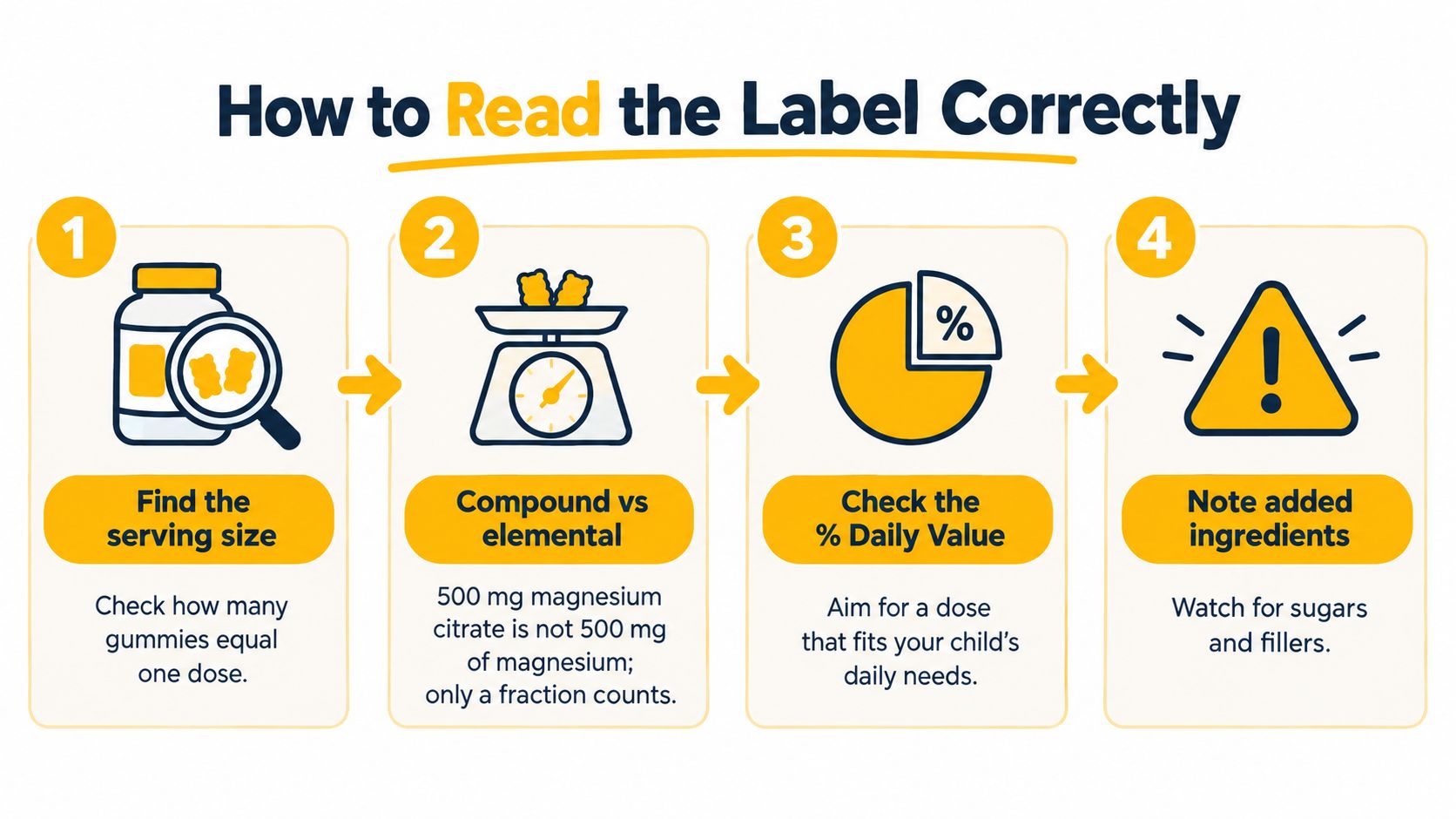
For example, Calm lists magnesium citrate at 200 mg per daily serving and elemental magnesium at 30 mg per daily serving, with directions to take two gummies daily or as directed by a healthcare professional. Those are different figures, so the elemental amount is the one to use in your dose calculation.
Australian Dosing Guidelines for Kids
Australian reference values separate two questions that are often confused. The first is how much magnesium a child needs in total from food and other sources. The second is how much magnesium can come from supplements and other non-food sources before the risk of adverse effects becomes more relevant.
For children aged 4–8 years, the recommended total intake is 130 mg per day, while the tolerable upper intake level from supplements and other non-food sources is 110 mg per day. For children aged 9–13 years, the recommended total intake is 240 mg per day, and the supplemental upper limit is 350 mg per day. These Australian figures, including the age-specific limits and the 5 mg per kilogram of body weight per day boundary for children aged 1–8, are published in the NHMRC nutrient reference values.
That apparent difference is not an error. The recommended intake includes magnesium naturally present in foods such as legumes, whole grains, vegetables, nuts and seeds. The upper limit applies to non-food sources because supplemental magnesium can affect the bowel even when a child's total nutritional requirement is higher.
A simple dose example
Suppose a child aged 4–8 takes a gummy serving containing elemental magnesium. You'd compare that elemental amount with the 110 mg per day supplemental limit, then add any magnesium from a multivitamin, powder, antacid or laxative. You wouldn't add magnesium from ordinary food to that supplement-limit calculation, although the child's overall diet still matters for nutritional adequacy.
Age banding also matters. A serving that seems modest to an adult may represent a more meaningful supplemental exposure for a smaller child. Don't increase the serving because the child hasn't appeared calmer, and don't use the total dietary recommendation as a target for supplementation.
The paediatric dosing guidance can help families organise the questions they want to ask a health professional. A separate children's product, Brave, is described in its product information as a daily multivitamin gummy, so caregivers should still check all labels rather than assume that products in the same household contain no overlapping nutrients.
Common Digestive Side Effects
A child takes a magnesium gummy and later develops loose stools. In many cases, the explanation is happening inside the intestine rather than in the brain or nervous system.
Picture the bowel as a tube carrying fluid and food along. Some magnesium remains unabsorbed. Certain magnesium salts can hold onto water in the intestinal contents and stimulate movement through the gut. The result can be softer stools, diarrhoea, nausea, abdominal cramping or general stomach upset.
The Therapeutic Goods Administration's explanation of magnesium salts describes this osmotic and laxative effect and characterises these reactions as generally mild and completely reversible. It also notes that they occur in only a small percentage of people, although it doesn't provide one national percentage for all Australian children using magnesium gummies.
What to do when the tummy reacts
A digestive reaction is often more consistent with dose-related intolerance than with a neurological problem. It still deserves attention, particularly in a younger child, because ongoing diarrhoea can contribute to dehydration.
Use a calm, practical response:
- Pause the gummy if diarrhoea or significant cramping develops.
- Review the full supplement list, including laxatives, antacids and multivitamins.
- Offer fluids as appropriate and watch for symptoms that persist or worsen.
- Ask a pharmacist or doctor for advice before restarting, changing the dose or switching forms.
- Follow product directions about food, since taking some formulations with food may reduce stomach upset.
Don't respond to loose stools by giving more gummies in the hope of achieving a stronger calming effect. If the child has repeated diarrhoea, appears dehydrated or is otherwise unwell, seek medical advice promptly. Guidance about gut health for kids can provide general context, but it doesn't replace an assessment of a child with ongoing symptoms.
Recognizing Warning Signs and Interactions
Most families are deciding what to do about a tummy complaint, not facing a medical emergency. The decision changes when symptoms suggest that magnesium is affecting circulation, muscle function, breathing or consciousness.
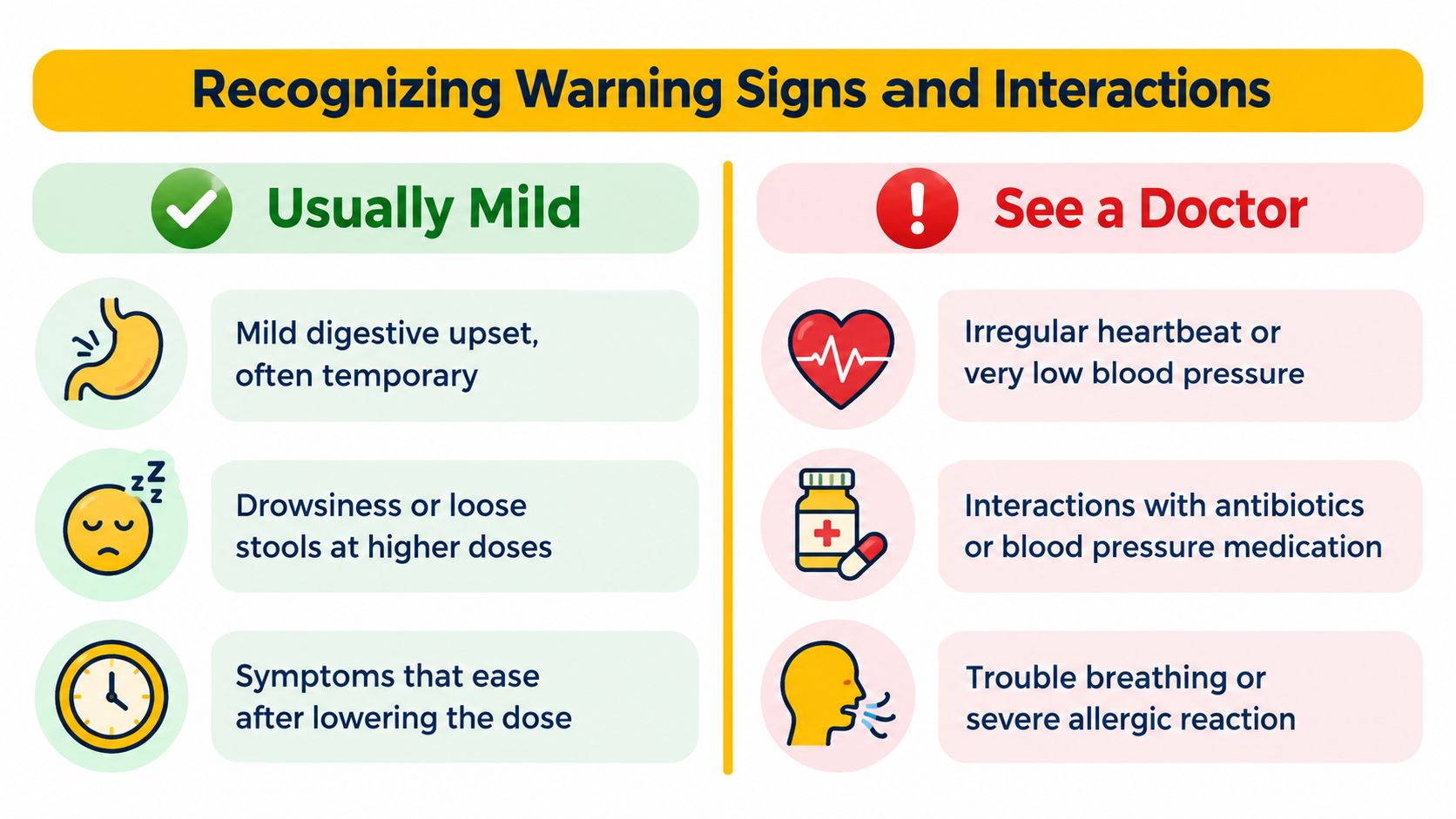
| Usually mild | Seek urgent medical help |
|---|---|
| Loose stools, nausea or mild cramping | Trouble breathing or respiratory depression |
| Stomach upset after starting or increasing the product | Profound weakness, marked drowsiness or confusion |
| Symptoms that settle after stopping and receiving professional advice | Faintness, very low blood pressure, slow or irregular heartbeat |
Serious magnesium toxicity from an oral gummy is uncommon in healthy people. The risk is different when kidney function is impaired, because the kidneys normally remove absorbed magnesium and reduced function can allow it to accumulate. The healthdirect guidance on magnesium lists serious warning signs including muscle weakness, reduced reflexes, low blood pressure, a slow heart rate, respiratory depression and, in severe cases, cardiac arrest.
Medicines and health conditions
Speak with a doctor or pharmacist before using a magnesium gummy if your child has known kidney disease, unexplained reduced urine output, significant dehydration or complex medical treatment. A child who develops breathing difficulty, profound weakness, faintness, unusual lethargy or an abnormal heartbeat needs urgent assessment.
Magnesium can interfere with the absorption of some medicines, including certain antibiotics and bisphosphonates. Don't guess the required separation between doses. A pharmacist can confirm the appropriate timing for the specific medicine, because the interval depends on what the child is taking.
If the child has only mild digestive symptoms, pause the product and seek advice. If the child has severe symptoms or a relevant kidney or medication risk, don't wait to see whether the reaction passes.
Creating a Safe Supplement Routine
A safe routine starts before the gummy reaches the child's hand. Treat it like any other supplement, even when it looks and tastes like a lolly.
Five habits that reduce mistakes
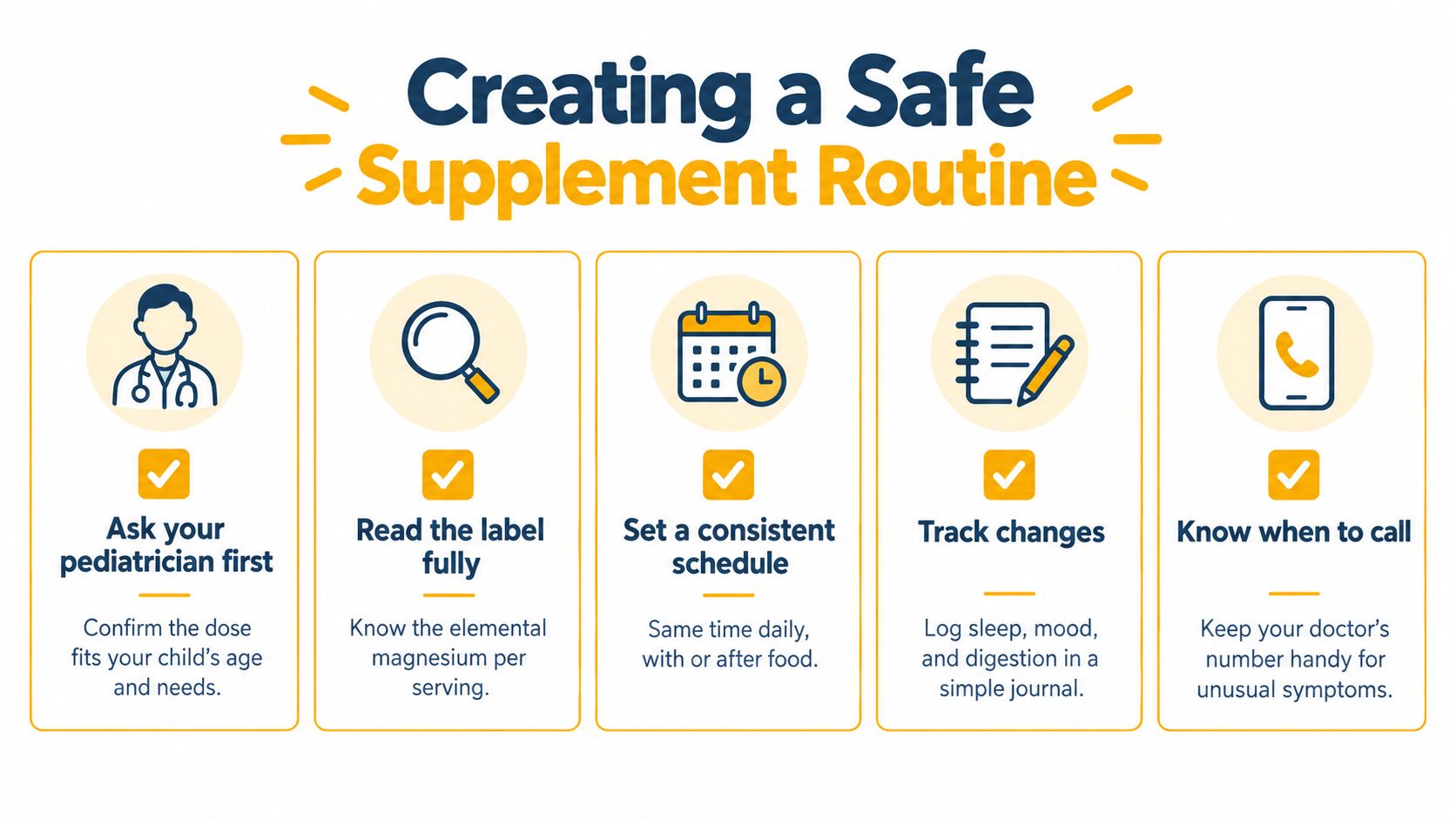
- Ask before starting. Check with a GP, paediatrician, dietitian or pharmacist if your child has a medical condition, takes medicine, has significant dehydration or has a restricted diet.
- Write down the elemental amount. Record the magnesium per daily serving, not just the compound name or the number of gummies.
- Count the whole household routine. Look at every supplement and medicine that may contain magnesium. Keep antacids and laxatives in the calculation.
- Choose a consistent time. Follow the product directions, and consider giving the gummy with or after food if that's permitted for the formulation and helpful for stomach comfort.
- Observe without overinterpreting. Note bowel movements, nausea, cramping, sleep, mood and any unusual behaviour. A simple diary helps a health professional distinguish coincidence from a pattern.
Practical rule: If diarrhoea begins after starting or increasing a magnesium gummy, stop the product and ask a health professional what to do next.
Store gummies where children can't help themselves. A child may see a sweet-looking product rather than a supplement, so adult supervision and secure storage are part of safe dosing.
You don't need to panic about every change. Mild digestive symptoms can be reversible and may improve when the product is stopped, but persistent symptoms deserve advice. Serious toxicity is rare in healthy children, yet urgent symptoms should always be treated seriously, particularly when kidney function or medicines are involved.
For a clear next step, take the product container, a list of all supplements and medicines, and a note of the child's symptoms to your pharmacist or doctor. That information makes it easier to confirm whether the dose, timing or product is appropriate.
Daily Powers offers children's gummy supplements organised around everyday routines, including Calm, a magnesium-based option designed for relaxation and wind-down. Visit Daily Powers to review the ingredient information and directions, then discuss whether a product fits your child's needs with a qualified health professional.