

Only 4.3% of Australian children aged 2–17 met both fruit and vegetable recommendations in 2022, while just 4.6% met the vegetable recommendation, according to the Australian Bureau of Statistics. For parents searching for food healthy for brain development, that reframes the task: start with everyday nutritional gaps, not expensive superfoods.
A child who accepts toast, yoghurt and a familiar pasta sauce gives you somewhere to begin. The practical question is how to build enough variety around those accepted foods without making meals more stressful or stretching the grocery budget.
Table of Contents
- The Foods That Support Focus in Children
- Daily Serves for Children Aged 4 to 12
- Breakfasts and Lunchboxes That Fit a Budget
- Getting Omega-3 and Iron Into Everyday Meals
- Keeping Nutrients Up When Your Child Eats Few Foods
- Where Supplements Like Daily Powers Fit
- Plan Your Child's Brain-Food Week
The Foods That Support Focus in Children
Start with what is already on the plate. Frozen broccoli beside pasta, lentils stirred into mince and capsicum served with a favourite dip all count, because a brain-supportive pattern is built from ordinary foods offered again and again. No single ingredient does that job on its own.
Wholegrains supply carbohydrate for energy. Protein foods provide the amino acids the brain uses to build its chemical messengers. Vegetables and fruit contribute fibre and micronutrients. Ordinary staples earn their place through those nutrients.
The visual below puts the everyday food groups worth making familiar side by side with the national intake picture.
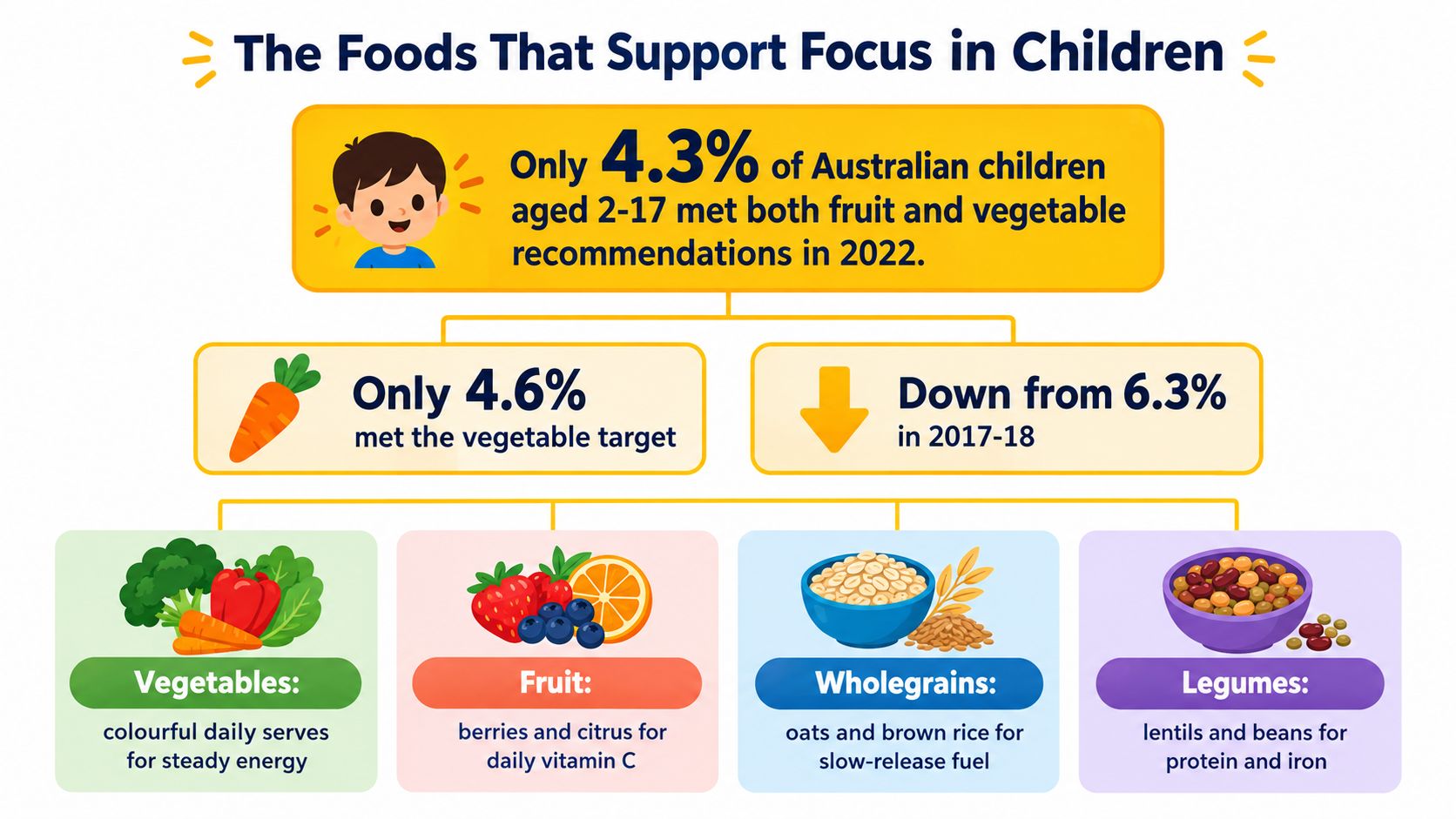
Brain-supportive foods and what each does for focus
The roles below describe normal nutrition and development. Serving a particular food carries no guarantee of better homework, behaviour or school results.
| Food | Key nutrient | Role in focus | Easy serve for kids |
|---|---|---|---|
| Oats and wholegrain bread | Complex carbohydrates, fibre | Supply glucose for brain energy | Porridge with milk and sliced banana |
| Eggs | Protein, choline, iodine | Provide amino acids used to build neurotransmitters | Scrambled egg on wholegrain toast |
| Legumes, including lentils, chickpeas and baked beans | Iron, zinc, fibre | Contribute iron for oxygen delivery and fibre for gut function | Hummus and cucumber wrap |
| Fish, including salmon, sardines and canned tuna | Omega-3 EPA and DHA, iodine | Supply fats involved in nervous-system structure and function | Salmon patties or sardines on toast |
| Lean red meat and poultry | Haem iron, zinc, protein | Provide readily absorbed iron and protein | Beef mince in bolognese |
| Dairy or fortified alternatives | Calcium, protein, iodine where present | Iodine supports thyroid-dependent development | Plain yoghurt with berries |
| Berries, kiwifruit and citrus | Vitamin C | Help the body absorb iron from plant foods | Kiwifruit slices with a bean lunch |
| Capsicum and broccoli | Vitamin C, folate | Complement plant-iron meals | Capsicum strips with hummus |
| Nuts and seeds, ground or spread | Vitamin E, healthy fats | Contribute fats used in cell membranes | Smooth nut or seed butter spread thinly on toast |
Fortified alternatives aren't automatically equivalent to dairy. Check whether the product supplies calcium, protein and iodine rather than assuming that every plant-based drink covers the same nutrients. Choose forms that suit your child's chewing skills, allergies and school food rules.
Budget and salt shift the picture slightly. Frozen vegetables, canned legumes and tinned fish are budget-friendly ways to reach the same nutrients, and rinsing canned beans or choosing a lower-salt tin keeps sodium down while keeping the iron, zinc and omega-3. How a meal is assembled counts too: porridge with milk, or egg on wholegrain toast, pairs carbohydrate with protein, which is the pattern the first rows of the table describe.
Practical rule: Choose foods your household can offer repeatedly. An affordable food your child eats is more useful than a costly ingredient that stays untouched.
Variety matters because these foods do different jobs. Eggs don't replace vegetables, and fruit doesn't replace an iron-rich food, even when both are nutritious. You also don't need every food in the table every day.
Daily Serves for Children Aged 4 to 12
A serve works like the cup line on a measuring jug: a fixed unit for counting, whatever ends up in the bowl. A child may eat more or less than one unit at a sitting, and a single sandwich, bowl of porridge or dinner plate often contains parts of several food groups. Appetite, activity, growth and the foods offered all affect how much a child eats.
The Australian Institute of Health and Welfare explains that good nutrition supports children's physical and cognitive development and provides energy to concentrate, learn and play. Its practical foundation is variety across vegetables and legumes, fruit, mostly wholegrain cereals, protein foods, and dairy or suitable alternatives.
Use age-specific targets without guessing
Daily targets come from the Australian Dietary Guidelines and shift with age and sex. The table shows the typical daily targets for each band; check the guideline for your child's exact figure, because targets for boys and girls begin to differ from about age nine.
| Age | Fruit (typical serves/day) | Grains, mostly wholegrain (typical serves/day) |
|---|---|---|
| 4–8 years | About 1.5 | About 4 |
| 9–11 years | About 2 | 4 to 5, with boys at the higher end |
| 12 years | About 2 | 5 to 6, with boys at the higher end |
Those numbers get easier to use once you know what one serve looks like. A grain serve is roughly one slice of bread or half a cup of cooked porridge, pasta or rice. A fruit serve is roughly one medium apple or banana, or two small pieces such as kiwifruit or apricots.
So a child who eats one slice of toast at breakfast, a two-slice sandwich at lunch and half a cup of cooked pasta at dinner reaches about four grain serves, roughly the daily target for a younger school-age child, before anyone counts snacks. A full breakfast bowl of porridge can count as two serves on its own.
An accredited practising dietitian can translate the targets into your child's usual bowls, cups and lunchbox containers if you're unsure. This is especially useful when your child eats small amounts frequently or follows an exclusion diet.
The unit stays fixed; the portion on the plate does not. A standard serve measures a set amount, while a household portion is just whatever lands in front of your child. A slice of bread is easy to recognise, but a large bread roll can hold the equivalent of two or three slices. A spoonful of yoghurt and a full tub differ just as much, even though both get called a snack.
Eggs deserve the same care. Two eggs make roughly one serve of the protein group, so a single boiled egg swapped in for a serve of meat leaves the count short, even though both foods sit in the same group.
Turn food groups into an ordinary school day
A useful starting pattern is:
- Breakfast: Wholegrain oats or toast with fruit, plus milk, yoghurt or a suitable alternative.
- Lunch: A wholegrain sandwich, wrap or pasta dish containing legumes, egg, lean meat or fish, with an accepted vegetable.
- Dinner: Vegetables alongside a protein food and a carbohydrate, with dairy or an alternative elsewhere in the meal pattern.
- Snacks: Fill gaps with ordinary foods such as fruit, yoghurt or toast, instead of expecting dinner to supply everything.
Say your child eats porridge with milk, an egg sandwich and pasta with lentil sauce. That is already a useful spread of food groups, covering most of a younger child's grain serves and a decent share of protein, even if the broccoli remains untouched. You can work on vegetable acceptance without dismissing the nutrition coming from elsewhere.
Look across ordinary days for patterns, not for a perfect plate at every meal.
Keep the daily targets in view, but review intake across the week rather than scoring each day as a pass or fail. For a fussy eater, repeated opportunities across the food groups help more than insisting on a larger dinner. Watch the vegetable group closely, and remember that a good fruit intake says little about whether protein, iron or dairy alternatives are covered.
Breakfasts and Lunchboxes That Fit a Budget
Breakfast isn't automatically nutritionally balanced just because a child eats it. An analysis of young Australian children published in Frontiers in Endocrinology found that breakfast supplied more than one-third of recommended daily intakes for some nutrients, including iron, calcium and zinc, but also contributed over 40% of daily sodium intake.
That doesn't mean you should remove a familiar breakfast abruptly. It means composition matters: preserve useful nutrients while looking for practical reductions in salt and added sugar.
Affordable combinations can be simple enough for busy school mornings.
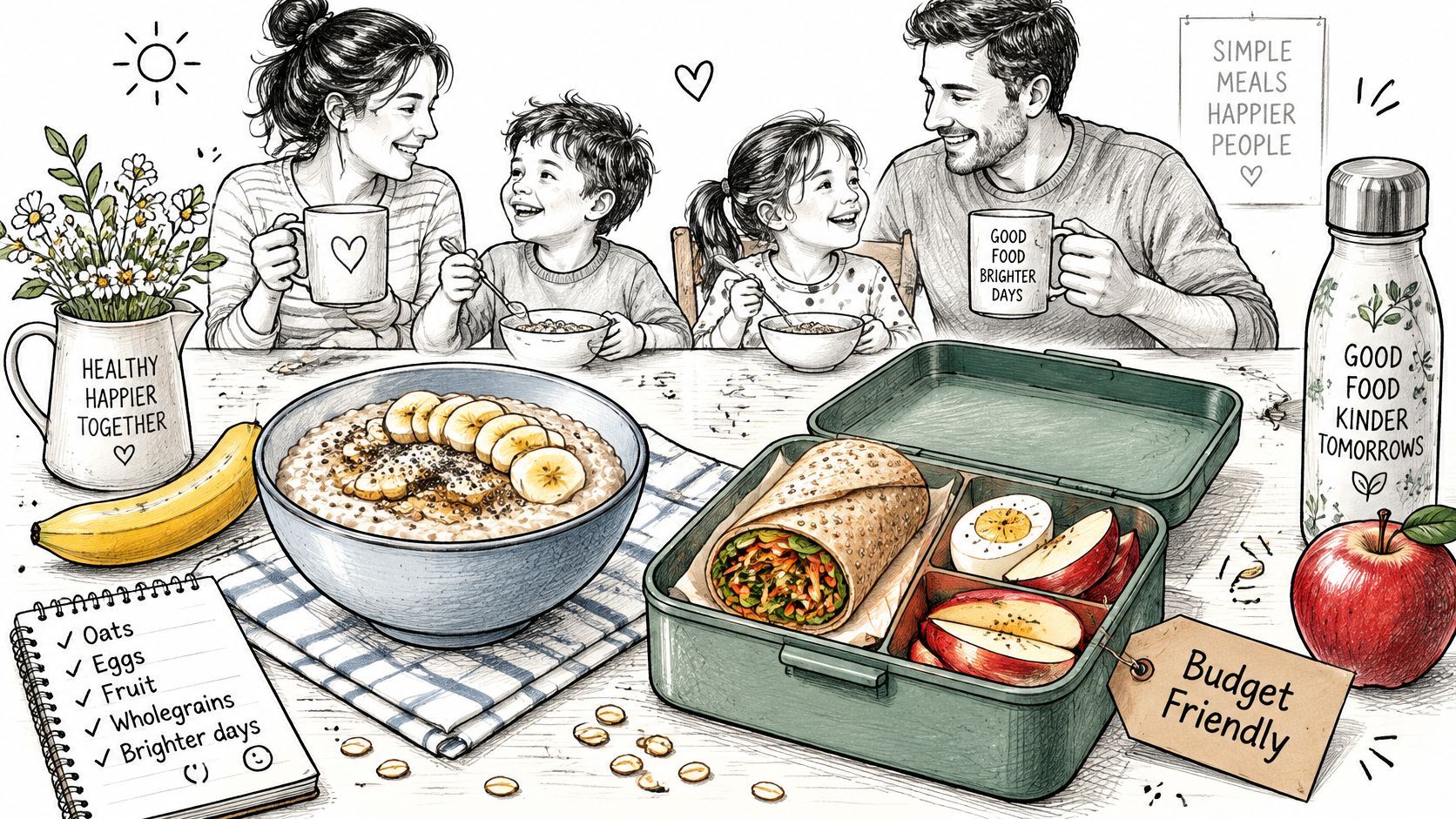
Compare the whole breakfast
Use four questions when choosing a default breakfast:
- Nutrient-dense: Does it contribute wholegrains, protein, fruit or useful fortification?
- Affordable: Can you keep buying it without sacrificing other meals?
- Accepted: Will your child eat enough of it?
- Lower in sodium: Is there a less salty version they'll accept?
| Breakfast | What makes it useful | What to check |
|---|---|---|
| Oats with milk and fruit | Combines wholegrain cereal with dairy and fruit | Choose plain oats and add flavour with fruit |
| Wholegrain toast with egg | Provides carbohydrate and protein | Compare breads and avoid automatically adding salty meats |
| Wholegrain toast with baked beans | Offers legumes in a familiar format | Choose reduced-salt beans where acceptable |
| Plain yoghurt with fruit | A quick option with protein and calcium | Check that a dairy alternative offers comparable nutrients |
| Lightly sweetened fortified cereal with milk and fruit | Can provide useful iron fortification | Compare fibre, sugar and sodium rather than judging the front label |
Fortified cereal can be a workable fallback, particularly for a selective eater. Plain porridge isn't a better breakfast in practice if a child won't eat it and leaves home hungry. Make gradual changes, such as mixing a familiar cereal with a less sweet option.
Build lunch from foods already in the kitchen
A hummus and grated carrot wrap uses inexpensive staples. Leftover pasta with lentil sauce avoids preparing a separate lunch, while an egg and cucumber sandwich offers another familiar texture. Canned salmon mixed with cheese can go with wholegrain crackers, provided your child accepts it and the lunch stays appropriately chilled.
Frozen fruit, canned legumes and shelf-stable oats can reduce waste and make planning easier. Compare sodium between similar packaged foods, drain canned ingredients where suitable, and pack perishable fillings with an ice brick in an insulated lunch bag.
Budget priority: Swap excess salt or sugar where you can, while keeping the protein, fibre and foods your child reliably accepts.
Getting Omega-3 and Iron Into Everyday Meals
Fish and iron-rich foods deserve deliberate places in the menu because they can be missing from otherwise familiar meals. EPA and DHA are long-chain omega-3 fats involved in nervous-system structure and function.
The Australian Dietary Guidelines identify fish as their predominant dietary source and describe proportionately smaller fish amounts for children than adults. That guidance isn't a promise that eating fish will improve school performance, and an adult fish target shouldn't become a child's portion prescription.
These food combinations can help you organise meals around both nutrients.
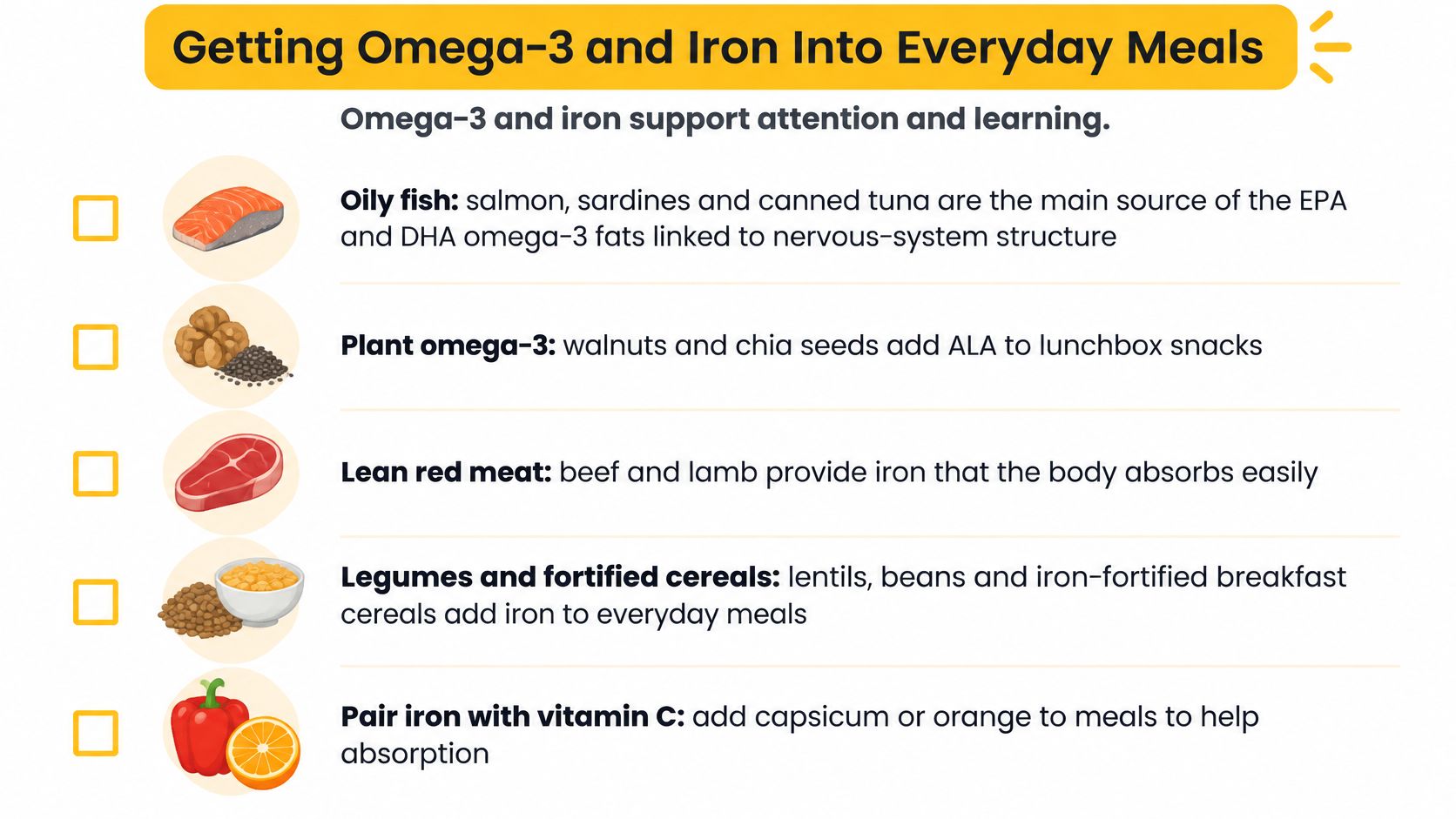
Make iron easier to include and absorb
Iron helps transport oxygen. A diet lacking iron can lead to deficiency and anaemia, which may undermine energy and attention; Australian government child-nutrition guidance also explains why both the quality and quantity of food matter.
Plant foods contain non-haem iron, which is absorbed less efficiently than haem iron from animal foods. Pairing plant iron with vitamin C is a useful food-based step.
- Add vitamin C to plant-iron meals. Serve capsicum with hummus, broccoli with tofu, or citrus after a lentil dish.
- Keep tea away from meals. Tea can reduce iron absorption, so it isn't a useful accompaniment to an iron-focused meal.
- Check breakfast cereal fortification. An accepted iron-fortified cereal can contribute when meat and legumes are difficult.
- Plan child-sized fish dishes. Rotate salmon patties and sardines on toast as menu options, rather than treating a particular meal count as a universal prescription.
- Stretch mince with lentils. Start with a texture your child recognises and increase the lentil component gradually if accepted.
Salmon, sardines and canned tuna offer different flavours and textures. Check current Australian food-safety advice on fish species and mercury for children before choosing a regular pattern; canned tuna isn't interchangeable with every large predatory fish. Remove bones or mash soft edible bones thoroughly as appropriate.
Our guide to DHA for kids explains the nutrient terminology parents encounter.
For another format, this video accompanies the meal-planning discussion.
Don't give high-dose iron on a hunch. Excess iron can be harmful, and a GP should assess whether testing or supplementation is appropriate. Vegan and highly selective eaters benefit from individual advice rather than a generic meal checklist.
Keeping Nutrients Up When Your Child Eats Few Foods
A systematic review in Proceedings of the Nutrition Society found that neurodivergent children with fussy-eating behaviours may have lower dietary variety, with diets often centred on processed grains and meats and containing few wholegrains or vegetables. It also leaves the causal pathway open: variety, emotional regulation and restriction may travel together without one neatly causing the next.
A restricted diet calls for assessment. Sensory discomfort, fear of unfamiliar foods and strong preferences can make ordinary feeding advice difficult to apply. Concentration or behaviour changes alone do not identify a nutrient deficiency.
Adequacy works like the floor of a house: variety can be added room by room, yet the floor still has to hold weight. Several signs can have causes unrelated to nutrition, so use them as prompts to ask for help.
Nutrient swaps when a child accepts few foods
| Nutrient at risk | Swap logic | Lower-pressure move | When to ask a professional |
|---|---|---|---|
| Iron | Match the carrier to an accepted texture before changing flavour | Keep one dependable base, then offer the nutrient in a familiar smooth or crisp format | Persistent tiredness, pale skin or poor appetite |
| Omega-3 | Change form before giving up on the nutrient | Keep any new exposure tiny and separate from the meal's safe food | An ongoing fish-free, highly restricted diet |
| Protein | Use texture families rather than a single meat | Alternate smooth, baked and crumbly accepted proteins across the week | Slow growth or weight loss |
| Zinc | Keep the look familiar while changing the carrier | Blend beans into a familiar sauce or pair cheese with accepted grains | Frequent infections or poor wound healing |
| Vegetable fibre | Protect safe foods while increasing range | Add vegetables to sauces, soups or muffins only when the change is disclosed | Almost no vegetables accepted alongside constipation or worsening restriction |
A swap can keep the nutrient while changing the look and feel. Smooth hummus and whole chickpeas place different sensory demands on a child, even though both come from legumes. A crisp patty can also feel safer than a soft piece of fish because the outside gives a predictable first bite.
Adding vegetables to a familiar sauce can widen that dish's range, so keep some accepted foods unchanged and name what you are serving. Predictability is part of the plan.
Lower pressure while protecting safety
Offer a tiny amount of an unfamiliar food beside an accepted one, with looking, touching or smelling counting as enough. Repeat opportunities without bargaining. If distress rises, pause the exposure and return to a steadier meal.
For more combinations built around familiar textures, use these lunch ideas for picky eaters.
Keep dairy, wheat, eggs and other major foods in the diet unless a clinician confirms an allergy. When avoidance is required, or sensory restriction removes whole food groups, ask a dietitian to plan appropriate alternatives.
Protect nutrient adequacy first, then widen the accepted range.
Where Supplements Like Daily Powers Fit
A supplement earns its place when it fills a defined nutrient gap. The name on the bottle works like a shop sign: it announces a purpose. The contents list tells you what's inside. A child can struggle to concentrate on a fully adequate diet, and a child eating a narrow range of foods may need a different kind of support entirely.
Before buying, separate the feeding problem from the product decision. Is the concern limited variety, a diagnosed deficiency, difficulty eating enough, or school attention? Each calls for a different response, and a general gummy answers only some of them.
A balanced meal remains the foundation, even when a clinician recommends supplementation.
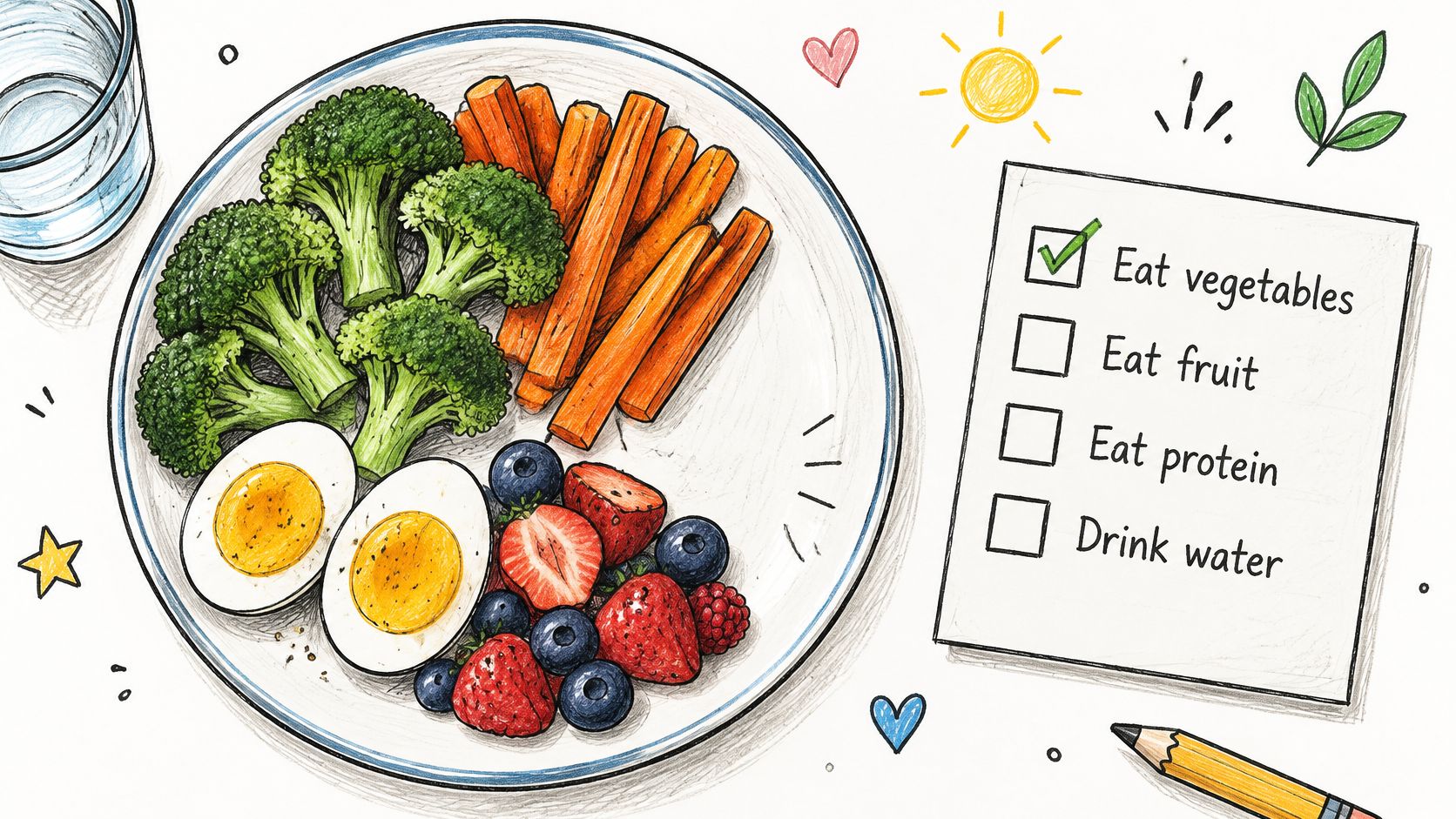
Questions to answer before adding a gummy
- What is the food pattern missing? Review accepted foods across the food groups, including suitable replacements for exclusions.
- Which nutrient needs attention? Work from a confirmed deficiency or a clinician's assessment rather than a guess based on behaviour.
- Does the formulation match that need? Read the ingredients panel rather than assuming a product covers iron, iodine or omega-3.
- Can the child take it safely and consistently? Check age suitability, chewing ability, allergies, and whether it can be stored out of children's reach.
Our guide to choosing vitamins for kids can help parents organise those questions before a GP or pharmacist discussion.
Read the formulation rather than the promise
Our Focus gummy is a sugar-free, vegan, blueberry-flavoured product designed for children who need extra help concentrating at school. Each gummy contains mushroom polysaccharides 120mg, vitamin D3 4μg, zinc gluconate 4mg, elderberry fruit powder 60mg and prebiotic fructooligosaccharides 100mg, with no artificial colours, flavours or sweeteners.
Follow the directions on the product label, or use it as a healthcare professional advises. Before combining it with a multivitamin, another supplement or regularly consumed fortified foods, ask a pharmacist or GP to review total vitamin and mineral intake, particularly zinc and vitamin D. The formulation supplies no iron and no omega-3, so children who need those still require a food source or a different product.
We develop our gummies with nutrition experts and to strict quality standards. That describes how the product is made. Whether it helps a particular child's concentration is a separate question the label cannot answer.
Agree on the purpose before starting any supplement. If a clinician identifies a specific deficiency, follow the treatment and review plan they recommend rather than substituting a general product.
Plan Your Child's Brain-Food Week
- Record ordinary eating. Include school food, snacks, drinks and leftovers that were eaten. Mark food groups that are consistently missing rather than judging individual meals.
- Choose a dependable breakfast. Keep the ingredients available and make any sugar or sodium changes gradually enough that breakfast remains acceptable.
- Add an achievable main meal. Choose fish, or an egg-and-legume dish if that suits your household. Include a vitamin-C-rich food with plant-iron meals.
- Offer a manageable food exposure. Place an unfamiliar food beside an accepted one without making eating it a condition of finishing the meal.
- Notice more than intake. Record appetite, energy, sleep and mealtime distress so you can describe patterns clearly.
- Arrange a review when concerns persist. Bring the food record to a GP or accredited practising dietitian if you're worried about growth, tiredness, restriction or nutritional gaps.
Decide what success means
Choose a practical outcome you can observe: breakfast eaten before school, a lunchbox containing an accepted protein food, or less distress around a new texture. Don't interpret a good homework afternoon as proof that a dietary change caused it.
If a healthcare professional recommends a supplement, agree on how to assess its usefulness and when to review it. A reliable routine shows that a child is taking the product, not that it has improved concentration.
Start with the smallest change your family can sustain. An affordable breakfast and a safe, repeatable lunch are worthwhile progress, even while vegetable acceptance takes longer.
Daily Powers offers children's gummy supplements and practical nutrition guides to help families build consistent routines alongside everyday meals. Visit Daily Powers to review ingredients and directions, and take any proposed supplement to your pharmacist or GP for a suitability check.