

You've packed a familiar dinner onto the table: one food your child will tolerate, two items they reject on sight, and a negotiation that somehow ends with everyone upset. You're not asking for a perfect menu. You'd like your child to eat with less pressure and feel confident that their limited diet isn't leaving important gaps.
Fussy eater gummies can be one practical part of that picture. They won't make vegetables suddenly appealing or replace a varied diet, but a well-chosen gummy may make supplementation easier to accept and easier to repeat. Used thoughtfully, it can support both nutrition and a calmer family rhythm.
Table of Contents
- The Mealtime Stand-Off and Your Peace of Mind
- More Than Just a Vitamin, The Role of Gummies
- How to Choose the Best Fussy Eater Gummies
- Safety and Dosing Guidance for Ages 4 to 12
- Making Gummies a Healthy Habit, Not a Treat
- Your Fussy Eater Gummy Questions Answered
The Mealtime Stand-Off and Your Peace of Mind
Your child pushes away the roasted vegetables before tasting them. The yoghurt is “too cold”, the pasta must be a particular shape, and the new chicken dish is rejected because it touched the peas. You offer another option, explain why food helps growing bodies, and eventually reach for something predictable. By the end of dinner, you're tired, your child is distressed, and everyone's attention has shifted from eating to conflict.
That experience can feel personal, but selective eating is common. A 2024 University of Sydney summary noted that almost 1 in 2 children go through a period of fussy eating, while estimates among school-aged children range from 19% to 59%. Those figures describe a broad developmental pattern, not a sign that you've failed as a parent or that your child is being deliberately difficult.
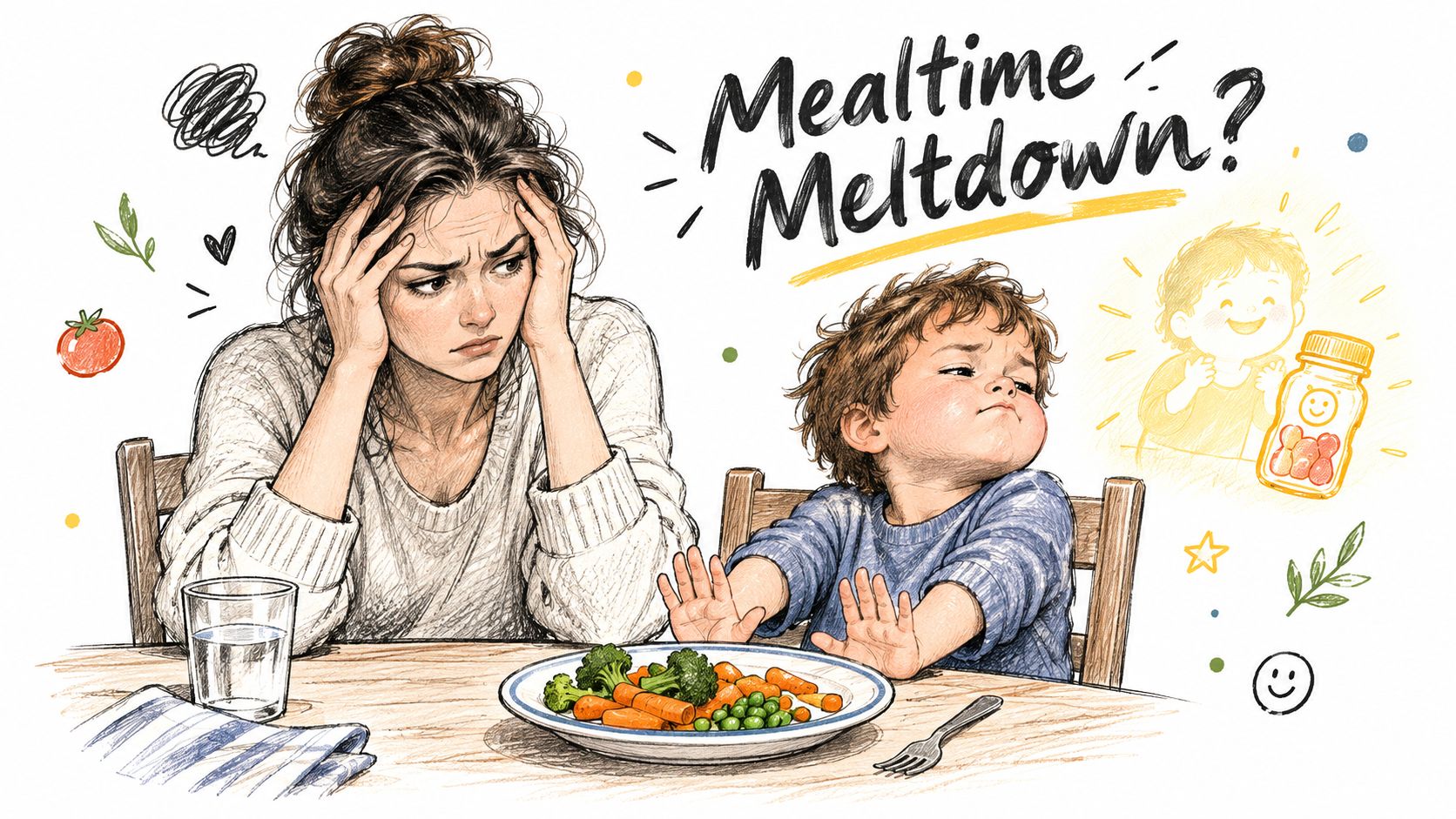
The real problem may be the daily pressure
Fussy eating can create a cycle. You worry about nutrients, so you encourage another bite. Your child feels watched or pressured, so they resist more strongly. The next meal begins with both of you remembering the last difficult one.
A supplement can sometimes remove one source of anxiety. Instead of trying to make every meal nutritionally complete, you can look at your child's eating pattern across the week and discuss any concerns with a GP, paediatrician or Accredited Practising Dietitian. A gummy may then provide a simple, child-friendly routine while you continue offering ordinary family foods without turning each meal into a test.
A calmer goal: support nutrition without making every refused food feel like an emergency.
The most useful way to think about gummies is as a support tool, not a magic fix. They can help with acceptance, consistency and parental peace of mind, but they shouldn't become a bargaining chip, dessert substitute or reason to stop offering varied foods.
More Than Just a Vitamin, The Role of Gummies
A gummy can do more than carry nutrients. For some families, its greatest value is that it makes a health task predictable, manageable and less emotionally loaded.

First, it can support a limited diet
A narrow food repertoire may mean your child has fewer regular opportunities to consume particular vitamins or minerals. That doesn't automatically mean a deficiency exists, and a supplement shouldn't be used to diagnose or treat one. It does mean that a carefully selected product can be discussed as a way to support everyday intake when food variety is currently limited.
The label matters more than the front of the packet. Look for a transparent nutrient panel and a serving size that matches your child's age. Avoid assuming that a long ingredient list is automatically more useful. The right product depends on the child, their diet, their health history and any advice from a healthcare professional.
Second, the format can reduce sensory resistance
Some children reject tablets because they're hard, chalky or difficult to swallow. Others dislike powders mixed into familiar foods because the taste or texture changes. A soft chew with a familiar fruit flavour may be easier for a child who is sensitive to mouthfeel, although no format works for every child.
That distinction is important. Gummies are not superior to tablets, liquids, powders or food-based strategies. They are one delivery option, and their usefulness depends on whether your child accepts the flavour, texture and routine.
Third, it can create a repeatable ritual
A gummy can become a small daily marker, similar to brushing teeth or packing a school bag. The routine works best when it happens away from mealtime pressure. You might offer it after breakfast, once an adult has checked the label and served the correct amount.
For example, a family could use simple language such as, “Your daily health gummy comes after breakfast.” That keeps the focus on consistency rather than reward. A product such as Focus is described by its maker as a sugar-free, vegan blueberry-flavoured gummy containing mushroom polysaccharides, vitamin D3, zinc, elderberry fruit powder and prebiotics, with directions to take two gummies daily or as directed by a healthcare professional.
The ritual won't solve every feeding concern, but it can move one nutrition-related task out of the dinner-time battleground. That gives you more room to keep meals relaxed and continue exposing your child to food without pressure.
How to Choose the Best Fussy Eater Gummies
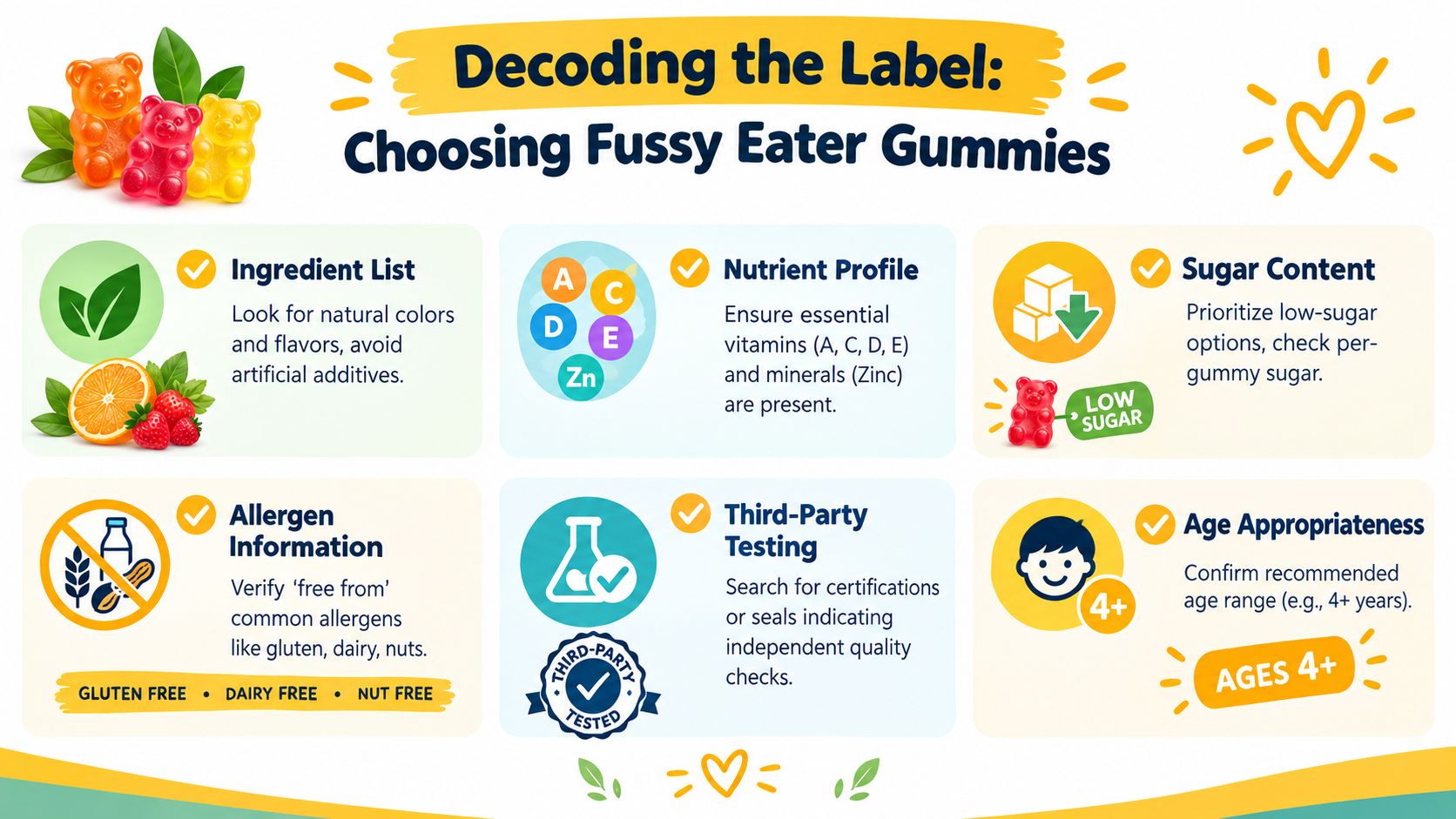
A child may accept one gummy and reject another because the flavour, texture or appearance feels unfamiliar. Start with the label rather than the cartoon character or flavour description. A product designed for children should clearly state its ingredients, serving instructions, age guidance and warnings. If you cannot tell what the daily serving provides, choose clearer information or ask a healthcare professional for help.
Read the nutrient profile carefully
Parents often look for familiar nutrients such as vitamins A, C, D and E, along with minerals such as zinc. These nutrients can matter within a child's overall diet, but the longest ingredient list is not automatically the best match. A gummy should fill a considered gap, not serve as a substitute for the varied foods your child is gradually learning to accept.
Ask practical questions:
- What does my child eat? Record foods your child accepts repeatedly, including the food groups represented, rather than focusing only on refusals.
- What is already being supplemented? A multivitamin, omega-3 product and fortified food may provide overlapping nutrients.
- Does the serving suit their age? Follow the product's stated age range and directions.
- Is the claim specific? “Supports general wellbeing” is different from a promise to fix appetite, growth or behaviour.
Public information about which nutrients are commonly low in Australian fussy eaters remains limited, as reflected in children's health guidance from Nature's Way Australia. If your child has a very restricted diet, poor growth, fatigue, gastrointestinal symptoms, or difficulty chewing and swallowing, professional assessment is more useful than guessing from a label. A supplement can be one piece of the plan, while a clinician checks the wider picture.
Treat sugar as a serious label question
Sweetness may make a product easier to accept, but a gummy should not become another confectionery habit. UNSW reported that 67% of Australian children aged 4–8 consumed more than 10% of total energy from free sugars in 2011–12, based on the cited Australian dietary data (UNSW's report on children's vitamin gummies). A sugar-free option can avoid adding sucrose to that existing dietary load, though it still requires sensible serving control.
Sugar-free does not mean unlimited. Check the sweeteners used and consider your child's digestive tolerance. Keep the container with supplements rather than treats, so the gummy remains part of a health routine instead of becoming a reward or casual snack. For a closer look at label considerations, see this guide to sugar-free multivitamins.
Look beyond the headline claims
Vegan ingredients may suit families avoiding animal-derived ingredients, while allergen information can help parents manage known sensitivities. “Free from” claims still need checking against the full label and the manufacturer's advice, especially when a child has a diagnosed allergy.
Texture deserves equal attention. A child who refuses sticky foods may reject a gummy that another child enjoys. Choose an age-appropriate chew and avoid turning acceptance into a test. If the texture causes distress, try a different format or pause and discuss alternatives with a healthcare professional. Reducing one daily point of conflict can help the whole family build a calmer, repeatable ritual.
| Feature | What to look for | Why it matters for fussy eaters |
|---|---|---|
| Ingredient list | Clear names, flavours and colours | Helps you avoid ingredients your child does not tolerate |
| Nutrient profile | Transparent amounts per daily serving | Lets you compare the product with your child's needs |
| Sugar content | Sugar-free or tightly controlled sugar per serving | Avoids turning supplementation into a regular sugar source |
| Allergen information | Clear allergen and “free from” details | Supports safer choices for sensitive children |
| Quality information | Understandable manufacturing and quality details | Gives you more confidence in what you are buying |
| Age appropriateness | Directions that match your child's age | Reduces dosing confusion and supports safer use |
Safety and Dosing Guidance for Ages 4 to 12
A child may see a gummy as lollies, particularly if it has a bright colour and fruit flavour. Adults need to frame it differently and control access. Store the container with other supplements or medicines, not in the treat cupboard, and keep it somewhere your child can't reach independently.
Australian product listings commonly include “use under adult supervision” warnings and different directions for younger children and school-aged children, as shown on this Australian children's gummy product listing. Supervision matters because a child may not understand that more isn't better, and families may accidentally combine products with overlapping nutrients.
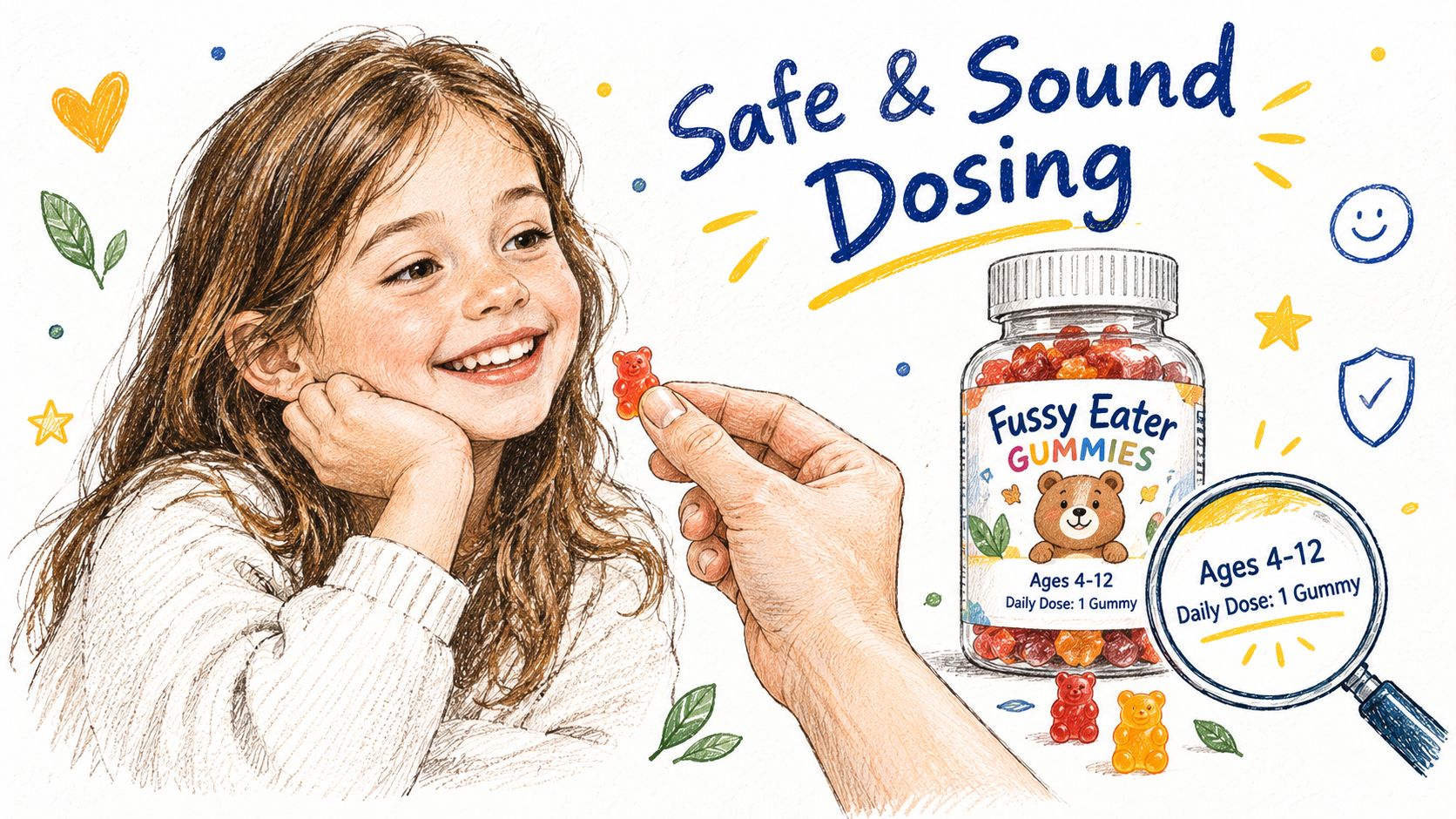
Follow the serving, not the child's enthusiasm
Use the exact serving stated on the product label for your child's age. Don't increase the amount because your child is going through a particularly selective phase, and don't use a second product to “cover” a nutrient without checking whether the ingredients overlap.
A simple routine helps:
- Read the directions before the first dose. Check age range, daily serving and any warnings.
- Measure or count the serving yourself. Let your child participate, but keep the adult responsible for the amount.
- Record other supplements. Include products such as omega-3s, iron or fortified powders when discussing the routine with a healthcare professional. Guidance on gummy omega-3 supplements can help you think through how multiple products fit together.
- Keep the pack closed. Put it away immediately after serving.
- Ask for help after an accidental extra dose. Contact a pharmacist, Poisons Information Centre or healthcare professional for specific advice rather than waiting for symptoms.
Consider tolerance as well as dosage
Sugar-free gummies may use sweeteners that some children tolerate differently from others. If your child develops digestive discomfort after starting a product, stop and seek advice about the ingredients and whether the product is appropriate.
The same caution applies to children with allergies, chronic health conditions, prescribed medicines or a highly restricted diet. A gummy may be suitable, but “child-friendly” doesn't replace individual advice.
Safe routine: an adult chooses the product, checks the serving, gives the dose and stores the container securely.
Making Gummies a Healthy Habit, Not a Treat
A gummy works best as part of a predictable family rhythm, rather than as payment for eating vegetables, finishing dinner or behaving well. Linking it to a meal can turn nutrition into a transaction. Linking it to a neutral daily task makes the routine calmer and easier to repeat.
Offer it after breakfast, while the school bag is packed, or alongside another adult-managed morning task. Use steady language, such as, “This is your daily supplement,” instead of “You earned a treat.” For practical guidance on selecting support for a limited diet, see these vitamins for fussy eaters.
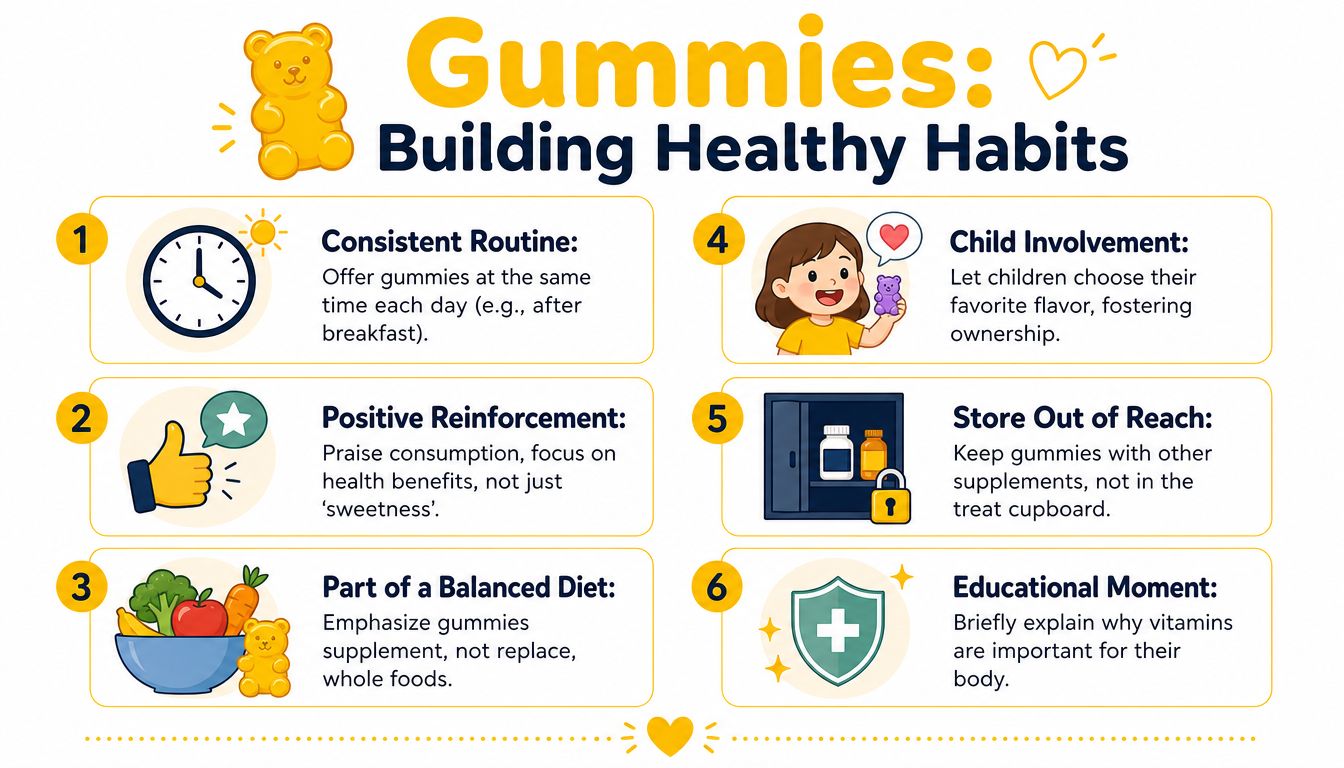
Build the ritual around participation
A small, safe choice can help a child feel involved. They might choose whether to take the gummy before or after packing lunch, place a tick on a routine chart, or select from products their caregiver has already approved.
Keep the choice narrow. “Do you want your gummy?” can turn a settled ritual into a negotiation. “Would you like to take it before we put on shoes or after?” offers ownership while the adult retains responsibility for the routine.
The wider message should remain clear: gummies supplement food. Continue serving family meals, placing accepted foods beside less familiar options, and letting your child decide whether and how much to eat. A missed gummy does not need a dramatic response. Resume the routine at the next planned opportunity.
Consistency beats excitement
The Australian Omega Kid feasibility study reported median compliance of 86.9% in one group and 89.3% in another, averaging 88%, while comparing calendar reporting with returned-sachet counts (the study summary reported by Nutrition Insight). The practical lesson is simple. Families are more likely to maintain a clear, visible daily action than a complicated plan that depends on constant motivation.
A manageable household sequence might look like this:
- Choose one time: Keep the timing stable on school days and weekends where practical.
- Use one phrase: Make the instruction calm and predictable.
- Let the child help: Invite them to tick the chart or carry the water bottle.
- Store it safely: Keep the adult-controlled supplement separate from treats.
- Keep food pressure-free: Never make the gummy conditional on eating a disliked food.
The routine should reduce friction, not create another daily stand-off. If conflict grows, reconsider the timing, flavour, texture or product with professional guidance. A calm ritual gives the whole family a repeatable health habit while leaving meals focused on nourishment, connection and learning.
Your Fussy Eater Gummy Questions Answered
Can gummies make picky eating worse?
They can when adults use them to replace meals or reward eating. Offer them at a neutral time, keep the serving controlled, and continue presenting varied family foods without pressure. This protects food exploration and keeps the supplement separate from the dinner-table negotiation.
The message matters. “Your body gets support from many foods, and this supplement is one small part of the routine” supports learning better than “You don't need to eat that because you've had your vitamins.” A calm, predictable ritual can reduce one source of mealtime tension.
Do gummies replace a healthy diet?
No. A gummy supplies selected nutrients, while food provides the wider experience of eating. Meals can offer protein, carbohydrates, fats, fibre and fluids, along with sensory learning and time with family. Supplements should not replace vegetables, fruit, wholegrains or other foods your child can safely eat.
If accepted foods are extremely limited, do not use a product label to decide whether the diet is adequate. A GP or Accredited Practising Dietitian can consider growth, symptoms, dietary history and relevant medical factors.
Which nutrients are commonly low in Australian fussy eaters?
There is no simple answer that applies to every child. Accepted foods vary widely, and products marketed for picky eaters do not establish one shared pattern of nutritional shortfalls among Australian children, as noted in Nature's Way Australia's children's health information.
Choose according to your child's actual eating pattern rather than the product with the longest ingredient list. Iron and other targeted nutrients should not be added casually, because a child's needs depend on their diet and health.
What should I do if my child takes too many?
Remove the product and keep the container available so its ingredient information can be checked. Contact a pharmacist, Poisons Information Centre or healthcare professional promptly for guidance. Do not wait for symptoms, and do not give another supplement to counteract it unless a professional advises this.
Are sugar-free gummies always better than tablets or diet changes?
Not automatically. Sugar-free may suit families trying to avoid added sugar, but taste, texture, tolerability, overlapping ingredients and safe chewing also matter. Tablets may suit one child, while food-first changes may be enough for another. A professional may suggest a different format if sensory, swallowing or medical concerns affect the choice.
The strongest option fits the child's needs, has clear dosing information and supports a calm, repeatable routine. Gummies can therefore do more than fill a small nutritional gap. Used appropriately, they can take one daily health task out of the mealtime struggle and help the family practise a steady ritual.
Daily Powers offers child-focused gummy options designed around everyday routines, including Brave and Focus, with sugar-free, vegan formulations and no artificial colours or flavours according to its product information. Explore the range at Daily Powers and choose a routine that supports your family's needs without turning nutrition into another dinner-table battle.