

Could a child's hair, skin or nails be showing a nutrition problem that a beauty gummy can't solve? That question matters because hair, skin and nails pills sit between two very different ideas: beauty-from-within support and medical treatment. Parents need to know which role a supplement can reasonably play before adding one to a child's routine.
In Australia, this category is also more closely regulated than many families realise. Hair, skin and nails products appear in the Australian Register of Therapeutic Goods, including listings classified as medicines, so choosing a product involves more than comparing flavour, packaging or the biggest promise on the front.
Table of Contents
- Understanding Hair Skin and Nails Supplements
- Common Ingredients and Their Roles
- Cosmetic Support vs Medical Treatment
- Reading Labels for Quality and Safety
- Choosing the Right Supplement for Your Child
- Building Healthy Habits with Daily Powers
Understanding Hair Skin and Nails Supplements
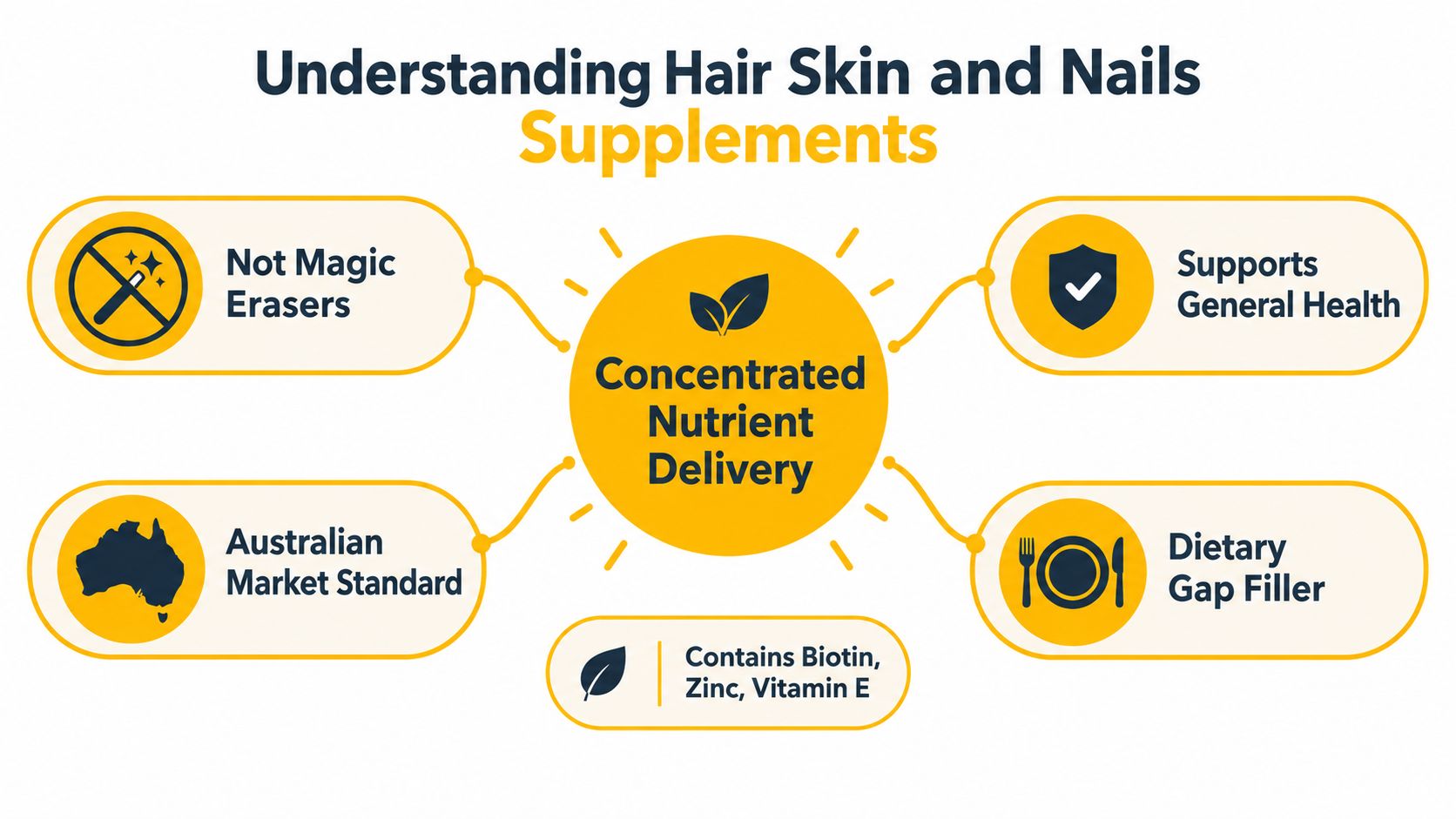
A child's hair, skin and nails are made from living tissues that need energy, protein, vitamins and minerals. A supplement can provide some of those nutrients in a concentrated form, but it can't replace meals, sleep, medical care or a varied diet. Think of it as a gap-filling tool, not a magic eraser for fussy eating or an instant answer to every cosmetic concern.
The beauty-from-within idea is simple. Instead of applying something only to the outside of the body, parents support the nutrients involved in normal tissue maintenance from the inside. Hair and nails contain keratin, while skin relies on ongoing cell renewal and structural proteins. Nutrients such as biotin, zinc and vitamin C are commonly included because they contribute to these normal body processes.
What the Australian category tells parents
Australian product records show that this is not just a passing lifestyle trend. The TGA has recorded hair, skin and nails medicines across several years, including registrations in 2017, 2019, 2022, 2023, 2024 and 2025. The same category includes an item registered on 30 August 2024 and another on 28 August 2025, both classified as medicines in their ARTG records. These dates and classifications are available in the TGA category listing.
The formulations also reveal a familiar pattern. Australian products often combine several micronutrients rather than relying on one ingredient. Biotin, ascorbic acid, zinc, folic acid and related vitamins and minerals appear in the records, reflecting the way this category has developed locally.
That regulatory context helps parents ask better questions. A product's presence in the Australian market doesn't mean it's suitable for every child, and it doesn't mean every marketing statement promises treatment. It does mean parents should look for clear product information, age guidance and responsible directions rather than treating all beauty gummies as interchangeable.
Where supplements fit in a child's diet
Children's nutritional needs change as they grow, and eating patterns can vary from day to day. A child who eats a narrow range of foods may have different gaps from a child who eats a broad diet, while dietary restrictions can create another reason to review intake with a qualified professional.
Australia also has a strong supplement culture. A Statista overview of Australia's vitamins, minerals and supplements market reports that around 79% of Australians take food supplements. The same market context describes growing interest in beauty supplements, while a Grand View Research outlook identifies hair, skin and nail care as the largest revenue-generating application in Australia's anti-ageing supplements market in 2025, with a 40.22% revenue share and a projected market size of US$267.6 million by 2033.
Those figures describe the wider market, not a promise for an individual child. For a practical explanation of how broader multivitamins differ from a beauty-focused formula, parents can review what a multivitamin is. The useful question is always, “What does my child need, and does this product address that need safely?”
Common Ingredients and Their Roles
Labels can make hair, skin and nails supplements look more complicated than they are. Start by separating the ingredient from the promise attached to it. A nutrient may support a normal biological process, but that doesn't mean taking more will create faster hair growth or correct a condition that has another cause.
Australian formulations illustrate this broad approach. One TGA-registered hair, skin and nails medicine contains ascorbic acid, betacarotene, biotin, calcium pantothenate, Equisetum arvense, ferrous fumarate, folic acid, manganese sulfate monohydrate, silicon dioxide and zinc citrate. That combination shows how local products often bring together several micronutrients and supporting ingredients rather than using a single nutrient in isolation.
What parents may see on a label
Biotin is usually associated with keratin production, which is relevant to hair and nails. It's a familiar ingredient, but a prominent position on the label doesn't prove that a child has a biotin shortfall or that extra biotin will change healthy hair.
Zinc contributes to normal tissue maintenance and immune function. It appears often in children's formulations because it has roles beyond appearance. If you're considering a separate zinc product, read guidance about zinc supplements for kids before combining products, since stacking several supplements can make the total intake harder to judge.
Vitamin C supports normal collagen formation. Collagen helps provide structure in skin and other connective tissues, so vitamin C belongs in the conversation when parents are assessing a multi-ingredient formula. It isn't a standalone solution for dry skin, brittle nails or hair changes, however.
Folate and iron may appear in some formulas because they support important processes throughout the body. Their presence on a label shouldn't be interpreted as evidence that a child needs them. Iron, in particular, should be discussed with a healthcare professional when deficiency is suspected rather than added casually.
Why combinations are common
Hair, skin and nails don't operate as separate departments. A child needs adequate overall nutrition, and several nutrients can contribute to normal tissue formation, energy metabolism or repair. That's why a balanced formula may make more sense than a single-ingredient product when a clinician or dietitian has identified a broad dietary gap.
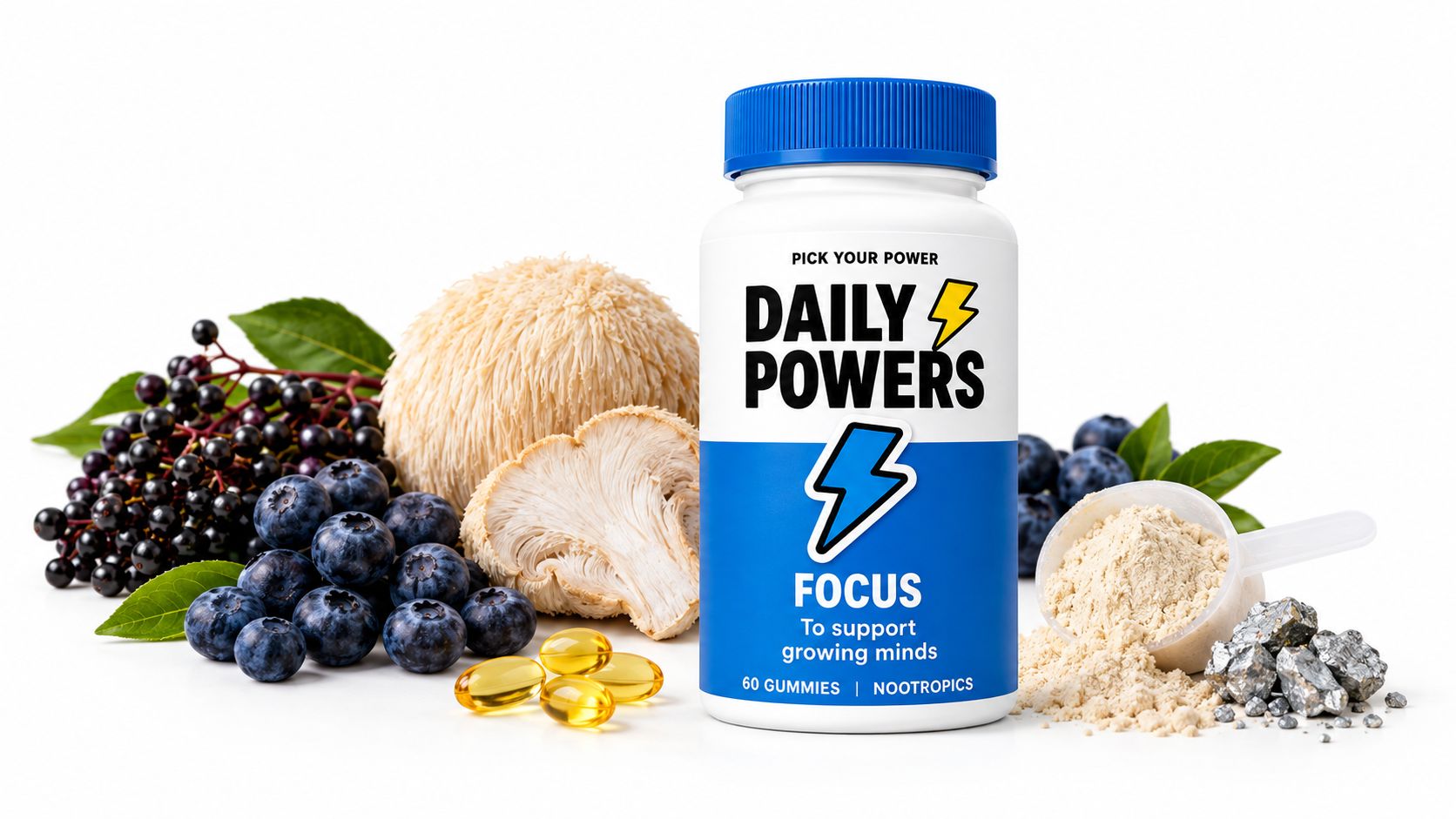
Still, “more ingredients” doesn't automatically mean “better”. Parents should compare the full panel, serving instructions and age suitability. A product such as Focus is formulated for growing minds rather than specifically for hair, skin and nails, and its listed ingredients include mushroom polysaccharides, vitamin D3, zinc, elderberry fruit powder and prebiotic fructooligosaccharides. It shouldn't be treated as a beauty supplement because it contains zinc.
Practical rule: Match the ingredient to the child's need, not the headline on the bottle.
Cosmetic Support vs Medical Treatment
A supplement may support normal nutrition, but it isn't a diagnosis. This distinction becomes important when a child has sudden shedding, patchy hair loss, marked nail changes or ongoing skin symptoms. The visible problem may be connected to a nutrient gap, but it may also reflect a condition that needs assessment and a different form of treatment.
Australian consumer retail content often groups biotin, collagen, zinc and silica products under broad promises such as stronger nails, hair growth or hydrated skin. The Australian hair, skin and nails supplement category at HealthyLife illustrates how widely these products are presented for general beauty support. That language can be useful for understanding consumer options, but it shouldn't blur the line between helping a healthy body meet its nutritional needs and treating disease.
Two different questions
| If the concern is | The sensible first step |
|---|---|
| A generally well child with a restricted diet | Review meals, dietary pattern and possible gaps with a healthcare professional |
| Sudden or patchy hair loss | Arrange medical assessment rather than relying on a beauty supplement |
| Brittle or changing nails | Look for possible underlying causes before choosing a product |
| A diagnosed condition | Follow the treatment plan and ask whether any supplement is appropriate |
| A child with no symptoms but a parent seeking general support | Check age guidance, ingredients and whether supplementation is needed |
Conditions such as androgenetic alopecia, telogen effluvium, thyroid disease, iron deficiency and perimenopausal hair loss are not solved by assuming a child needs more biotin. The first three may be relevant in different age groups, while perimenopausal hair loss is an adult concern, not a typical explanation for a young child. The broader lesson is that hair changes have many possible causes.
When to pause the beauty plan
Seek professional advice if the change is significant, persistent, painful or unusual for your child. A clinician may ask about illness, eating patterns, family history, stress, medications and other symptoms before deciding whether testing or treatment is appropriate.
A supplement can be reasonable when it supports an identified dietary need, but it shouldn't delay care. Parents can use evidence-informed practice as a useful decision-making principle: combine the child's symptoms and circumstances with professional advice and the best available evidence.
The safest expectation: A beauty-from-within product may support nutrition. It doesn't replace an explanation for unexplained hair, skin or nail changes.
Reading Labels for Quality and Safety
Label reading is a practical safety skill, especially when a child already takes more than one supplement. Start with the product's regulatory information, then move through the ingredients, serving directions and formulation details. Don't rely on a front label that only highlights a flavour or a beauty claim.
A parent-friendly label check
- Look for Australian regulatory information. Search for the product in the ARTG where appropriate, and check how it is classified. The TGA records show that hair, skin and nails products can be listed as medicines, so parents should understand what the listing says rather than assuming every product has the same status.
- Confirm the child's age range. A formulation designed for adults may contain ingredients or serving amounts that aren't suitable for children. Follow the product directions, and ask a pharmacist, doctor or dietitian if the child is younger than the stated age or has a medical condition.
- Read the complete ingredient list. Check active ingredients, allergens, flavourings and other components. A child with allergies, food sensitivities or a restricted diet needs more than a quick glance at the words “natural” or “clean”.
- Check the serving instructions. Gummies can look like lollies, but they're supplements. Store them out of reach and never let children decide how many to take. Combining a multivitamin with a beauty formula or separate mineral product can also create unnecessary overlap.
- Assess the formulation against family priorities. Parents may prefer vegan ingredients, no artificial colours or flavours, and zero sugar. These features can make a product fit more easily into a family's eating pattern and reduce the feeling that a daily supplement is a confectionery item.
A sugar-free claim doesn't make a product automatically necessary or medically effective. It addresses only one formulation preference. Likewise, vegan ingredients matter to families who avoid animal-derived components, but parents still need to check the full panel and manufacturing information.
Keep the packet, not just the gummies
Save the packaging or take a clear photograph of the label. That information helps a healthcare professional review what the child is taking, especially if the family changes brands or adds another supplement later. It also prevents dosing instructions from being forgotten when gummies are transferred into another container.
Choosing the Right Supplement for Your Child
The right product starts with the child, not the category. Ask what problem you're trying to solve. Is the child eating very few foods, following a restricted diet, refusing tablets or showing a symptom that needs medical evaluation? Each answer leads to a different decision.
A child with a narrow diet may need a broader nutrition conversation. A child who dislikes swallowing tablets may need a more acceptable format, but that doesn't mean a beauty formula is automatically the right choice. If the concern is hair loss or a sudden nail change, the first choice should be assessment, not a more attractive bottle.
Use four filters
Need. Identify the nutritional gap or practical reason for supplementation. Don't choose hair, skin and nails pills only because a child's hair seems fine but a social media post made the product sound preventative.
Suitability. Check age guidance, allergens, dietary requirements and the complete nutrient panel. If the child takes other products, compare the labels rather than assuming the ingredients are different.
Acceptance. A gummy may be easier than a tablet for some children, while another child may prefer a liquid or chewable tablet. Flavour and texture matter because a product that stays in the cupboard can't become part of a routine.
Consistency. Use the product only as directed, at a predictable time that fits the household. A parent might place the packet beside the breakfast supplies, while another family may connect it with brushing teeth in the evening. The routine should be supervised and should not present the gummy as a reward or sweet.
Build the habit without building anxiety
Keep the language neutral. “This is part of your nutrition routine” is more helpful than telling a child the gummy will make their hair beautiful, fix their skin or make them look different. Children should learn that supplements support health when needed, while meals, sleep, movement and medical care remain important.
Parents should also give the routine time to settle before judging whether it works. Hair, skin and nails change gradually, and a visible difference isn't a reliable measure of whether a product was necessary. If a concern persists, return to the original question and speak with a healthcare professional rather than continually switching products.
Building Healthy Habits with Daily Powers
A family routine works best when it's simple enough to repeat on a busy school morning. A parent might keep a child's supplement with breakfast, check the serving directions, supervise the dose and move on without turning it into a negotiation. Another family may choose an evening routine, provided the product's directions and the child's needs support that timing.
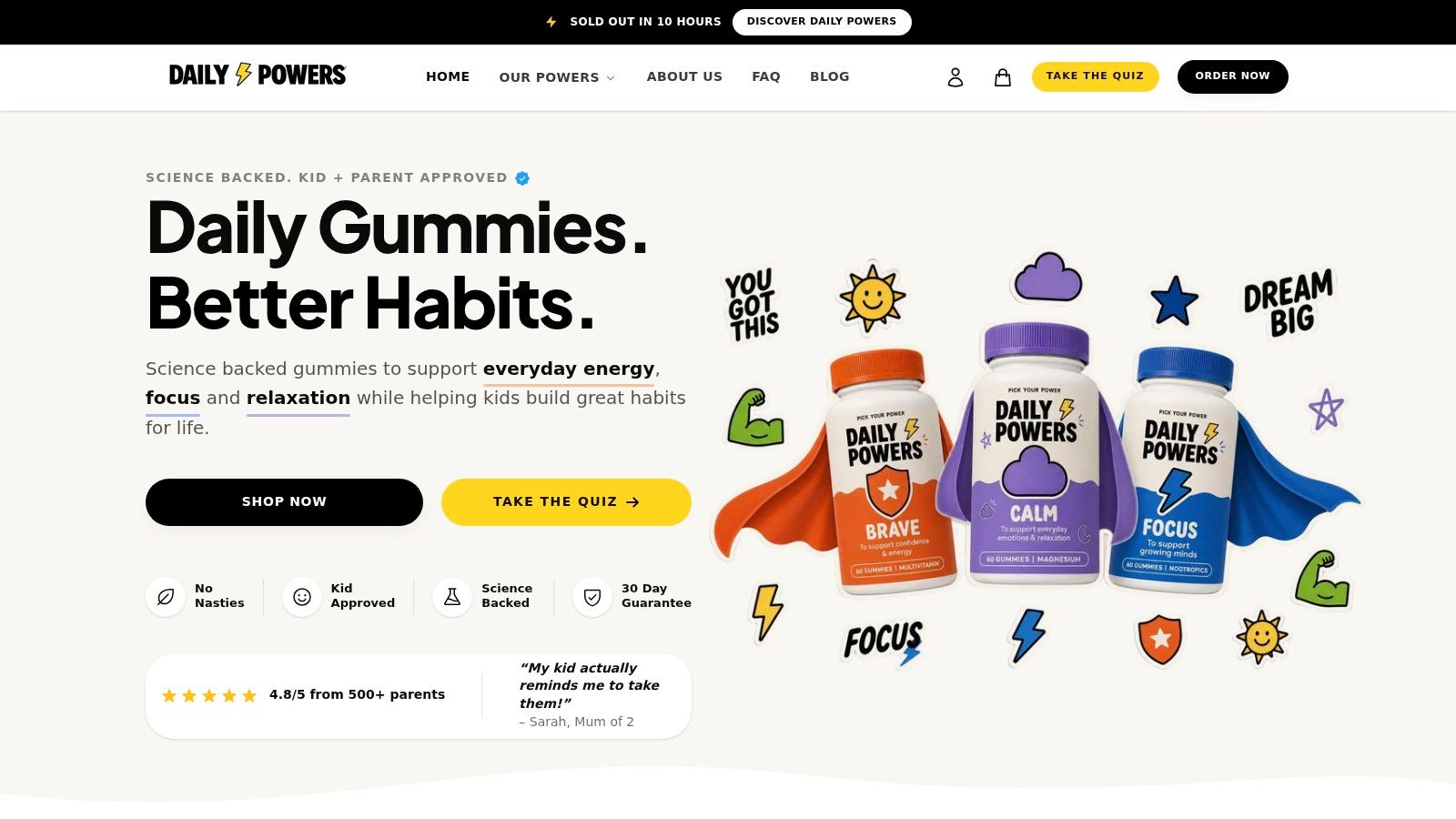
Daily Powers offers children's gummy products organised around different everyday needs, including Brave for general daily nutrition, Focus for growing minds and Calm for relaxation. Their stated formulation approach includes zero sugar, vegan ingredients and no artificial colours or flavours, with products designed for children's routines. Those characteristics may appeal to families who want a chewable format without treating a supplement as a lolly.
For a child whose actual need is a suspected deficiency or unexplained hair change, a general gummy routine isn't a substitute for professional advice. For a family trying to make an appropriate daily supplement easier to manage, the useful features are clear directions, transparent ingredients, a child-acceptable texture and a storage plan that keeps the product under adult supervision.
A routine also gives parents a chance to teach label literacy. The child can help identify the packet, wash their hands, take the supervised serving and put the container away. That approach turns supplementation into a calm health habit rather than a promise about appearance.
The following video provides another way to introduce the idea of daily gummy routines:
Before starting hair, skin and nails pills, write down the reason for using them, check the label and discuss any symptoms with a qualified healthcare professional. Daily Powers provides children's gummy options intended to fit consistent household routines, and you can explore the range through Daily Powers to compare ingredients and directions.