

The lunchbox comes home untouched again. The bread is soggy, the foods have merged into one unfamiliar pile, and the small piece of cucumber has never left its compartment. You're left wondering whether to pack the same safe food tomorrow or keep trying to improve the balance.
Effective lunch ideas for picky eaters start with acceptance, not pressure. Keep one recognisable base, offer controlled choices, make gentle nutrition upgrades, and introduce only one manageable extra at a time. That approach fits Australian guidance, which describes selective eating as a common developmental stage and emphasises predictable routines, small portions and low-pressure exposure. The seven formats below focus on control, predictability, familiar textures, gentle flavours and make-ahead convenience. For each lunch, choose a familiar base, add one manageable extra, and treat any optional daily supplement as routine support only, following its label and professional guidance.
Table of Contents
- 1. DIY Dipping Stations with Hidden Veggie Sauces
- 2. Personalised Build-Your-Own Sandwich Boards
- 3. Creamy Pasta Bowls with Mild Vegetable Sauces
- 4. Mini Meatballs or Nuggets with Safe Dipping Sauces
- 5. Mild Curry or Coconut-Based One-Pot Meals
- 6. Soft Breakfast-for-Lunch Builds
- 7. Customisable Grain or Protein Bowls with Mild Toppings and Dressings
- 7-Option Comparison: Lunch Ideas for Picky Eaters
- Turn Favourite Lunches Into a Repeatable Rhythm
1. DIY Dipping Stations with Hidden Veggie Sauces
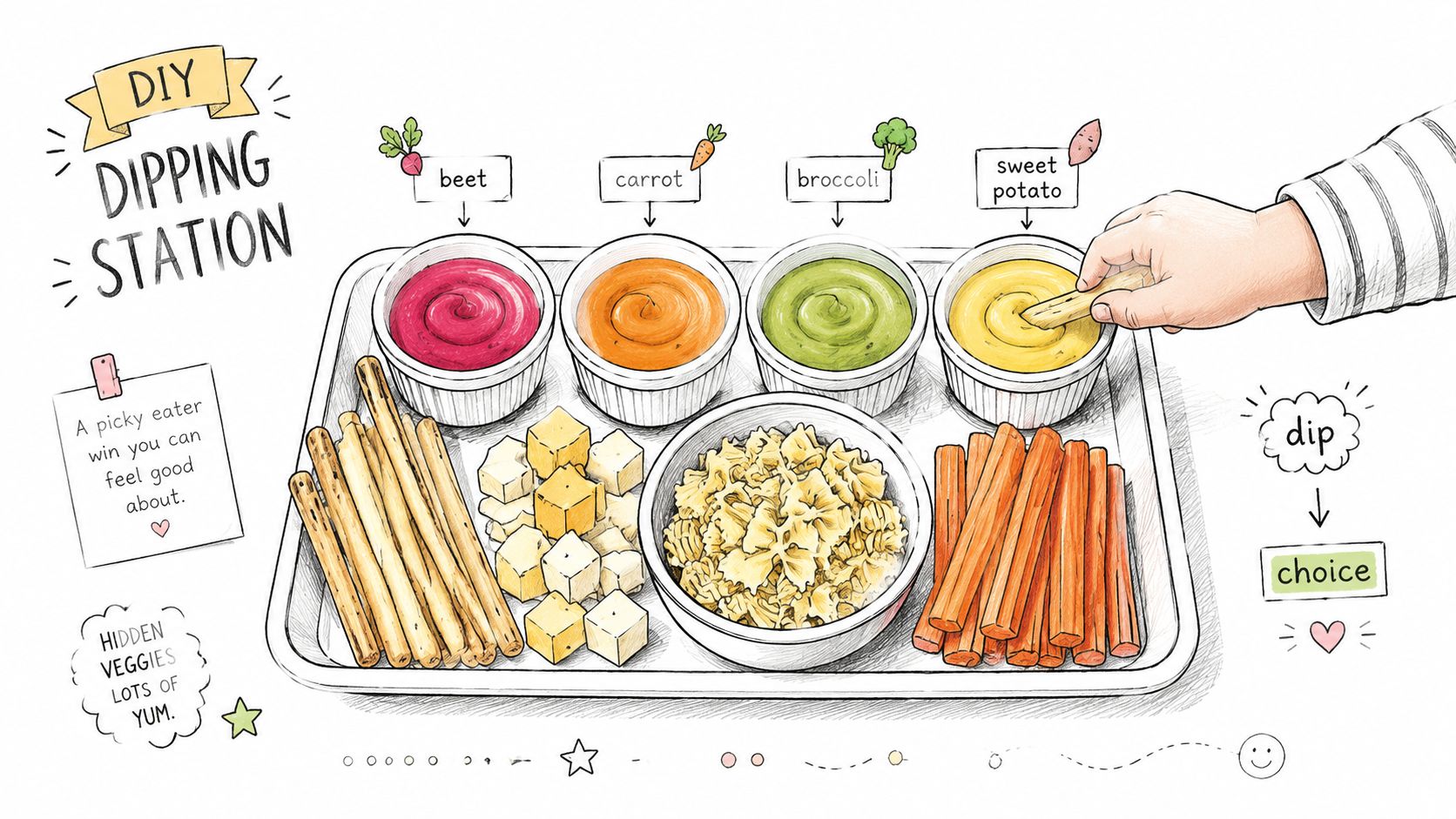
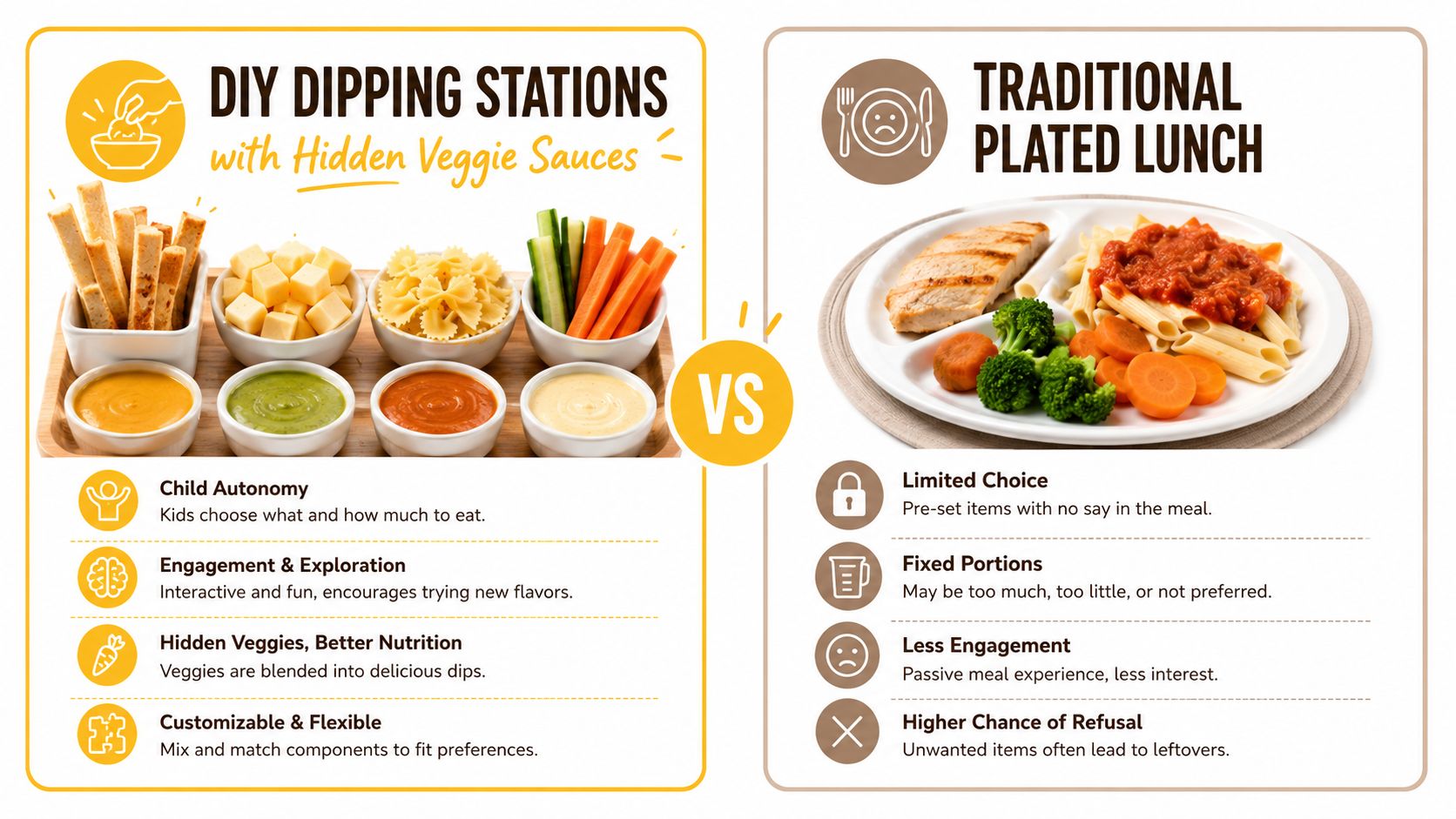
A dipping station works because the child controls the order, amount and combination. Instead of placing vegetables inside a mixed meal, serve familiar foods separately and let your child decide whether to dip, touch or leave the sauce alone. This is especially useful when whole vegetables are refused but smooth textures are accepted.
Try a small lunchbox with breadsticks, cheese cubes and pasta shapes beside one smooth sauce. Beetroot and white bean hummus, butternut pumpkin with tahini, creamy broccoli and cheese, or sweet potato blended with lentils can all provide a gentle bridge to vegetables. Keep the flavour mild and the texture consistent.
Make the sauce lunchbox-friendly
Cook vegetables until soft, then use a food processor or stick blender to create a lump-free sauce. A small squeeze of lemon can help maintain freshness and brighten the flavour. Freeze sauces in ice cube trays, then transfer portions to a sealed container once solid. That gives you easy quantities to thaw for the next day without making a fresh batch each morning.
Offer no more than a few components at once. Too many choices can feel just as overwhelming as no choice, so start with one dip and two or three familiar dippers. Let your child help wash vegetables, press the blender button with supervision, or choose the container. Participation can make an unfamiliar ingredient feel less threatening.
Practical rule: The sauce is an invitation, not a test. A child can explore it without being expected to finish it.
A predictable eating pattern also matters. Queensland Health recommends regular eating opportunities, time-limited meals and space between eating occasions to protect appetite, alongside small portions and limited choices. If you're considering a daily gummy routine for a fussy eater, read the Daily Powers guide to vitamins for fussy eaters, and check the product label and professional advice before use.
Lead with a sauce your child already tolerates, then alter only one ingredient in a later batch. A slightly different colour or flavour still counts as exposure.
2. Personalised Build-Your-Own Sandwich Boards
Some children reject sandwiches because they can't see what's inside. A deconstructed sandwich board removes that surprise. Put the bread, protein, spread and toppings in separate sections, then let your child assemble a combination they recognise.
For a familiar version, offer wholemeal bread, cream cheese, mild turkey and cucumber. Rice cakes can sit beside natural peanut butter and banana, while sourdough works with hummus, grated carrot and feta. A wrap board might include shredded chicken, avocado and a mild salsa, but your child doesn't need to use every component.
Give control without removing structure
Choice works best inside a clear boundary. Select the foods available, then let your child choose the spread or topping. Keep each category limited, use child-safe utensils, and pre-cut anything difficult to manage at school. A lunchbox isn't the place for a complicated construction project if your child has limited time or struggles with packaging.
Arrange foods by type or colour so the board looks orderly rather than cluttered. If your child creates a combination they enjoy, take a quick photo and repeat it later. Repetition isn't a failure. Australian guidance for healthy lunchboxes recommends foods that are simple and easy to eat, and that principle is particularly valuable when a child feels uncertain about mixed textures.
Try introducing one new ingredient during a familiar weekly routine. For example, keep the same bread, cheese and turkey, then add a small piece of avocado on one day. Your child can leave it untouched, handle it or taste it. Each response provides information about texture and readiness.
A sandwich board also adapts easily to allergies and family preferences. Swap peanut butter for tahini or another suitable spread, replace deli meat with egg or chicken, and keep wet ingredients separate so the bread stays recognisable. The result is more than a sandwich. It's a repeatable format your child can adjust without losing the comfort of familiar foods.
3. Creamy Pasta Bowls with Mild Vegetable Sauces
Pasta gives selective eaters a familiar shape and a soft, predictable bite. A smooth sauce can add vegetables without introducing the raw crunch, visible pieces or strong seasoning that often causes refusal. Serve the meal warm at home, or pack it in a suitable insulated container if your child prefers warm food at school.
Use penne with a cauliflower-based white sauce, fusilli with carrot, parsnip and mild cheddar, macaroni with pumpkin and ricotta, or farfalle with finely blended broccoli, cream and parmesan. Start with a sauce colour and flavour your child already accepts. A bright orange pumpkin sauce may be easier for one child, while another may prefer a pale cheese sauce.
Build a smooth, clingy sauce
Steam or roast the vegetables until very soft. Blend them with the dairy or plant-based base, then add reserved pasta water to adjust the consistency. Pasta water helps the sauce coat the shapes instead of pooling at the bottom of the container. A small amount of parsley, dill or nutmeg can add depth without relying on chilli or assertive garlic.
Make the pasta shape part of the routine. If your child accepts macaroni, don't switch immediately to spirals because they seem more nutritious or interesting. Keep the shape steady while changing only the sauce ingredient. You can also serve a small spoonful of sauce beside plain pasta if mixing is currently unacceptable.
A child who eats plain pasta isn't starting from nothing. The pasta is the bridge, and the sauce can change gradually.
This format is useful for families who want more variety without creating a visually complex lunch. Batch-cook the sauce, cool it safely, freeze portions, and combine it with freshly cooked pasta when needed. For families exploring the relationship between food routines and digestion, the Daily Powers article on gut health for kids offers additional context, but supplements should never replace a varied diet or professional care.
If a daily routine suits your family, Brave is described by its maker as a vegan, orange-flavoured multivitamin gummy with no sugar or artificial colours or flavours. Treat it as optional routine support, and follow the product's on-site directions.
4. Mini Meatballs or Nuggets with Safe Dipping Sauces
Finger-sized foods can feel easier to manage than a plated meal. Mini meatballs and nuggets are recognisable, portable and simple to portion, while a dip lets your child control moisture and flavour. This makes the same protein feel less demanding than a mixed casserole or heavily dressed salad.
Offer turkey meatballs with mild tomato sauce or plain yoghurt. Chicken nuggets can sit beside avocado sauce or a familiar mild dip. Beef meatballs with finely grated zucchini and carrot provide a gentle nutrition upgrade, while pork and apple meatballs offer a naturally familiar sweet note.
Keep every bite consistent
Make the pieces uniform so the texture and cooking result stay predictable. Blend or finely grate vegetables into the mixture rather than leaving visible strands if your child rejects uneven textures. Bake on baking paper instead of frying, then cool the pieces fully before packing. Freeze cooked portions flat first, then move them to a freezer bag so they don't stick together.
Serve two or three dipping choices at most. Plain Greek yoghurt, a mild tomato sauce and a creamy avocado dip give variety without making the lunchbox feel crowded. Pair the protein with a familiar soft side such as mashed potato, rice or pasta. If your child only eats the nugget, the other foods remain low-pressure exposure rather than a reason for conflict.
Ask which part felt easiest after school. Was the meatball too firm? Was the sauce too wet? Did the smell change after refrigeration? Those answers can guide the next batch more effectively than asking whether your child “liked” lunch.
For food safety, use your family's usual Australian school-lunch storage practices and the school's requirements, particularly for meat, dairy and chilled dips. A familiar cold meal may be more successful than a warm meal that loses its preferred texture during the morning.
5. Mild Curry or Coconut-Based One-Pot Meals
A one-pot meal can introduce new flavours while keeping the visual presentation calm. Instead of separate ingredients scattered through the lunchbox, tender vegetables, legumes and protein sit in a smooth, cohesive sauce. Coconut milk can soften the flavour, while a familiar rice, pasta or bread base gives your child something safe to return to.
Try chicken, potato and peas in a mild coconut curry. A gentle lentil dhal can be served with rice, while mild butter chicken provides a familiar creamy tomato profile. Chickpeas, sweet potato and spinach can also work in a coconut-based sauce if the texture is blended or cooked down enough for your child.
Start with warmth, not heat
Begin with a single mild spice such as turmeric or cumin, used lightly. If your child accepts that flavour, you can later add a small amount of ginger. Avoid making the first attempt hot, heavily seasoned or full of large vegetable pieces. Cut vegetables small and cook them until tender, so they integrate into the sauce rather than creating sudden textural changes.
Serve the curry over a starch your child already eats. White rice, pasta or soft bread can make the new sauce easier to approach. Pack the components separately if your child dislikes wet foods touching the starch. A small ramekin of sauce beside plain rice still exposes your child to the flavour without removing control.
Introduce the meal when your child isn't rushed, exhausted or already hungry enough to become distressed. A calm home dinner is often a better setting for exploring a new taste than a hurried school morning. Don't turn acceptance into a deadline. Your child may need several quiet opportunities before the smell, colour and flavour become familiar.
Batch-prep the sauce and use it in small portions across the week. You can serve it with rice one day and soft flatbread another, changing the presentation while keeping the core flavour steady. That balance of repetition and modest variation is more realistic than expecting a picky eater to accept an entirely new cuisine at the first attempt.
6. Soft Breakfast-for-Lunch Builds
Breakfast foods often feel safe because children already know their smell, shape and texture. Serving them at lunch expands the range of acceptable meals without asking your child to learn a completely new format. Pancakes, scrambled eggs, French toast and toast can all travel well when prepared with the right texture.
Pack soft scrambled eggs with whole-grain toast and berries. Mini pancakes with finely grated apple can be served beside plain yoghurt, while French toast with cinnamon pairs with banana. Baked eggs with mild cheese and soft bread soldiers turn dipping into the familiar activity.
Protect the soft texture
Use low heat and stir eggs gently so they stay soft rather than rubbery. Add finely grated zucchini, spinach or carrot to batter or eggs, but keep the amount small enough that the familiar texture remains dominant. Make pancakes small and consistent. Fun shapes can add novelty, but they shouldn't become another condition your child expects every day.
Choose mild sides that won't compete with the main food. Plain yoghurt and accepted fruit are useful companions because they can be kept separate. If your child dislikes food touching, use silicone cups or separate compartments. If they prefer foods at room temperature, don't insist that breakfast-for-lunch must be hot.
Small upgrade: Keep the pancake recipe unchanged, then alter only the dip or side. A child can explore one new element without losing the familiar centre of the meal.
You can call it a “special lunch” if that makes the format feel positive, but avoid presenting it as a reward for eating other foods. The purpose is to make lunch easier, not to create another pressure system. Prepare extra pancakes and freeze them in portions, or make the batter part of a weekend routine for quicker school mornings.
If you're considering an optional focus-oriented gummy alongside lunch planning, check the product label, age guidance and professional advice rather than treating it as a substitute for food, sleep or a suitable school routine.
7. Customisable Grain or Protein Bowls with Mild Toppings and Dressings
A grain bowl gives children a clear view of every ingredient. Keep the grain plain, place the toppings in separate sections and offer a small amount of dressing on the side. Your child can choose the ratio, avoid unwanted combinations and still see exactly what is available.
Start with white rice, shredded roast chicken and very soft broccoli. Couscous works with feta, cucumber and lemon yoghurt, while egg noodles can be paired with shredded carrot, edamame and mild peanut sauce. For a nut-free option, tahini may work if it suits your family. Quinoa with turkey, roasted sweet potato and avocado dressing offers another combination, but the base should remain familiar.
Let the bowl stay visually clear
Cook vegetables until soft or cut them into manageable pieces. Keep the grain plain so the child can control the flavour, and provide two or three small dressing choices rather than pouring sauce over everything. Distinct sections are important for children who refuse mixed foods. A child may accept chicken and rice separately long before accepting them stirred together.
Pre-portion ingredients before the week begins. Cook a batch of rice or couscous, prepare a mild protein, and store toppings separately. At packing time, you only need to assemble the familiar base and choose one optional extra. Photograph combinations your child accepts, then repeat them before making another change.
Australian lunchbox research highlights why this practical approach matters. In one NSW sample, fewer than half of lunchboxes contained vegetables, and children consumed the lowest proportion of packed vegetables, while they ate 68% of packed lunch contents on average. The findings support a simple principle: pack a vegetable in a small, acceptable form beside foods your child eats, rather than relying on a large serving that returns untouched. You can read more about choosing an appropriate routine in the Daily Powers guide to kids' vitamin gummies, while keeping food variety at the centre.
7-Option Comparison: Lunch Ideas for Picky Eaters
| Option | 🔄 Implementation Complexity | ⚡ Resource & Prep | 📊 Expected Outcomes | 💡 Ideal Use Cases | ⭐ Key Advantages |
|---|---|---|---|---|---|
| DIY Dipping Stations with Hidden Veggie Sauces | Moderate, blending, portioning, assembly | Moderate prep time; blender, ramekins/ice-cube trays; can prep ahead | 📊 High engagement and increased veg intake; ⭐⭐⭐ | At-home lunches for 4–8 y/o, sensory-sensitive eaters, interactive meals | Interactive, customizable, hides vegetables, adaptable to diets |
| Personalised 'Build-Your-Own' Sandwich Boards | Low, simple assembly and layout | Low–moderate; variety of ingredients, cutting/boards | 📊 Good acceptance with autonomy; risk of unbalanced choices; ⭐⭐ | Busy mornings, supervised meals, kids who prefer control | Low-cook, cost-effective, empowers choice, easy exclusions |
| Creamy Pasta Bowls with Mild Vegetable Sauces | Moderate, cooking + blending for smooth texture | Moderate; stove, blender, cooking time; reheats/freezes well | 📊 High acceptance for texture-averse children; nutrient-dense comfort food; ⭐⭐⭐ | Warm lunches/dinners, batch cooking, children preferring soft foods | Comforting, easily hides veg, reheats/freezes well |
| Mini Meatballs or Nuggets with Safe Dipping Sauces | Moderate, simple if store-bought, higher if homemade | Moderate–high for homemade batching; oven/baking tray; freezer-friendly | 📊 Good satiety and appeal; protein-focused intake; ⭐⭐ | Active children, finger-food preference, batch meal prep | Protein-rich, portion-controlled, customizable sauces |
| Mild Curry or Coconut-Based One-Pot Meals | High, spice balancing and technique required | Moderate; coconut milk/curry pastes, one-pot cooking; batch/freezable | 📊 Gradual palate expansion and nutrient density; may need repeated exposure; ⭐⭐ | Introducing global flavours, family dinners, batch cooking | Nutrient-dense, freezes well, supports palate development |
| Soft Breakfast-for-Lunch Builds (Pancakes, Scrambled Eggs, Toast) | Low, quick stovetop baking/cooking | Low; pantry staples, minimal equipment, fast prep | 📊 Very high acceptance due to familiarity; satiating; ⭐⭐ | Quick lunches, younger picky eaters, when familiarity helps | Familiar, quick, protein-rich, easy to hide veg |
| Customizable Grain or Protein Bowls with Mild Toppings | Moderate, multiple components, assembly skills | Moderate–high; several ingredients, meal-prep friendly | 📊 High engagement and autonomy; risk of unbalanced mixes; ⭐⭐ | Week-long meal prep, kids needing choice, varied diets | Balanced structure, highly adaptable, supports routine-building |
Turn Favourite Lunches Into a Repeatable Rhythm
Seven formats don't need to become seven new recipes every week. They're better used as flexible templates. Choose a familiar base, change one component at a time, and repeat successful combinations often enough that your child knows what to expect.
A simple rotation might use pasta on one day, a deconstructed sandwich on another, breakfast foods later in the week, and a grain bowl when you have pre-cooked ingredients available. The dipping station and mini meatballs can come from the freezer, while coconut meals can use leftovers packed in a separate container. You're building a dependable system, not competing for the most creative lunchbox.
Australian evidence shows why patience matters. Almost one in two children may experience a period of selective eating during the toddler years, with the behaviour typically peaking around age three, and Australian clinical commentary reports that around 31% of mothers of 14-month-old children identified their child as a fussy eater in a 2017 study. Independent Australian guidance also notes that up to half of toddlers refuse a new food at least half the time. These findings support repeated, low-pressure exposure well before school refusal becomes entrenched, rather than expecting a child to accept a new vegetable after one attempt. Australian clinical commentary on fussy eating provides the background for that approach.
Lunch is a meaningful nutrition opportunity, but perfection isn't required. Australian research found children consume about 37% of daily energy and 31–43% of selected nutrients during school hours, while discretionary foods contribute 44% of school energy intake. That makes a familiar lunch worth improving gradually, but it also means one difficult day shouldn't become a family crisis. Add a more nourishing spread, choose a wholegrain version your child accepts, or place a tiny practice food beside the safe foods.
Supplements are optional routine support, not a replacement for varied food. If you use a soft, fruit-flavoured daily gummy such as Daily Powers, read the transparent ingredient list and on-site usage guidance, follow the stated directions, and speak with a healthcare professional when your child has dietary restrictions, medical needs or ongoing feeding concerns. A supplement shouldn't be used to pressure a child to eat, compensate for a consistently restricted diet without advice, or replace assessment by a qualified professional.
Start tomorrow with one lunch your child already accepts. Keep the container simple, ask your child to choose one component, and record what made the meal easier to eat. Over time, those small observations will give you a practical rotation that reduces waste, lowers morning stress and makes lunch feel predictable rather than pressured.
Daily Powers offers Australian children's gummy supplements framed around everyday needs such as multivitamin support, focus and calm, with sugar-free, vegan formulations and transparent on-site ingredient and usage information. If an optional gummy ritual fits your established food routine, visit Daily Powers to review the products and choose an approach that complements, rather than replaces, varied lunches.