

A familiar weekday lunchbox can look reassuring: the same sandwich, a piece of fruit and a glass of milk. Then a parent wonders whether that's enough vitamin B. The answer depends on what's in the sandwich, what else your child eats across the week and which B vitamins those foods provide.
There isn't one food that covers the whole group. These sources of vitamin B work best as a mix, with fortified staples, dairy or alternatives, vegetables, fruit, meat or legumes all playing different parts. Here's how to match everyday foods to the B vitamins, recognise when a child's eating pattern may need attention and decide calmly whether to seek professional advice.
Table of Contents
- The B Vitamin Team in a Growing Body
- Kid Friendly Sources of Each B Vitamin
- Where Australian Meals Supply These Vitamins
- Low Vitamin B6 Intake and Warning Signs
- Food First Versus a Supplement
- A Week of Plates for Fussy Eaters
- Set the Plate Before Any Supplement
The B Vitamin Team in a Growing Body
Monday's fortified toast and a glass of milk can cover four of the six B vitamins before lunch is over: thiamin and folate from the bread, riboflavin and B12 from the milk. Add a banana for B6 and only niacin is still waiting on dinner. The B vitamins are a team of six: thiamin (B1), riboflavin (B2), niacin (B3), vitamin B6, vitamin B12 and folate (B9).
Each member handles a related but different job. Together they help the body use energy from food and support processes involved in growth, blood and the nervous system. Because the work is split across six vitamins, no single food covers them all, which is why variety matters more than any one serve.
A child can eat enough food overall and still keep a narrow menu that leaves parts of the team short. The toast-and-milk morning works because two different food groups show up at once. Repeat the same three foods every day and the mix stops growing, even when the plate looks full.
Keep the goal practical: check food variety first, and treat a supplement as a later decision rather than a starting point.
A food list helps you spot gaps in a child's routine; a clinician confirms whether those gaps add up to a deficiency. Start by matching the foods your child already eats to the table below, and notice which team members rarely make the plate.
Kid Friendly Sources of Each B Vitamin
| Vitamin | Job in a growing body | Foods kids often eat | Fortification note |
|---|---|---|---|
| Thiamin (B1) | Helps release energy from carbohydrate | Fortified bread and rolls, yeast-extract spread, pork, legumes, fortified breakfast cereal | Bread-making wheat flour is fortified with thiamin; organic flour is an exception |
| Riboflavin (B2) | Supports energy use | Dairy milk, yoghurt, cheese, eggs, fortified breakfast cereal | Often added to ready-to-eat breakfast cereals; check the label |
| Niacin (B3) | Supports energy metabolism | Chicken, turkey, tuna, peanuts, mushrooms, fortified cereal | May be added to some cereals; meat and poultry are natural sources |
| Vitamin B6 | Helps the body use protein | Chicken, banana, potato, chickpeas, fortified cereal | Selected cereals and some other foods may be fortified; sugary drinks aren't a kids' strategy |
| Vitamin B12 | Supports red blood cells and the nervous system | Milk, cheese, yoghurt, eggs, beef, fish | Almost no reliable natural B12 in unfortified plant foods |
| Folate (B9) | Supports growth and blood-cell formation | Leafy greens, legumes, fruit, avocado, fortified bread | Most wheat flour has been fortified with folic acid since 2009; organic flour is excluded |
Read across one row at a time. The “job” is a plain-language guide, not a symptom checklist, and the foods are options to mix and match, not a requirement to serve every item. If your child enjoys eggs but won't eat meat, eggs can still add variety to the day. If they accept chickpeas or hummus, those are useful legume options alongside fruit, vegetables and grains.
Fortification is part of the Australian food pattern, but it doesn't mean every similar-looking product is fortified. The Australian Bureau of Statistics' 2023 food and nutrients information describes thiamin in cereal foods and the role of fortified bread-making flour. It also notes that folate occurs naturally in leafy greens, fruit and grains, while most wheat flour has been subject to mandatory folic-acid fortification since 2009.
The bread label can matter
Organic flour is an important exception to the flour fortification rules. If your household switches from a standard loaf to organic bread, check the ingredient list rather than assuming the two breads provide the same fortified nutrients. Wholegrain and fortified breads can contribute to the pattern, while vegetables, fruit and legumes bring naturally occurring folate and other B vitamins.
For B12, the distinction is different. Milk, cheese, yoghurt, eggs, meat and fish provide familiar options, but unfortified plant foods aren't a reliable natural source. If you're considering a B12 product for a child, first discuss the eating pattern and the options with a health professional. For general information on one format, see this guide to vitamin B12 gummies.
Where Australian Meals Supply These Vitamins
A sandwich, a bowl of cereal and a glass of milk can each contribute more than one B vitamin at once. In the Australian Bureau of Statistics' usual nutrient intakes data, the leading sources of thiamin, riboflavin and B12 in 2023 were ordinary staples: cereal dishes, bread, dairy milk and breakfast cereal. The table shows the share of national intake each grouping carried.
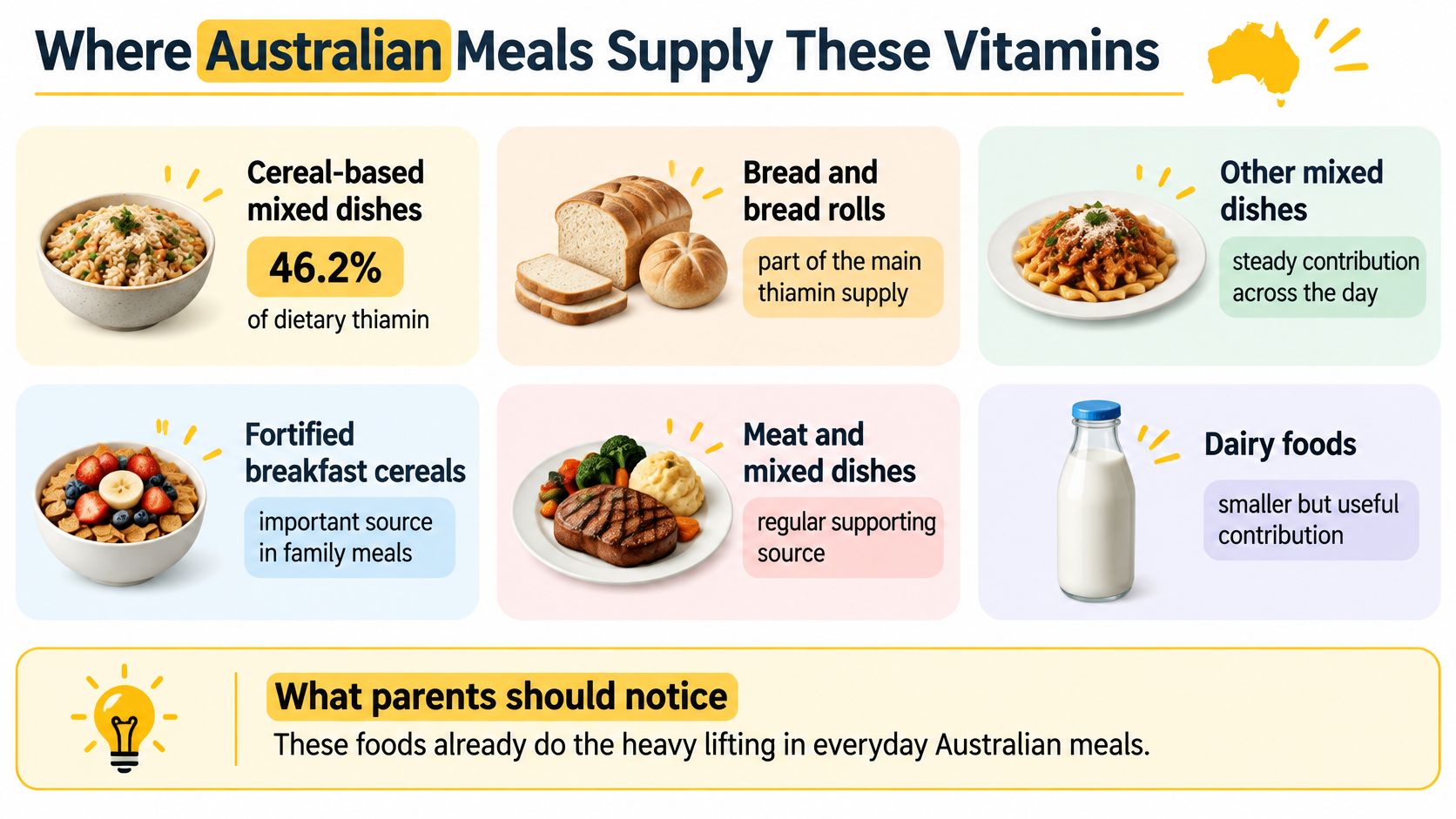
One lunchbox can touch all three 2023 rows. Cheese on fortified bread puts the bread in the group behind the thiamin figure and the cheese in the dairy group behind the riboflavin figure. Pour a glass of milk beside it and that dairy group grows again, while pasta with beef at dinner feeds the cereal and meat groups behind the B12 figure. Mixed meals, rather than any single food, carry much of Australia's B group.
Each 2023 figure is a combined share: several food groups added together, so no one group supplies that much alone. Bread and cereal foods turn up in row after row partly because Australian rules add thiamin and folic acid to bread-making flour.
The earlier round of the same ABS series, from 2011–12, put milk products and dishes and meat, poultry and game at the top of the B12 list, with cereal-based products and fish further down. By 2023 the leaders had shifted toward cereal-based mixed dishes and dairy milk. National habits move, and a vitamin's main sources move with them.
| Vitamin | Leading food groups | Share of intake | Year |
|---|---|---|---|
| Thiamin (B1) | Cereal-based mixed dishes, bread and bread rolls, yeast extracts | 46.2% combined | 2023 |
| Riboflavin (B2) | Dairy milk, ready-to-eat breakfast cereals, cereal-based mixed dishes | 32.9% combined | 2023 |
| Vitamin B12 | Cereal-based mixed dishes, dairy milk, unprocessed beef, sheep and pork | 34.5% combined | 2023 |
| Vitamin B12, earlier pattern | Milk products and dishes | 30% | 2011–12 |
| Vitamin B12, earlier pattern | Meat, poultry and game products and dishes | 29% | 2011–12 |
| Vitamin B12, earlier pattern | Cereal-based products and dishes | 13% | 2011–12 |
| Vitamin B12, earlier pattern | Fish and seafood | 8.8% | 2011–12 |
Read the table as a map of the national pattern. A single child's needs sit outside what survey shares can show. The rows still explain where a narrower diet can leave a gap: a child eating mostly plant-based meals steps away from the dairy and meat groups leading the B12 rows, and a child who refuses bread, cereal and milk steps away from the groups leading all three vitamins. Either pattern is a reason to look at the whole week's food with a GP or dietitian.
Low Vitamin B6 Intake and Warning Signs
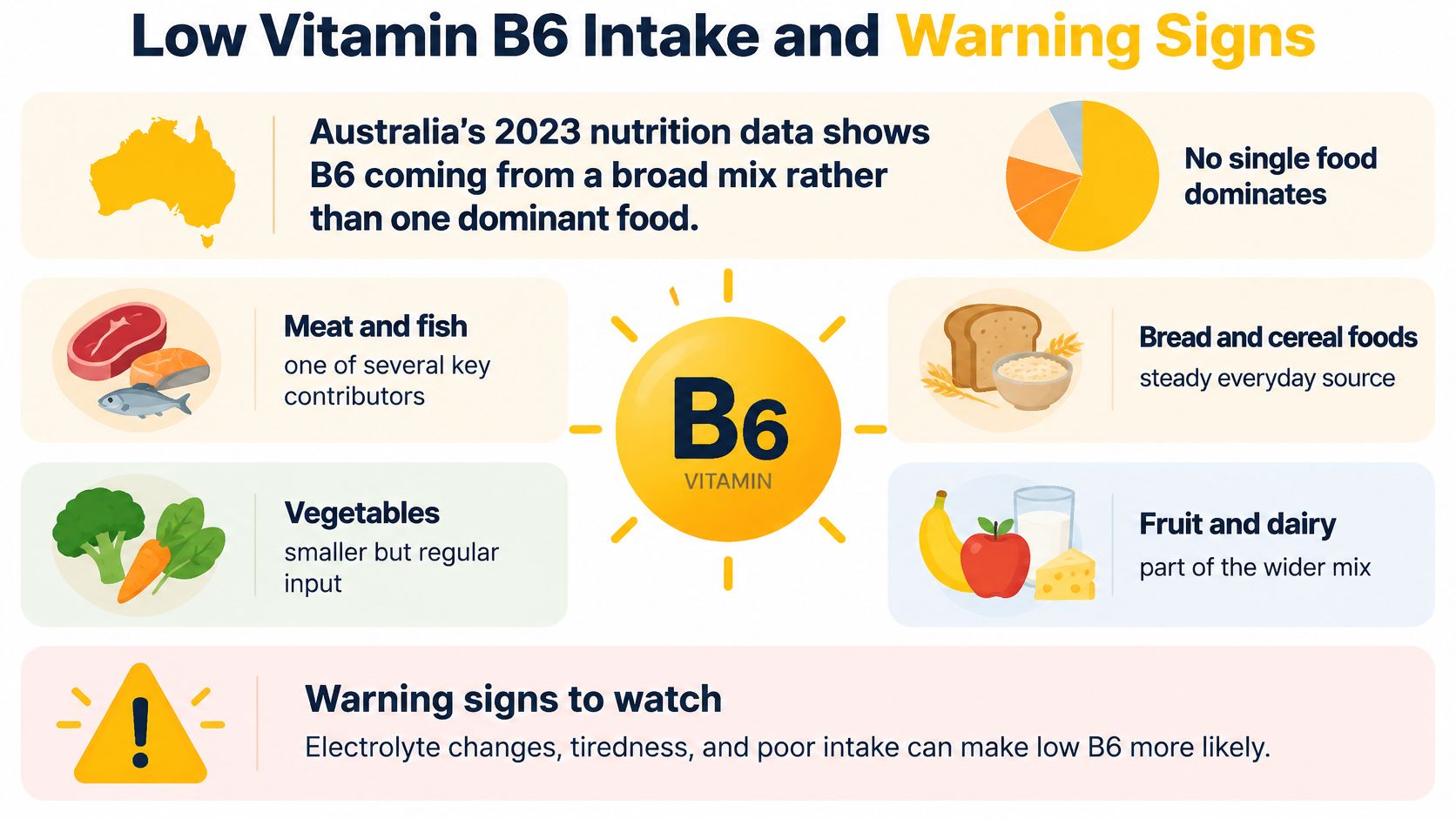
In 2023, 46.7% of Australians aged two years and over had inadequate vitamin B6 intake from food and beverages relative to the Estimated Average Requirement, up from 28.9% in 2011–12, and the largest single contributor to total B6 intake was electrolyte, energy and fortified drinks at 14.6%, according to Food Standards Australia New Zealand's vitamin B6 information. These are population figures covering everyone aged two and over. They show where the country's B6 comes from, and they can't tell you whether your own child is getting enough.
That drinks share deserves a second look, because much of it comes from products children don't need. It is not a recommendation to hand a child an energy drink. For kids, B6 spreads across ordinary meals: chicken, mixed dishes built on rice or pasta, potatoes, chickpeas and fruit all contribute. Because no single food dominates, even a fussy eater usually picks up some B6 across the week. The gap appears when the accepted menu shrinks to a handful of the same foods.
Signs can't diagnose a deficiency
Tiredness, irritability or a limited menu may be reasons to review what a child eats, and each has many possible explanations. If a sign shows up, such as cracked corners of the mouth or ongoing tiredness, the useful move is to record what your child eats across a week and take that food diary to a GP. Matching one symptom to one vitamin at home rarely works, because the same sign can point to several different causes.
Some signs deserve faster action. Numbness, unsteady walking or unusual weakness warrant prompt attention from a doctor, and worries about growth or a fully plant-based diet without a planned B12 source are good reasons to book in. A clinician can decide whether an assessment or blood test is appropriate. Adding a high-dose product on your own won't confirm a deficiency, and it can mask the picture a clinician needs to see.
Some everyday foods sold in Australia are fortified with B6, including certain cereals, breads and plant-based alternatives, so a label check can tell you what a food adds. A fortified food only contributes if a child eats it. If energy, growth or a very restricted diet concerns you, widen food choices where possible and book an appointment instead of chasing a national percentage with a drink or a supplement.
Food First Versus a Supplement
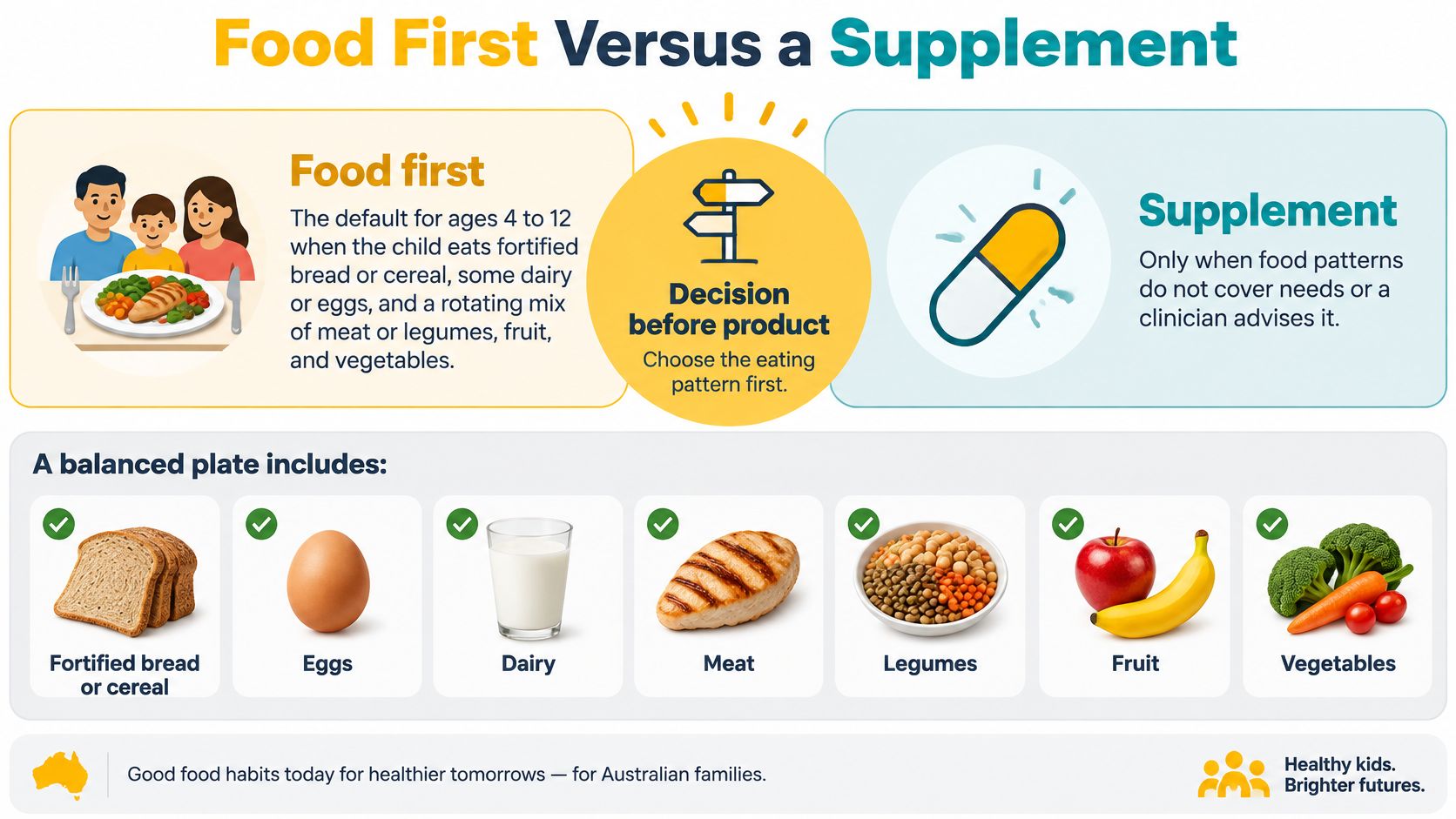
For most children in the primary school years, food is the starting point: fortified bread or cereal, some dairy or eggs, and a rotating mix of meat or legumes, fruit and vegetables. A supplement supplies what is on its label, and nothing more. It cannot stand in for the protein, fibre and energy a skipped meal would have provided, and taking more than the label suggests is never a shortcut to a better diet.
| Eating pattern | Start here | Supplement conversation |
|---|---|---|
| Varied eater with fortified bread or cereal, dairy or eggs, and rotating meals | Keep the food table and ordinary variety | Usually not needed if growth and energy are fine |
| Same few foods most days | Add one accepted food from a missing vitamin, and keep it in the routine for several weeks | Ask a GP or dietitian if the limited list lasts for months |
| Vegetarian with dairy and eggs | Use milk, yoghurt, cheese and eggs for B12, and legumes and greens for folate | Rarely needed, since B12 already comes from everyday food |
| Fully plant-based | Use fortified bread and cereals for thiamin and folate | Natural B12 isn't reliable; plan fortified food or a supplement with a clinician |
| Worried about growth, persistent tiredness or a very restricted diet | Don't self-diagnose from a food list | Let a GP decide whether a supplement or a blood test is appropriate |
Here is how the vegetarian row looks on one family's Tuesday. Breakfast is scrambled eggs on toast with a glass of milk. Recess is a tub of yoghurt, and after school there is cheese and fruit. Dinner is pasta with chickpeas and green vegetables stirred through, a familiar meal with legumes and greens folded in gently. Across that single day, dairy and eggs cover B12 at almost every sitting, and the legumes add folate, all without anything from a bottle.
Supplements earn their place after the food work has had a fair chance and a gap still has a name. That call sits with a GP or dietitian, who can weigh up growth, diet and any test results together. If a limited menu drags on for months, or energy and growth worry you, book that appointment rather than raising a dose on your own.
Decision rule: fix the pattern you can see on the plate, and use a supplement as a backup for a named gap, not as the whole plan.
Choosing a supplement is the last step in the sequence, and it works best when the food routine underneath it is already steady. For ideas on building a routine children will stick with, see natural vitamins for kids.
A Week of Plates for Fussy Eaters
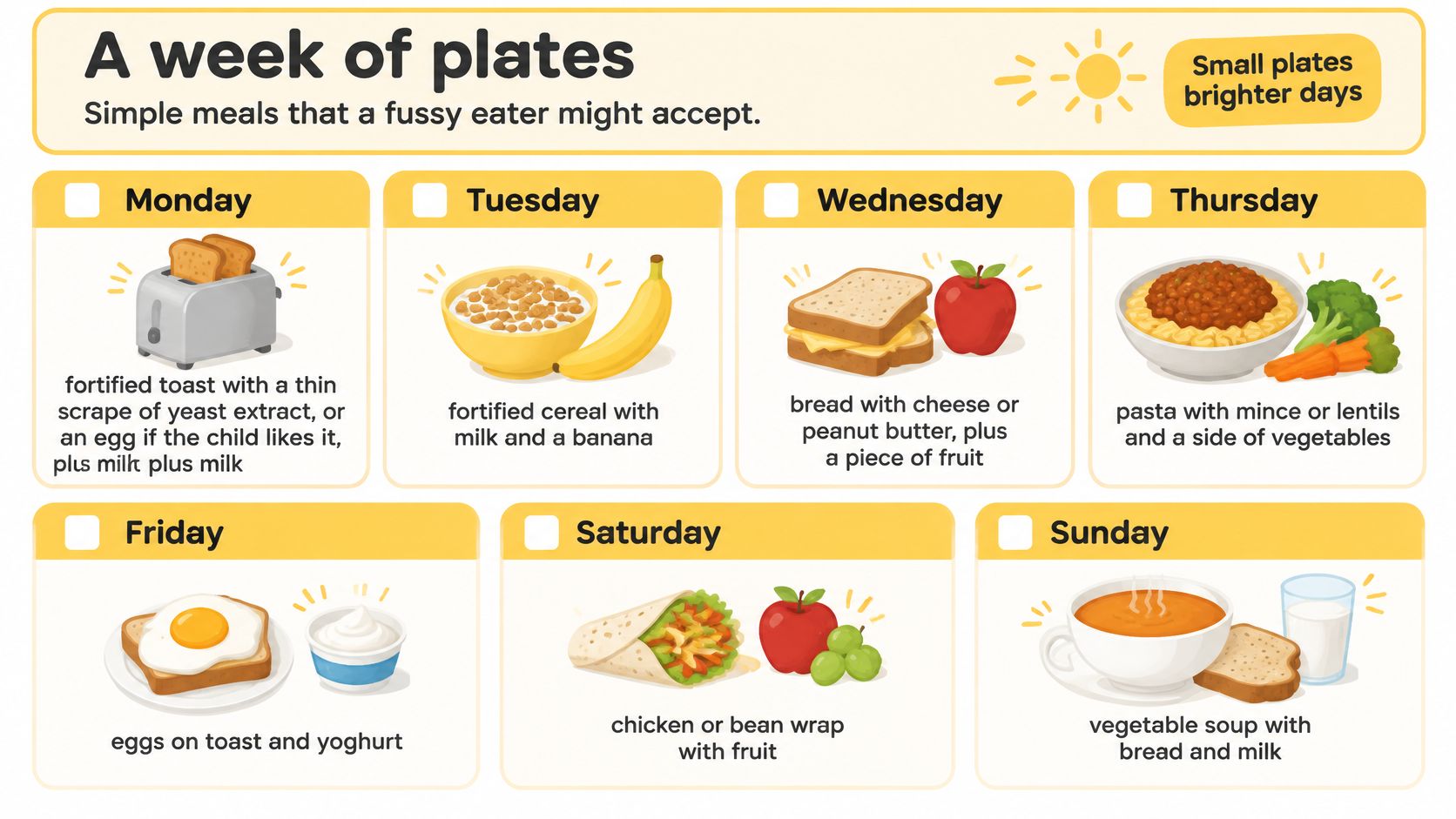
A meal plan doesn't need to be perfect to be useful. Try this ordinary school-week rhythm, adapting portions and ingredients to what your child accepts. The aim is to bring different B-vitamin sources into familiar meals, not to serve every option in the table at once.
- Monday: Offer fortified toast with a thin scrape of yeast-extract spread, or an egg if your child likes it, plus milk.
- Tuesday: Serve chicken and potato, with a piece of fruit on the side. If chicken is refused, chickpeas or hummus can provide a legume option.
- Wednesday: Choose a ready-to-eat breakfast cereal that lists added B vitamins and serve it with milk.
- Thursday: Make a tuna or cheese sandwich on standard fortified bread. Check the loaf if you've recently changed brands or switched to organic bread.
- Friday: Offer banana and chickpeas or hummus, especially if meat isn't appealing that day.
Make a new food easier to accept
Across the weekend, try avocado on toast, lentils stirred into mince or spinach blended into a familiar sauce. These are options to test, not tricks that guarantee a child will eat them. Start with a small serve alongside a safe food, then offer the new item again on another day rather than expecting one taste to settle the question.
If your child refuses meat, keep dairy or eggs in the mix if they eat them, and add legumes where they're accepted. If they refuse milk, try yoghurt or cheese if suitable, and don't assume an unfortified plant drink provides B12. If bread is the only dependable food, check whether it's fortified, then try adding one fruit your child is willing to eat.
For more lunchbox combinations, browse these lunch ideas for picky eaters. At the end of the week, check the six vitamin rows against what your child ate. If one row has no food your child accepts, note it down and use that information when deciding whether to seek advice.
Set the Plate Before Any Supplement
A week of meals can show where to start, but it can't diagnose a deficiency. Use a simple sequence to turn the food list into a practical plan.
- Circle the familiar foods. Match everything your child already eats to the six vitamins in the table. Mark any vitamin with no clear food source in their usual pattern.
- Choose one likely addition. Pick a missing food your child is most likely to accept, then offer it alongside a safe food during the week. Keep trying it over the next two to three weeks before deciding whether it has become part of the routine.
- Bring the pattern to a professional if needed. If a food row remains empty, your child's diet is very restricted, or growth and energy concern you, book a GP or dietitian appointment. Bring your marked table or a simple food record so the clinician can see what your child eats.
- Discuss supplements only after that check. If a clinician recommends a general multivitamin for a fussy eater, check the product label and dose against their advice before use. A supplement shouldn't replace a clinical review or a B12 plan for a fully plant-based child.
A habit is easier to remember when it sits beside something the family already does, such as brushing teeth. If a clinician recommends a supplement, follow their advice and the product label; keep meals as the main plan. For context, Brave is Daily Powers' daily multivitamin gummy for kids, with 12+ essential vitamins and minerals in a daily two-gummy serve; its full ingredient breakdown, including doses, is published on the Daily Powers website.
Daily Powers offers children's daily multivitamin gummies, including Brave, with ingredient information published for parents to review. If you're considering a supplement after checking your child's food pattern and seeking advice where needed, visit Daily Powers to see what's available.