

The school run is already underway. One child refuses breakfast, another wants a smoothie, and you're wondering whether a scoop of green powder could solve the family's shortage of vegetables before everyone leaves the house. The label promises a simple wellness ritual, but practical questions quickly appear: Will it replace vegetables? Does it contain sugar? Is it vegan? Could it upset a sensitive stomach? Is it suitable for children?
A superfood green powder can be convenient, but convenience shouldn't be confused with completeness. The most useful way to view it is as a possible micronutrient top-up, not a shortcut around balanced meals or a powdered version of the recommended variety of whole produce.
This guide uses plain-language explanations and an Australian parent-focused lens. You'll learn what these blends contain, what a typical serve can realistically contribute, how to assess claims, which children and adults may need extra caution, and how to compare labels without getting lost in words such as “detox”, “cleanse” or “energy”.
Table of Contents
- Introduction to Superfood Green Powders Today
- What Superfood Green Powder Really Is
- Common Ingredients Inside Green Powder Blends
- Claimed Benefits Versus What Evidence Shows
- Safety Suitability and Use for Children
- How to Evaluate Quality and Choose the Right Blend
- Practical Ways to Use Green Powder and Build Healthy Habits
Introduction to Superfood Green Powders Today
A rushed morning can leave a family choosing between a proper breakfast and getting out the door. Green powder fits that gap: a parent might stir it into water, blend it into a smoothie, or add it to food. Adults may also find the format practical during travel, irregular work hours, or weeks when plant variety is difficult to maintain.
That convenience helps explain the product's presence in Australia. Market analyses estimate the Australian greens and superfood supplements category at AUD 180–240 million in 2026, with powder blends making up roughly 55–65% of category volume. A separate analysis places the Australian greens powder mix category at AUD 250–350 million in 2026, with household penetration above 15% (IndexBox's Australia greens and superfood supplements analysis; IndexBox's Australia greens powder mix report). These estimates use different market definitions, so they are not one combined total. They do show that green powder is an established supplement format rather than a novelty.
The useful question isn't “Is green powder healthy?” It's “What does this particular product add, and what does it leave out?”
Parents need to read beyond the front label. Low in sugar can help limit sweeteners, but it does not make a blend nutritionally complete. Vegan indicates suitability for a plant-based diet, yet a child could still react to an allergen or find certain herbs and algae unsuitable. A powder may contain leafy greens while offering too little fibre and food volume to replace vegetables on the plate.
The guide builds that understanding in a practical order. It explains how these powders are made and groups their common ingredients, then separates advertised benefits from what a serve can realistically provide. It also covers safety, allergens, vegan suitability, label quality, and kid-appropriate use. The goal is a measured choice: a green powder may top up a diet, but it cannot supply the texture, volume, variety, and eating experience of whole vegetables.
What Superfood Green Powder Really Is
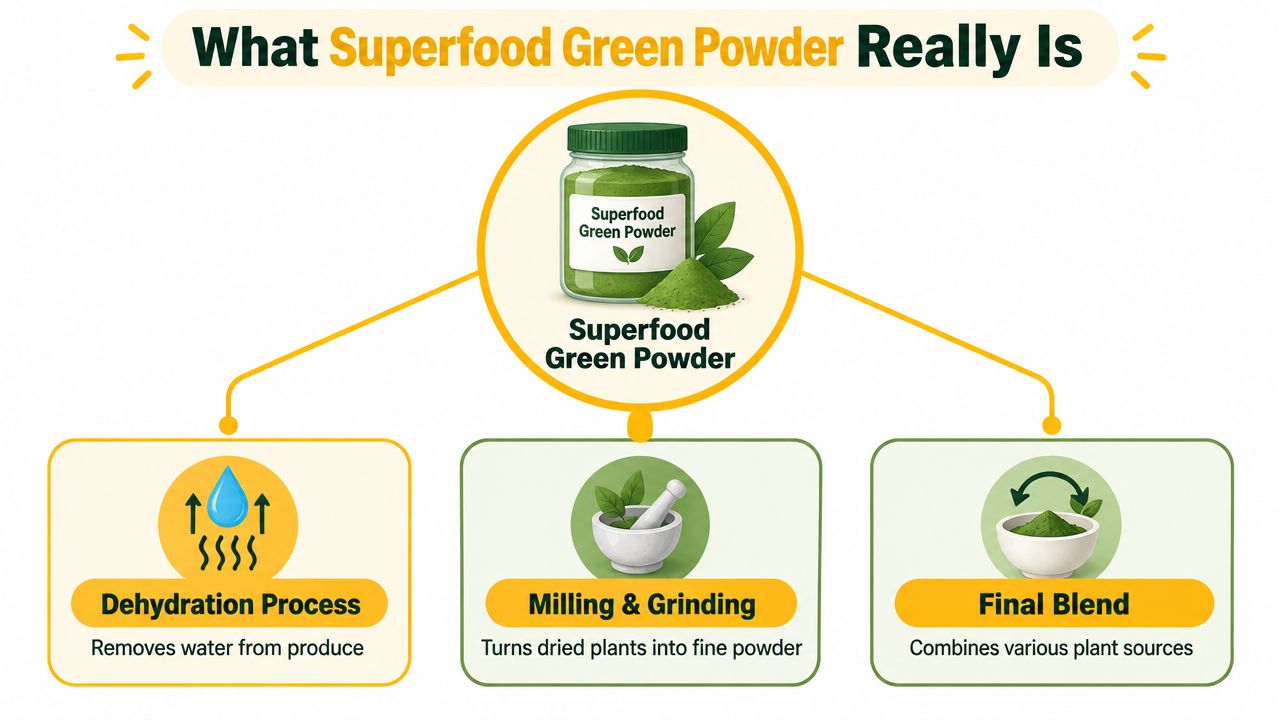
A superfood green powder starts with plant ingredients. Manufacturers remove much of their water, mill the dried material, then combine it with other plant powders or added nutrients. Common sources include dehydrated fruits, vegetables, herbs, cereal grasses and algae. The finished product is a fine powder that can be stirred into a drink or mixed into food.
From plant to powder
A cucumber or spinach leaf contains a great deal of water. Dehydration removes much of it, milling turns the dried plant into a fine material, and blending brings several sources together in one scoop. The powder needs far less storage space than fresh produce, which can make daily use easier.
The process can preserve some nutrients, but it also changes the food. Water, volume and some fibre are reduced, and processing may affect certain compounds. A spoonful should therefore be treated as a supplement portion, not the equivalent of a bowl of salad, a piece of fruit or cooked vegetables.
Australian nutrition commentary describes green powders as dehydrated, ground plant matter and notes that a serve commonly contains only a small amount of fibre. The same coverage compared a powder containing only a couple of grams with about 6 g from an apple or pear. The fibre comparison is a useful reminder that a concentrated-looking scoop may still provide little of the bulk found in whole fruit.
Where the format fits
For a family, green powder is better understood as a micronutrient top-up. It may add selected vitamins, minerals or plant compounds when whole-food variety is inconsistent. It does not supply the chewing, water, volume and broader food matrix that vegetables bring to a meal.
That distinction also helps parents read labels. Low in sugar can reduce added sweetness, but it does not make a powder a complete food. Vegan describes the formulation, not whether the product suits every child. Allergens, herbs, algae and added ingredients still need checking, particularly for children with allergies or sensitivities.
Families are considering a familiar scoop-and-mix supplement format, not a replacement for ordinary food. Its popularity makes label literacy more important. Check the serving size, ingredient order, sugar content and allergen statement before deciding whether the product has a useful place in the household routine.
For parents comparing formats, Brave is a separate children's daily multivitamin gummy with essential vitamins, kid-friendly flavours and textures, a vegan formulation, and no artificial colours or flavours. It is not a green powder, so its purpose and suitability should be assessed separately.
Common Ingredients Inside Green Powder Blends
A parent comparing green powders may find similar-looking tubs with very different contents. One formula may centre on cereal grasses and algae. Another may combine leafy greens, fruit powders, probiotics, prebiotic fibres or added vitamins. Blend describes the format, not a standard recipe, so the ingredient panel matters more than the green colour.
The main ingredient families
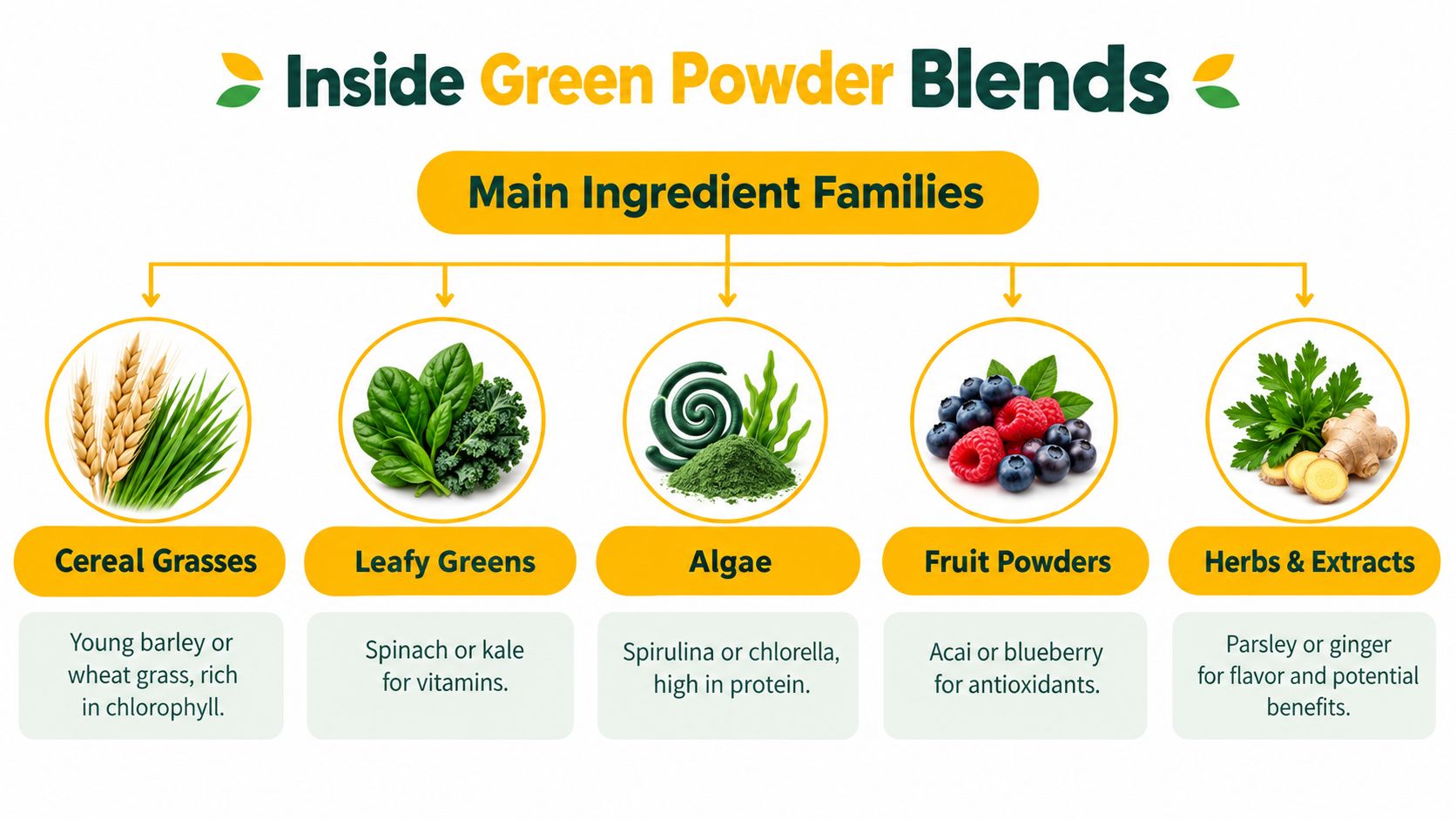
Cereal grasses, including young barley or wheat grass, provide powdered plant material and chlorophyll. Their names may sound similar to fresh greens, but a scoop still does not represent an equivalent volume of vegetables.
Leafy greens, such as spinach or kale powders, can supply selected plant nutrients. Their appearance on the label identifies the source, not the amount in a serve. With a proprietary blend, the quantity of each ingredient may remain undisclosed.
Algae, including spirulina and chlorella, are common in green formulas. They can contribute plant-derived nutrients and protein-containing material, although a small scoop is not automatically a meaningful protein serve. The nutrition panel is more useful than the ingredient's reputation.
Fruit and berry powders can provide flavour, colour and plant compounds, making a mixture easier to drink in a smoothie. They do not recreate the fibre, fluid or chewing experience of whole fruit. Parents checking sugar should also distinguish naturally occurring sugars from added sweeteners, because fruit ingredients do not by themselves show how sweet the finished product will be.
Herbs and extracts, such as parsley or ginger, may shape flavour and the product's intended formulation. Extracts need closer attention because their concentration and use can differ from ordinary food ingredients. A child's allergies, sensitivities and age should guide how cautiously these additions are considered.
What a small serve tells you
Some Australian retail labels list about 1.3 g of fibre, 0.2 g of sugars and 66–71 kJ per 5 g serve, alongside added vitamins such as B6, B12, D, folate and K. Those figures offer a practical reality check. A scoop can be concentrated in selected micronutrients while remaining low in energy, protein and fibre.
Parents can read the label through three questions:
- What plants are included? This identifies the ingredients.
- How much is present? This shows whether amounts are disclosed.
- What does the nutrition panel report? This describes the contribution per serve.
A product such as Focus takes a different supplementation approach. Its listed children's formulation combines mushroom polysaccharides, vitamin D3, zinc, elderberry fruit powder and prebiotic fructooligosaccharides. It is vegan, sugar-free and contains no artificial colours or flavours. Assess it as a targeted gummy supplement, not as a greens powder or a substitute for vegetables.
Claimed Benefits Versus What Evidence Shows
A parent may reach for green powder after a child skips breakfast, catches every classroom bug or refuses vegetables. Marketing can make one scoop sound like a solution for energy, immunity, detox and gut health. A more useful question is narrower: what can this serve realistically deliver?
Energy and detox claims
A small serve is not a breakfast, sports drink or meal replacement. Its low energy contribution means any improved alertness may reflect a wider routine, such as drinking more water, eating more regularly or addressing a nutritional gap. Treat the powder as a possible micronutrient top-up, not as a stimulant or a source of meaningful fuel.
“Detox” is a weak buying criterion. The body already has organs that process and remove waste, while a green colour does not show that a product performs a special cleansing action. Parents can look instead for identifiable nutrients, permitted claims and serving information that matches the child's needs.
Fibre and the five-serve misunderstanding
A green powder may contain fibre, but a small amount of refined plant material does not equal the recommended five serves of vegetables. Whole vegetables and fruit bring food volume, water, texture and variety. They also give children opportunities to learn flavours and eating habits that a drink cannot provide.
The distinction matters. Added vitamins and minerals may offer a micronutrient top-up, much like adding a small patch to a well-used school bag. The patch can help with one weak spot, but it cannot replace the bag's main structure. Sugar, allergens and vegan suitability still require a label check, particularly when a child will use the product regularly.
For families considering immune support, sleep, balanced meals and ordinary food choices remain part of the wider picture. This guide to children's immune support can help parents prepare questions, but no powder guarantees protection from illness.
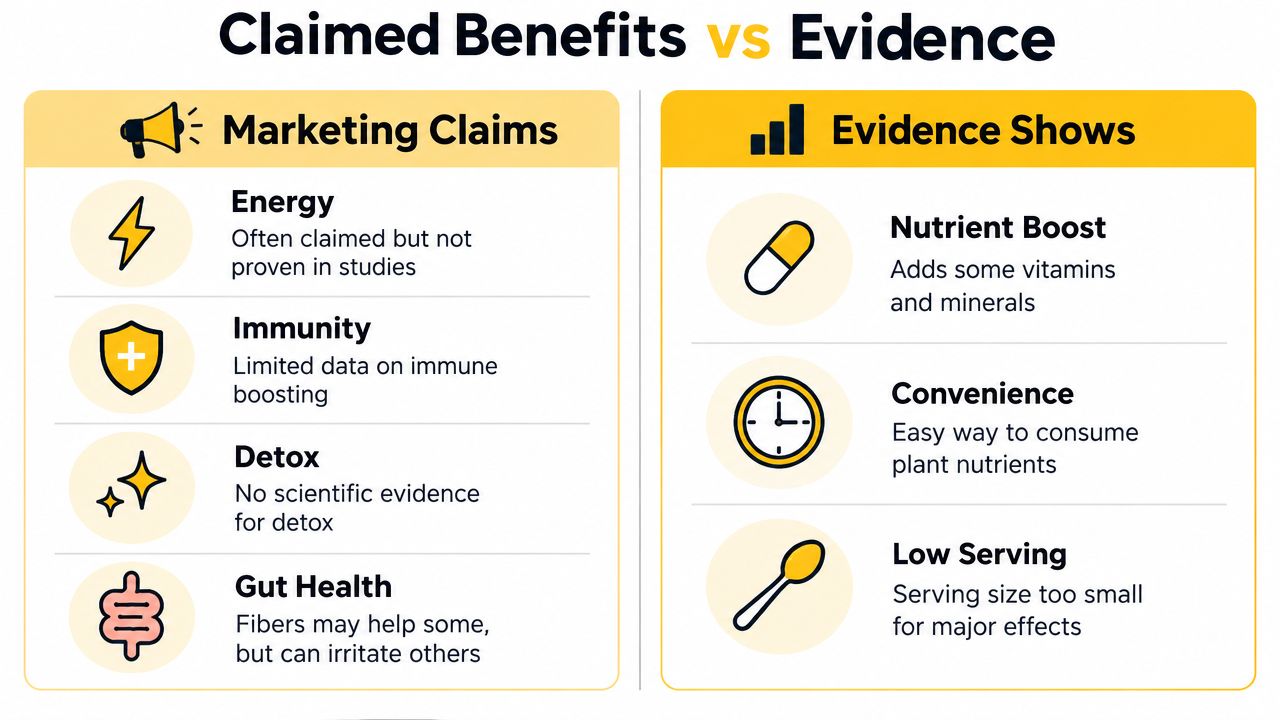
A balanced choice weighs convenience and possible nutrient support against the limits of a small serve. A suitable product can fill a narrow gap in an established food-first routine. It should not carry the nutrition of a child or adult on its own.
Safety Suitability and Use for Children
A powder designed for adults may not suit a child. Concentrated ingredients, strong flavours, prebiotic fibres and unfamiliar combinations can affect children differently. Check the complete label, serving directions and age guidance before offering it, rather than assuming an adult product is suitable to share.
Digestion and prebiotic ingredients
Some green powders contain prebiotic fibres such as inulin. A child who already has bloating, abdominal discomfort or unpredictable bowel symptoms may need particular caution. Australian consumer commentary notes that prebiotic fibres can trigger symptoms in people sensitive to high-FODMAP foods, and that continuing changes to permissible ingredients and listed-medicine guidance make ingredient-by-ingredient checking more useful than generic “superfood” wording (YourLifeChoices discussion of green powder suitability).
Use the product's stated serving guidance instead of creating a larger amount. Stop if concerning or persistent symptoms appear and seek advice from a qualified health professional. This resource on gut health supplements may help families prepare questions about fibre and prebiotic products.
Medicines, allergens and Australian regulation
An ingredient can be unsuitable for a medical condition or interact with a medicine. Review products containing concentrated herbs, algae, extracts, added vitamins or minerals with a pharmacist, dietitian or doctor, especially when the child takes regular medicines or has an existing diagnosis.
Regulatory status also depends on the product's wording and claims. Supplements making certain health or performance claims may be regulated as therapeutic goods and may need to meet Australian Register of Therapeutic Goods requirements. The label should therefore be checked for each ingredient, not judged by the broad term “superfood”.
Is powder the right format for a child?
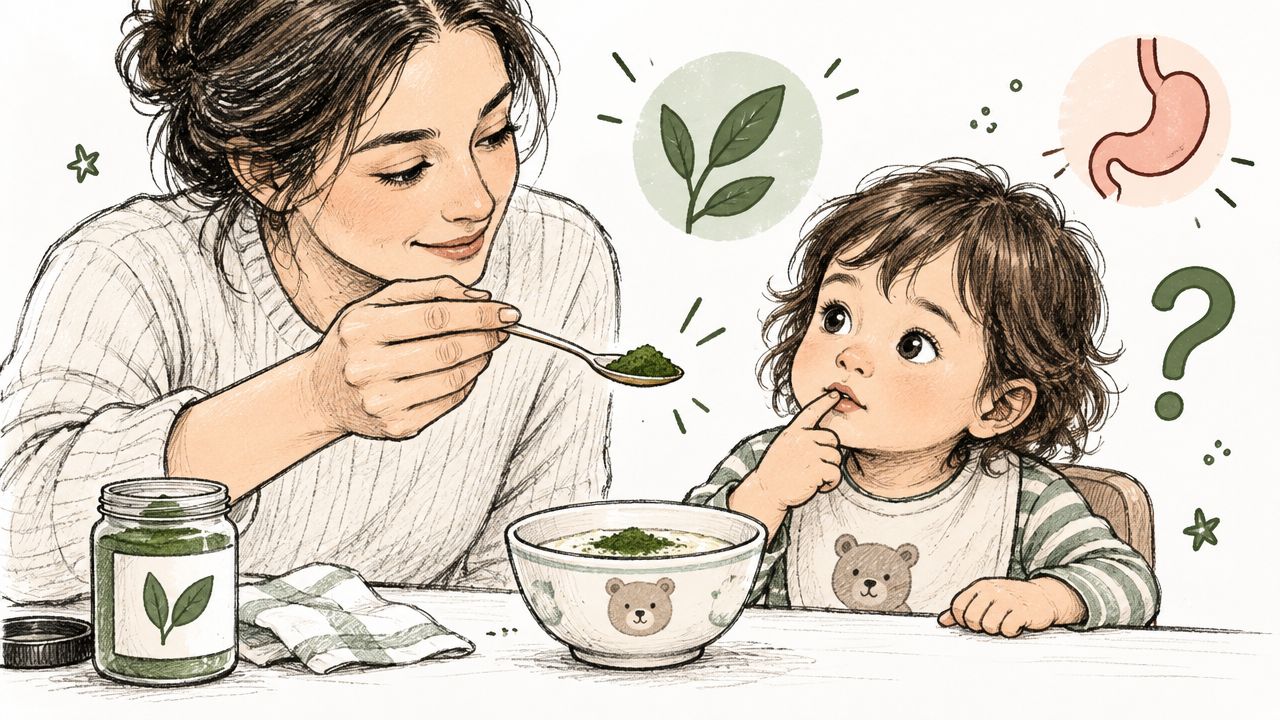
Texture can decide whether a child accepts the routine. Gritty powder or an earthy flavour may lead to refusal, leaving the container unused. A product that remains unopened provides no practical nutrient top-up.
A children's gummy may be easier for some families, but parents still need to check age suitability, allergens, serving size and overlapping ingredients. Calm is listed as a children's magnesium gummy containing magnesium citrate, vitamin B6, zinc and prebiotics in a sugar-free, vegan format without artificial colours or flavours. It belongs to a different product category from green powder, so compare the purpose and ingredient list rather than treating the formats as interchangeable.
How to Evaluate Quality and Choose the Right Blend
A sensible shopping decision starts with the back of the packet, not the front. The front may feature grasses, berries and words such as “clean” or “detox”. The ingredients panel and directions tell you whether the product is transparent, appropriate and practical for your household.
A label-reading checklist
Look for the exact amount of each major ingredient where possible. A long list can sound impressive, but a proprietary blend that hides individual quantities makes it harder to assess what you're taking.
Check added sugar separately from total sugars. A product can taste sweet because of fruit ingredients or sweeteners, while another may use no added sugar but still have a strong earthy flavour. Families managing allergies should also read the allergen statement and manufacturing information rather than relying on a “natural” or “plant-based” description.
For vegan households, check the finished product, not just the plant ingredients. Capsules, flavour systems and processing aids can vary. If the label makes a vegan claim, look for clear wording or certification that supports it.
| Quality criterion | What good looks like | Red flag to avoid |
|---|---|---|
| Ingredient transparency | Individual ingredients and amounts are clearly listed | A proprietary blend hides quantities |
| Sugar information | Added sugar and total sugars are easy to distinguish | Sweetness is promoted without clear label detail |
| Allergen detail | Major allergens and manufacturing warnings are stated | “Natural” is used as a substitute for allergen information |
| Vegan suitability | The finished product's vegan status is clearly identified | Plant ingredients are listed but the final formulation is unclear |
| Dosing guidance | Serving size, preparation and age advice are easy to find | The label encourages flexible or excessive use |
| Testing and quality | The manufacturer explains relevant quality controls | Broad purity promises lack supporting detail |
| Australian compliance | Claims and product status are appropriate for the Australian market | Therapeutic claims appear without clear regulatory context |
Match the blend to the household
Adults may prioritise flavour, portability or a specific micronutrient profile. Parents may prioritise sugar content, allergen clarity, taste, texture and age guidance. Those priorities can point to different products, even within the same family.
Before buying, ask what problem you're solving. Is it an occasional gap in adult vegetable intake, a need for a vegan supplement, or a child's difficulty swallowing tablets? If the main need is understanding how a broader vitamin product differs from a greens blend, this plain-language explanation of multivitamins offers useful context.
Don't choose a product because its ingredient list is longest. Choose one whose contents, directions and purpose you can explain clearly to another caregiver.
Practical Ways to Use Green Powder and Build Healthy Habits
If a family decides to use a superfood green powder, begin with the routine rather than the promise. Follow the label's serving directions, mix it in the liquid or food recommended by the manufacturer, and introduce it when you can observe how the person responds. A familiar breakfast smoothie may work better than an unfamiliar glass of strongly flavoured powder.
Taste and texture decide whether a habit survives. Start with a small amount of a familiar food only if the product directions allow it, and don't disguise a supplement in a meal if doing so could create a problem for a child with allergies or intolerances. Keep the container sealed, store it as directed, and use the supplied scoop so each serve remains consistent.
Pair the powder with whole foods
The powder should sit alongside meals that provide the things it can't. Add leafy greens to sandwiches or pasta, keep washed fruit visible, include beans or lentils where suitable, and offer vegetables in forms your child already accepts. A green drink can be part of the routine, but it shouldn't become the reason a family stops serving produce.
A simple household pattern might look like this:
- Choose one consistent cue. Use breakfast preparation or school-bag packing as the reminder.
- Prepare the product as directed. Don't increase the serving because a child missed vegetables that day.
- Keep whole foods present. Offer fruit or vegetables in ordinary meals without making the powder a reward or punishment.
- Watch tolerance. Note bloating, changes in bowel habits, taste refusal or other unwanted effects.
- Review the routine. Ask a health professional about ongoing use if the child takes medicines, has a medical condition or uses other supplements.
Consider adherence before ingredients
Some families will prefer a children's gummy because it feels simpler and more predictable than mixing a powder. Daily Powers offers children's gummy supplements framed around Brave, Focus and Calm, with sugar-free, vegan formulations and no artificial colours or flavours, according to its product information. The format doesn't replace food, but a child-friendly routine may be easier for a household to maintain when a powder's taste or texture creates resistance.
The best choice is the one that fits the child's age, needs and tolerance, while leaving whole foods at the centre of the diet. If symptoms appear, stop the product and ask a qualified professional for guidance rather than trying to solve the problem by changing several supplements at once.
Daily Powers offers sugar-free, vegan gummy supplements for children, including formulations built around daily multivitamin, focus and calm routines. If your family needs a simpler alternative to a green powder, visit Daily Powers to review the ingredient lists and child-focused directions.