

Australian children aged 4–8 need 5 micrograms of vitamin D daily and 700 mg of calcium, while ages 9–11 need 5 micrograms of vitamin D and 1,000 mg of calcium. A quality gummy should supply part, not all, of those amounts as part of a balanced diet.
That's the practical starting point for many parents standing in the kitchen before school, trying to make one small health decision feel manageable. You're usually not looking for a miracle, you're looking for a routine your child won't refuse, a dose you can trust, and a product that fits real family life without turning supplements into a daily argument.

Table of Contents
- Why Parents Turn to Vitamin D Calcium Gummies
- How Vitamin D and Calcium Work Together for Growing Bodies
- Gummy Versus Tablet Supplements for Kids
- Safe Dosing Guidance by Age and Routine
- Common Misconceptions About Sugar-Free and Coloured Gummies
- How to Choose a Quality Vitamin D Calcium Gummy in Australia
- Building a Consistent and Calm Supplement Routine
Why Parents Turn to Vitamin D Calcium Gummies
The scene is familiar. Breakfast is half-eaten, a backpack is missing, and a child is negotiating about shoes while a parent reaches for the supplement bottle. In that moment, vitamin D calcium gummies can feel like the least stressful option because they're easy to offer and often easier to accept than a chalky tablet.
The real job parents are trying to do
Parents are usually solving three problems at once. They want to support bone growth, make sure the child takes the supplement, and avoid creating another battle in an already busy morning.
That's why gummies get attention. They're treated more like a routine cue than a medicine cabinet chore, and that matters when consistency is the actual challenge.
Practical rule: If your child won't reliably swallow a tablet, a gummy may improve day-to-day follow-through, but it still has to be treated as a measured supplement, not a sweet.
A child's age, diet, sun exposure, and overall health all shape whether a supplement is useful. Australian data show that vitamin D deficiency isn't uniform across children, which is one reason a family decision shouldn't be based on the fact that “other kids take one too” (Australian Bureau of Statistics vitamin D data).
Parents also need to think beyond taste. A gummy only helps if the serving size is clear, the child gets the intended amount, and the dose fits with food, other supplements, and medical advice where needed. For some families, that clarity is what makes the format attractive in the first place.
How Vitamin D and Calcium Work Together for Growing Bodies
Calcium and vitamin D do different jobs, and that is why they are often paired. Calcium supplies the mineral base for bones, while vitamin D allows the body to absorb and use that mineral properly.
Why the pair matters
If a house has bricks but no mortar, the structure will not hold together well. The same idea applies here, calcium supports the bone framework, and vitamin D helps the body make use of it. They are linked, but they are not interchangeable.
For a closer look at how these two nutrients interact, see our guide to calcium and vitamin D.
Australian nutrient guidance gives parents a clear reference point for children and adolescents. The adequate intake for vitamin D is 5 micrograms per day for children aged 4 to 8 years and also 5 micrograms per day for ages 9 to 18, while the calcium target rises with age, including 700 mg daily for ages 4 to 8 and 1,000 mg daily for ages 9 to 11 (Australian nutrient reference values).
What a supplement can and can't do
A gummy is for nutritional support, not a substitute for medical treatment of a diagnosed deficiency. If a child has suspected vitamin D deficiency or low calcium intake with symptoms, the dose and follow-up may need lab assessment and clinician guidance rather than an over-the-counter routine.
Total intake still matters. Vitamin D is fat-soluble, so food, fortified products, and other supplements all count together. Calcium also has a total upper level that applies across food and supplements, so the amount in a gummy should be read as part of the whole day, not in isolation, using the same national nutrient reference values cited above.
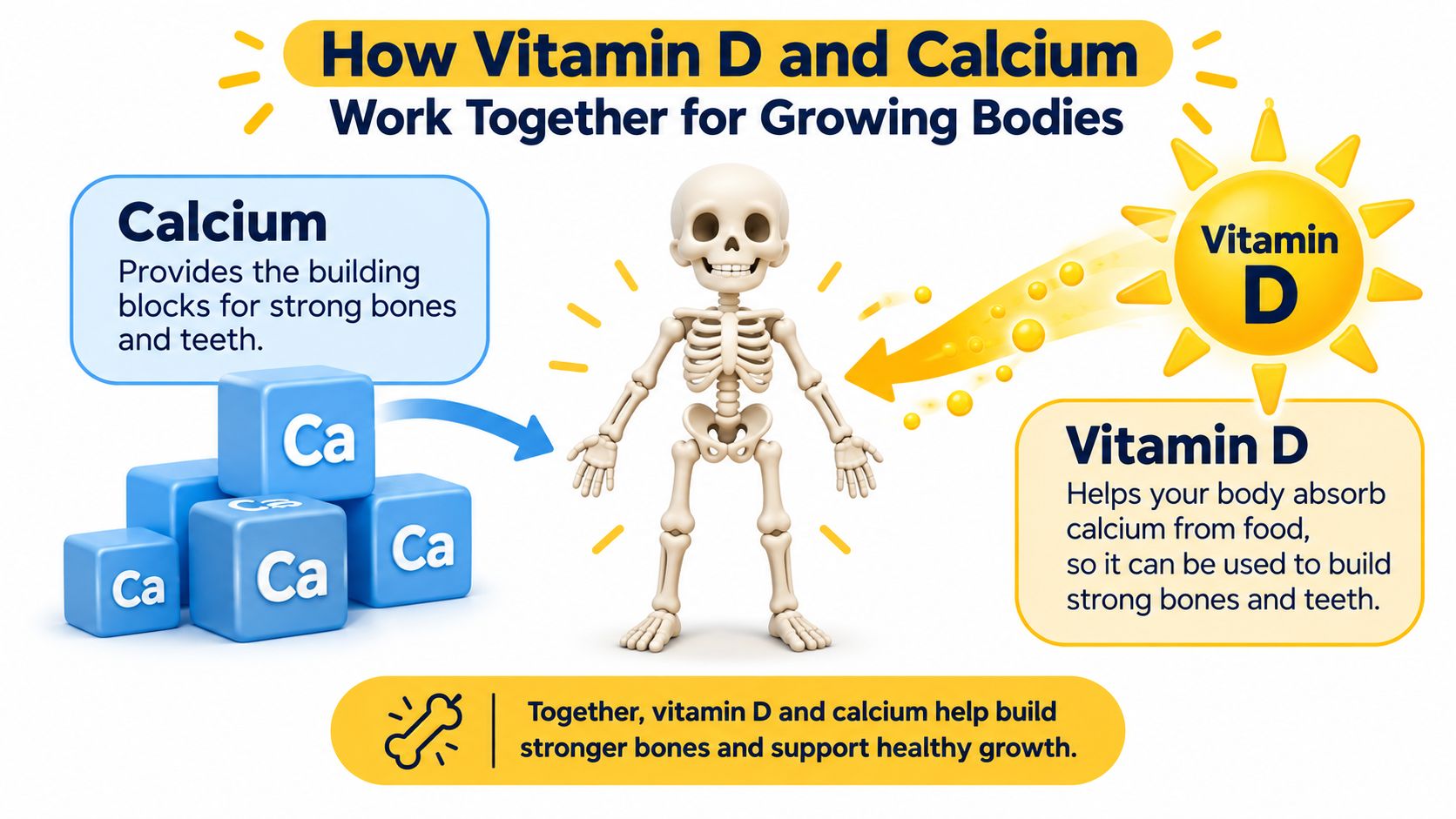
For families comparing products, the label matters more than the flavour. The same nutrient pair can be delivered in different forms, and that affects how you judge serving size, age suitability, and whether the product fills a gap or only adds more of a nutrient the child already gets elsewhere. A relevant product example is Calm, which shows how a children's gummy can be designed around a defined daily routine rather than a vague wellness promise.
Gummy Versus Tablet Supplements for Kids
The question isn't whether gummies are “better” than tablets. The better question is which format your child will take consistently, safely, and at the right dose.
Where gummies help
Gummies often reduce resistance. If your child rejects tablets, a gummy may turn a struggle into something repeatable, and that's a real benefit for families trying to keep one healthy habit going.
They can also help caregivers build a predictable routine. Morning after breakfast, after school, or with another fixed cue, the format itself becomes part of the habit.
Where tablets still have advantages
Tablets can be easier to measure precisely in some formulations, and they don't create the same sticky, sweet residue on teeth. Some parents also prefer them because the label often feels more straightforward when a product is designed around a single nutrient.
But tablets only help if the child accepts them. A perfectly formulated tablet that sits unused in the cupboard isn't a useful supplement.
| Format | Main strength | Main trade-off |
|---|---|---|
| Gummy | Easier acceptance and routine-building | Needs careful serving control and storage |
| Tablet | Often more direct dosing and less tooth contact | Can be harder for younger children to take |
Calcium products aren't all the same, either. Australian therapeutic-product records show children's products using colecalciferol with calcium carbonate or calcium phosphate, which is a reminder that formulation is a technical detail, not a marketing flourish (TGA record).
Keep the bottle out of reach like any other supplement. A gummy can look like a lolly to a child, even when it's meant to be used carefully.
If your child's routine is already fragile, the format that gets taken reliably may matter more than the one that looks more exact on paper. That's the trade-off parents need to weigh.
Safe Dosing Guidance by Age and Routine
A child's gummy dose should never be a guess. Start with the label, match the serving to the child's age, and total everything taken that day. The vitamin D target for children and adolescents is 5 micrograms daily, while the upper level for ages 1–18 is 80 micrograms daily, so two products that look harmless on their own can add up quickly.
How to read the label without guessing
Begin with the nutrient form. For calcium, check the elemental calcium amount, not only the salt name on the front of the pack. A label may mention calcium carbonate or calcium phosphate, but the number that matters is the calcium actually delivered.
Serving size comes next. If you are unsure how many gummy supplements fit into one day, see our guide on how many multivitamin gummies to take. Families sometimes give a gummy on top of a multivitamin, fortified drink, or another supplement that also contains vitamin D. That is how a small dose becomes a larger daily total than expected.
A practical routine for families
Keep the routine plain and consistent.
- Match the age guidance: Use the product only within the age range on the label.
- Check the full day: Count vitamin D from all supplements and fortified foods together.
- Avoid stacking products: Do not combine two vitamin D products unless a clinician has advised it.
- Keep the dose consistent: Give it at the same time each day so it is easier to track.
- Read the label fully: “Sugar-free” does not tell you the vitamin amount, and “gummy” does not tell you the calcium amount.
Australian calcium intake remains a broad dietary issue, with 63.7% of people aged 2 years and over, or 15.7 million people, having inadequate calcium intake from food and beverages in 2023 (ABS calcium intake data). That is one reason a measured supplement may help, but it should sit alongside food, not replace it.
If a child has limited sun exposure, darker skin, malabsorption, or a medical condition, the label is only the starting point. In those situations, the dose should be discussed rather than improvised.
Common Misconceptions About Sugar-Free and Coloured Gummies
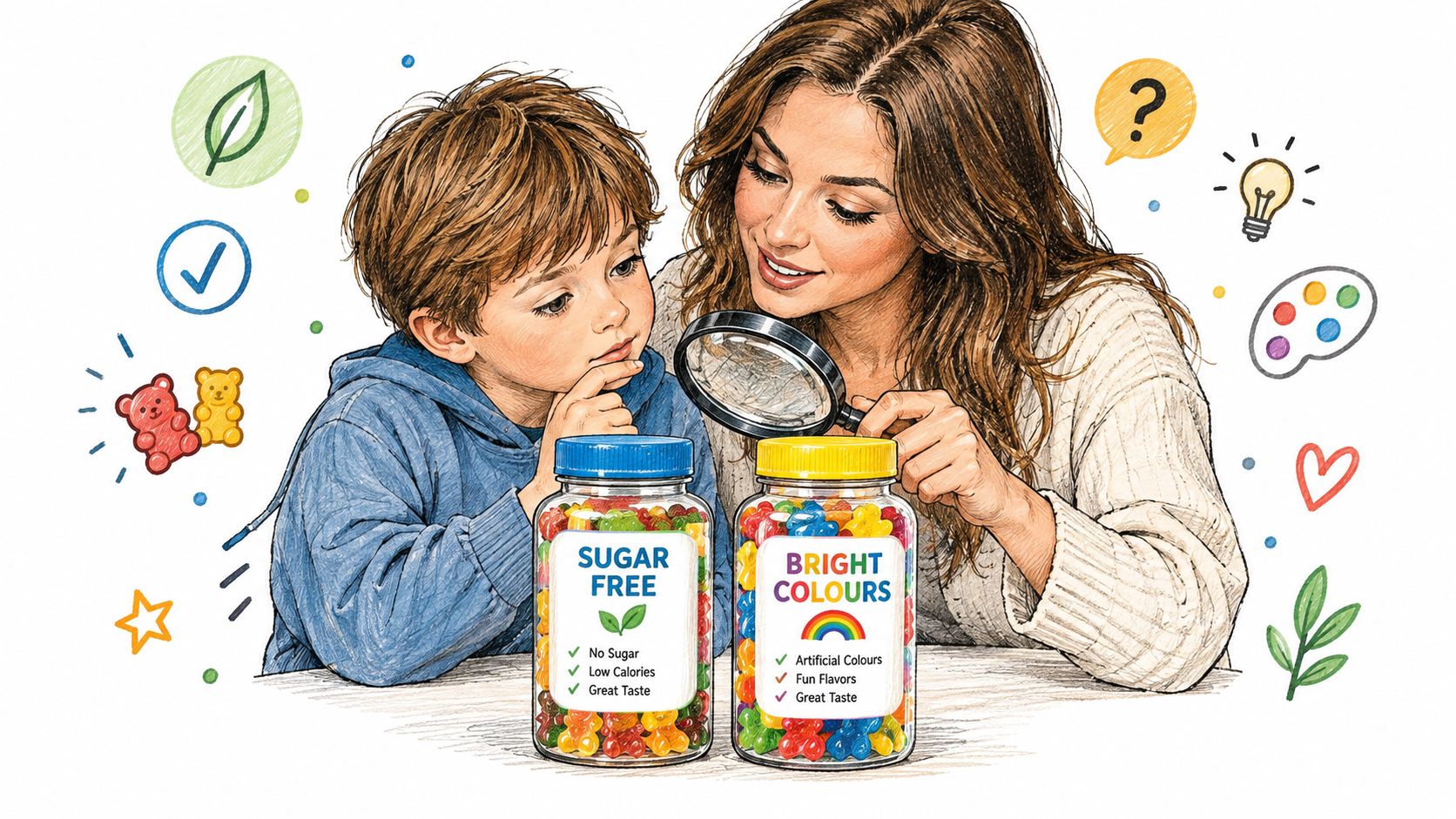
“Sugar-free” sounds reassuring, but it doesn't automatically mean tooth-friendly or risk-free. A gummy can still be sticky, acidic, or taken so often that it keeps the mouth exposed for longer than a parent expects.
What parents often miss
The biggest mistake is treating the front of pack as the whole story. Sugar-free gummies can still rely on sweeteners, acids, or chewy textures that mean timing and brushing habits matter.
Colour is another area where parents sometimes overcorrect. Artificial colours aren't the only issue families care about, and a vegan formula isn't automatically better unless it also fits the child's dietary needs and the label is transparent. Ingredient lists matter more than marketing language.
Dental habit rule: If a gummy is sticky or sweetened, give it with a meal or at a predictable time, then keep the tooth-cleaning routine consistent.
Families who want to keep additives low should look at the full ingredient panel, not just the headline claims. If a child needs a format they will accept, a simpler routine with clear storage, clear dosing, and a regular brushing habit is usually more realistic than chasing a perfect product.
For a plain-language explanation of label reading and ingredient claims, see Daily Powers' sugar-free multivitamin guide. The important point is that a supplement can be sugar-free and still need careful handling.
How to Choose a Quality Vitamin D Calcium Gummy in Australia
A parent standing in a pharmacy aisle usually has two questions. Which product is clear about what it contains, and which one is suitable for a child at home?
In Australia, start with the pack itself. Look for an AUST L or ARTG number where required, because that shows the product has been entered into the Therapeutic Goods Administration system for a regulated category. That listing does not mean the gummy is suited to every child, or that it replaces professional advice. It does mean the label should be easy to read and the product should fit its stated category.
A practical buying checklist
- Clear nutrient amounts: Vitamin D and elemental calcium should be stated in plain language.
- Serving format: A gummy, chew, or tablet should suit the child's age, chewing ability, and routine.
- Storage claims: Check whether the pack needs refrigeration, a cool cupboard, or protection from heat and moisture.
- Label comparison: Compare two products side by side, not by the front panel alone, but by the full ingredient list, directions, and storage instructions.
- Household fit: A product that is easy to store, easy to count, and easy for caregivers to recognise is less likely to be missed or mixed up.
Many shoppers get tripped up here. Two gummies can look similar on the shelf and still differ in how they are stored, how they are served, and how clearly the label describes the product. A good pack does not ask parents to guess.
When to ask for professional advice
If your child gets very little sun, has darker skin, follows a restricted diet, or has a history of digestive or absorption problems, speak with a health professional before buying a supplement. The aim is to match the product to the child, not to the marketing on the jar.
Daily Powers is one example of a brand built around repeatable children's supplement routines, with transparent ingredient listings and gummy formats designed for families who want clear dosing. It is still wise to compare any product's nutrient amounts, directions, storage needs, and suitability before you buy.
Building a Consistent and Calm Supplement Routine
Consistency beats intensity here. A small supplement taken the same way every day is usually more useful than a perfect bottle that gets ignored, swapped, or doubled up.
Make the routine predictable
Choose one daily moment and keep it stable, such as breakfast or another fixed family cue. When a child knows what happens next, there's less bargaining and less chance of missed doses.
Store the bottle like a supplement, not a snack. That means a place children can't reach, a cap that stays closed, and a simple habit log if more than one caregiver helps with dosing.
A routine works when adults control the timing, the storage, and the serving. The child's job is to take what's offered, not to decide the dose.
Keep expectations realistic
A gummy won't replace food, sunlight, sleep, or medical care. It's one small tool for children who need nutritional support and for families who need a routine they can maintain.
If the child is refusing the product, if you're unsure whether another supplement already contains vitamin D, or if a medical condition is part of the picture, pause and get advice rather than making up a new dose. That keeps the routine safe and gives you a better long-term plan.
The calmest supplement routine is the one with clear serving directions, clear storage, and clear reasons for using it. That's how parents move from guesswork to something steady enough to sustain.
If you want a children's supplement routine that's easier to keep track of, explore the range at Daily Powers. You'll find gummy-based options with clear ingredient information that can help families build a more consistent daily habit.