

A multivitamin is a daily nutritional safety net that helps fill possible gaps in a child's diet by providing several vitamins and minerals in measured amounts. In Australia, 15.5% of people took a multivitamin or multimineral supplement in 2023, compared with 9.5% in 2011–12, but popularity alone doesn't answer whether your child needs one every day. (Australian Bureau of Statistics)
Perhaps breakfast was half-eaten, the lunchbox was assembled in a rush, and your child rejected the only food containing vegetables. You may be wondering whether a kids' multivitamin could fill the gaps.
The useful question isn't just, “What is multivitamin?” It's whether a particular product makes sense for your child, what it can realistically do, and how to choose and use it safely. The answer should account for diet, age, health needs, format, dose and the practical reality of Australian family mornings.
Table of Contents
- A Simple Way to Think About a Multivitamin
- What's Actually Inside a Kids' Multivitamin
- The Three Nutrients That Drive Energy and Immunity
- Benefits and the Honest Limits of Daily Use
- Safe Dosing for Children Aged 4 to 12
- How to Choose a Sugar-Free Vegan Multivitamin
- Building a Daily Routine Kids Will Stick To
- The Evidence in Plain English and Your Next Step
A Simple Way to Think About a Multivitamin
A multivitamin is a simple daily nutritional safety net that helps fill potential gaps in your child's diet by providing a range of essential vitamins and minerals. You still maintain the car and drive carefully, but the spare gives you limited support when the road becomes difficult.
In formal terms, it's a dietary supplement containing a blend of vitamins and minerals in measured doses. For a tired parent, that means one product may provide several nutrients rather than asking a child to take separate tablets. It doesn't turn a narrow diet into a varied one, and it doesn't replace breakfast, fruit, vegetables, grains, legumes or other nourishing foods.
Australia treats multivitamins supplied as vitamins or complementary medicines as therapeutic goods. The Therapeutic Goods Administration explains that vitamins are regulated for safety and quality under the national framework used for other low-risk medicines. Listed products must use permitted ingredients, select claims from an approved indications list, be manufactured in a certified facility and hold evidence supporting the claims made on the pack. (Australian therapeutic-goods overview)
Four questions worth asking
A sensible decision starts with four practical checks:
- What's in the bottle? Look beyond the front label and read the active ingredients and amounts.
- What benefits are realistic? A product may support normal nutritional functions, but it isn't a guaranteed fix for tiredness, illness, concentration or growth.
- What dose suits ages 4–12? Children's needs vary with age, and the label's serving instructions matter.
- Does the format fit your family? A sugar-free vegan gummy may be easier to use than a liquid or chewable tablet, but only if its formula and dose are appropriate.
Australian clinical advice also keeps the decision grounded. Most children who eat a healthy, varied diet get the vitamins and minerals they need, and the Royal Children's Hospital notes that a multivitamin may not contain enough of a specific nutrient if a child is deficient. (Royal Children's Hospital guidance on vitamins and children)
Practical rule: A multivitamin complements food. It doesn't replace food.
What's Actually Inside a Kids' Multivitamin
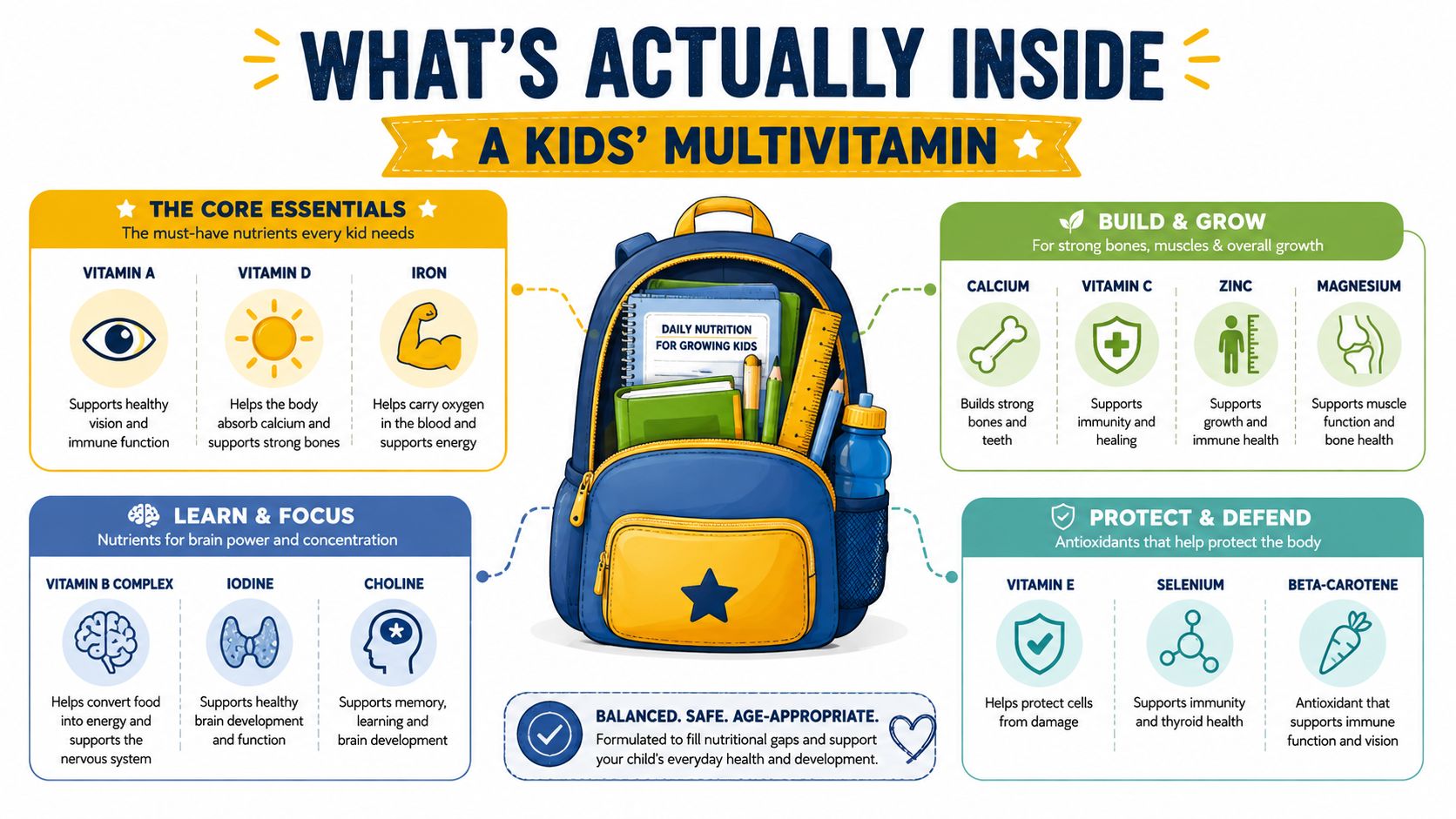
Packing a multivitamin is a little like packing a school bag. Some nutrients are everyday essentials, some provide targeted support, and others are optional additions that may suit particular formulas or dietary preferences.
The core group commonly includes vitamins A, C, D, E, K and the B vitamins. These nutrients contribute to different normal functions, including vision, bones, skin, blood, nervous-system activity and energy metabolism. Their presence doesn't mean every child needs extra amounts. It means the formula is designed to cover several nutritional roles in one product.
Minerals act more like support tools. Zinc contributes to normal immune function and is involved in growth and cellular processes. Iron matters for blood formation and oxygen transport, while magnesium, selenium and iodine support other body processes. Iron deserves particular care because a child with suspected iron deficiency may need assessment and a targeted treatment plan rather than a general gummy.
Optional extras can include omega-3 fatty acids, probiotics or lutein. These ingredients change the purpose and complexity of a product, so don't assume a longer ingredient list makes a formula stronger or more suitable. A child's food intake, allergies, dietary pattern and clinical history still matter more than the number of ingredients printed on the label.
Why Australian labels may look different
Formulas vary by country because food patterns, regulations, age groups and public-health concerns vary. Vitamin D may receive attention in Australian advice because risk depends on factors such as location, season, skin exposure and individual circumstances. The Royal Children's Hospital recommends targeted assessment and dose guidance for children at risk of vitamin D deficiency, rather than universal supplementation for every child. (Royal Children's Hospital vitamin D guidance)
Iodine may also appear in Australian formulas because dietary intake differs between families. That doesn't make it an automatic requirement. Check the full label and seek advice if your child has a restricted diet or a diagnosed deficiency.
Formats include gummies, chewable tablets and liquids. Gummies can help with acceptance, while liquids may suit children who can't chew safely. A child-friendly format is useful only when the product also provides transparent ingredients, sensible doses and clear age directions. For example, Brave is described as a vegan daily multivitamin gummy with essential vitamins, kid-friendly textures, no sugar and no artificial colours or flavours.
For a closer look at how vitamins and minerals can be combined, see this guide to a multivitamin with minerals.
The Three Nutrients That Drive Energy and Immunity
Parents often connect multivitamins with energy and immunity, but nutrients support normal body functions rather than creating instant energy or preventing every infection. The most useful way to think about them is to ask what role each nutrient plays in an ordinary school day.
For Brave, the three highlighted areas are Vitamin C, Zinc and the B vitamins. Its stated amounts include 45 mg of Vitamin C and 3.5 mg of Zinc, while the B-vitamin group includes B1, B2, B6, B12, niacin and pantothenic acid. Vitamin C supports normal immune-cell function and antioxidant protection, and it contributes to normal energy-yielding metabolism. Zinc supports normal immune function and participates in cellular processes connected with metabolism, growth and DNA synthesis. The B vitamins help the body convert food into usable energy, and several also contribute to normal immune function.
Vitamin C also helps the body absorb iron from food and supports collagen production, according to Raising Children Network's explanation of vitamins and minerals. That makes a varied diet important even when a supplement is used.
| Nutrient | Typical kids dose | What it helps with | Watch for |
|---|---|---|---|
| Vitamin C | 30–45 mg | Normal immune function, collagen production and energy metabolism | Don't treat it as a guaranteed cure for coughs or infections |
| Zinc | 3–5 mg | Normal immune function, growth and cellular processes | Check for duplication across products |
| B vitamins | Depends on the individual vitamin | Converting food into usable energy and supporting normal body functions | Compare each active amount, not just “B complex” on the front |
These are example ranges, not universal prescriptions. The right amount depends on the child's age, diet, product and health circumstances. B12 and iron may need special attention in children who eat little or no animal food, have a highly restricted diet or show signs that warrant medical investigation.
For a practical discussion of supplement choices connected with energy, read multivitamins for energy. A label can support a routine, but it can't diagnose why a child is tired or replace assessment of persistent symptoms.
Benefits and the Honest Limits of Daily Use
A child who eats selectively for a few weeks, skips meals during a busy family period or follows a restricted pattern may not receive every nutrient consistently. A multivitamin can make that routine easier to manage by covering selected nutritional gaps. It remains nutritional back-up, not treatment for a diagnosed condition.
Its role is limited. A gummy does not supply the fibre, protein, essential fats, plant compounds or varied food experiences found across meals. It also cannot explain persistent tiredness, weight loss or ongoing difficulty eating. Those concerns need proper assessment rather than a larger supplement serve.
Why more isn't automatically better
Fat-soluble vitamins A, D, E and K can accumulate in the body, so high-dose products require care. Minerals may also compete for absorption, meaning a longer ingredient list is not automatically a better formula. Check the full label, especially when a child also takes fortified drinks, single nutrients or another supplement.
Australian paediatric guidance reports that children with a healthy regular diet and no demonstrated deficiency have no indication for routine supplement use, and no proven health benefits from taking vitamins as a general precaution. (Royal Children's Hospital Australian Child Health Poll report)
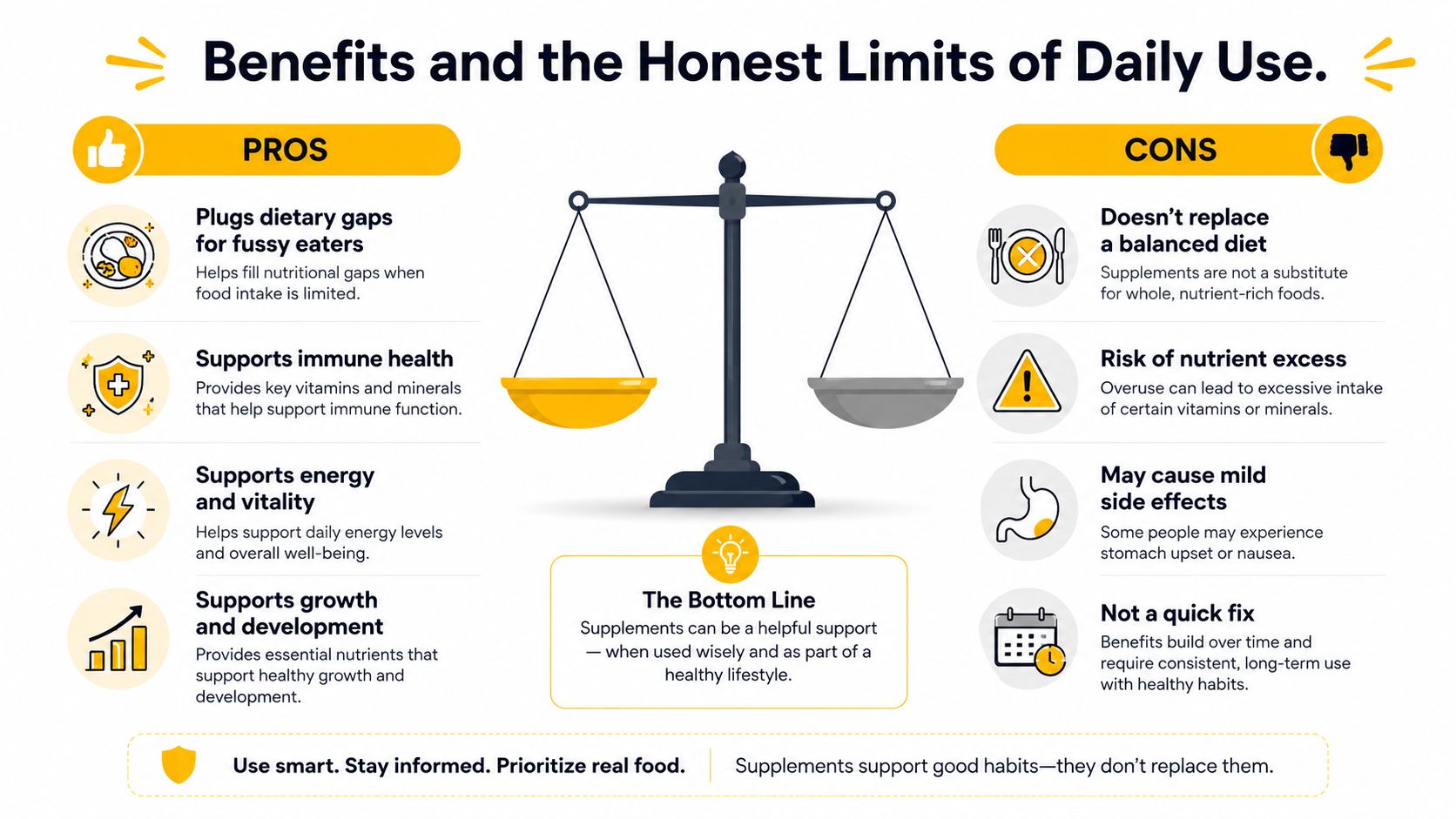
The practical conclusion is balanced:
- A supplement may plug a gap when food intake is limited or a healthcare professional identifies a need.
- A supplement doesn't replace meals, dietary variety or support for feeding difficulties.
- A supplement isn't a promise of immunity, concentration, growth or energy.
Daily use can suit some family routines, particularly when intake is temporarily narrow. It is unnecessary for other children, and it should not become a substitute for investigating symptoms or improving food variety. The appropriate dose depends on the child and product, not the size of the marketing promise.
Safe Dosing for Children Aged 4 to 12
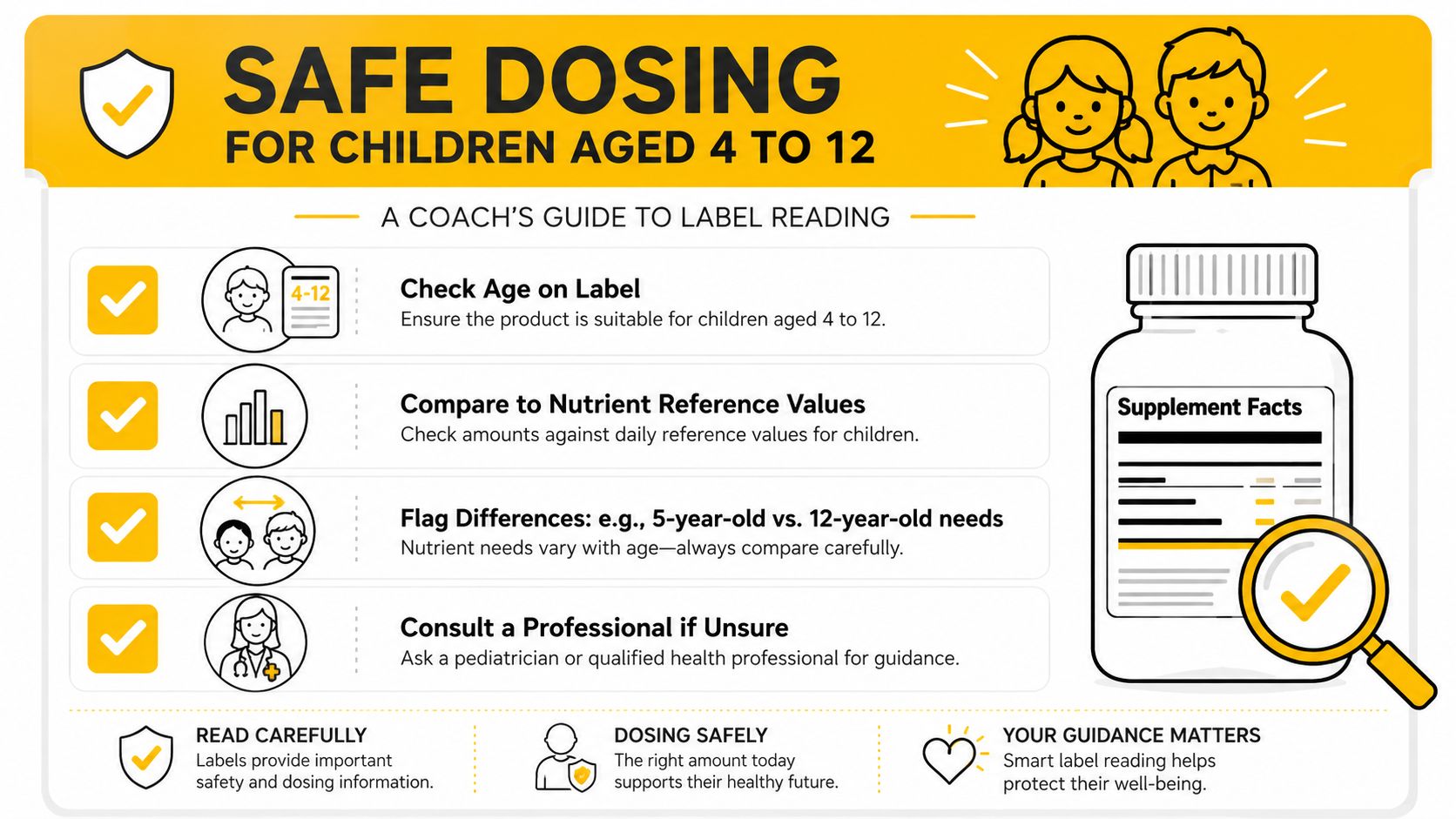
A five-year-old and a twelve-year-old aren't nutritionally identical. Their bodies, diets and requirements differ, so a label that says “kids” without a clear age range doesn't give you enough information.
Start with the serving directions. Check whether the product is intended for your child's age, how many gummies or millilitres make one daily serve, and whether the amounts listed apply to that full serve. The active ingredient dose is what matters. The total weight of a gummy includes other ingredients and doesn't tell you how much Vitamin C, Zinc or Vitamin D your child receives.
A label-reading checklist
- Check the age range. Don't assume an adult product can be divided safely for a child.
- Read every active ingredient. Compare the amounts with the Australian Nutrient Reference Values, which set intake levels intended to meet nutritional needs and help prevent deficiency and excess toxicity. (NHMRC Nutrient Reference Values)
- Look for overlapping products. Fortified drinks, individual vitamins and another multivitamin can add up.
- Follow the stated serve. Never increase the dose because a child is tired or unwell.
- Ask for individual advice. A GP or paediatric dietitian should guide treatment for a diagnosed deficiency, medication interaction or ongoing symptom.
Gummies need the same storage care as medicines. They can look and taste like lollies, so keep the container out of reach and explain that taking extra isn't a treat. If a dose is missed, don't double the next one unless a healthcare professional specifically tells you to.
Sugar content also belongs in the safety conversation. A product can be easy to take without contributing added sugar, but check the ingredient panel rather than relying on words such as “natural” or “fruit”. Dose responsibility matters more than brand familiarity.
How to Choose a Sugar-Free Vegan Multivitamin
Choosing a product becomes easier when you compare the label in the same order every time. Start with what you want to exclude, then confirm the active nutrients and the age-appropriate serve.
| Filter | What to look for | Red flag |
|---|---|---|
| Sugar source | No glucose syrup, sucrose or fruit juice concentrate added as a sweetener | “Fruit-based” wording without a complete ingredient list |
| Certifications and registration | An Australian Register of Therapeutic Goods listing where applicable, plus credible vegan certification if important to your family | Vague quality language without verifiable product information |
| Nutrient form | Clearly named forms, such as methylated B12, chelated iron or Vitamin D3 from lichen where suitable for a vegan formula | A proprietary blend that hides individual amounts |
| Allergen profile | Clear information about dairy, egg, gluten and peanut | “Free from” claims that don't explain manufacturing controls |
| Format | A gummy, chewable or liquid matched to age and chewing ability | A format the child can't use safely or consistently |
| Dose transparency | Each active amount shown clearly and compared with relevant daily reference information | “Mega dose” or “supercharged” language |
A sugar-free vegan formula can still vary considerably in taste, texture, nutrient forms and dose. Vegan status doesn't automatically mean the formula is clinically appropriate, and sugar-free status doesn't prove that every active amount is sensible.
Australian listed complementary medicines must meet listing requirements, but listing doesn't itself prove that a product delivers every outcome a caregiver may hope for. The Therapeutic Goods Administration ARTG entry for a children's product illustrates why registration status and efficacy claims should be considered separately.
Label test: If you can't identify the age range, daily serve and amount of each active nutrient, pause before buying.
Use the first three filters as your starting screen, then confirm the dose and allergen information. This sugar-free multivitamin guide can help you think through the ingredient list without treating “more” as a quality marker.
Building a Daily Routine Kids Will Stick To
One child rushes through Weet-Bix. Another refuses eggs and asks for the same plain toast every morning. The parent still needs to pack lunches, find a missing school hat and get everyone out the door.
A gummy works best when it attaches to something already happening. Brushing teeth, eating breakfast or filling a school water bottle can become the cue. This is habit stacking, and it means the family doesn't have to remember a separate health task in the middle of the morning rush.
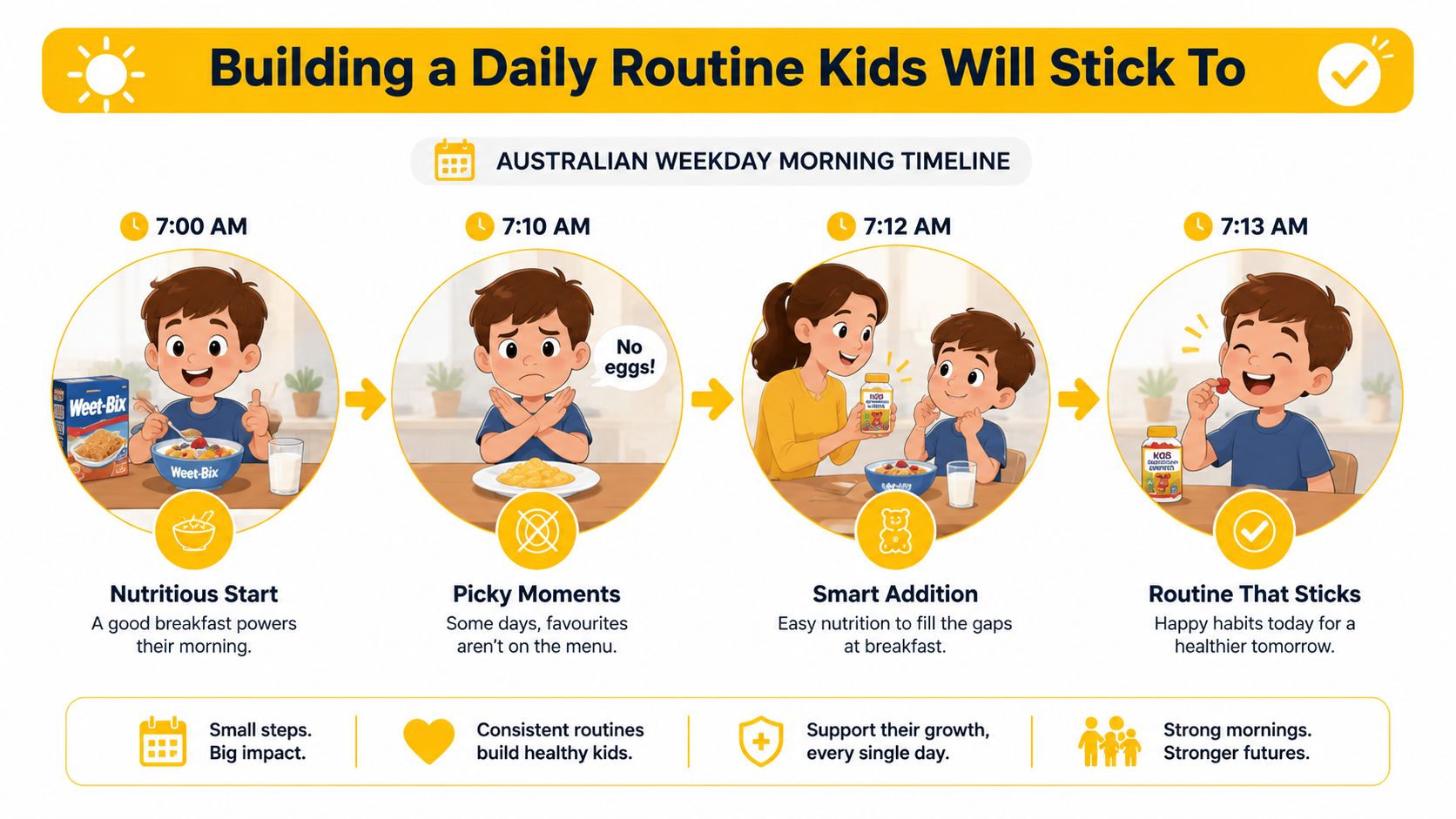
A representative routine might look like this:
- Breakfast first: Offer the usual meal without turning the gummy into a reward for finishing food.
- Use one fixed cue: Give the labelled serve after breakfast or alongside another consistent morning task.
- Let the child participate: A simple “pick your power” ritual can make the routine feel active rather than imposed.
- Store it safely: Keep the container away from children, including during holidays and visits to relatives.
- Handle missed days calmly: Resume the normal labelled serve rather than doubling up.
The emotional tone matters. Many kids like taking a gummy in the morning because it helps them feel confident and powerful for the day ahead. That can make the habit positive, but it shouldn't turn the product into a promise that a child must feel brave, energetic or well every day.
Try this two-line ritual tomorrow:
“Breakfast first, then your daily serve.
You're ready to choose one small brave step today.”
The Evidence in Plain English and Your Next Step
A multivitamin decision usually starts with the family's actual routine. A child who eats a broad range of foods may have no clear reason to take one every day, while a restricted diet, ongoing fussy eating, suspected deficiency or another health concern may justify professional advice. Vitamin D decisions also depend on a child's age and risk factors, with assessment and dosing guidance when deficiency is suspected, as outlined in the Royal Children's Hospital vitamin D deficiency guidance.
Keep this summary in mind:
A well-chosen kids' multivitamin is a safety net, not a substitute for food.
Before buying or starting one, check five things:
- Review the diet. Identify the likely gap instead of choosing based only on the front-label promise.
- Scan the product. Check the age range, labelled daily serve, active amounts, sugar ingredients, allergens and vegan suitability.
- Discuss concerns. Ask a GP or paediatric dietitian about suspected deficiency, medication, restricted eating or ongoing symptoms.
- Track the dose. Store the product safely and record each serve if more than one caregiver may give it.
- Review the fit after a month. Ask whether the routine is useful, tolerated and still appropriate, rather than continuing automatically.
The dosage question deserves care. A larger serve cannot compensate for an unbalanced diet, and adding another supplement can raise the chance of unnecessary intake. Follow the label and seek individual advice when the child's diet, health or medicines make the choice less straightforward.
Daily Powers offers Australian children's gummy supplements, including Brave, a vegan, sugar-free daily multivitamin formulation without artificial colours or flavours. Visit Daily Powers to review its ingredient information and dosing guidance, then consider whether it fits your child's diet and needs.