

Why do some magnesium supplements seem to help bedtime wind-down, while others do almost nothing except add a chalky tablet to the routine? The answer isn't just “magnesium.” For sleep, the form, the elemental dose, and what else is in the product matter just as much as the headline number on the label.
| Form | Bioavailability | Digestive Tolerance | Sleep-Specific Benefits | Best Suited For |
|---|---|---|---|---|
| Magnesium glycinate | Generally well absorbed | Often gentler on the stomach | Supports relaxation and evening wind-down | Children or adults who want a calmer bedtime routine |
| Magnesium citrate | Better absorbed than oxide in human studies | Can be looser on the bowel for some people | Good option when absorption matters | People who want a practical sleep-support form with solid absorption |
| Magnesium oxide | Poorer absorption than organic forms | More likely to be disappointing for sleep goals | Little advantage when sleep support is the aim | Low-cost use cases where sleep isn't the main goal |
| Magnesium malate | Variable, but usually discussed more for daytime use | Tolerance varies | Less commonly chosen for sleep-specific support | People looking beyond bedtime support |
A parent usually doesn't need a chemistry degree to choose well. They do need to know whether a product is built for relaxation, whether the child will take it, and whether the label reflects elemental magnesium or just the weight of the compound. That distinction is where a lot of the confusion starts.
Table of Contents
- How Magnesium Supports Natural Sleep and Relaxation
- Understanding the Four Main Magnesium Forms
- Comparing Magnesium Forms for Sleep Benefits and Bioavailability
- Elemental Magnesium Versus Total Compound Weight Explained
- Real Family Scenarios for Choosing the Right Magnesium
- Why Magnesium Supports Wind-Down Better Than Sedation
- Practical Guide to Using Magnesium for Better Sleep
How Magnesium Supports Natural Sleep and Relaxation
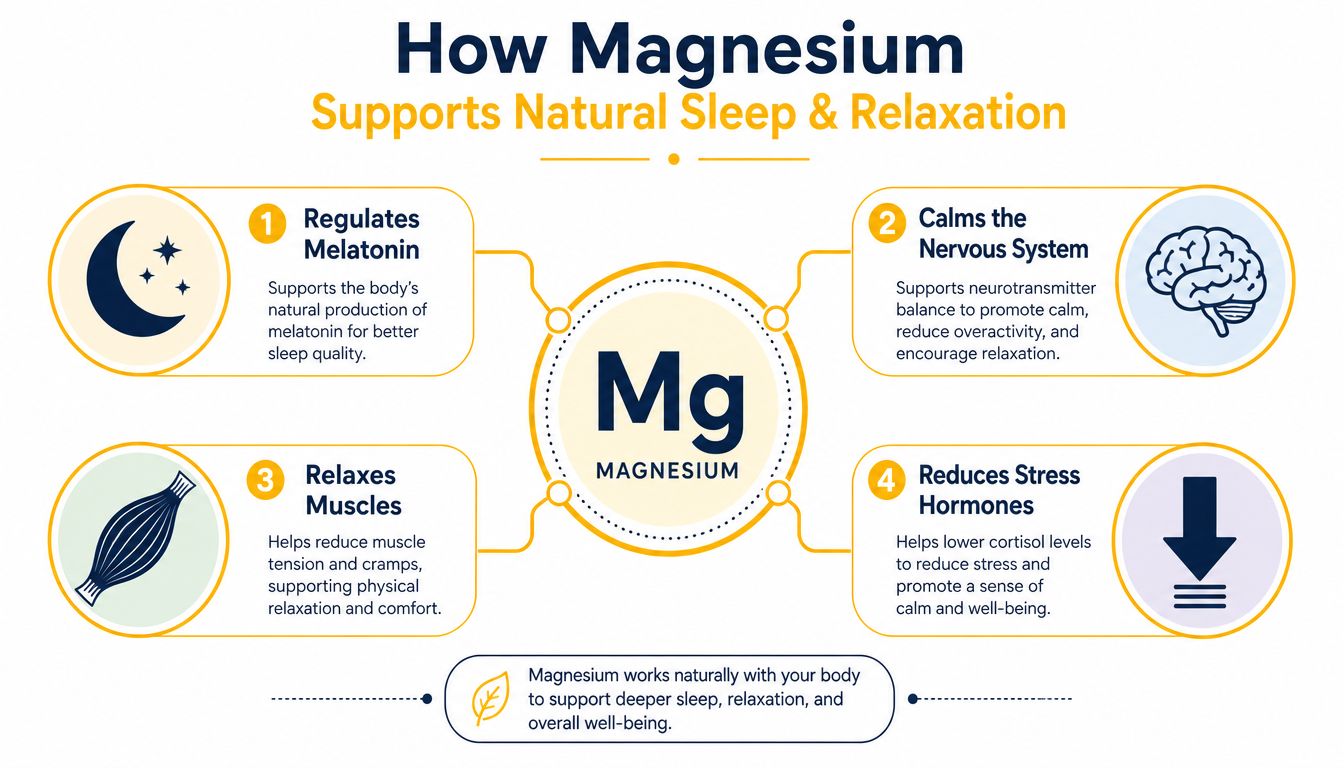
Why do some bedtime magnesium products feel calming while others do little beyond adding another capsule to the routine? The answer is in how magnesium works with the body's own relaxation systems, not in any sedative effect.
The nervous system piece
Magnesium ions interact with GABA receptors and support GABAergic neurotransmission, which helps quiet neural activity and supports sleep onset and maintenance (source). In plain language, magnesium helps the brain settle rather than forcing drowsiness.
That matters for parents choosing sleep support for a child. A child who is overtired or overstimulated after school usually needs help moving from alert to calm, not a product that knocks them out. Magnesium fits that calmer wind-down role better than ingredients aimed at fast sedation.
Practical rule: magnesium supports the body's own relaxation pathways, so the expected effect is gentler evenings and easier settling, not a knockout effect.
Muscles matter too
Magnesium also supports normal muscle function and muscle relaxation. If the body feels tight, restless, or physically wound up, bedtime can become hard even when a child is clearly tired.
That is one reason magnesium comes up in sleep conversations. It supports both the brain and the body, and bedtime often depends on both feeling ready to rest. For many families, the struggle is not sleepiness alone, it is the tension that keeps sleep from arriving smoothly.
The most useful takeaway from the sleep literature is that magnesium tends to make more sense when intake is low or status is borderline. It is a nutrient first, a sleep-support ingredient second. For parents comparing products, the bigger questions are whether the label shows elemental magnesium, how much of the compound is magnesium, and whether the product includes companion ingredients that affect absorption and tolerance. The form name matters, but the absorbed amount matters more.
Understanding the Four Main Magnesium Forms
Magnesium products can look similar on the shelf and behave very differently in the body. The name on the front, glycinate, citrate, oxide, or malate, tells you which compound magnesium has been paired with, and that pairing affects absorption and tolerance.
Why the binding partner matters
Magnesium glycinate binds magnesium to glycine, an amino acid often used in calming formulations. That's one reason it's commonly chosen for evening use. It's not just about magnesium content, it's about how the whole compound feels in the body.
Magnesium citrate pairs magnesium with citric acid. It's a form many families recognise because it's widely used and, in human studies, has shown better absorption than magnesium oxide. Magnesium oxide is an inorganic salt, which sounds efficient on a label but usually doesn't translate into equally strong absorption. Magnesium malate combines magnesium with malic acid, and it's often talked about more in the context of general energy support than bedtime calm.
For parents, that matters because the same “magnesium” label can hide very different real-world experiences. Two products may both sound like bedtime support, but one may be kinder to the stomach, and another may deliver more absorbed magnesium.
Here's the practical reading rule:
- Glycinate: often chosen when calm and tolerability matter most.
- Citrate: often chosen when better absorption is the priority.
- Oxide: usually the least appealing option when sleep support is the goal.
- Malate: better known outside bedtime routines.
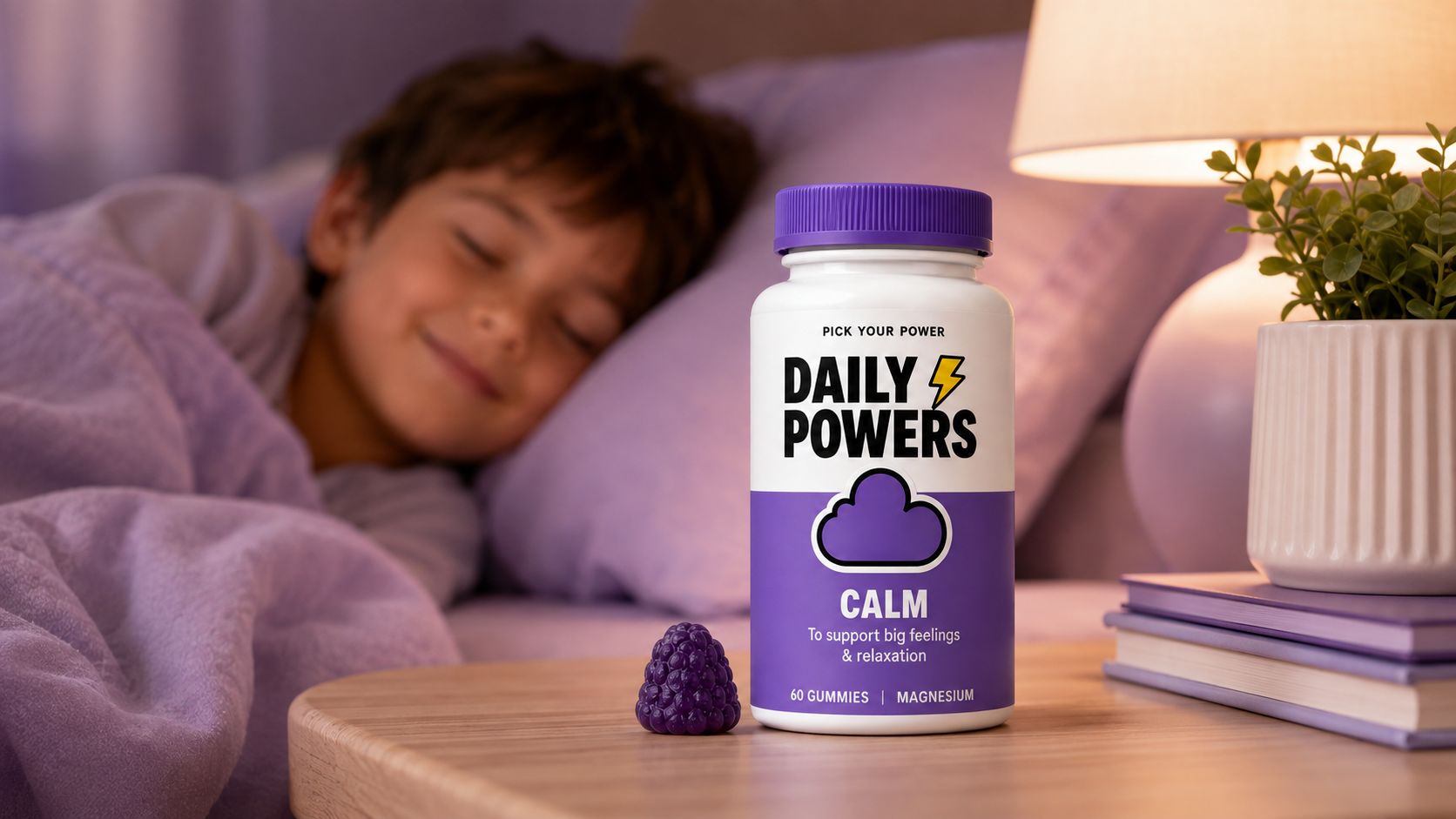
Calm uses magnesium citrate, which fits the absorption-first logic many families look for in a nightly routine. It also includes vitamin B6, zinc, and prebiotics, so caregivers should read it as a multi-ingredient gummy rather than a single-ingredient magnesium tablet.
Comparing Magnesium Forms for Sleep Benefits and Bioavailability
How much of a magnesium supplement reaches the body? That question matters more than the form name on the front of the bottle.
Human studies comparing magnesium preparations over 60 days found that organic forms including citrate showed greater absorption than magnesium oxide, based on 24-hour urinary magnesium excretion, with daily magnesium citrate supplementation showing superior bioavailability (source). That means a product can look generous on the label while delivering less usable magnesium than parents expect.
| Form | What it means in practice | Sleep-use impression |
|---|---|---|
| Citrate | Better absorption than oxide in human studies | Stronger candidate for sleep support when tolerability is okay |
| Glycinate | Often used for its gentle, calming profile | Good fit for nightly relaxation routines |
| Oxide | Poorer absorption, more likely to disappoint | Usually not the first pick for sleep |
| Malate | More often discussed for daytime use | Not the obvious bedtime choice |
The choice is not just about the name. Citrate has stronger absorption evidence, while glycinate is often preferred for a softer digestive feel. For some families, citrate suits a gummy or capsule that needs to be easy to take. For others, glycinate fits better at night because the child is sensitive to anything that unsettles the stomach.
The label can still mislead if you stop at the compound name. A product may say magnesium citrate or magnesium glycinate, but the key question is how much elemental magnesium it provides and how well the child is likely to absorb it.
If sleep is the goal, ask whether the body can absorb it, whether the child will tolerate it, and whether the other ingredients make the picture harder to read.
That last part matters. Blends with other calming ingredients can be useful, but they also make it harder to know what is helping. If a child settles better after switching to a multi-ingredient product, that does not show magnesium alone caused the change.
Absorption also changes with intake level. As noted earlier, the body does not absorb magnesium in a fixed way, and that is another reason form choice and overall diet need to be considered together.
For families comparing products, the better question is often which option suits the child's routine, stomach comfort, and ingredient list, not which form sounds nicest.
Elemental Magnesium Versus Total Compound Weight Explained
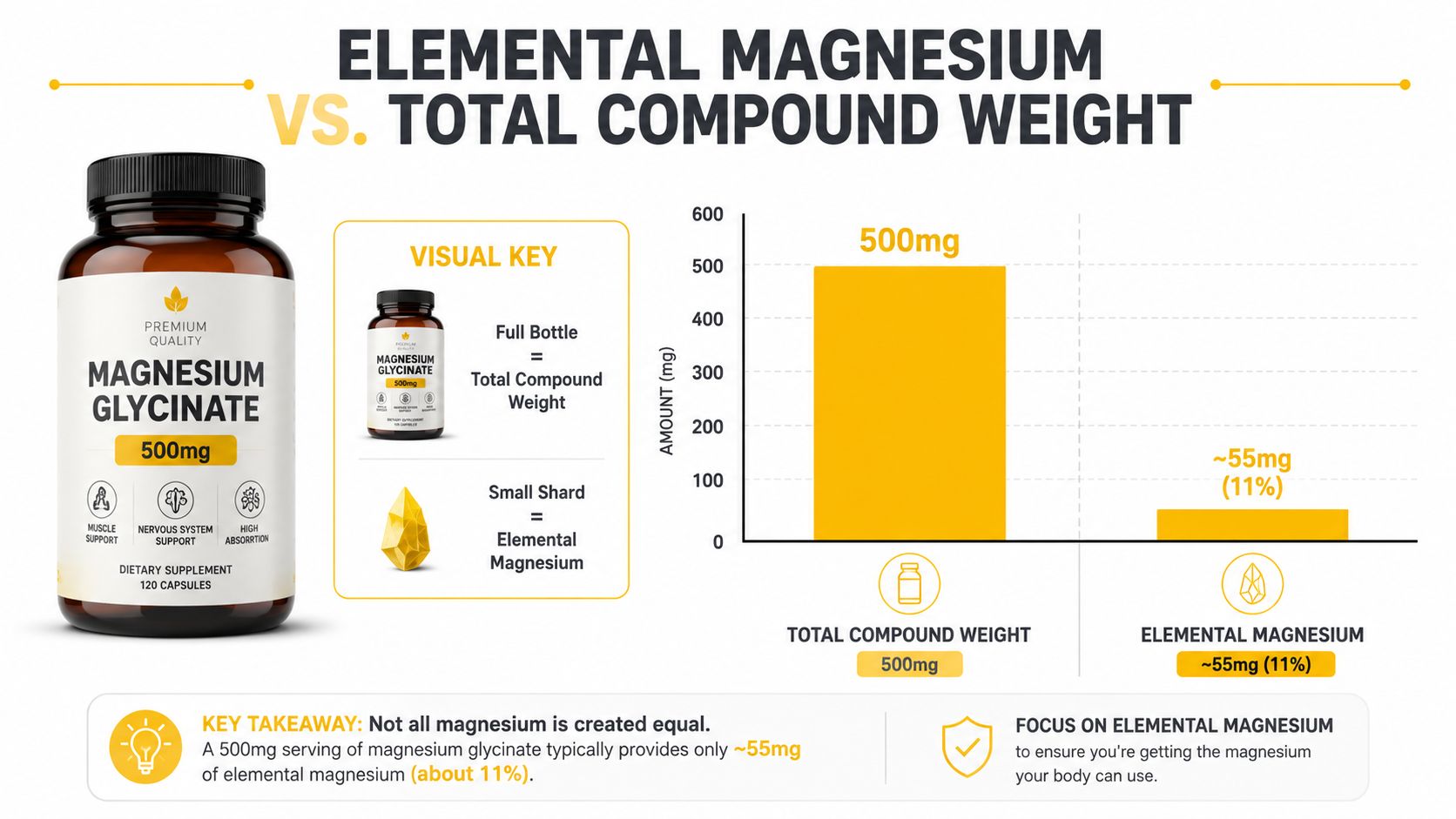
A label can say 500 mg magnesium citrate and still deliver only a small amount of actual magnesium. The listed weight usually refers to the whole compound, not the mineral alone. Parents often see the front-of-pack number and assume that is the dose the body gets, and that is where confusion starts.
What to look for on the label
Elemental magnesium is the amount that counts nutritionally. Total compound weight is the magnesium plus whatever it has been bound to, such as citrate or glycinate. A label should make both clear.
A magnesium compound is the full package. Elemental magnesium is the mineral portion the body can use. If a product does not separate the two, comparing doses across brands becomes guesswork.
This matters even more for children, because bedtime products should fit within age-appropriate daily intake, not just look large on the front panel. The Australian upper level for supplemental magnesium is a useful safety reference when comparing products, especially if a child is taking more than one supplement.
A simple label check can prevent over- or under-dosing:
- Find the form. Look for citrate, glycinate, oxide, or malate.
- Find the elemental amount. Do not stop at the compound weight.
- Check the companion ingredients. B6, zinc, glycine, and others can change the product's effect.
- Compare the routine, not just the number. A gummy a child will take is better than a tablet that never gets swallowed.
If a supplement mixes magnesium with other vitamins or minerals, the label needs a closer look. A guide to a multivitamin with minerals can help parents understand how those added nutrients change the picture.
Absorption also shifts with diet and magnesium status, so the same product can behave differently from child to child. That is another reason the headline number alone does not tell the full story.
The clearest habit is to read the supplement facts panel the way you would read a food label, slowly and with the mineral amount in mind. The sleep decision gets easier once you stop comparing total powder weight and start comparing elemental magnesium.
Real Family Scenarios for Choosing the Right Magnesium
Bedtime choices usually happen at 7.30 pm, not in a lab. One child is still buzzing after school, another refuses chalky tablets, and a third settles best when the routine stays familiar. Magnesium can suit each situation in a different way.

When the child is overstimulated
Some children are not poor sleepers, they are still revved up by bedtime. They come home from school, snack, move around, argue, and then struggle to settle. In that situation, a magnesium product that supports relaxation may be more useful than one aimed at changing sleep timing.
The product type matters too. A child-friendly gummy can lower resistance because the bedtime habit itself becomes part of the wind-down. The useful question is not whether a gummy is magical, but whether the product gives a child enough elemental magnesium in a form they will readily take.
That is why the label matters more than the front-of-pack name. A gummy may look simple, yet the key question is how much elemental magnesium it provides, what companion ingredients are included, and how those ingredients fit the child's routine.
When the child hates tablets
Picky eaters often reject anything gritty, oversized, or medicinal. For them, format matters as much as formulation. A child who refuses a capsule may still accept a berry-flavoured chew if the ingredient list is clear and the dose suits the child.
Companion ingredients can also change the experience. Some products pair magnesium with B vitamins, zinc, glycine, or prebiotic ingredients, and those additions can shape how the product feels in daily use. The form name alone does not explain the full picture.
When parents compare it with other sleep aids
Melatonin is more about sleep timing. Herbal sleep aids can help some families, but the effect depends on the herb and the blend. Antihistamine sleep aids create drowsiness rather than supporting natural relaxation, and that can leave children groggy the next day.
Magnesium sits in a different category. It supports the body's own calm-down systems instead of overriding them. For families who want a nightly ritual rather than a stronger sedating effect, magnesium usually makes more sense than a product that forces sleepiness.
A parent's best question is simple, “What problem are we solving tonight, bedtime resistance, sleep timing, or true insomnia?” The answer changes the product choice.
The other thing that matters is expectation. Magnesium is not meant to knock a child out. It is meant to make the transition to sleep easier, and that is a much more realistic bedtime goal.
Why Magnesium Supports Wind-Down Better Than Sedation
Magnesium fits bedtime routines best when the goal is calm, not knockout. It helps with natural relaxation and normal nervous system signalling, which is different from the way antihistamines create drowsiness or the way melatonin directly affects the sleep-wake cycle.
That distinction matters for regular family use. A child who needs a predictable evening routine usually does better with something that supports the body's own settling process than with a product that forces sleepiness. Magnesium also has the advantage of being a nutrient the body uses every day, not just a sleep hack.
A randomised, placebo-controlled trial of 80 healthy adults using 80 mg/day of food-grown magnesium for 8 weeks reported a 32% increase in self-reported sleep quality in the magnesium group versus 16% in the placebo group, with stress scores also lower at week 8 (source). That doesn't make magnesium a miracle, but it does support the idea that it can help the wind-down process for some people.
The goal isn't to force sleep. The goal is to make sleep more likely by lowering the friction around settling.
If you're comparing magnesium with other approaches, keep the job in mind. Melatonin is a timing tool. Herbal blends can be calming, but the effects vary. Antihistamines may make a child sleepy, yet that sleepiness isn't the same thing as healthy relaxation.
A useful internal guide for parents is how to get kids to sleep, because magnesium works best inside a broader routine, not as a standalone fix. Bedtime still needs lights down, predictable cues, and a consistent order.
Practical Guide to Using Magnesium for Better Sleep
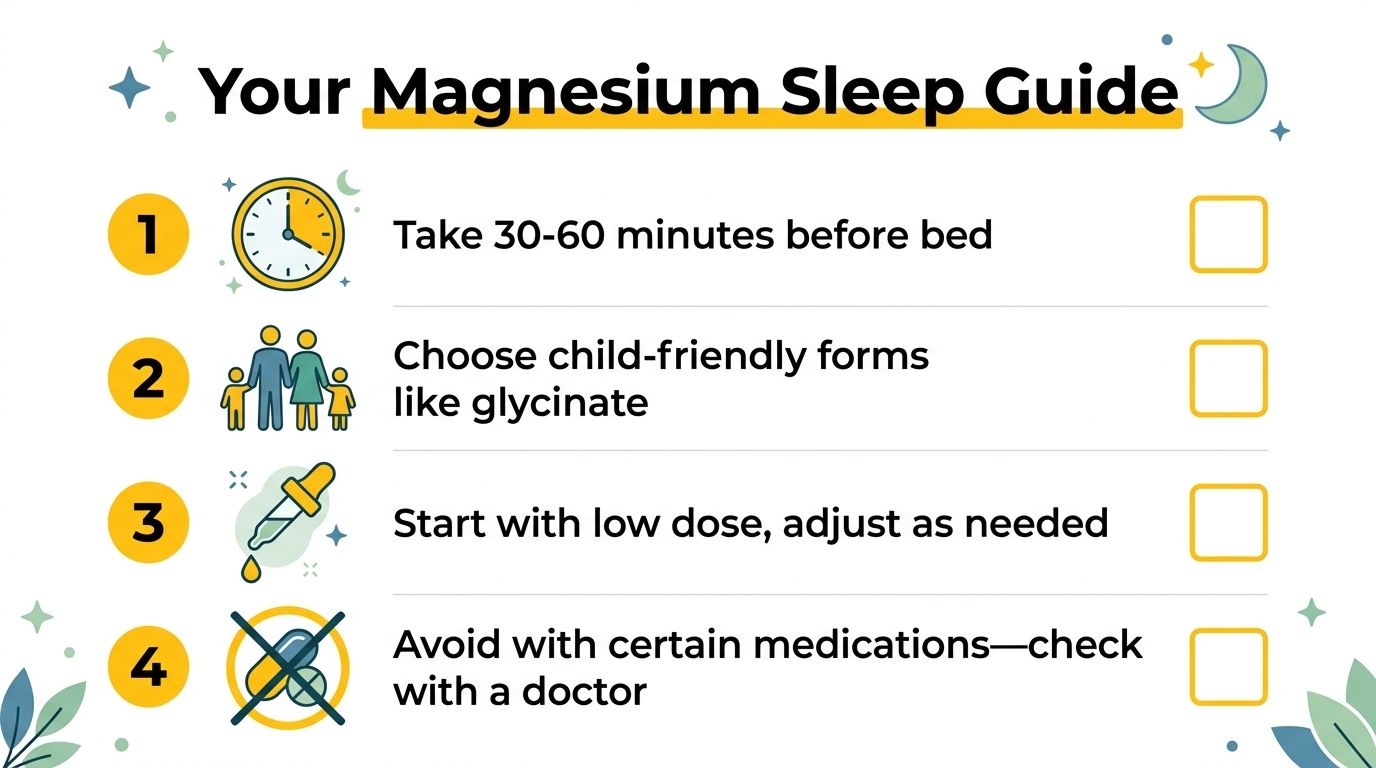
Evening timing matters. The clearest practical guidance converges on taking magnesium 30 to 60 minutes before bed, which gives the body time to shift toward relaxation before lights-out. That timing fits family routines better than taking it randomly after dinner or too close to brushing teeth.
What to do first
Start with the label, not the promise. Check the elemental magnesium amount, then check whether the form is citrate, glycinate, or something else. If the product is aimed at children, the dose should stay age-appropriate and easy to use regularly.
Watch the stomach response. GI side effects like diarrhoea become more likely as supplemental magnesium goes above the Australian adult upper level of 350 mg/day. That doesn't mean every child reacts the same way, but it does mean bigger isn't better.
Keep the rest of the routine boring and predictable. Magnesium works best when it's paired with the usual sleep supports, dinner at a sensible time, low light, and a calm transition from activity to bed.
Reassess if nothing changes. If the child still fights bedtime after a reasonable trial, the form, the dose, or the broader sleep routine may need adjusting. That doesn't automatically mean magnesium failed, it may mean the product doesn't match the child's needs.
The most useful product questions are the simplest ones. Is the form well absorbed, is the dose sensible, and will my child take it every night? If the answer to all three is yes, you've probably found a practical option.
For families who want a closer look at a child-focused formula, Calm ingredients and use guidance can help you compare what's inside a magnesium gummy with the bedtime job it's meant to do.
If you're deciding whether magnesium belongs in your family's bedtime routine, Daily Powers offers child-focused gummies designed around simple, repeatable habits and transparent ingredient lists. Take a look at Daily Powers if you want to compare magnesium options with a calm-first, parent-friendly approach.