

A child who's tired before school, distracted during homework or emotionally overloaded by late afternoon rarely needs one magic fix. Sleep, regular meals, water, movement and predictable transitions often matter more than a single product labelled as a boost for kids. Supplements may have a place for some families, but they're optional support, not replacements for food, rest or professional care.
Australian children's nutrition data helps explain why parents look for simple routines. In 2022–23, only 4.6% of Australian children aged 2–17 met the recommended vegetable serves, while 63.9% met the fruit guideline, according to the Australian Bureau of Statistics dietary behaviour release. That doesn't mean every child needs a supplement. It does mean families may benefit from practical ways to make meals, routines and health decisions more consistent.
Start with the daily foundations, then match any optional supplement to a specific moment, such as breakfast, homework, the after-school transition or bedtime. Follow the product directions, check the full ingredient list and speak with a doctor or dietitian if your child has a medical condition, takes medicines, follows a restricted diet or has ongoing fatigue, sleep problems, concentration difficulties or mood changes.
Table of Contents
- 1. Establish Daily Micronutrient Routines with Consistency Anchoring
- 2. Support Concentration and Task Initiation Through Pre-Learning Nutrition
- 3. Build Emotional Regulation Capacity Through Wind-Down Routines and Magnesium Support
- 4. Strengthen Immunity and Energy Through a Consistent Daily Ritual
- 5. Reduce Supplement Friction Through Taste Preference and Safe Trials
- 6. Pair Any Supplement with Meals, Water and Digestive Comfort
- 7. Use Subscription Delivery to Remove Practical Barriers
- 8. Build Confidence Through Ingredient Education and Clear Labelling
- 8-Point Kids Boost Strategy Comparison
- Turn the Best Ideas Into One Safe Routine
1. Establish Daily Micronutrient Routines with Consistency Anchoring
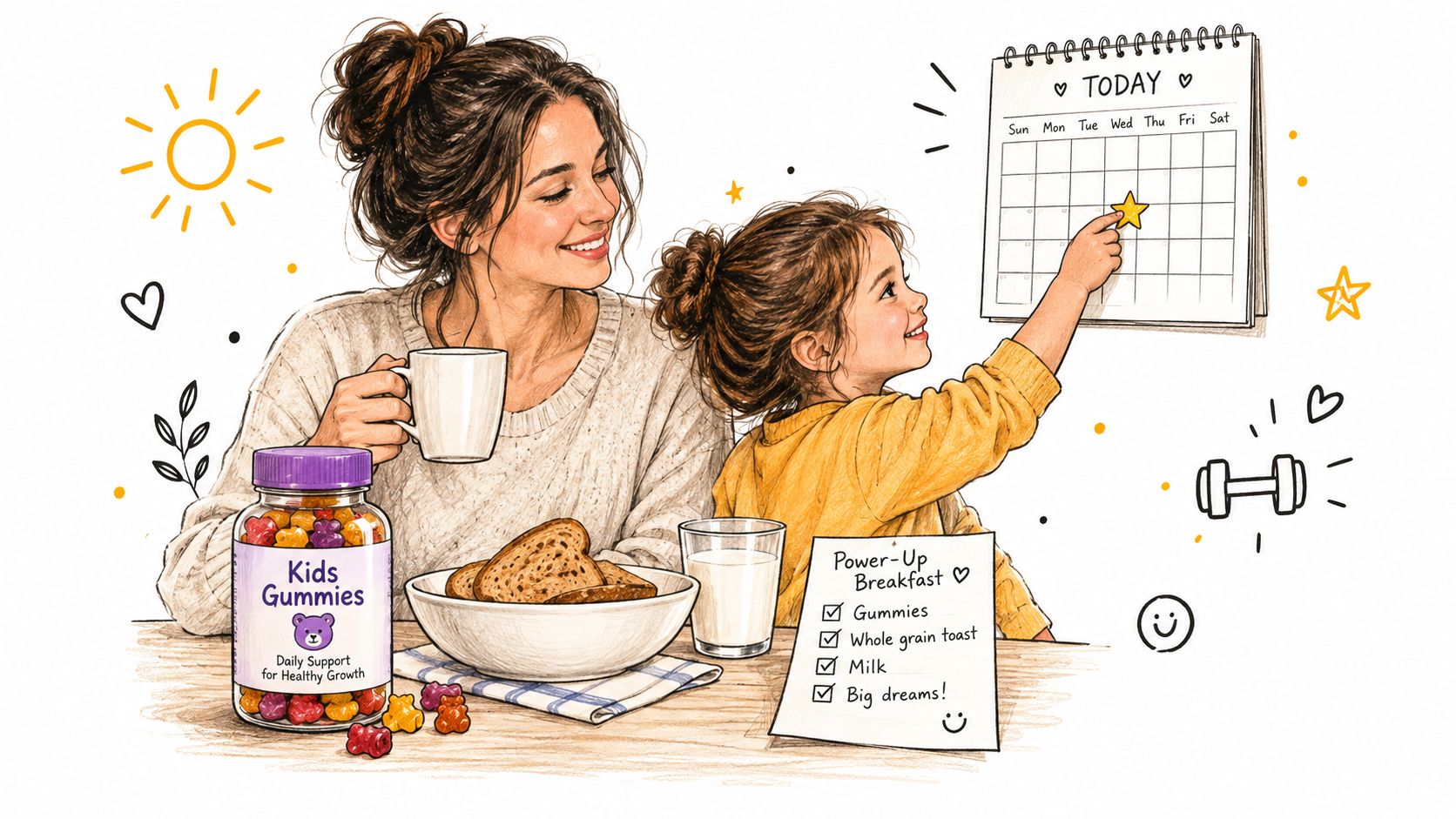
A supplement routine works best when it joins a habit your family already keeps. Breakfast, school-bag packing or the after-school snack can become a reliable cue, so your child doesn't have to remember a separate task from scratch. The point isn't to make a gummy feel like a reward. It's to make the decision predictable and supervised.
Choose a time when an adult is present and your child isn't rushing. A morning routine might include breakfast, water, teeth brushing and the supplement, while an afternoon routine could begin when your child puts their school bag away. Let your child help choose the location, decorate a reminder card or name the ritual “Power-Up Breakfast” or “Homework Ready Time”.
Practical rule: Anchor the supplement to an existing action, not to an ideal schedule your family rarely follows.
For example, Focus is described by Daily Powers as a blueberry-flavoured gummy containing mushroom polysaccharides, vitamin D3, zinc, elderberry fruit powder and prebiotics. Its product information says to take two gummies daily, or as directed by a healthcare professional. That information describes the product and directions, but it doesn't prove that every child will concentrate better.
Use a fridge calendar, stickers or a simple tick box during the early weeks. Celebrate consistency with a choice of story, game or outdoor activity rather than another food reward. If a subscription is used, treat delivery as a household planning tool, not evidence that a product is necessary. Keep supplements out of children's unsupervised reach, and review the routine if your child starts taking another product.
2. Support Concentration and Task Initiation Through Pre-Learning Nutrition
A child who refuses homework may be hungry, thirsty, tired or unsure how to begin. Before treating the problem as a need for a concentration supplement, give the body a reliable start. Offer water and a small snack containing familiar foods, then reduce the first task to one clear action, such as opening the book or completing one question.
Regular meals and snacks matter because Australian child-health guidance links food intake with memory, focus, mood and energy. The Royal Children's Hospital nutrition guidance for older children recommends regular meals and snacks rather than relying on quick-energy foods. It also places food quality and routine ahead of stimulant-style solutions.
A pre-learning ritual can still be useful, as long as you describe it accurately. A child might drink water, eat a light snack, set a timer and take an age-appropriate supplement only if a caregiver has decided it's suitable. Don't promise a particular response, and don't describe a supplement as medication or as a guaranteed way to improve school performance.
Try this sequence before homework:
- Refuel first: Offer a familiar snack and water before asking for sustained attention.
- Lower the starting barrier: Put the required book, pencil and first instruction in one place.
- Use a short opening task: Begin with something your child can complete without extensive prompting.
- Observe patterns: Note whether concentration changes with breakfast, sleep, timing or the type of task.
- Seek outside input: Ask the teacher whether the same difficulty appears at school.
The useful measure is not a dramatic promise. Look for practical signals, such as fewer reminders to begin, a calmer transition or more independent work. If concentration problems persist across settings, discuss them with a qualified health professional rather than escalating supplements.

3. Build Emotional Regulation Capacity Through Wind-Down Routines and Magnesium Support
After-school distress often reflects accumulated effort, noise, hunger and tiredness. A child may appear defiant when they're struggling to shift from school demands to home life. A predictable wind-down gives that transition a shape.
Start with environmental changes before considering a magnesium product. Offer a snack, lower the noise, dim the lights and allow a brief period without questions or instructions. Then move into calm activities such as a bath, quiet reading, gentle music, drawing or age-appropriate breathing exercises. Keep the order similar each evening, but allow your child some choice within it.
Daily Powers describes Calm as a grape-flavoured, magnesium-based gummy containing magnesium citrate, vitamin B6, zinc and prebiotics. The product information says its daily serving provides 30 mg of elemental magnesium and directs users to take two gummies daily, or as advised by a healthcare professional. Those details should be checked against your child's age, diet, other supplements and individual health needs.
The Daily Powers guide to magnesium gummies for children may help caregivers understand the product's intended role, but marketing language shouldn't replace clinical advice. A magnesium gummy can be considered optional support. It can't compensate for late nights, excessive evening stimulation, anxiety that needs assessment or an unsuitable bedtime routine.
A calmer evening usually comes from several small changes working together, not from one gummy working alone.
Watch for practical signs, including the time your child takes to settle, night waking, morning mood and the ease of leaving screens behind. If sleep remains difficult, your child snores heavily, wakes distressed or has persistent mood changes, speak with a health professional.

4. Strengthen Immunity and Energy Through a Consistent Daily Ritual
A multivitamin may suit a child whose diet is restricted by picky eating, food allergies, limited food variety or access to fewer food choices. It is a nutritional backup, not a promise of stronger immunity or protection from illness. A doctor or dietitian can help decide whether supplementation fits the child's needs.
The ABS dietary supplements release reported that in 2023, 19.2% of boys and 18.0% of girls aged 2–17 took a dietary supplement, while 10.1% of boys and 9.2% of girls took a multivitamin or multimineral. Across the population, vitamin and mineral supplements were the most common type, rising from 21.9% in 2011–12 to 29.7% in 2023. These figures describe use, not medical need. Most children in the survey period were not taking supplements.
A consistent morning ritual can make nutrition discussions easier. Offer breakfast, water and a varied range of vegetables, fruit, grains, protein foods and dairy or suitable alternatives first. The gummy can sit beside that routine, like a small safety net, rather than replacing meals. Children who eat a narrow range often need repeated exposure, patience and professional support.
Daily Powers describes Brave as an orange-flavoured vegan multivitamin gummy with no sugar or artificial colours or flavours. Caregivers can consult the multivitamin gummies for kids guide to understand the intended daily ritual, then check the current label, age guidance and serving instructions. Compare the ingredients with other supplements before starting it, since overlapping nutrients may be unnecessary.
For ongoing low energy, repeated infections or recovery that seems unusually slow, keep notes for a clinician rather than relying on the product to explain the problem. Seek advice if concerns persist, worsen or affect school attendance, play or everyday functioning.
5. Reduce Supplement Friction Through Taste Preference and Safe Trials
Taste and texture can decide whether a routine survives the first week. A child who dislikes chalky tablets, strong flavours or unfamiliar textures may reject a product before they understand why it's being offered. That resistance isn't a character flaw. It's information about sensory preference.
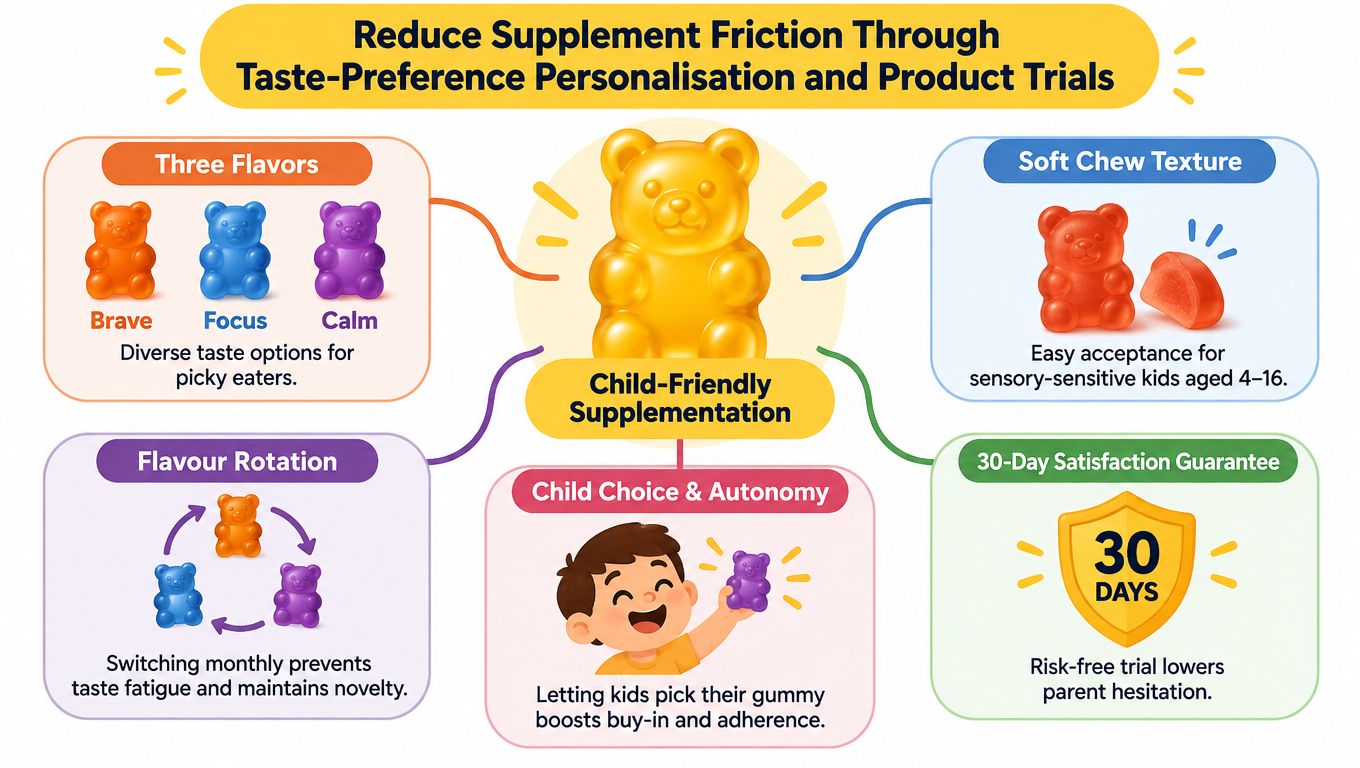
Give your child a limited, age-appropriate choice. You might ask whether they prefer to try an orange, blueberry or grape flavour, but don't offer unlimited options or let a child decide how much to take. The adult remains responsible for checking the label, serving size, storage and interactions. The child gets a voice in the experience.
Daily Powers describes Brave as orange flavoured, Focus as blueberry flavoured and Calm as grape flavoured. Its publisher also lists soft gummy textures, vegan formulations, no sugar and no artificial colours or flavours across the range, along with a 30-day satisfaction guarantee. These are product details, not proof that every child will accept the taste or experience a particular benefit.
Use a single-product trial rather than introducing several new products at once. If your child has sensory sensitivities, begin when they're calm, explain the texture plainly and avoid hiding the gummy in food. Hiding ingredients can create trust problems and may make it harder to identify the cause of a reaction.
- Ask for useful feedback: “Was it too chewy, too sweet, too sour or easy to swallow?”
- Respect a clear refusal: Don't turn supplementation into a daily battle.
- Keep the trial controlled: Change one relevant factor at a time.
- Check the label again: Ingredients and directions matter more than a flavour preference.
- Stop for concerning symptoms: Seek advice if your child develops a reaction or feels unwell.
A product trial should reduce friction, not create pressure. If acceptance remains poor, return to food-first strategies and ask a health professional whether supplementation is needed.
6. Pair Any Supplement with Meals, Water and Digestive Comfort
Timing can make supplementation easier to remember and gentler to tolerate, but it cannot guarantee absorption or a noticeable result. Follow the product label instead of creating a personalised schedule. If the directions allow use with food, pair the supplement with a familiar meal and offer water alongside it.
Use timing to fit the family routine, not to promise a specific effect. A daily multivitamin may sit beside breakfast, while a learning-related product could fit the school-morning or homework routine. If your child takes Calm in the evening, keep it after the wind-down snack rather than alongside another magnesium-containing product. Note any digestive change for two weeks before adjusting anything, and ask a health professional about combining products.
Prebiotics are dietary components that beneficial gut microbes can use. Their presence does not show that digestion, mood or concentration will change. New ingredients may cause discomfort for some children, so follow the stated serving instructions and avoid changing the amount without professional advice. Stop and seek guidance if symptoms continue.
Read the whole label: Check the active ingredients, serving size, age guidance, warnings and other products your child takes together.
Keep meals and water in place while you assess any supplement. It should not replace breakfast, an afternoon snack, varied foods or adequate sleep. Adding a product should never end conversations about food variety or substitute for professional care when a child has ongoing symptoms or nutritional concerns.
7. Use Subscription Delivery to Remove Practical Barriers
A family can have a well-designed routine and still run out of the product. Reordering competes with work, school messages, appointments and shopping. Subscription delivery may reduce that administrative burden, but it shouldn't pressure a family to keep buying something a child doesn't need or tolerate.
Treat the subscription as a logistics choice. Check how often deliveries arrive, whether the quantity suits the child's current directions and how easily you can pause, skip or cancel. Revisit the arrangement when your child travels, changes routines, starts another supplement or receives new clinical advice.
Daily Powers describes its subscription service as offering automated deliveries with flexible pause, skip and cancellation options. The publisher also states that it ships across Australia and offers online ordering and customer accounts. Those features may help families maintain access, including households that don't shop for children's supplements locally, but convenience doesn't establish nutritional need.
A useful household system includes a stock check before the next delivery, a written record of what the child takes and a reminder to review labels when products change. Multi-child households should be especially careful not to assume that one serving or formula suits every child. Keep each product in its original packaging and store it securely.
Use subscription delivery when it solves a real problem, such as forgotten reorders or an unpredictable shopping schedule. Pause it during holidays if that makes sense, and don't treat an uninterrupted delivery history as a health outcome. The meaningful outcome is a safe, informed routine that still fits the family's needs.
For broader questions about choosing and managing a supplement subscription, see this Australian children's supplement subscription guide, then confirm the current commercial terms directly with the brand.
8. Build Confidence Through Ingredient Education and Clear Labelling
Parents need more than a colourful package and a promise of a boost for kids. They need to know what's inside, how much to give, which age group the directions cover and whether another product already contains the same nutrients. Transparent labelling turns a purchase into a decision that can be checked.
Start with the active ingredients and serving instructions. Then check excipients, allergens, flavouring, sweeteners and warnings. If your child follows a vegan diet or avoids particular ingredients, verify the current label rather than relying on a general product description. Formulas and directions can change, so keep the packaging or consult the manufacturer's current product page.
Daily Powers publishes ingredient lists and dosing guidance for children aged four to sixteen, according to the publisher information supplied for this article. Its product range is described as vegan, sugar-free and free from artificial colours and flavours, and the brand states that its products are TGA Approved. Caregivers should still confirm the current label and seek professional advice when a child has a medical condition, takes medicines or uses other supplements.
Explain ingredients in language your child can understand. You might say that vitamin D and zinc have roles in normal development and wellbeing, while a gummy isn't a shortcut to learning, sleep or emotional regulation. Avoid telling children that a product will make them clever, fearless or calm on demand. Those messages can create unrealistic expectations and make ordinary tiredness feel like a personal failure.
Use a simple information card at home:
- Purpose: Write the narrow reason you're considering the product.
- Directions: Record the label's serving guidance and the time you use it.
- Ingredients: Note anything relevant to allergies, dietary restrictions or duplication.
- Observations: Record tolerance and routine changes without promising a result.
- Review date: Choose a time to reassess whether the product still fits.
Clear information protects children better than enthusiastic claims. If you can't explain why the product is being used and how you'll check its suitability, pause before adding it to the routine.
8-Point Kids Boost Strategy Comparison
| Strategy | 🔄 Implementation complexity | ⚡ Resource & time requirements | ⭐ Expected outcomes / quality | 📊 Ideal use cases / impact | 💡 Key advantages & tips |
|---|---|---|---|---|---|
| Establish Daily Micronutrient Routines with Consistency Anchoring | Moderate, initial 2–4 weeks habit formation | Low ongoing; parent setup + visual cues; minutes/day | High adherence, reported +60–70% vs ad-hoc | Families seeking predictable rituals; ages 4–16 | Anchor to supervised activity, use charts, leverage subscription |
| Support Concentration and Task Initiation Through Pre-Learning Nutrition | Moderate, timed dosing 15–30 min pre-activity | Low–moderate; consistent daily use for 2–4 weeks | Moderate, meta-analyses suggest ~15–20% attention gains | Before school/homework; task-initiation resistance | Frame as "brain fuel", pair with water/snack, collect teacher feedback |
| Build Emotional Regulation Through Wind-Down Routines & Magnesium | Moderate, integrate into 60–90 min wind-down | Low ongoing; effects accumulate over 2–4 weeks | Moderate–High, ~15–25% improved sleep metrics | Bedtime resistance, anxiety-prone or sensory-sensitive children | Pair with quiet activities, avoid screens, adjust dose if loose stools |
| Strengthen Immunity & Energy Through Multivitamin Consistency (Brave) | Low, simple daily breakfast habit | Low ongoing; benefits evident in 4–8 weeks | Moderate, ~10–15% reduced acute illness incidence/duration | Picky eaters, restricted diets, regional produce scarcity | Anchor to breakfast, use subscription, track energy/attendance |
| Reduce Friction via Taste-Preference Personalisation & Trials | Low–Moderate, set up trials and choice process | Low; 30‑day trial window, 2–4 weeks for taste acceptance | High for adherence, personalization ↑ adherence ~40–50% | Onboarding new supplements, picky/sensory-sensitive kids | Offer 30‑day trial, involve child in choice, rotate flavours monthly |
| Optimise Absorption via Timing, Pairing & Digestive Support | Moderate, requires intentional timing & pairing | Moderate; education needed, prebiotic adjustment 1–2 weeks | Moderate, absorption gains ~20–40% with correct pairing | Children needing maximal bioavailability or with gut concerns | Time Brave with breakfast, Focus before tasks, Calm before bed; ensure hydration |
| Leverage Subscription Consistency to Automate Habit Success | Low, one-time setup; manage account as needed | Very low ongoing effort; saves reorder time; discounted cost | High for continuity, subscriptions ↑ adherence 60–80% | Busy families, multi-child households, regional/remote areas | Emphasise pause/skip, align deliveries with routine anchors, highlight trial guarantee |
| Build Confidence & Health Literacy Through Transparent Labelling | Moderate, content creation and comms required | Moderate upfront investment; parents need time to read | High for trust, transparency ↑ consumer trust ~50–70% | Skeptical parents, allergy/vegan families, dosing-sensitive caregivers | Provide ingredient spotlights, age‑appropriate guides, QR links to full data |
Turn the Best Ideas Into One Safe Routine
Choose one priority first. If mornings are chaotic, focus on breakfast, water and a predictable departure routine before adding a product. If homework begins with hunger and resistance, build an after-school snack, a short movement break and a clear first task. If bedtime is the problem, establish a screen-free wind-down, lower stimulation and keep the order of activities consistent.
The strongest boost for kids is usually a pattern rather than a single intervention. Australian guidance supports a food-first approach, and the Pregnancy, Birth and Baby information on children and vitamins explains that most healthy children can meet their nutritional needs through food. Supplements may be appropriate for diagnosed deficiency, special diets, malabsorption or other clinical reasons, but excess intake can be harmful. A child's enthusiasm for a gummy doesn't demonstrate that supplementation is needed.
Match an optional supplement to a real family moment, then keep expectations modest. A breakfast routine may improve consistency, but it won't repair an inadequate diet by itself. A focus-labelled product may provide a ritual before homework, but it can't diagnose or resolve persistent learning difficulties. A magnesium product may sit alongside a calming bedtime routine, but it can't replace assessment for ongoing sleep or mood concerns. A multivitamin may be useful in a particular dietary context, but it isn't a guarantee against illness.
Track practical signals rather than dramatic results. Note whether your child eats breakfast more consistently, starts homework with fewer reminders, settles more easily or tolerates the routine without distress. Don't track only the days that confirm your expectations. If there's no clear benefit, the child dislikes the product or symptoms continue, review the decision with a doctor or dietitian.
Before starting anything, check the age guidance, serving size, full ingredient list and storage instructions. Avoid duplicate supplements, especially when more than one caregiver gives vitamins or when a child uses fortified foods and drinks. Keep products away from unsupervised children, and ask a health professional about interactions, medical conditions, allergies or ongoing symptoms.
Daily Powers may fit a family's plan where its clearly labelled products, gummy format and routine-focused approach align with the child's needs and professional advice. The key takeaway is simple: consistency and healthy routines come first. A supplement can support that plan only when there's a clear reason, careful use and realistic expectations.
Daily Powers offers children's gummy products organised around everyday needs such as bravery, focus and calm, with product information, ingredient lists and dosing guidance available online. If you're building a safer, more consistent family routine, visit Daily Powers to review the range and decide whether one product fits your child's plan.