

You've just finished school pick-up, the snacks are still in the bag, and your child is bouncing off the walls while you're trying to get through dinner and bedtime. That's the moment many Australian parents start reading the back of a magnesium gummy label for the first time, because the front of pack promise is never the whole story.
The calm magnesium gummies ingredients on a label matter because they decide whether a product is mostly a sweet chew with a wellness theme, or a carefully built children's supplement with a clear magnesium source, supportive nutrients, and a sensible dose. For families in Australia, the label also has to make sense against TGA rules, magnesium RDIs, and everyday family routines, not just marketing language. 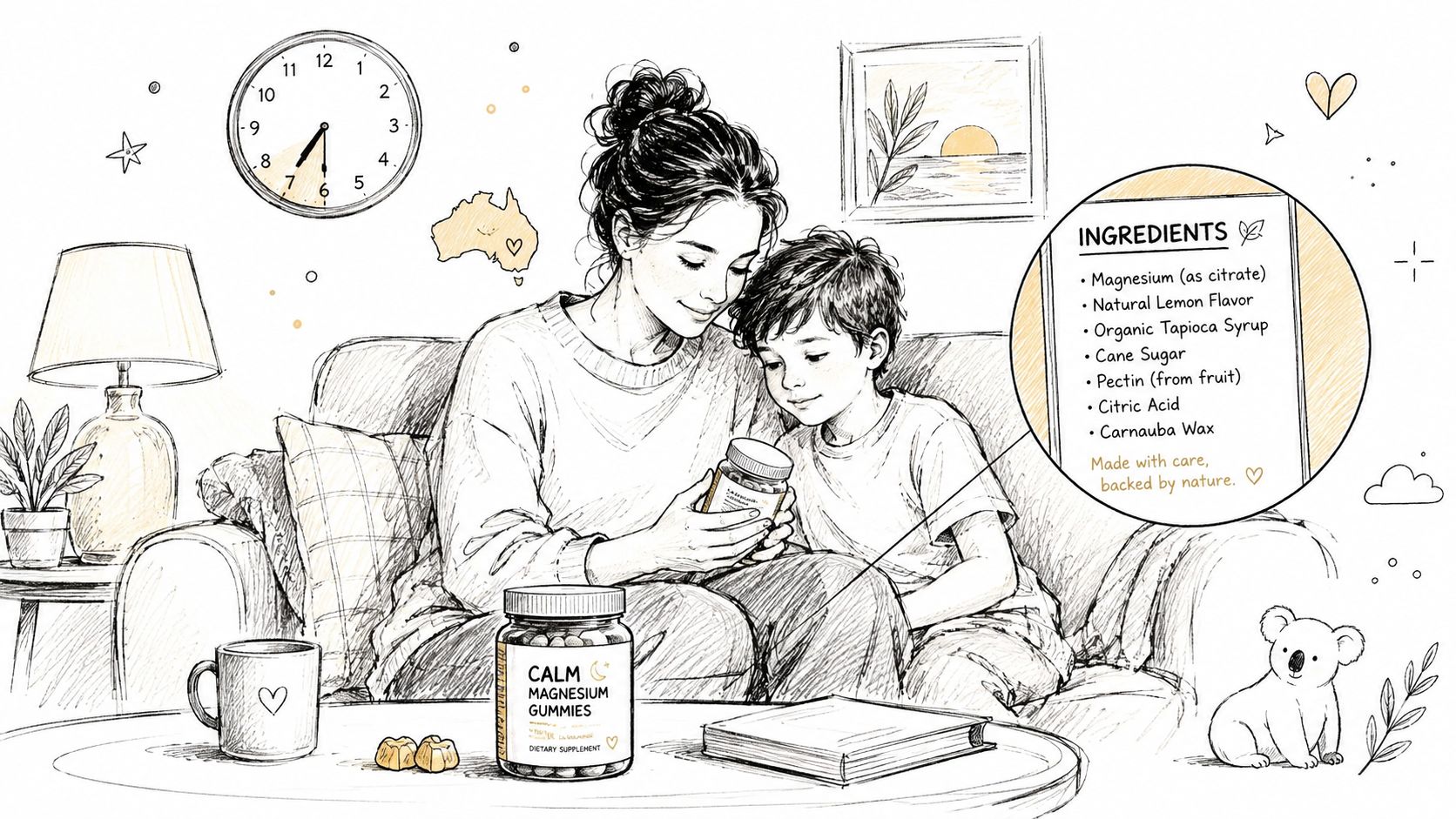
If you've ever wondered why one gummy says magnesium citrate, another says prebiotics, and a third says zero sugar, you're not alone. The quickest way to judge a product is to learn the ingredient categories, then read them against age, dose, and label rules, not hype. A useful place to start is this guide to best vitamins for kids, because calm products only make sense when they fit into the bigger picture of children's nutrition.
Table of Contents
- Why Calm Magnesium Gummies Ingredients Matter for Aussie Families
- The Active Magnesium Form and How It Works
- Supporting Ingredients and Their Roles
- Why the Magnesium Form, Dose, and Prebiotic Strain Were Selected
- Sweeteners, Gelling Agents, and the Zero Sugar Promise
- Allergen, Vegan, and Additive Claims Explained
- How a Calm Gummy Dose Fits Australian Magnesium RDIs
- Quick Reference Checklist for Reading a Calm Gummy Label
- Common Questions Parents Ask About Calm Magnesium Gummies
Why Calm Magnesium Gummies Ingredients Matter for Aussie Families
After-school noise, dinner refusal, and a bedtime negotiation that goes nowhere can leave parents feeling like they're managing three children at once, even when there's only one in front of them. That's why calm magnesium gummies ingredients deserve a proper look. They're not just a flavour list, they're a set of choices about how a child's supplement is built, how it's dosed, and what it's trying to support.
Start with the label, not the logo
A calm gummy can look simple on the shelf, but the ingredient list tells you what the product is. In Australia, magnesium-containing supplements for children sit under complementary medicine rules, so the label should make sense as a therapeutic product rather than a sweet snack. The practical test is straightforward, look for the magnesium form, the amount per dose, and any supporting ingredients that make the product easier to take or more relevant to family routines.
Practical rule: if you can't identify the magnesium source and the per-serving amount, you can't judge the product properly.
That matters because families don't buy calm gummies in isolation. They buy them alongside dinner, homework, sports, and the general chaos of a weekday evening. If the formula is built well, the ingredients should fit a child's routine without creating confusion, sugar overload, or label guesswork.
What parents should take away
The aim here isn't to memorise every ingredient. It's to learn a quick reading habit. Once you know how to sort the active magnesium, the support nutrients, the gelling system, and the sweetener profile, you can compare brands in about two minutes and make a calmer decision at the shelf.
A product like Calm is a good example of how this category is usually positioned in Australia, with magnesium citrate, vitamin B6, zinc, and prebiotics in a chewable format for children. The point isn't to chase a single brand. It's to understand the ingredient logic so you can decide whether any calm gummy suits your child's age, diet, and tolerance.
The Active Magnesium Form and How It Works
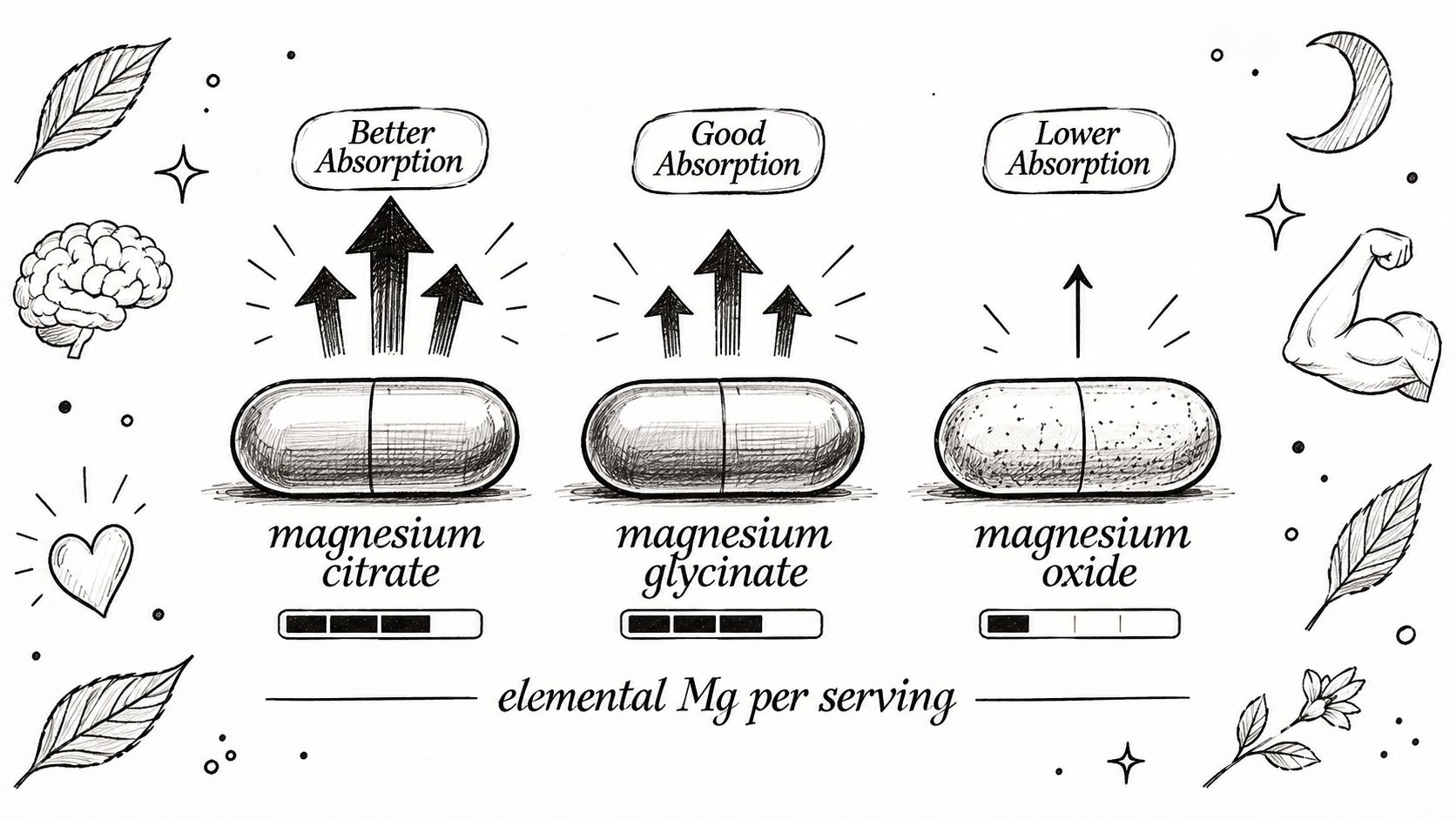
The first line on a calm gummy label that really matters is the magnesium form. For child-focused chewables, magnesium citrate is the common active form in the category, and that fits the way these products are usually designed, as soft, flavour-masked gummies rather than capsules or tablets. Magnesium's role is central because it's the mineral linked to the calming positioning, while the other ingredients are there to support the formula around it.
What elemental magnesium means
Parents often get tripped up by the difference between the compound name and the actual magnesium content. A label might list magnesium citrate, but the useful number is the elemental magnesium. That's the amount of magnesium the child is getting from the serving, not the total weight of the salt.
A useful reference point from an overseas calm gummy product is 60 mg elemental magnesium per gummy, or 120 mg per 2-gummy serving. That same reference label also shows how the active dose can sit inside a much larger compound amount, which is why the ingredient name alone never tells the full story. The maths is what keeps the label honest.
Why citrate is used so often
Magnesium citrate appears often in chewables because it's a well-characterised, bioavailable salt that works in a gummy matrix. In plain English, it's a form manufacturers can build into a soft chew without making the product chalky or difficult to dose. For Australian parents, that makes it easier to compare products that use different salts, because the active form affects both the label and how the product feels to take.
A child doesn't care what the supplement is called on paper. They care whether it tastes good, chews easily, and becomes part of the evening routine.
That's one reason the physical format matters too. Published CALM gummy labels show the standard technical pattern for this category, magnesium citrate carried in a soft gummy base with humectants, acidity regulators, and fruit flavouring. It's a practical delivery system, not a tablet dressed up in a sweeter outfit.
How to read the dose line
When you scan the back of pack, look for the serving size first, then the elemental magnesium per serve. Those two numbers belong together. If a label only gives the compound weight, you still don't know how much magnesium the child is taking.
Supporting Ingredients and Their Roles
The supporting ingredients in calm magnesium gummies ingredients aren't filler. They're there to shape the product's texture, taste, and nutritional profile, while keeping the magnesium the main act. In the category brief, the support ingredients are prebiotics, zinc, and vitamin B6, and each one plays a different role in the body.
Prebiotics
Prebiotics are often included because they help support digestion and gut health. In food terms, they show up naturally in ingredients like onions, chicory root, and garlic. In a gummy, they're used to round out the formula so the product does more than deliver a mineral in isolation.
That matters in picky eating households, where a child's diet can be uneven from day to day. A prebiotic isn't a replacement for vegetables or fibre-rich meals, but it does give the formula a broader nutritional profile than magnesium alone. That can be useful when the goal is a simple, child-friendly daily habit rather than a one-note supplement.
Zinc
Zinc is usually there for immune support and the body's everyday repair and recovery functions. It appears naturally in foods like beans, meat, and poultry, which helps explain why it's often framed as a support nutrient rather than the core calming active. In a calm gummy, zinc complements the magnesium rather than competing with it.
Vitamin B6
Vitamin B6 is a familiar partner in children's supplements because it supports mood regulation, neurotransmitter function, and immunity. Food sources include fish, poultry, and vegetables. For parents trying to understand the label, B6 is best read as the nervous-system support nutrient, while magnesium stays the main calming mineral.
Simple reading habit: if magnesium is the engine, B6, zinc, and prebiotics are the support systems around it.
A product like Daily Powers Calm combines magnesium citrate, vitamin B6, zinc, and prebiotics in a berry-flavoured gummy, which is a straightforward example of how the category is typically assembled. The important point is not that every child needs all four ingredients, but that each ingredient serves a different purpose in the final chewable formula.
Why the Magnesium Form, Dose, and Prebiotic Strain Were Selected
When a gummy formula goes through testing, the team usually adjusts three things first, the amount of magnesium, the type of magnesium, and the prebiotic source or strain. Those are the levers that change both how the product works and whether kids will take it. On paper, many combinations could look fine. In real households, only a few combinations survive taste, texture, and tolerance.
Dose is a design choice, not an afterthought
A lower dose of a more suitable magnesium salt can be more practical than a bigger dose of a poorly tolerated one. That's because children's products have to balance effect with ease of use. A gummy that's too strong, too gritty, or too hard to chew won't become part of a family routine, no matter how good the label looks.
The serving structure on a child-friendly calm gummy usually reflects that balance. The category example showing 60 mg elemental magnesium per gummy is a good illustration, because it's a measured amount rather than an aggressive one. That approach leaves room for food intake across the day and keeps the product in a more sensible range for a child's routine.
Why prebiotics get tested too
The prebiotic ingredient isn't chosen only for what it does on paper. It also has to work in a gummy, taste acceptable, and sit comfortably in a child's stomach. That's why the strain or source can change during testing. A formula might be nutritionally sound but still lose out if it's too chewy, too tangy, or not well accepted by fussy eaters.
Parents usually assume the hardest part is nutrition. In practice, acceptance is often the deciding factor.
That's especially true in the 4 to 12 age range, where texture sensitivity can be the difference between a product being used daily or abandoned after two tries. The best formulation is the one a family can keep using.
What this means in practice
A gummy can be reformulated with a different magnesium compound or a different prebiotic source and still be a legitimate supplement. The key question is whether the final version stays close to the intended dose, tastes good, and feels easy enough for a child to take consistently. That's why expert testing looks at both lab results and child response, not just ingredient theory.
Sweeteners, Gelling Agents, and the Zero Sugar Promise
Most parents get stuck here, because the gummy base can look like a chemistry lesson. The good news is that the gummy structure usually follows a predictable pattern, a gelling agent, a sweetener system, flavouring, and sometimes colour from natural sources. Once you know those parts, a zero-sugar label becomes much easier to verify.
Pectin versus gelatine
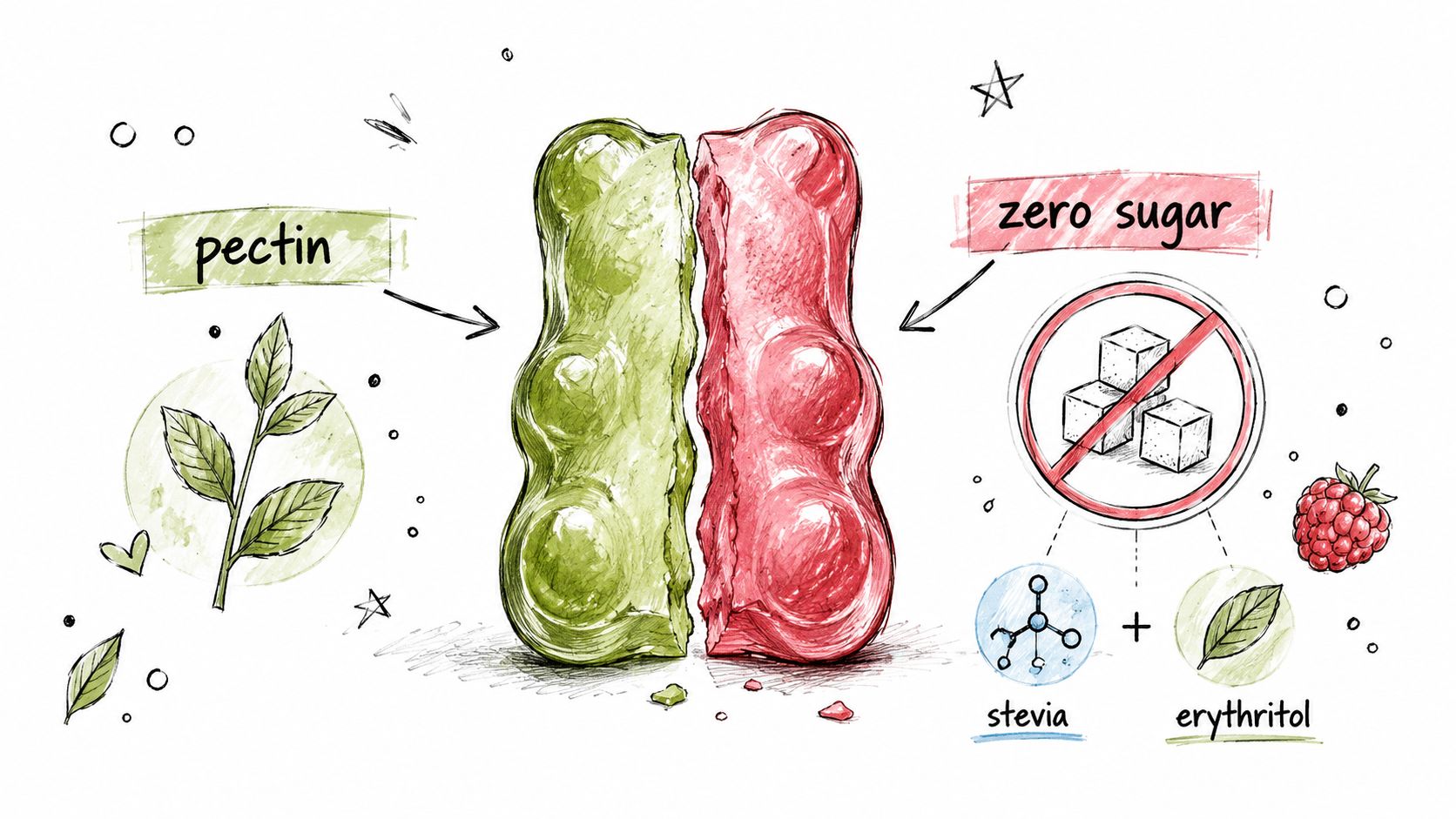
If a children's gummy is vegan, pectin is the gelling agent you're most likely to see. Pectin gives the chew its shape without using animal-derived gelatine. That makes it a common choice in family products that want to stay plant-based and easy to chew.
Published CALM gummy labels and similar products also show other technical supports in the matrix, such as agar, citric acid, and locust bean gum, which help with firmness, flavour balance, and mouthfeel. The takeaway is simple, the gummy base is doing a lot of work behind the scenes so the active magnesium can be delivered in a child-friendly way.
How zero sugar is usually built
A zero-sugar gummy still needs sweetness and texture, so manufacturers often use a mix of sweeteners and humectants. In the broader category, that can include sugar alcohols or polyols, and sometimes non-nutritive sweeteners. The label should make that structure visible. If the front says zero sugar but the ingredient list hides the sweetener system, keep reading before you buy.
A practical way to scan the pack is to look at the carbohydrate line, then the ingredient list. If the product is sugar-free, you should see a sweetening system that explains how the gummy still tastes good without added sugar. The texture and flavour need to work together, especially if the product is berry flavoured and aimed at children.
Allergen, Vegan, and Additive Claims Explained
Claims like vegan, no artificial colours or flavours, and free from statements look simple, but they only mean something if you know what to verify on the actual ingredient list. For parents managing allergies or dietary needs, that detail matters more than the front-of-pack promise. A gummy can be plant-based and still not suit every child.
Vegan means the gelling system matters
In a gummy, vegan usually means the product avoids gelatine and uses a plant-based gelling system such as pectin or agar. That's the technical difference parents should check first. If the texture is soft and chewy but the label says vegan, the base is almost certainly plant-derived rather than animal-derived.
The same thinking helps with allergen checks. A product can be vegan and still contain ingredients a specific child needs to avoid. So the ingredient panel always wins over the marketing line.
What no artificial colours or flavours usually means
On an Australian label, no artificial colours or flavours means the product isn't relying on synthetic colourings or flavour compounds for its sensory profile. That doesn't guarantee it's “free from everything”, it just tells you what type of additive system it isn't using. You still need to read the rest of the panel for the actual flavouring and any processing aids.
Natural berry flavouring is common in this category because it helps make a mineral gummy acceptable to children without making the formula look or taste medicinal. For families with sensitivities, the key distinction is between “no artificial” and “absolutely nothing extra”. They're not the same claim.
Allergen checks still matter
Parents of children with multiple sensitivities should still confirm the full ingredient panel, especially if the child reacts to a broad range of packaged foods. A formula can be low-additive and still include ingredients that don't suit every family. That's why the safest habit is to read the ingredient list, the allergen statement, and any storage or manufacturing notes every time you buy.
A clean label helps, but a clean label is not the same thing as a personal allergy clearance.
How a Calm Gummy Dose Fits Australian Magnesium RDIs
The simplest way to judge a calm gummy is to compare the elemental magnesium in one serve with the Australian magnesium RDI for your child's age. For children aged 4–8 years, the RDI is 130 mg/day. For boys aged 9–13 years, it is 240 mg/day, and for girls aged 9–13 years, it is 210 mg/day. Those figures come from the Australian Government's Australian Nutrient Reference Values for magnesium, and they give parents a sensible benchmark for thinking about serve size.
A useful way to read the label is to treat the gummy like one part of a bigger day, not the whole day's magnesium intake. The number on the pack tells you how much magnesium is in the serve, while the family diet still supplies the rest.
A worked example parents can use
If a gummy delivers 30 mg elemental magnesium per daily serve, that is a modest amount in the context of a child's full day of eating. It sits alongside food intake, not instead of it. If a product offers 60 mg elemental magnesium in a daily serve, that is still only a portion of the day's needs, and the exact share depends on the child's age group and on the magnesium already coming from food.
That is why “more” is not automatically better in a children's product. A dose can be too small to matter much, or larger than a child needs. The right dose is the one that fits the child's age, their diet, and the serving directions on the label.
Food still does the heavy lifting
Magnesium gummies are best read as a supplement to a balanced diet, not a replacement for magnesium-rich foods. Australian guidance treats magnesium as a nutrient children need from food and, when appropriate, from supplements as well. If a child eats a good mix of grains, legumes, nuts, seeds, and vegetables, the gummy is filling a gap rather than carrying the whole load.
The two-gummy daily serving used in some products is usually set to match both the formula and the intended age group. That serving pattern helps keep the product consistent. It also reminds parents to judge dose in context, not just by reaching for the bigger number on the front of the pack.
Quick Reference Checklist for Reading a Calm Gummy Label
A good calm gummy label should answer five questions fast. What is the magnesium form, how much elemental magnesium is in a serve, what else is included, how is the gummy set, and does the claim match the ingredient list? If you can't answer those in under a minute, the label probably needs a second look.
Parent checklist
- Active magnesium salt: Look for magnesium citrate or another clearly named form, not just “magnesium” by itself.
- Elemental amount: Find the per-serving elemental magnesium figure, because that's the number that matters most.
- Support nutrients: Check for prebiotics, zinc, and vitamin B6 if the product is positioned as a broader calm formula.
- Gelling system: Prefer a plant-based base such as pectin if you need a vegan gummy.
- Sweetener profile: Confirm the product really is zero sugar by reading the ingredients and carbohydrate line.
- Additive statement: Look for no artificial colours or flavours, then verify the full panel for your child's specific needs.
For a transparent product page example, the Daily Powers expert advice blog is worth checking alongside the ingredient panel because label reading works best when the product page and pack agree.
A simple rule for comparison shopping
If two calm gummies look similar, compare the magnesium form first, then the elemental dose, then the sweetener and gelling system. That order keeps you focused on the parts that affect age fit, taste, and consistency. The marketing front can wait until the back of pack makes sense.
| Ingredient Category | Example on Label | Function in the Gummy |
|---|---|---|
| Active Magnesium Salt | Magnesium Citrate | Delivers elemental magnesium for the calming role |
| Supporting Nutrient, Prebiotics | Chicory Root Fibre | Supports digestion and gut health |
| Supporting Nutrient, Vitamin B6 | Pyridoxine | Aids mood regulation and neurotransmitter function |
| Supporting Nutrient, Zinc | Zinc Citrate | Supports immune function and daily repair |
| Gelling Agent | Pectin | Provides a vegan, soft chewable texture |
| Sweetener System | Maltitol and Stevia | Delivers a pleasant berry flavour with zero added sugar |
| Flavour and Colour | Natural Berry Flavour | Gives child-friendly taste with no artificial colours or flavours |
Common Questions Parents Ask About Calm Magnesium Gummies
A parent often looks at a calm gummy label and wants one clear answer, is this suitable for everyday use? The practical answer depends on three things, the child's age, the label directions, and what else the child already gets from food. A gummy is usually part of a regular routine, so it needs to be easy enough to use consistently without turning the evening into a daily standoff.
When should kids take them
Many families give a calm gummy during the evening wind-down, often around dinner or before bed. The exact timing matters less than using it the same way each day. If your child tolerates chewables better after food, that can be the right time. If the bedtime routine is the only moment that sticks, that works too.
What if my child dislikes chewables
Children often accept a berry-flavoured gummy better than parents expect, especially when the texture is soft and the serving feels manageable in a small mouth. If the chew is still a struggle, do not push it. A supplement only has a place in the routine if the child will take it.
How is this different from a powder or tablet
The main difference is adherence, which means whether a child will take it without a fuss. Powders can be flexible, and tablets can be efficient, but many children resist both. A chewable format lowers the friction, which is why the texture and flavour deserve as much attention as the magnesium itself.
When should I pause and ask for advice
If a child has a medical condition, takes other supplements, or reacts badly to a new ingredient, pause use and speak with a healthcare professional. The same advice applies when a child has several dietary restrictions or a history of sensitivities. The label tells you what is inside the gummy, but it cannot tell you how your child's body will respond.
A label can still help you make a safer first pass. Start with the magnesium form, check the serving size against the directions, and then scan the other ingredients for anything that does not suit your child's diet.
How do I compare one calm gummy with another
If two gummies look similar, compare the magnesium form first, then the dose, then the sweetener and gelling system. That order keeps the focus on what affects use at home, such as age fit, taste, and how steadily the product can be given. The front of pack can look friendly, but the back of pack is where the comparison starts.
For parents who want a transparent product page example, the Daily Powers expert advice blog is worth checking alongside the ingredient panel, because label reading works best when the product page and the pack agree.
The right gummy is the one your child can take calmly, safely, and without a nightly battle.
If you want a children's calm gummy that keeps the ingredient list clear and the routine simple, explore the range at Daily Powers. Read the label, compare the magnesium form and dose, and choose the option that fits your child's age, diet, and evening routine.