

Every winter, parents get sold the same easy story, that a child needs an immune vitamin because it's an "immune" vitamin. That's too blunt to be useful. The better question is simpler and more practical, does your child have a nutrient gap, or are you buying a gummy to soothe the worry that comes with coughs, busy school terms, and fussy eating?
Australian nutrition data point in a different direction from the marketing noise. For most children aged 2 to 11, vitamin intake from food is generally adequate, with calcium standing out as a more common shortfall than vitamins themselves (ABS food and nutrition data). That doesn't mean supplements are never useful. It means children's immune vitamins should be a targeted decision, not a reflex.
Table of Contents
- Do Children Actually Need Immune Vitamins
- The Key Nutrients Behind Immune Support
- Sugar-Free, Vegan, and Clean Label Compared
- How to Audit Any Children's Immune Vitamin Label
- Building a Daily Supplement Routine That Sticks
- Common Misconceptions Parents Have About Immune Vitamins
- A Simple Decision Framework for Your Family
Do Children Actually Need Immune Vitamins
A child who eats a fairly varied diet usually does not need a bottle of gummies. That is the default view, and it should stay that way. The Australian Bureau of Statistics found that, in 2023, inadequate intake from food and beverages remained below 10% for every vitamin among children under 12 (ABS food and nutrition data). If your child is getting fruit, vegetables, dairy or alternatives, grains, proteins, and a mix of foods across the week, an “immune” label is not a buying signal.
First, work out what problem you're trying to solve
Separate everyday picky eating from a real nutrient gap. A child who skips broccoli for a week is in a different position from a child on a highly restricted diet, a child with a diagnosed deficiency, or a child with a medical condition that changes nutrient needs. That is the point where a supplement can earn its place.
Practical rule: buy for a specific gap, not for a vague promise of “better immunity”.
There are four times I would seriously consider a children's immune vitamin. The diet is restricted enough that food variety is clearly poor. A clinician has identified a deficiency or is monitoring one. A medical reason changes nutrient needs. A supplement is being used as a short-term top-up during a period of low intake.
There are also four times I would skip it. If your child eats well overall, if the issue is mainly texture or colour preferences, if you are hoping a gummy will prevent routine bugs, or if you are already stacking several fortified products, you are probably overbuying. Supplements do not replace sleep, vaccination, hygiene, or a decent plate of food. That is the standard I use with parents at the kitchen bench.
The Key Nutrients Behind Immune Support
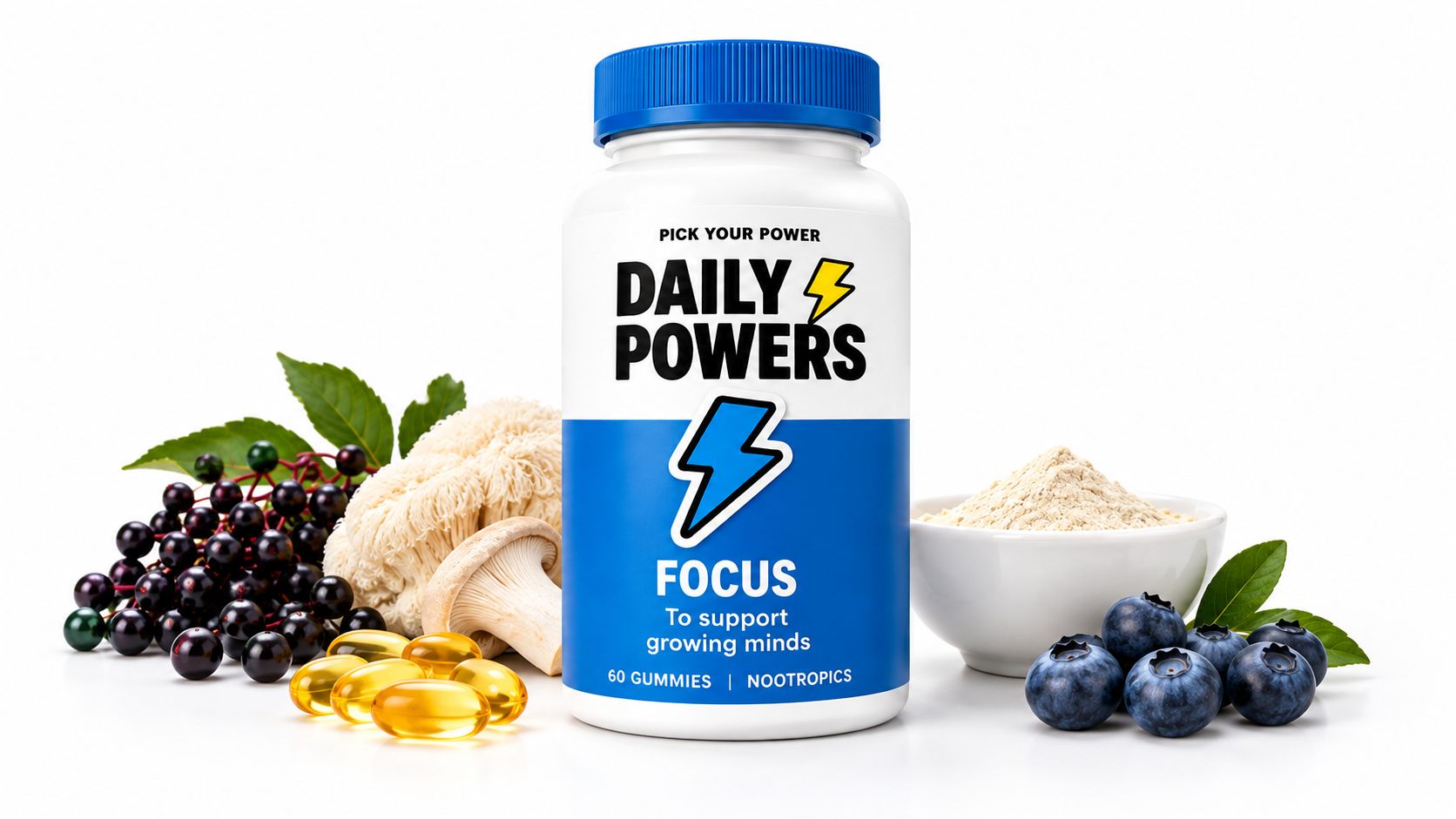
Parents usually look for one of a few nutrients on the label. That's sensible, because immune support is mostly about understanding what's inside the gummy and whether the child's diet already covers it.
Start with the basics, not the buzzwords
Vitamin C is the easiest to understand. In Australia and New Zealand, the NHMRC lists a recommended dietary intake of 25 mg/day for children aged 4 to 8 years and 45 mg/day for children aged 9 to 13 years (NHMRC nutrient reference values). It supports collagen synthesis, antioxidant protection, and normal immune-cell function. That doesn't make it magic. It means fruit and vegetables matter, and a gummy is only a top-up when those foods aren't happening consistently. If you want a plain-language guide to vitamin C supplements, use this vitamin C resource as a reference point for label reading.
Vitamin D shows up because families know it's hard to get enough from food alone. Zinc matters because it supports immune function and growth, but more is not better. Elderberry, prebiotics, and mushroom polysaccharides are usually included as supportive ingredients rather than core nutrients, which is why you should read them as part of the whole formula, not as standalone miracles. In Focus, those ingredients appear as mushroom polysaccharides, vitamin D3, zinc gluconate, elderberry fruit powder, and prebiotic fructooligosaccharides, which gives parents a concrete example of how these immune-adjacent ingredients are bundled in one children's gummy.
Common Immune-Support Nutrients at a Glance
| Nutrient | Role in immunity | Common food sources |
|---|---|---|
| Vitamin C | Supports immune-cell function and antioxidant protection | Fruit and vegetables |
| Vitamin D | Supports normal immune regulation | Fortified foods, some fish, sunlight exposure |
| Zinc | Supports immune function and growth | Meat, legumes, nuts, seeds, fortified foods |
| Elderberry | Often included as a supportive botanical ingredient | Usually appears in supplements, not everyday foods |
| Prebiotics | Feed beneficial gut bacteria | Plant fibres, whole grains, fruit, vegetables |
| Mushroom polysaccharides | Included for immune-support positioning | Typically supplement-only, not a routine dietary source |
Food-first still wins. A supplement earns its place when the plate is thin, not when the label sounds impressive.
Sugar-Free, Vegan, and Clean Label Compared
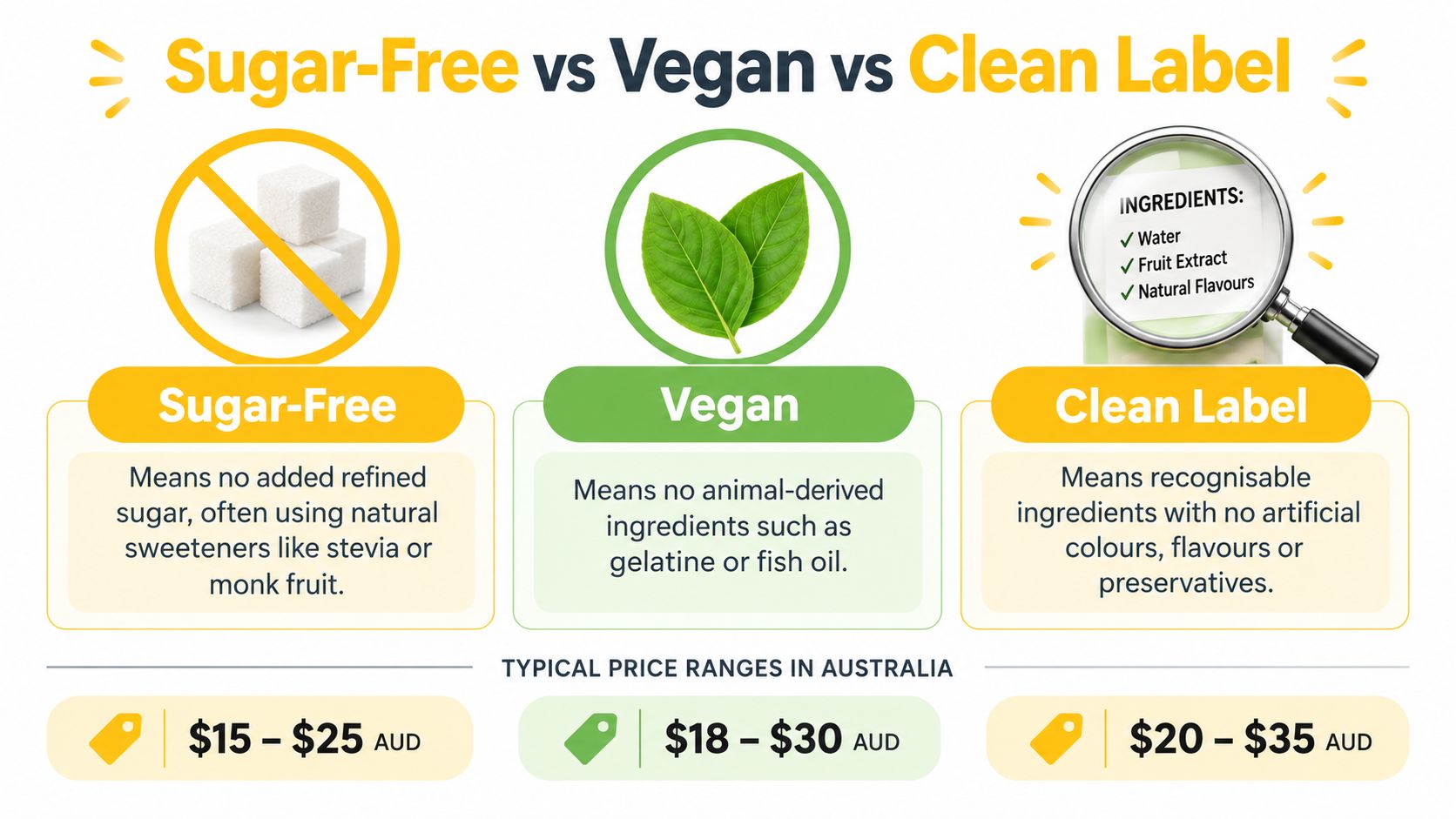
The label arguments matter because kids don't take supplements in a spreadsheet. They take them at breakfast, after school, or half-asleep on the way to the bathroom. The formulation has to work in real life.
Sugar-free is about habit, not virtue signalling
Sugar-free gummies are easier to defend for daily use because they avoid adding extra sweetness to a child's routine. That doesn't make them automatically healthier in every other sense, but it does remove one obvious downside. If a product uses a sugar-free approach and still gets a child to take it consistently, that's a legitimate win for adherence.
Vegan matters when the family's values or needs demand it
Vegan gummies avoid animal-derived ingredients such as gelatine. That matters for families who want a product that fits dietary rules, and it also matters when you're comparing texture and repeat use. If you're researching that angle, this vegan kids' multivitamin guide is a useful comparison point. A vegan gummy isn't automatically superior, it's just better aligned for some households.
Clean label is mostly about trust
"Clean label" shouldn't mean vague. It should mean recognisable ingredients, no artificial colours or flavours, and a formula a parent can explain. Brave fits that style of formulation as a vegan, zero-sugar gummy with no artificial colours or flavours, which is why products like it tend to appeal to families who want a simpler daily ritual rather than a candy-like supplement. That's useful if your child resists tablets, but it's still the label, dose, and total nutrient load that decide whether the product is sensible.
The point isn't to chase the fanciest wording. It's to choose a product your child will take without turning every dose into a negotiation.
How to Audit Any Children's Immune Vitamin Label
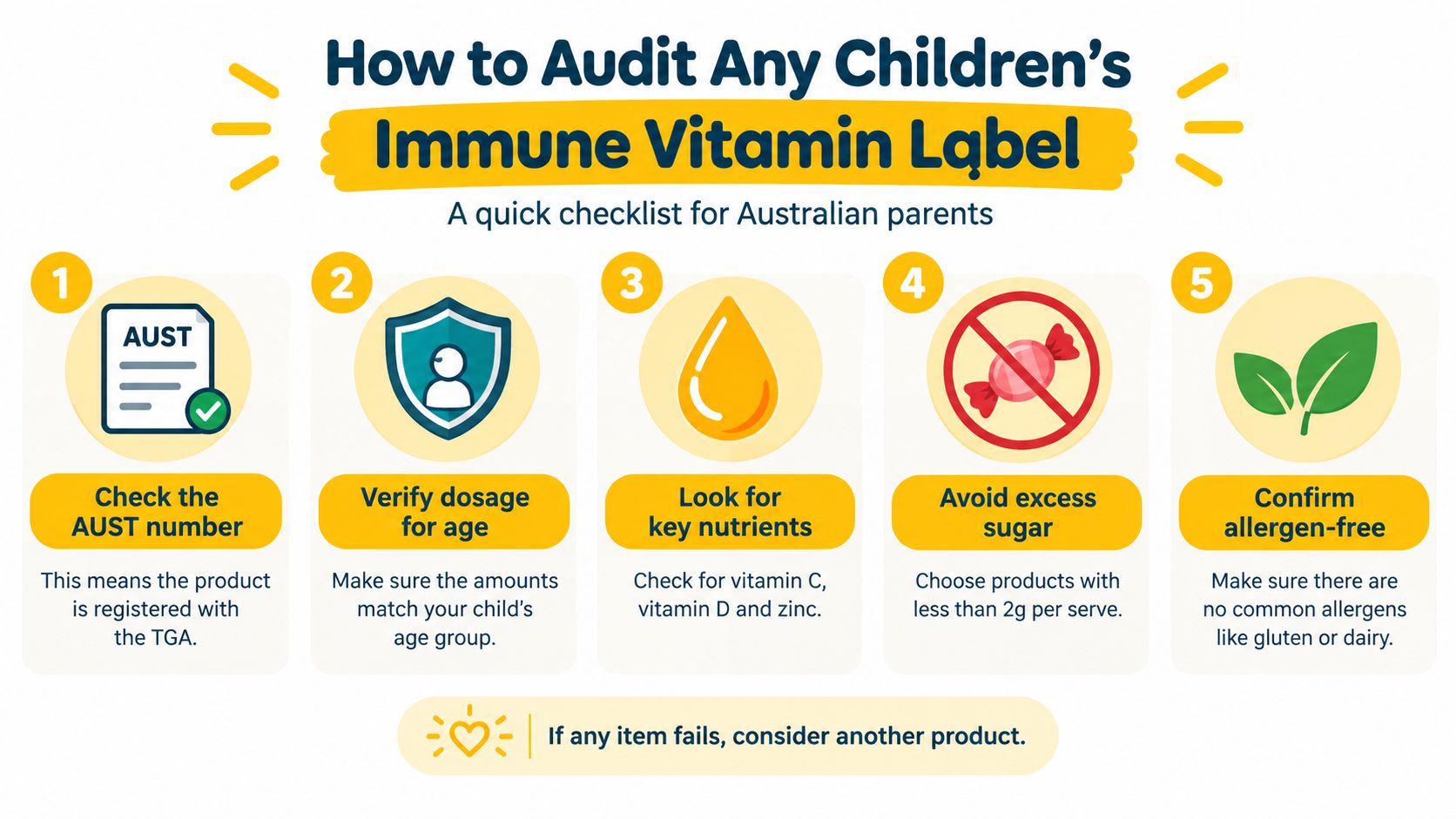
Parents usually waste time comparing branding. The label is what stops bad purchases.
Run the same five checks every time
- Check the AUST number. If a product is supplied as a therapeutic good, the label should show it clearly, and you should be able to verify it through the TGA framework (TGA guidance).
- Match the dose to age. The same gummy can suit one child and be too much for another.
- Look at the full nutrient load. Count everything your child already gets from other supplements and fortified foods.
- Watch for stacking. A multivitamin, gummy, drink powder, cold-and-flu product, and fortified foods can push intake higher than you expect.
- Check the form of the nutrient. The ingredient name tells you how the product is built, and that affects tolerance and overlap.
The practical test is simple. Read the label as if you are responsible for the whole day's intake, not just one bottle.
If a child already takes one supplement, the next question is what that does to the total daily load.
That is where vitamin B6 needs a closer look. The TGA warns that peripheral neuropathy has occurred at comparatively low supplemental doses of vitamin B6, so combined intake from multiple products matters, including multivitamins and mineral supplements. If a label hides the amount, blurs the serving size, or makes the total hard to work out, choose another product.
One clear plan beats guesswork every time. A child does not need more products, just a label you can add up.
Building a Daily Supplement Routine That Sticks
The best gummy on the shelf fails if it lives in the wrong place. Parents don't lose consistency because they forgot a nutrient. They lose it because the bottle ends up in a drawer, the child hates the taste, or the household runs out on a hectic week.
Anchor it to an existing habit
A weekday morning works better when the supplement sits beside something already automatic, like breakfast or brushing teeth. Don't create a new ritual from nothing. Attach the gummy to a moment that already happens every day, and keep it boring.
After a few weeks, the routine becomes less about persuasion and more about repetition. That's why subscription delivery can help, especially when it includes pause and skip options. One example is the kids routine chart, which is useful because it reminds parents that a supplement has to fit into family life, not sit outside it.
If you're comparing delivery models, Daily Powers offers automated deliveries with flexible management and a 30-day satisfaction guarantee, which lowers the friction of trying a gummy system for the first time. That kind of setup matters because the most common failure mode is simple: the bottle runs out and nobody replaces it.
The routine does not need to be perfect. It needs to be repeatable, tolerable, and easy enough that your child recognises it as part of the day rather than a fight.
Common Misconceptions Parents Have About Immune Vitamins
Parents tend to believe three things at once, and all three can be wrong. More ingredients must be better. A gummy can replace good food. Any vitamin marketed for immunity must be worth buying.
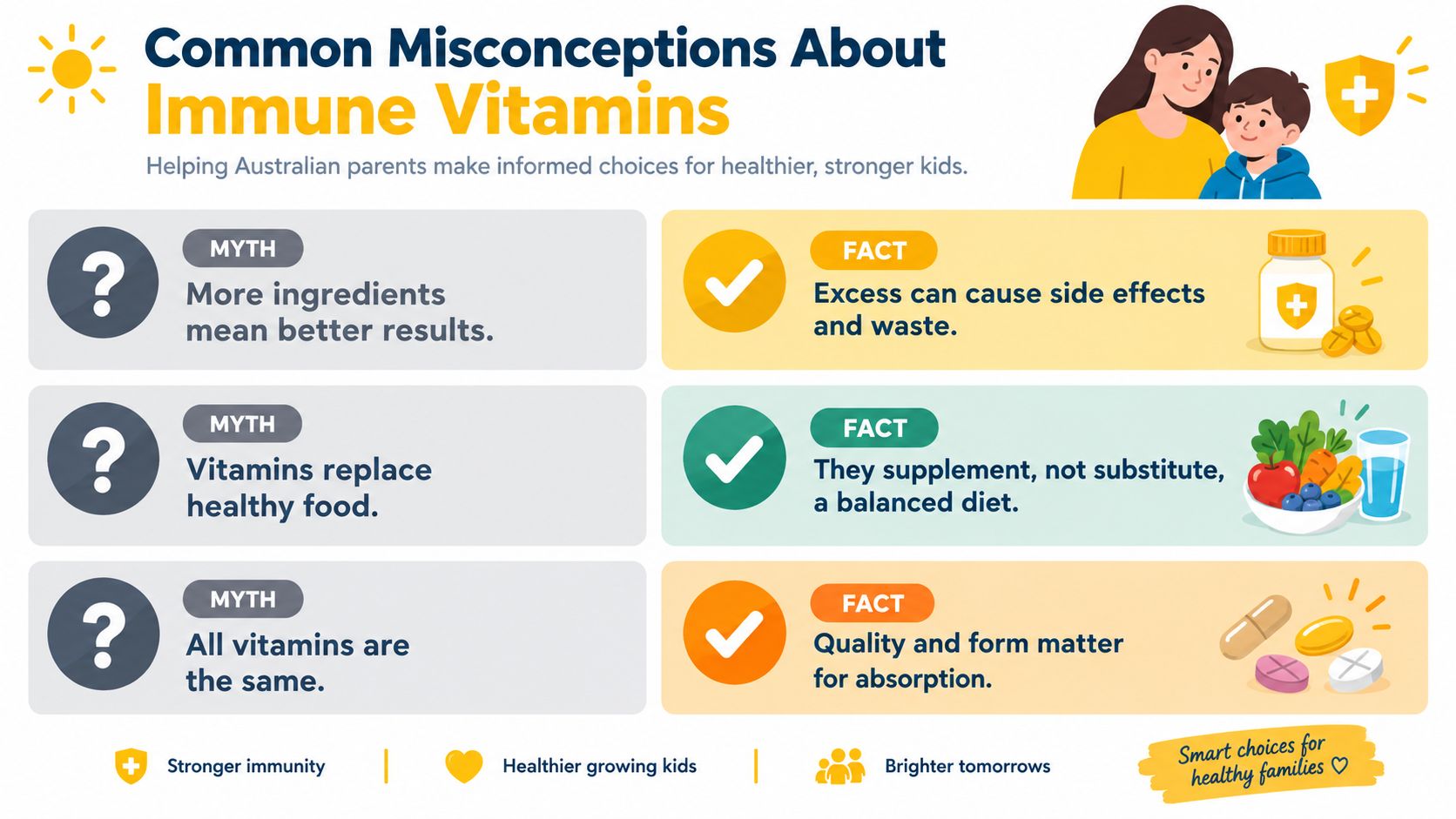
The facts are less glamorous, and more useful
Myth one, more ingredients mean better results. Reality, extra nutrients can create side effects, duplicate exposure, and waste. You want the right ingredients in the right dose, not the longest list.
Myth two, vitamins replace healthy food. They don't. They supplement a diet, they don't substitute for it. If the plate is empty of fruit, vegetables, protein, and fibre, a gummy is a weak band-aid.
Myth three, all vitamins are the same. They're not. Form, dose, and ingredient clarity matter, especially for children who already take medicines or have sensitive digestion.
That's why I'm direct about this topic. Some children do need a supplement, but plenty don't. And even when they do, the right move is still to ask what gap you're filling, whether the dose fits the child, and whether the product can be used safely alongside everything else they eat or take.
A Simple Decision Framework for Your Family
The decision gets easier when you reduce it to three questions. What gap am I trying to fill? What dose does my child need? What oversight do I have if I choose a supplement?
If you can't answer those questions cleanly, don't buy yet. If you can, then check the label against three essentials: the AUST number, an age-appropriate dose, and the full nutrient load across all products. After that, think about the habit side, because the right product still needs an anchor moment, a flavour your child accepts, and delivery that doesn't fail when life gets busy.
For families who do want a sugar-free, vegan gummy with transparent labelling, Daily Powers' Brave and Focus are examples worth comparing against the same checklist. They're not for every child, and they shouldn't be treated as a shortcut around food, sleep, or medical advice. They are two product options that fit the kind of routine many parents are trying to build.
Your job isn't to chase immunity in a bottle. Your job is to decide whether a supplement fills a real gap, fits the child in front of you, and can be used without creating new problems.
If you want a cleaner way to compare children's immune vitamins, look at Daily Powers' range and read the labels with the same checklist you'd use for any brand. Visit Daily Powers to review the products, check the ingredient panels, and decide whether Brave or Focus fits your child's routine.