

Fibre is one of the most overlooked levers in a child's daily diet. In Australia, children aged 2–18 had a median fibre intake of 18.2 g per day, yet only 42.3% met the Adequate Intake. The gap was even clearer in the 2011–2012 national survey, when more than half of children fell below the benchmark. Australian research on children's fibre intake
That matters because fibre supports more than regular bowel movements. It adds bulk, helps some foods release energy more steadily, and feeds the gut through a mix of soluble and insoluble fibres. But fibre works best with fluids. If you suddenly pile bran, seeds and legumes onto a child's plate without enough water, bloating and resistance can follow.
Build it gradually. For ages 1–3, Australia's Adequate Intake is 14 g per day, rising to 18 g for ages 4–8. Older children need more, with targets ranging from 20 g to 28 g depending on age and sex. Eat for Health's Australian fibre reference values
The list below is a practical toolkit, not a perfect-meal contest. Each food has a simple serving idea and a Daily Powers gummy pairing, so you can turn fibre into a repeatable morning, lunchbox or evening routine.
Table of Contents
- 1. Whole Grain Oats
- 2. Berries Fresh and Frozen
- 3. Legumes Beans Lentils and Chickpeas
- 4. Chia Seeds
- 5. Whole Wheat Bread and Pasta
- 6. Vegetables With Edible Skins
- 7. Pear and Apple With Skin
- 8. Flaxseeds and Ground Flaxseed
- 8-Item Comparison of High-Fiber Foods for Kids
- Building a Fibre-Rich Routine Your Family Will Actually Stick To
1. Whole Grain Oats
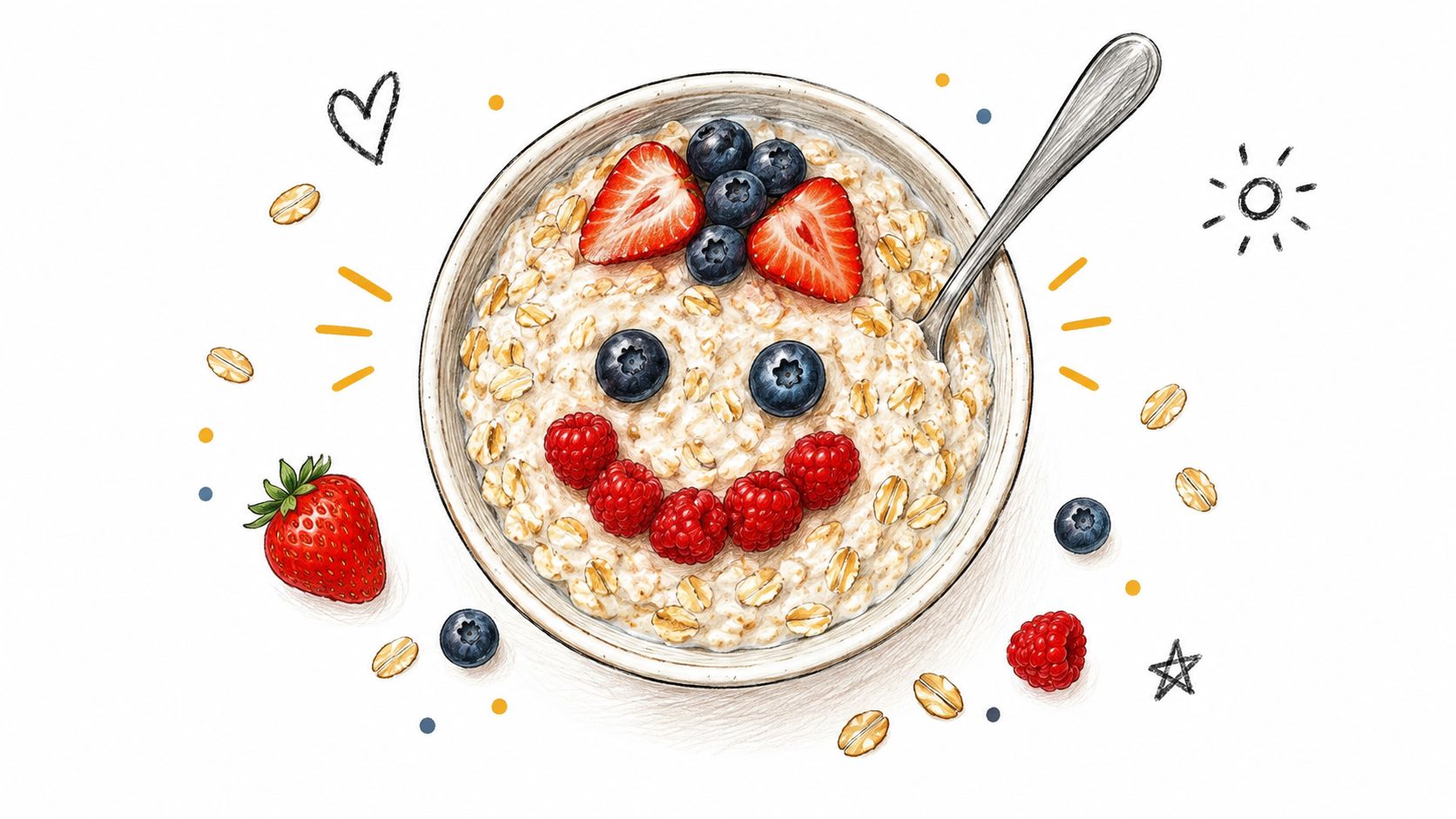
Oats are the easiest breakfast foundation for a child who needs more fibre without a dramatic menu change. They're soft, familiar and adaptable, with soluble fibre that works well in porridge, overnight oats and smoothies. The texture also gives you room to add fruit, yoghurt or nut butter without making the meal feel unfamiliar.
For a school morning, combine rolled oats with milk or a suitable milk alternative, natural vanilla and berries. Overnight oats are useful when mornings are rushed because you can prepare them the night before and serve them cold. If your child prefers more texture, try steel-cut oats, but start with rolled oats if chewiness is likely to cause refusal.
Practical rule: Change one part of the breakfast first. Keep the flavour familiar while the fibre increases.
The Daily Powers Brave gummies can sit alongside an oat-based breakfast as a simple daily multivitamin routine. Brave contains essential vitamins for general wellbeing, comes in a kid-friendly format, and is vegan with no artificial colours or flavours. It complements breakfast, but it doesn't replace the fibre, fluid or variety that oats and fruit provide.
If your child is prone to constipation or you're building a broader gut-friendly routine, use the practical guidance in this article about gut health supplements. Keep the change gradual, offer water with breakfast and let your child choose toppings. A few berries and a familiar drizzle of yoghurt often work better than presenting a plain bowl as a nutritional test.
2. Berries Fresh and Frozen
Berries make fibre easier to serve because they're naturally sweet, colourful and useful in foods children already accept. Strawberries, blueberries, raspberries and blackberries work in porridge, yoghurt, smoothies and snack boxes. Frozen berries are especially practical for Australian families because they're available year-round and can be blended into a smooth texture.
Start with a breakfast bowl of oats, yoghurt and blueberries. For an after-school snack, blend frozen berries with yoghurt or milk, then serve the mixture as a smoothie bowl with a spoon. If seeds or texture are a problem, blend thoroughly rather than insisting on whole berries.
Fresh berries can be expensive outside peak season, so frozen fruit is the sensible everyday option. Save fresh berries for lunchboxes or family snacks when they're good value. Wash fresh produce before serving, and cut larger berries appropriately for your child's age and eating skills.
Make the pairing part of the routine
Daily Powers Focus is a blueberry-flavoured gummy designed for a daily routine around school, homework and learning. Its listed formulation includes mushroom polysaccharides, vitamin D3, zinc, elderberry fruit powder and prebiotics. The product information states that it's vegan, sugar-free and free from artificial colours and flavours.
Serve berries as the food, and treat the gummy as a separate routine cue. That distinction matters. A supplement can complement a varied diet, but it can't provide the fibre, fluid or chewing practice that whole fruit provides.
A useful script: “Berries first, then your Focus gummy.” Short, predictable language reduces negotiation and helps children connect the routine with the school day.
3. Legumes Beans Lentils and Chickpeas
Legumes belong in a child's regular rotation because they provide fibre and plant protein in foods that fit ordinary family meals. Beans can disappear into tomato sauce, lentils can soften a bolognese, and chickpeas can become hummus for a lunchbox. Start with a spoonful or spread rather than serving a large bowl of plain legumes.
Use canned beans or chickpeas when time is tight. Choose a low-salt option when available, rinse them, and mash them into a spread. Hummus with carrot sticks, cucumber or wholegrain crackers makes a practical lunchbox combination. At dinner, stir red lentils into a familiar pasta sauce, or serve lentil-based pasta with a sauce your child already accepts.
Australian child-health guidance gives useful examples of fibre contributions. The Royal Children's Hospital fibre guide lists about 7 g of fibre in half a cup of baked beans, 4 g in half a cup of wholemeal pasta, and 5 g in half a cup of peas. Peas show how a familiar side dish can lift fibre without changing the whole meal.
If legumes are new, increase them gradually. A sudden increase can cause gas, while smaller serves give the gut time to adjust. Offer water with the meal and keep the rest of the plate familiar.
A calm lunchbox approach
Daily Powers Calm is a berry-flavoured magnesium gummy containing magnesium citrate, vitamin B6, zinc and prebiotics, according to its product information. It is positioned as part of a routine supporting relaxation and emotional wellbeing.
Make the hummus lunchbox the midday anchor, then offer Calm after school as the wind-down cue. The gummy marks the shift from school mode to home mode, while beans or chickpeas carry the fibre load at lunch. Keep the routine simple and consistent.
For more practical ideas, use this guide to gut health for kids. Keep the message positive, and do not turn hummus into a test your child can fail.
4. Chia Seeds
Chia seeds are small enough to add without changing the main meal, but they need careful handling. Once mixed with liquid, they absorb moisture and create a gel-like texture. That makes chia useful in puddings and smoothies, but it also means you should serve it with adequate fluid and avoid scattering dry seeds over food where a child may struggle with the texture.
Start with a tablespoon mixed into yoghurt, porridge or a smoothie. Let the mixture sit before serving so the seeds soften. Chia pudding works as an evening snack when mixed with milk or a suitable alternative and refrigerated overnight. Add berries or mashed pear for sweetness rather than relying on added sugar.
Keep the texture child-friendly
A child who rejects chia pudding may accept chia blended into a smoothie. Another may prefer it stirred through oats where the texture is less obvious. Don't increase the amount just because the first serve went well. Fibre tolerance develops through repetition, not one oversized portion.
The same principle applies to all high fibre foods for kids. Offer a modest addition, provide water and watch how your child responds. If bloating or discomfort persists, stop increasing the fibre and speak with a qualified health professional.
Chia also gives you a useful breakfast-to-evening pattern. Add a small amount to morning oats, then use a softened chia pudding later in the day if your child enjoys it. Keep the food routine separate from any supplement routine, and follow the product label when using a children's gummy.
5. Whole Wheat Bread and Pasta
The simplest fibre upgrade is often a swap, not a new recipe. Replace white bread with wholegrain bread, or move from refined pasta to wholemeal pasta while keeping the fillings and sauce familiar. Wholegrain options retain more of the grain's outer layers, so they generally provide more fibre than refined versions.
The Better Health Channel comparison shows the practical difference. Four slices of wholegrain bread provide about 10.7 g of fibre, compared with about 3.8 g for white bread, while one cup of frozen mixed vegetables provides about 7.6 g, compared with about 3.8 g for a half-cup serve. Better Health Channel guidance on dietary fibre
You don't need to change every product at once. Start with the bread used for school sandwiches, then try a mixed pasta dish at dinner. Toasting wholegrain bread can improve its texture, and a familiar filling, such as cheese, egg or chicken, can make the change less noticeable.
Use a transition that protects acceptance
- Keep the filling the same: Change the bread before changing the sandwich contents.
- Blend pasta types: Mix wholemeal and white pasta while your child gets used to the flavour and texture.
- Use a reliable sauce: Tomato, cheese or pesto can soften the stronger taste of wholemeal pasta.
- Offer water: Fibre-rich meals need fluids to support comfortable digestion.
For more lunchbox ideas that work around food refusal, use these lunch ideas for picky eaters. Your goal is a sandwich or pasta meal your child eats, not a technically perfect option that comes home untouched.
6. Vegetables With Edible Skins
Sweet potato, carrots and broccoli give you three different textures, colours and serving styles. Sweet potato can become soft wedges or fries, carrots can be cut into coins, and broccoli can be served as small “trees”. Leaving edible skins on suitable vegetables preserves useful fibre, but preparation still needs to match your child's eating ability.
Roast sweet potato with a little oil and minimal salt for an after-school snack. Serve it with hummus or yoghurt dip if your child likes dipping. Steam broccoli until just tender, not mushy, and add a familiar cheese sauce or serve it beside a food your child already accepts.
Carrots work well raw for older children who can manage the texture, or cooked until soft for younger children. Cut food into manageable shapes and supervise children while they eat. The safest presentation is more important than squeezing every possible gram of fibre into one serve.
Make vegetables predictable
Use the same vegetable in different forms across the week. A child who rejects steamed broccoli may accept roasted broccoli, finely chopped broccoli in a fritter, or small florets alongside pasta. Keep offering it without pressure, and let dips do some of the acceptance work.
Pair an after-school vegetable snack with Daily Powers Brave only if you haven't already used that product in the routine. Brave is a daily multivitamin gummy for general wellbeing, with a kid-friendly flavour and texture, and it contains no artificial colours or flavours. The gummy can anchor the habit, but the vegetable remains the source of fibre and food variety.
For dinner, use Focus only where it suits your household routine and follow the product directions. Don't frame a gummy as payment for eating vegetables. Children should learn that nutritious foods belong in everyday meals, not that they must earn them.
7. Pear and Apple With Skin
A whole pear or apple is one of the easiest fibre wins for a child's lunchbox. Serve it unpeeled when your child can safely manage the skin, since peeling removes some fibre. Pears offer a soft, sweet bite, while apples provide a firmer texture and travel well without much preparation.
One pear can contribute a useful amount of fibre to a child's day. That makes familiar fruit practical, not secondary to specialised products. Build the habit through repeated, low-effort servings rather than trying to add fibre to every recipe.
Pack the fruit whole, or slice it at home and leave the skin on. If your child rejects the texture, avoid a mealtime battle. Cook the fruit into a soft sauce, blend it into a smoothie, or grate it into oats. Keep presenting whole fruit at another meal so the child continues to see and handle the skin.
Build the snack around what already works
- For school: Pack a firm apple or pear beside a familiar sandwich.
- For afternoons: Serve sliced fruit with water before homework or sport.
- For texture-resistant children: Cook or blend the fruit, then offer small amounts of skin-on fruit during calmer meals.
- For variety: Alternate apples and pears instead of introducing a different fruit every day.
Pair the lunchbox apple or pear with Daily Powers Brave at breakfast if your family already uses that gummy. This creates a simple morning routine, with the multivitamin and fibre-rich fruit supporting the same start to the school day. Keep the roles clear: fruit supplies fibre, while the gummy fits the family's daily multivitamin habit.
A practical pattern is fruit at breakfast or in the lunchbox, water alongside it, and another familiar fibre food later in the day. Consistency matters more than finding a perfect preparation.
8. Flaxseeds and Ground Flaxseed
Ground flaxseed is a quiet fibre boost for children who reject visible seeds. Stir it into porridge, yoghurt, a smoothie or muffin batter, where it blends into foods they already eat. Ground flaxseed is easier to use than whole flaxseed because it mixes more evenly into soft foods.
Start with a small amount and increase gradually. Store ground flaxseed in the refrigerator or freezer, and check its smell before use. A fresh product should not smell strongly bitter or paint-like. Whole seeds can be ground as needed, but the simplest routine for busy families is to keep a small sealed container of ground flaxseed chilled and ready.
Small changes win here: Add flaxseed to one reliable food every day rather than scattering it across meals your child may refuse.
A berry smoothie with milk or a suitable alternative, oats and ground flaxseed makes a useful breakfast combination. You can also add it to homemade muffins, but don't let baking become the only way your child gets fibre. Pair baked goods with fruit, yoghurt or another whole food so the routine remains varied.
Match the addition to the child
For a younger child, mix flaxseed into a smooth food and serve a modest amount. For an older child, stir it through cereal or yoghurt and let them choose the flavour combination. Offer water with the meal, especially when you're adding multiple fibre-rich ingredients across the day.
Flaxseed can support a broader food pattern, but it isn't a substitute for vegetables, fruit, legumes or whole grains. The best high fibre foods for kids are the ones that appear repeatedly in ordinary meals and remain acceptable enough to eat.
8-Item Comparison of High-Fiber Foods for Kids
| Item | 🔄 Implementation complexity | ⚡ Resource requirements | ⭐ Expected outcomes | 📊 Ideal use cases | 💡 Key advantages |
|---|---|---|---|---|---|
| Whole Grain Oats | Low, simple cooking or overnight soak | Low cost; pantry staple; basic cookware | Sustained energy, steady blood sugar, improved concentration | School-morning breakfasts, overnight oats, porridge mixes | High soluble fiber, versatile carrier for mix-ins; introduce gradually |
| Berries (Fresh & Frozen) | Low, ready-to-eat or blend; minimal prep | Variable cost (frozen = cheaper), fridge/freezer storage | Antioxidant/anthocyanin support, fiber boost, cognitive benefit | Smoothies, bowls, snacks, mixed with oats | High antioxidants, naturally sweet; freeze for year-round use |
| Legumes (Beans, Lentils, Chickpeas) | Medium, canned ready; dried require soaking/cooking | Very affordable; pantry-stable; stove or pressure cooker useful | Protein + fiber for sustained satiety and steady focus | Hummus, soups, salads, lunchboxes, pasta alternatives | High fiber & protein, micronutrients; versatile formats for kids |
| Chia Seeds | Low, mix or pre-soak (best texture requires soaking) | Moderate cost per serving; shelf-stable; needs liquid | Very high satiety, omega‑3 support, digestive regularity | Smoothie bowls, chia pudding, oatmeal add-ins | Extremely fiber-dense; neutral taste; start small and ensure fluids |
| Whole Wheat Bread & Pasta | Low, direct swap, similar cooking time | Low cost; widely available; same kitchen tools as refined | Steadier energy, higher daily fiber and micronutrients | Sandwiches, school lunches, family dinners | Familiar format eases acceptance; cost-effective fiber upgrade |
| Vegetables with Edible Skins (Sweet Potato, Broccoli, Carrots) | Low–Medium, wash/prepare; roasting/steaming adds time | Low cost; fresh storage; simple cooking tools | Prebiotic fiber, vitamins for immunity and steady energy | Roasted sides, snacks, dips for lunchboxes and dinners | Colorful, nutrient-dense, prebiotic benefits; versatile preparation |
| Pear & Apple with Skin | Very low, ready-to-eat, minimal prep | Low cost; portable; long shelf life when stored properly | Digestive regularity, portable fiber and steady energy | Lunchboxes, on-the-go snacks, after-school | Convenient high-fiber skins; familiar and child-friendly |
| Flaxseeds & Ground Flaxseed | Low, whole grains need grinding for best absorption | Low–moderate cost; whole seeds + grinder or buy ground; refrigerate ground | Fiber + ALA omega‑3s for cognition and digestion | Smoothies, porridge, baked goods, muffins | Invisible addition to foods; cost-effective when ground fresh |
Building a Fibre-Rich Routine Your Family Will Actually Stick To
A fibre-rich week doesn't require eight new recipes. Use the foods as building blocks. For a child aged 4–8, the Australian Adequate Intake is 18 g per day. For ages 9–13, it's 20 g for girls and 24 g for boys. Australian nutrient reference values These are daily targets, not amounts you need to force into one meal.
A practical family rhythm looks like this:
- Breakfast: Oats with berries and a small amount of chia or ground flaxseed.
- Lunchbox: Wholegrain bread with a familiar filling, plus an apple or pear.
- After school: Roasted sweet potato, hummus with vegetables, or yoghurt with berries.
- Dinner: Wholemeal pasta with lentil sauce, or broccoli and peas beside a familiar main.
- Evening: A softened chia pudding or fruit-based snack if your child is still hungry.
For a mixed-age household, serve the same foods and adjust the portion to the child. A younger child may need a smaller serving of legumes, seeds or raw produce, while an older child can manage more variety and texture. Don't chase a perfect number at every sitting. Track the pattern across the day and protect the foods your child reliably eats.
Three habits make fibre work better:
- Increase it gradually. Add roughly 5 g per week rather than making a sudden jump.
- Pair every fibre boost with water. Fibre and fluid work together, especially when meals include seeds, legumes or whole grains.
- Protect the morning and after-school windows. Breakfast supports the start of the school day, while the afternoon snack prevents children arriving at dinner overtired and ravenous.
A strong diet still has gaps. Picky eating, changing appetites and busy school days can make consistent variety difficult. A daily, sugar-free, vegan children's supplement such as Daily Powers Focus, with its nootropic and prebiotic formulation, or Daily Powers Brave, a multivitamin gummy, can complement a fibre-rich diet by fitting into a repeatable household ritual. It doesn't replace whole foods, water or medical advice, and it shouldn't be used to compensate for a consistently limited diet.
If your child has ongoing pain, severe symptoms, persistent constipation or difficulty passing stool, speak with your GP or paediatrician. Fibre advice is useful for everyday planning, but it isn't a diagnosis or a substitute for care when symptoms are significant.
Tomorrow, pick two foods from this list. Put one into breakfast and one into the lunchbox, then add the Daily Powers gummy that fits your family's routine. Repetition is what turns a good nutrition idea into something your child actually receives.
Daily Powers offers sugar-free, vegan children's gummies designed around everyday routines for focus, general wellbeing and calm. Visit Daily Powers to explore the range and choose a simple gummy habit to pair with your child's fibre-rich meals.