

Saturday at the chemist, you're balancing a toddler on one hip while your school-age child wipes a streaming nose on their sleeve. In front of you, an entire shelf promises immune support, with gummies, powders, liquids and tablets competing for attention. You're tired, the school term feels endless, and buying something seems easier than deciding whether it will help.
That impulse is understandable. Dietary supplements are already part of ordinary Australian family life. The Australian Bureau of Statistics reported that 33.6% of Australians took a dietary supplement in 2023, while vitamin and/or mineral supplements were used by 29.7%. Among children and teenagers, the Australian Child Health Poll found that 42% had taken vitamins or supplements, and 76% of parents said they gave them to boost immune function.
The useful question isn't whether a colourful gummy says “immune”. It's whether the ingredients, dose, age guidance and regulatory claims make sense for your child. The aim is steady support for normal immune function, not a magic switch that prevents every cough passed around the classroom.
Table of Contents
- Why Every Family Pharmacy Trip Now Includes an Immune Aisle
- How the Immune System Works in Children
- The Core Immune Support Supplements Worth Knowing
- Food First or Supplement First for Australian Kids
- Reading the Label on an Australian Immune Product
- Fitting an Immune Routine Into Real Family Life
- Common Myths About Immune Support Supplements
- A Practical Immune Support Plan for the Whole Family
Why Every Family Pharmacy Trip Now Includes an Immune Aisle
The immune aisle has become a familiar stop for Australian parents. A bottle may sit beside children's pain relief, skincare and everyday medicines, presented as part of the standard family health kit rather than a specialist wellness purchase.
Several pressures have pushed that change. Families became more alert to respiratory illness and children's recovery after the pandemic. Pharmacies and supermarkets filled with bright gummies and powders that are easier for children to accept than chalky tablets. Social media then added a constant stream of confident advice, often making a complicated biological system sound as simple as “take this to boost immunity”.
The popularity itself isn't proof that a product works. It does show that parents are trying to make sensible choices in a crowded category, often while managing sleep deprivation, picky eating and repeated school absences.
The practical question: Is this product correcting a likely nutritional gap, or is it selling reassurance in a convenient shape?
Australian families have used supplements across age groups for years. An analysis of the 2011–12 Australian Health Survey found that 23.5% of children, 20.1% of adolescents and 43.2% of adults had used at least one dietary supplement in the previous two weeks. More recent ABS reporting suggests that use broadened further by 2023, so supplements now sit comfortably inside many household routines.
Children are a particularly important part of that pattern. The Australian Child Health Poll estimated that households spent $74 million per year on vitamins and supplements for children under 15, with primary-school-aged children the most likely to receive them at 50%, according to the ABS release.
That doesn't mean every child needs a daily immune formula. It means parents deserve better than packaging-led decisions. A useful review starts with what the immune system needs, then asks whether a specific supplement supplies something the child may lack.
How the Immune System Works in Children
Your child's immune system has three layers of defence, and each layer handles a different task. It works more like a coordinated network than a muscle that can be “boosted”. The first protection acts before immune cells need to fight.
The walls
Skin, mucus, the gut lining and stomach acid form physical and chemical barriers. They trap, block or destroy many unwanted organisms at the body's entry points. A healthy epithelial barrier reduces the number of invaders that reach deeper tissues.
The gut also contains a large community of microorganisms that interacts with immune development. Nutrition, illness, stress and medicines can influence this environment. A child's overall eating pattern therefore matters more than one dramatic dose taken after symptoms appear.
The patrol
If something passes the barriers, innate immune defenders respond quickly. Neutrophils, macrophages and natural killer cells recognise broad danger signals and act without needing a precise history of that pathogen. Their role is rapid containment, rather than a specialised investigation.
That quick response can produce familiar signs of illness, including inflammation, tiredness and fever. These signs do not automatically show that a child has a “weak” immune system.
The specialists
Adaptive immunity takes longer to organise, but it is more specific. T-cells and B-cells identify particular threats, produce targeted antibodies and create memory cells. Those memory cells help the body respond more efficiently when it meets the same threat again.
Children's adaptive immune systems are still developing, so repeated infections during the school years are not surprising. Age, sleep, stress and nutritional status can affect how well each layer performs. For a plain-language explanation, read this guide to what immunity means.
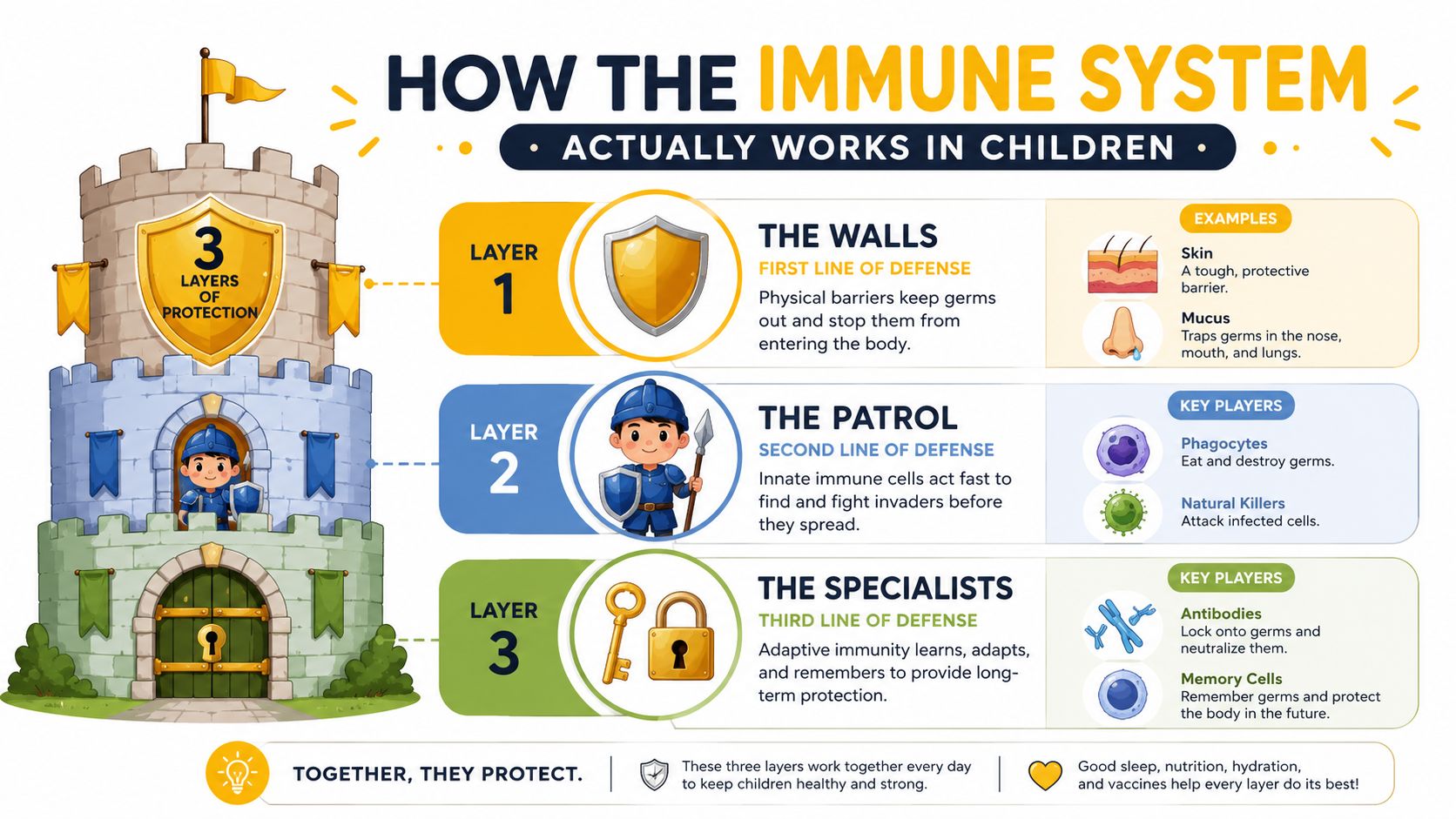
A supplement can provide a nutrient used by this network. It cannot replace sleep, food, vaccination, hand hygiene or medical care. It also cannot turn a normal immune response into an invincible one. The sensible child-first question is whether a product fills a likely nutritional gap, rather than whether its packaging promises stronger immunity.
The Core Immune Support Supplements Worth Knowing
A child comes home with another runny nose, and the immune aisle starts to look tempting. The useful question is less “Which product promises the strongest defences?” and more “Which nutrient, if any, fills a real gap for this child?” Familiar nutrients have the clearest role. Their value is greatest when intake is low, a deficiency is present, or a specific nutritional need has been identified. Evidence for preventing respiratory infections is limited in otherwise healthy children, as explained in this Australian review of nutritional supplements and immune function.
Vitamin C
Vitamin C supports normal immune function, white blood cell activity and epithelial barriers, the surfaces that help line the body's entry points. The European Food Safety Authority concluded that vitamin C intake has a cause-and-effect relationship with normal immune function, including for infants and young children up to three years.
The Australian Sports Commission discusses vitamin C in relation to epithelial barriers, white blood cells and inflammatory mediators. Its guidance also describes evidence involving 200–2000 mg per day. Supplementation reduced common-cold duration by 8%, while the incidence of upper respiratory tract infections stayed unchanged, as outlined in its vitamin C guidance.
Parent takeaway: regular fruit and vegetables remain the practical foundation. A supplement can fill an intake gap, while a large dose does not guarantee that a cold will be prevented.
Vitamin D
Vitamin D helps regulate immune responses. The European Commission regulation records authorised child-specific wording stating that vitamin D contributes to the normal function of the immune system in children.
A GP or dietitian can help assess vitamin D when sun exposure is limited, a child has darker skin, or the family lives in a part of Australia where seasonal sunlight makes adequate production more difficult. The right dose depends on the child and the clinical context, so do not copy an adult product's directions. See this guide to vitamin D3 gummies for more information.
Parent takeaway: vitamin D may suit a defined risk or intake concern. It does not need to become an automatic winter purchase for every child.
Zinc
Zinc supports immune-cell development and function. Australian Healthdirect guidance says zinc is needed to fight infection and that low zinc levels may increase infection risk, particularly in children and older people.
Dose matters because excess zinc can cause problems. The total may rise quickly when a child takes a multivitamin, an immune lozenge and a fortified drink. Oral zinc also differs from nasal zinc products, so use products designed for children and seek advice rather than improvising.
Parent takeaway: review food intake and add up the total daily dose before choosing zinc.
Probiotics
Probiotics are a family of different products, not one ingredient with one predictable effect. Benefits depend on the strain, dose, product quality and reason for use. A product intended for antibiotic-associated digestive problems therefore should not be assumed to prevent respiratory infections in school-aged children.
Parent takeaway: select a probiotic for a defined situation, then ask a pharmacist or clinician which strain is appropriate.
Supporting nutrients
Iron matters for normal immune function, but supplementation should follow professional assessment when deficiency is suspected. Omega-3 fats may influence inflammatory pathways. They still do not replace a varied diet or act as a treatment for repeated infections.
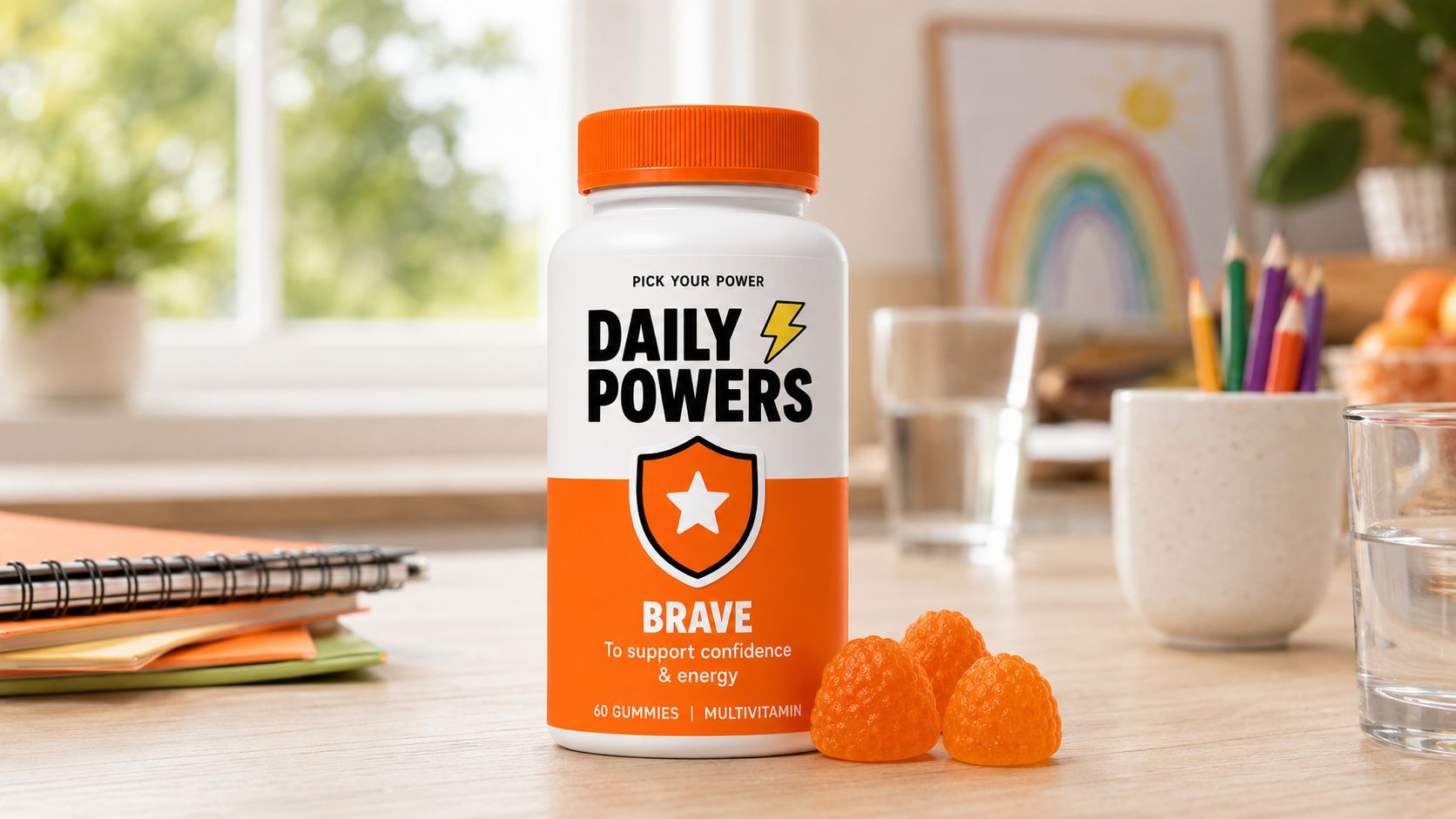
For a product comparison, Brave is a daily multivitamin gummy for children listing vitamin C, vitamin D3, vitamin A, vitamin E, zinc and B vitamins. Its stated amounts are 45 mg vitamin C, 5 micrograms vitamin D3, 3.5 mg zinc, 400 micrograms retinol equivalents of vitamin A and 5 mg vitamin E. The B vitamins primarily support energy metabolism and cellular processes, with adequate levels also relevant to normal immune function.
| Supplement | Evidence strength | Recommended daily intake, kids 4–8 | Upper limit, kids 4–8 | Parent takeaway |
|---|---|---|---|---|
| Vitamin C | Strong rationale for normal immune function, limited prevention evidence | Check the Australian RDI for the child | Check the full label and total intake | Food first, supplement for a gap |
| Vitamin D | Useful when intake or sun exposure is inadequate | Individual advice matters | Avoid stacking products | Ask about risk factors |
| Zinc | Helpful when intake is low, with context-specific evidence | Check age-appropriate guidance | Avoid excess from combined products | Total the daily dose |
| Probiotics | Strain-specific and situation-specific | No single universal target | Follow product and professional advice | Do not treat all strains as interchangeable |
| Iron and omega-3s | Valuable for defined nutritional needs | Depends on diet and assessment | Do not self-prescribe high doses | Investigate the reason first |
Food First or Supplement First for Australian Kids
For most children aged four to twelve, food should do most of the nutritional work. A plate containing vegetables or fruit, protein, dairy or a suitable alternative, wholegrain foods and healthy fats gives the immune system a steady supply of nutrients rather than relying on one concentrated product.
Useful options include citrus, berries, kiwi fruit, capsicum and broccoli for vitamin C; eggs and oily fish for vitamin D and other nutrients; meat, seafood, legumes, nuts and seeds for zinc and protein; and yoghurt or other fermented foods when tolerated.
A supplement becomes more reasonable when a child has a narrow diet, a diagnosed deficiency, increased nutritional needs or a clinician-identified risk. Vitamin D may deserve specific attention in families with limited sun exposure or other risk factors. Zinc may need review during periods of poor intake, while a probiotic can be considered for a defined digestive situation.
A simple test: If your child's meals are varied and growth is tracking normally, adding several overlapping products is unlikely to improve the routine.
A daily multivitamin can be a practical bridge for a very selective eater, but it shouldn't become permission to stop offering ordinary foods. Keep presenting vegetables, fruit, protein foods and dairy or alternatives without turning dinner into a nutrition exam.
The main danger is unnecessary layering. Read every active ingredient panel before combining a multivitamin with vitamin D drops, zinc products or fortified foods. A pharmacist, GP or paediatric dietitian can help identify whether the concern is a true gap, a temporary phase or a symptom that needs investigation.
Reading the Label on an Australian Immune Product
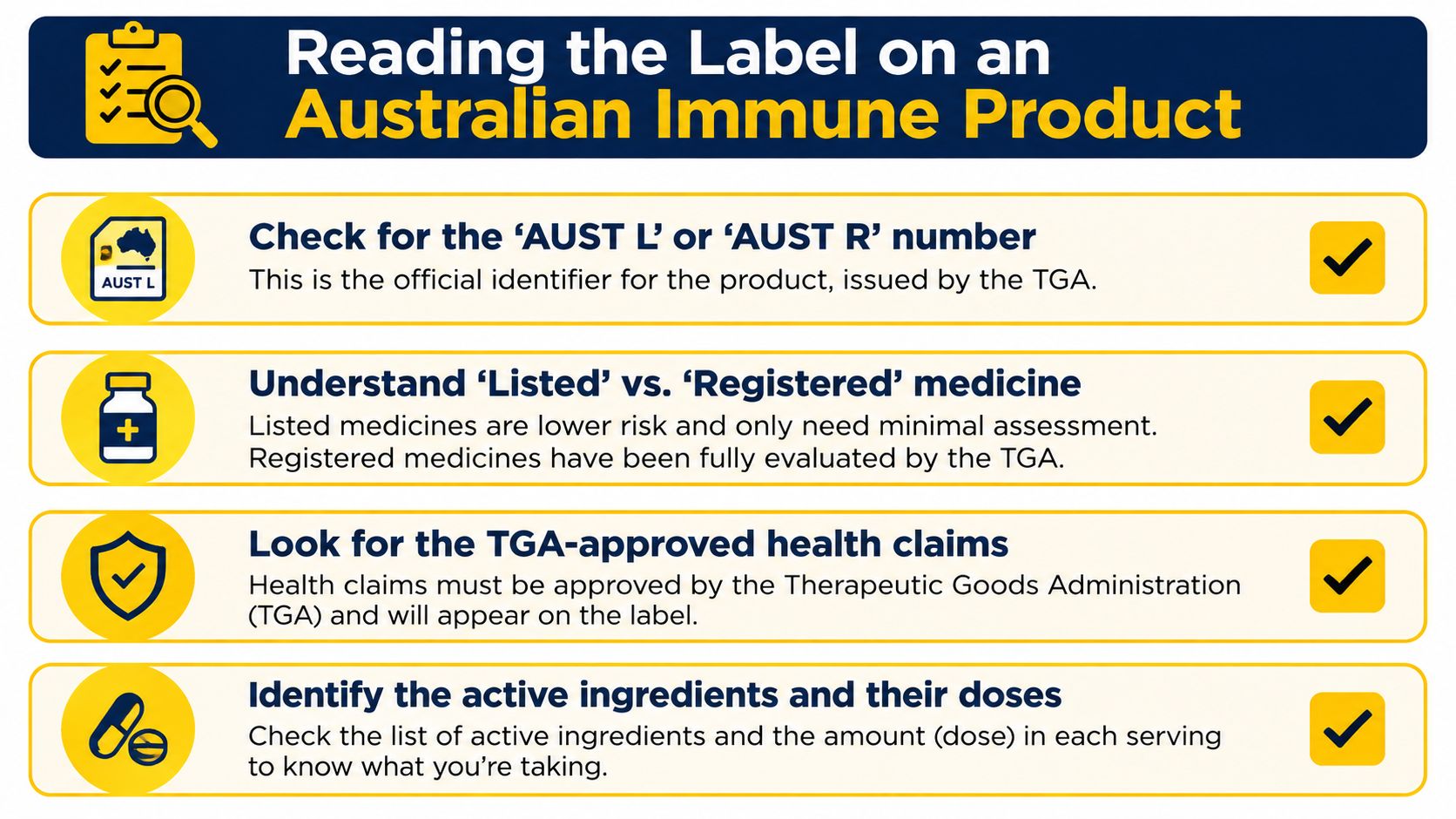
Australian labels need a regulatory reading, not just a marketing reading. Many immunity products are listed medicines rather than foods. The Therapeutic Goods Administration register includes complementary medicines containing combinations such as ascorbic acid, zinc salts, colecalciferol and, in some formulas, Terminalia ferdinandiana.
Start with the registration details
Look for an AUST L or AUST R number. A listed medicine generally sits within a lower-risk category, while a registered medicine faces a different level of evaluation. The number doesn't mean the product will prevent colds, and it doesn't remove the need to follow age and dose directions.
Then read the permitted claim language. “Supports normal immune function” is narrower and more defensible than “stops illness”, “boosts immunity” or “strengthens your child's defences”.
Check the active panel
Write down the amount of every nutrient per daily serving. Compare that list with other products in the cupboard, including multivitamins, fortified drinks and single-nutrient drops.
Pay particular attention to fat-soluble vitamins such as vitamins A and D, because excessive intake can accumulate. Zinc also requires care because high total intake can be harmful. The product's age range, serving size, allergens, sweeteners and storage directions matter just as much as the front label.
Gummies can make dosing easier, but they can also feel like lollies. Check whether the formulation contains sugar or artificial colours and flavours, and keep the container out of children's reach. A sugar-free multivitamin guide can help parents think through the difference between a convenient format and a nutritionally necessary product.
Fitting an Immune Routine Into Real Family Life
A good routine survives a busy household. It doesn't depend on a perfect morning, a child who never changes their mind or a parent remembering several dosing windows.
Take a winter school term. One family keeps the agreed supplement beside the breakfast bowls, while another pairs it with an after-school snack because mornings are too rushed. Both approaches can work if the label allows that timing and the child receives only the stated daily serving.
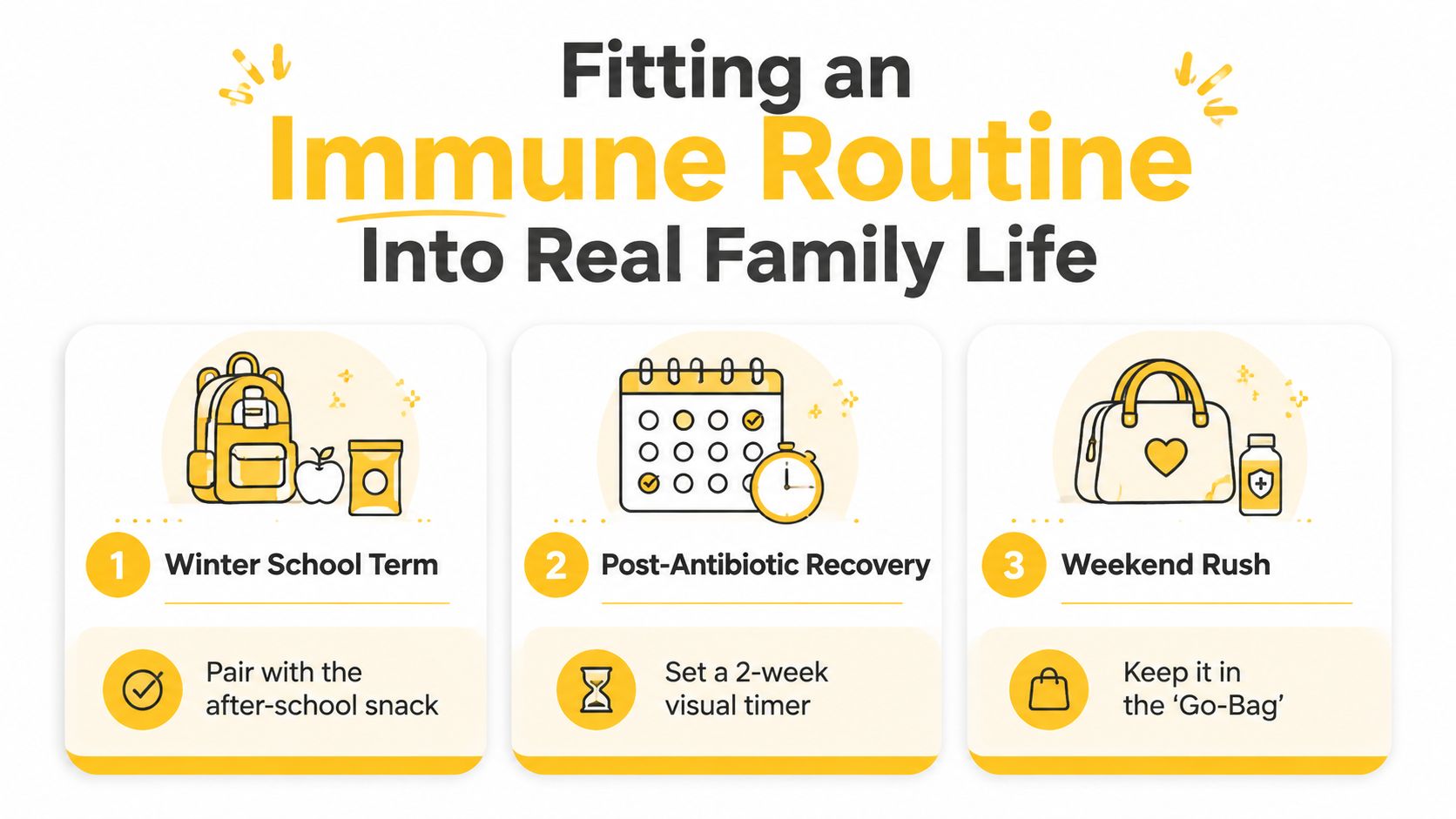
After antibiotics, parents often want to add everything at once. A better approach is to ask a pharmacist about whether a specific probiotic is appropriate, how long to use it and whether it needs to be separated from the antibiotic. Don't start several new products together, because you won't know what caused a digestive change or reaction.
For a child in a deep fussy-eating phase, a chewable or gummy may be easier than a capsule. That convenience can support adherence, but it doesn't make the product essential. Offer it calmly, never frame it as a reward, and don't force a child who is distressed or unable to chew safely.
Reduce the friction
- Use one anchor: Attach the routine to breakfast, toothbrushing or an after-school snack.
- Plan for travel: Keep the product in its original container rather than loose in a school bag.
- Handle refusal gently: Pause, check the texture or flavour, and ask a clinician about another form if the nutrient is needed.
- Avoid catch-up dosing: Missing a serving usually doesn't justify doubling the next one.
The routine should feel like brushing teeth, not another homework assignment. If it creates daily conflict, the format or the product may not suit your child.
Common Myths About Immune Support Supplements
“A mega-dose of vitamin C will stop the cold”
Vitamin C contributes to normal immune function, but that doesn't mean a large dose can switch off an infection. The Australian evidence discussed earlier supports a nuanced picture, including effects on cold duration in some settings, not guaranteed prevention.
“Two immune products are safer than one”
Combining products can duplicate vitamin A, vitamin D, zinc or other nutrients. More isn't automatically better, particularly for children whose body size and nutritional needs differ from adults.
“Supplements boost immunity above normal”
The phrase sounds reassuring but describes biology poorly. A healthy immune system needs balanced barriers, rapid defenders, and targeted adaptive responses. The practical aim is to support normal function when nutrition is inadequate, not push the system into overdrive.
“All probiotics work the same way”
They don't. Strain, formulation and purpose matter, so a probiotic used in one clinical context shouldn't be treated as a universal immune product.
“Natural means safe”
Herbs can have pharmacological effects and can cause allergic or other adverse reactions. The TGA began consulting in 2026 on removing Andrographis from low-risk listed medicines after safety concerns, as reported by NutraIngredients. That regulatory activity is a reminder to check current advice rather than assuming a plant ingredient is harmless.
Children also shouldn't receive high-dose vitamin A or D without professional guidance, and IV vitamin infusions have no established role for healthy children seeking immune protection. The durable basics remain food, sleep, hygiene, vaccination and medical review when symptoms warrant it.
A Practical Immune Support Plan for the Whole Family
A sensible plan is smaller than the shelf suggests. Start with the child's age, eating pattern, sun exposure, medical history and current products. Then make only the decisions that solve an identifiable problem.
For toddlers, prioritise safe food textures, growth monitoring and clinician advice before adding immune support supplements. For primary-school children, keep vitamin C-rich foods in the weekly pattern, review zinc sources and ask about vitamin D when risk factors apply. For teenagers and adults, the same principle holds, although needs and medical considerations change with age.
A workable weekly rhythm looks like this:
- Daily: Offer varied meals, adequate protein, water and a predictable sleep routine.
- At the weekly shop: Choose fruit, vegetables, eggs, yoghurt or alternatives, legumes, nuts or seeds, and fish or other protein foods that your family will eat.
- When considering a supplement: Check the active ingredients against every product already used.
- During antibiotics: Ask a pharmacist whether a strain-specific probiotic is appropriate rather than buying a generic product automatically.
- When illness repeats or seems unusual: Book a GP appointment instead of increasing doses.
Stop rule: Don't use supplements to delay care for breathing difficulty, dehydration, persistent fever, marked lethargy, poor growth or recurrent infections that concern you.
The goal isn't crisis dosing when a child comes home coughing. It's a steady baseline supported by nourishing food, rest, hygiene and targeted supplementation only when the likely benefit outweighs the cost and complexity.
Daily Powers offers Australian children's gummy formulations, including Brave, designed around simple daily routines and transparent ingredient information for families with children aged four to twelve. If you're comparing practical options for an evidence-aware household routine, visit Daily Powers and review the product details with your child's needs in mind.