

Only 7.2% of Australian children aged 5–17 meet all measured national movement recommendations, so a kids routine chart can help turn healthy intentions into repeatable daily habits. The most useful chart is visible, simple and linked to real moments such as getting dressed, packing lunch, moving after school, winding down and going to bed.
You know the scene. A backpack has disappeared, one child can't find a clean uniform, breakfast is going cold and somebody has remembered their sports gear only after shoes are on. By the time everyone reaches the car, the morning has become a series of hurried instructions rather than a routine children can manage.
A well-designed chart changes the question from “What do I need to remind you to do?” to “What's the next step on your chart?” It gives children a visible sequence, reduces repeated decisions and lets them experience the satisfaction of completing each task. The chart isn't a magic solution, but it can move responsibility from the adult's voice to a shared household system.
Table of Contents
- Why Your Family Needs a Kids Routine Chart
- Designing a Kids Routine Chart That Actually Works
- Implementing the Daily Routine Loop
- Reward Systems That Keep Kids Motivated
- Troubleshooting Common Kids Routine Chart Problems
- Your 3-Week Action Plan to Get Started
Why Your Family Needs a Kids Routine Chart
The need is practical, not decorative. Australia's 24-Hour Movement Guidelines bring sleep, physical activity and sedentary behaviour into one daily framework. In 2023, the Australian Bureau of Statistics reported that only 18.1% of children aged 2–5 met all measured recommendations, while just 7.2% of children and young people aged 5–17 met all measured recommendations for their age group.
The same ABS release found that 68% of 2–5-year-olds met the physical activity recommendation, but this fell to 18% among 5–17-year-olds. Screen habits create another pressure point, with 30% of 2–5-year-olds and 60% of 5–17-year-olds using screen-based devices during the hour before bed. Children aged 5–17 also spent an average of 2 hours 51 minutes per day on sedentary screen activity, according to the ABS data.
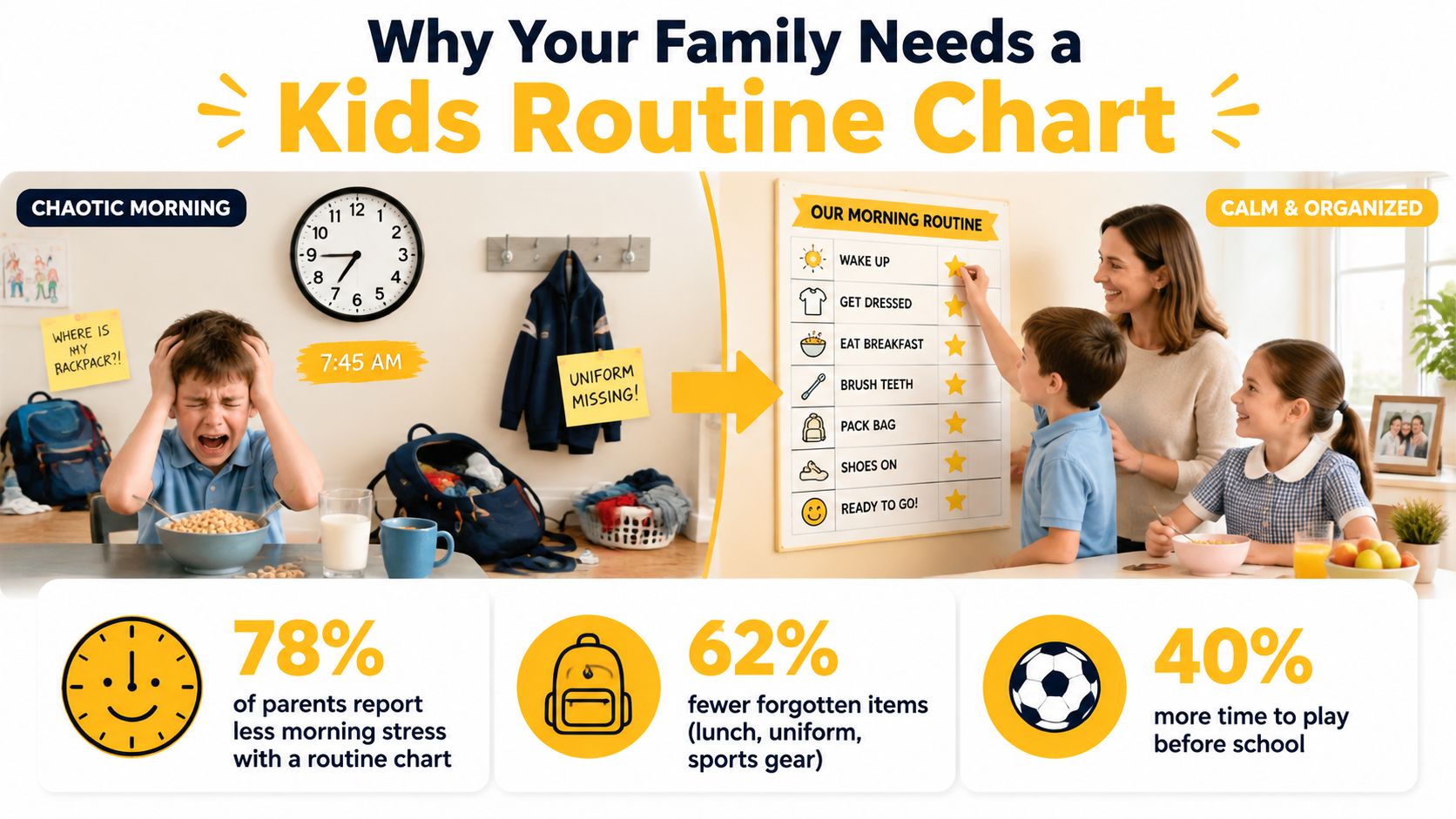
A chart won't make a child sleep, exercise or eat well by itself. It does make the desired behaviour easier to see and repeat. For a child who feels overwhelmed by several instructions, four picture cards can be more useful than a long verbal explanation.
Why visual steps help
Children often resist routines because transitions are difficult, not because they're deliberately refusing to cooperate. A visual sequence limits the number of choices they need to make and gives them some control over what happens next. Ticking a box, moving a marker or adding a sticker also creates an immediate sense of progress.
Australian guidance supports using illustrated posters, child-made charts, reminder cues, responsibility-sharing and specific praise as part of a routine and reward-chart approach. The Raising Children Network guidance also emphasises helping children take ownership rather than making adults responsible for every step.
Treat the chart as a prompt, not a policing tool. If your child misses one box, help them restart at the next realistic step instead of declaring the whole morning a failure.
Designing a Kids Routine Chart That Actually Works
Start with the wall, not the artwork. Put the chart where your child naturally gets ready, such as near the bedroom door, bathroom or kitchen, and place it at a height they can reach. The Avery merit-chart guide recommends a visible position, a row for each behaviour, columns for the days of the week, and images or colour to make the chart engaging.
Keep each box specific. “Get ready” is too broad, while “uniform on” tells a child exactly what completion looks like. One clear behaviour per row also follows Australian reward-chart advice, which recommends naming or showing one target behaviour rather than combining several actions into one vague instruction.
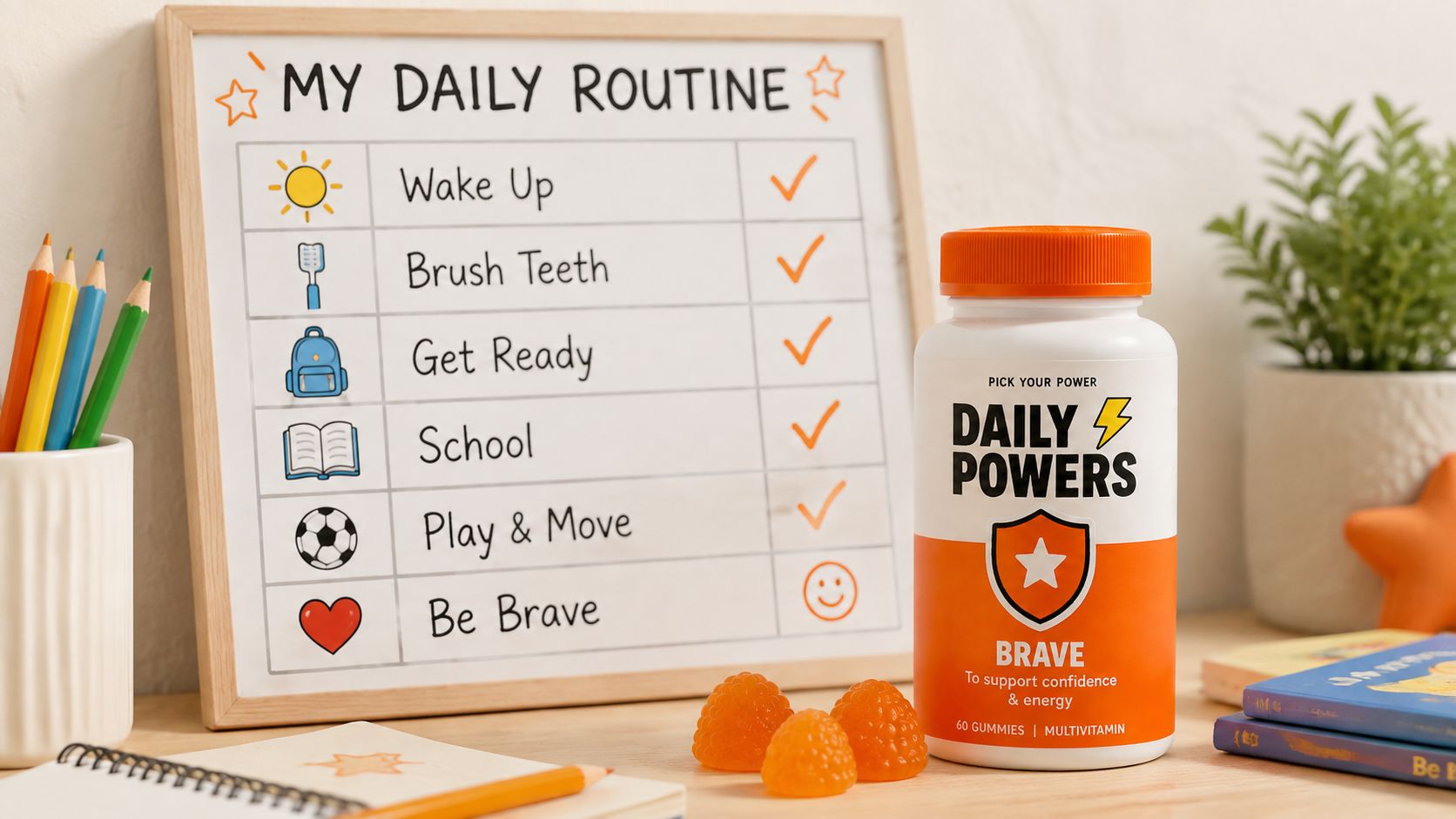
A practical morning-to-bed layout
A school-day chart might use three coloured areas:
Morning
- Packed lunch
- Uniform on
- Brave gummy
- Sports gear in bag
After school
- Snack
- Homework
- Put school items away
Bedtime
- Pyjamas on
- Brush teeth
- Calm activity
- Book ready
For the supplement step, Brave can sit after getting dressed as a simple “pick your power” ritual. Its product information describes a daily multivitamin gummy for kids with essential vitamins, kid-friendly flavours and textures, no artificial colours or flavours, and a vegan formulation. Follow the product directions and any advice from your healthcare professional.
You can find more ideas for fitting a gummy into an existing health routine in this guide to kids vitamin gummies. The chart shouldn't imply that a supplement replaces food, sleep, movement or professional medical advice. It should make an agreed household habit visible.
Choose the right format
A daily checklist suits younger children or families working on a small number of transitions. A weekly grid helps older children notice patterns across school days and weekends. Let your child choose the marker colour, draw an icon or add stickers, but don't fill the chart with so many decorations that the next action becomes hard to find.
Use a neutral cue, such as a short alarm or the same song, to signal the next transition. The cue should start the routine without sounding like another adult command.
Implementing the Daily Routine Loop
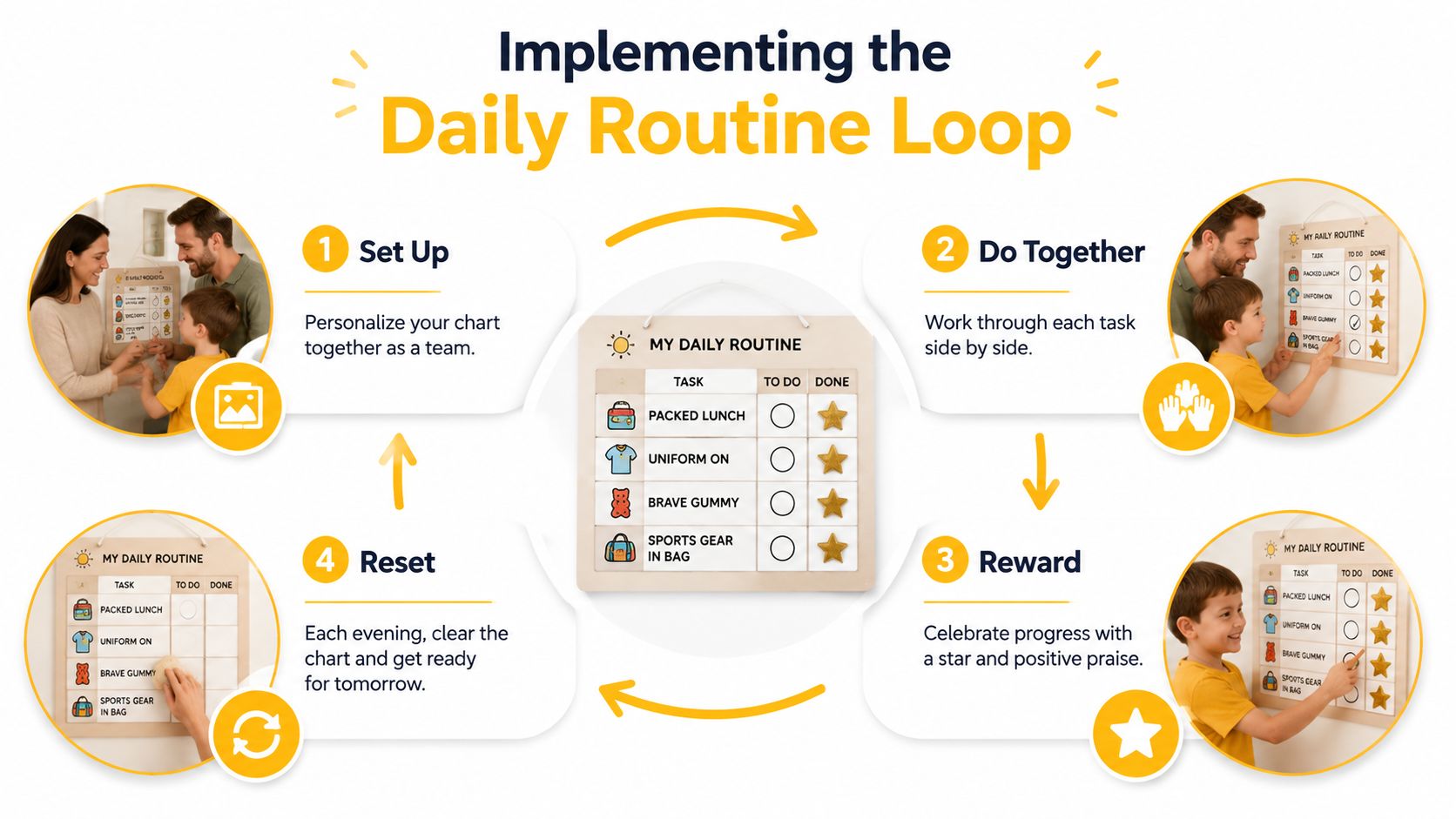
The chart earns its place when it helps a child complete the next action without an adult repeating the entire routine. A workable loop has four parts: show the steps, complete one, mark it promptly and reset the chart for tomorrow.
Start with one clear cue
Choose a morning check-in and, if needed, a separate evening check-in. The Australian routine-chart methodology supports visible steps, neutral cues such as music or an alarm, shared responsibility and specific praise.
Set up the environment so the child can act. Say, “Check your chart,” and give them time to locate the next box. If they stop, point to the relevant icon or offer two choices. Repeating every instruction can make the adult the routine manager, rather than helping the child build independence.
Use the same approach for bedtime, while keeping the pace calm. A sequence such as washing, putting on pyjamas, brushing teeth, choosing a quiet activity and reading gives the child a predictable path. Keep screens out of the bedroom and follow family guidance on screen timing and sleep. The guide to getting kids to sleep offers further bedtime ideas.
A supplement ritual can fit into the chart when the household already agrees it belongs there. For example, Brave can follow getting dressed, while Calm may sit with an evening wind-down. A child working through homework or learning tasks might use Focus as the named gummy step. Follow each product's directions and any advice from a healthcare professional. The chart should make the habit visible, not suggest that gummies replace food, sleep, movement or learning support.
Mark completion while the connection is fresh
Add a sticker or tick immediately after the task. The child can then connect the action with its visible result. Praise the exact behaviour: “You checked the chart and packed your lunch without me reminding you.”
An older sibling can prepare markers, check that the chart has been reset or choose the next cue. Keep responsibility with the adult, rather than making one child supervise another child's full routine.
Reward Systems That Keep Kids Motivated
A child finishes getting dressed, checks the chart and adds a sticker before anyone asks. That small mark gives immediate feedback, while specific praise helps the child understand which action made the routine work. The right reward depends on the child, the task and how familiar the habit has become.
Australian parenting guidance describes reward charts as a positive way to work towards clear goals. It recommends giving the sticker whenever the target behaviour occurs and reviewing progress at a consistent time. Reward the action itself, rather than general “good behaviour”.
| Reward Type | Examples | Best For | When to Fade |
|---|---|---|---|
| Immediate visual mark | Sticker, stamp or tick | New habits and younger children | Once the child starts checking independently |
| Specific praise | “You packed your lunch before the cue” | Building confidence and ownership | Keep this longer, while varying the wording |
| Choice | Selecting a book, music or weekend activity | Children who value control | Reduce when the routine feels predictable |
| Larger privilege | A planned family activity | A goal that needs sustained effort | Avoid making every daily task depend on it |
A routine chart can also include a health habit that the family has already chosen. A Daily Powers gummy may sit after getting dressed, homework or an evening wind-down, depending on the product directions and the household's plan. This turns the supplement ritual into a visible daily win without presenting gummies as a replacement for food, sleep, movement or learning support.
Tangible rewards help children begin, but they can become bargaining points. If each toothbrush tick earns extra screen time, the child may focus on the prize and the parent may negotiate every night. Use the smallest effective reward, then build motivation through precise praise and the satisfaction of completing the routine.
As the child starts checking the chart without prompting, make the sticker less central while keeping the chart visible as a guide. Fade rewards gradually rather than removing them at once. If participation drops, change the design, rotate colours or offer a choice between two acceptable markers. The goal is steady involvement, not a perfect record.
Troubleshooting Common Kids Routine Chart Problems
A child can stand in front of a chart each morning and still ignore it. Before concluding that your child “doesn't care”, check whether the chart is visible, readable and tied to a predictable moment. Small setup problems often explain more than motivation does.
The chart is ignored. Move it to eye level and remove extra rows. Let your child draw the icons or choose the colours. That ownership can make the chart feel like a personal tool rather than another adult instruction.
The routine takes too long. Replace “get ready” with clear actions such as putting on the uniform, packing lunch and placing sports gear in the bag. A visual timer can show when the transition starts and finishes, reducing repeated reminders.
Nobody remembers to review it. Link the review to breakfast, arriving home, dinner or the bath. The Australian behaviour-chart guidance recommends giving the sticker when the target behaviour occurs and reviewing progress at a consistent daily time. If food is part of the wider concern, these practical ideas for vitamins and fussy eaters can help you consider where a chosen health habit fits.
The gummy becomes a battle. Place the step at a natural transition, such as after getting dressed or after a calming bedtime activity. Some families report that the gummy step becomes a moment children anticipate as the routine takes hold, but it should remain one ordinary part of the sequence. Calm is described as a magnesium, vitamin B6, zinc and prebiotic gummy intended to support relaxation and everyday wellbeing. Follow the product directions, and speak with a healthcare professional if you are unsure whether it suits your child.
If the chart still fails, change one part of the loop at a time: placement, task size, cue, marking method or review time. This makes it easier to identify the actual barrier and build a routine that works in your household.
Your 3-Week Action Plan to Get Started
Use the first week to make the chart workable. Choose a visible location, involve your child in decorating it and begin with three morning tasks rather than trying to organise every minute of the day. Add a supplement step only when it fits naturally into the existing sequence.
In the second week, introduce the routine loop. Use the same alarm, song or household cue, and mark each completed task immediately. Keep your language brief and specific, such as “You checked your next step” or “You remembered the sports gear.”
Use the third week to refine rather than judge. Remove a task that creates confusion, split one that is too broad, or move the chart if your child walks past it. Keep acknowledging small wins, including getting back on track after a missed day.
Practical rule: Consistency matters more than perfection. A chart should make tomorrow easier, not make today feel like a test.
The finished system should help your child see what happens next, take increasing responsibility and connect healthy habits with ordinary family moments. Start with the morning rush, make one sequence visible and let the routine grow from there.
Daily Powers offers Brave, Focus and Calm gummy options that can be placed into established morning, study or wind-down rituals, with product directions and ingredient information available for families to review. Visit Daily Powers to explore the range and choose whether one of these daily health habits fits your child's routine chart.