

The most popular advice about kids vitamin gummies is to choose the flavour your child will take. That matters, but it isn't enough. A gummy can be easy to chew, pleasant-tasting and still deserve the same care as any other supplement in your home.
Australian families already use children's vitamins widely. The Australian Child Health Poll reported that 42% of Australian children and teenagers were taking vitamins or supplements, with families spending an estimated A$74 million a year on products for children under 15, as reported by Australian coverage of children's vitamin use. The Australian Bureau of Statistics also recorded supplement use among children aged 2–4 and 5–11 in 2023, showing that this is an established household routine, not a niche purchase.
The practical question isn't whether gummies taste good. Parents need to ask what is in them, whether the dose suits the child, how much sugar the format adds, and whether the bottle is being treated like a health product rather than a lolly jar.
Table of Contents
- The Hidden Reality Behind Kids Vitamin Gummies
- Decoding the Ingredient List
- How to Choose a High-Quality Gummy
- Building a Daily Health Ritual
- Safety and Storage Essentials
- Smart Supplementation for Modern Families
The Hidden Reality Behind Kids Vitamin Gummies
Kids vitamin gummies look harmless because they borrow the visual language of sweets. Bright colours, fruit flavours and a soft texture can make a difficult daily task much easier, especially for a child who refuses tablets. But that same appeal can make portion control and storage more important, not less.
Australian poisons data give this concern real weight. Between 2014–15 and 2018–19, the New South Wales Poisons Information Centre recorded 10,944 vitamin and mineral supplement exposures, and the rate rose by 9.6% per year during that period, according to the peer-reviewed analysis of Australian poisons-centre cases. Multivitamins were the most common product involved, with 3,610 cases, while children aged 14 and under accounted for more than half of exposures. Toddlers aged one to four represented about two in five reported cases.
Researchers specifically noted that palatable gummies and chews marketed to young children may help explain the high exposure numbers. That doesn't mean every gummy is unsafe. It means the format changes the household risk: a child may understand a tablet as medicine but interpret a sweet, chewable gummy as something to eat freely.
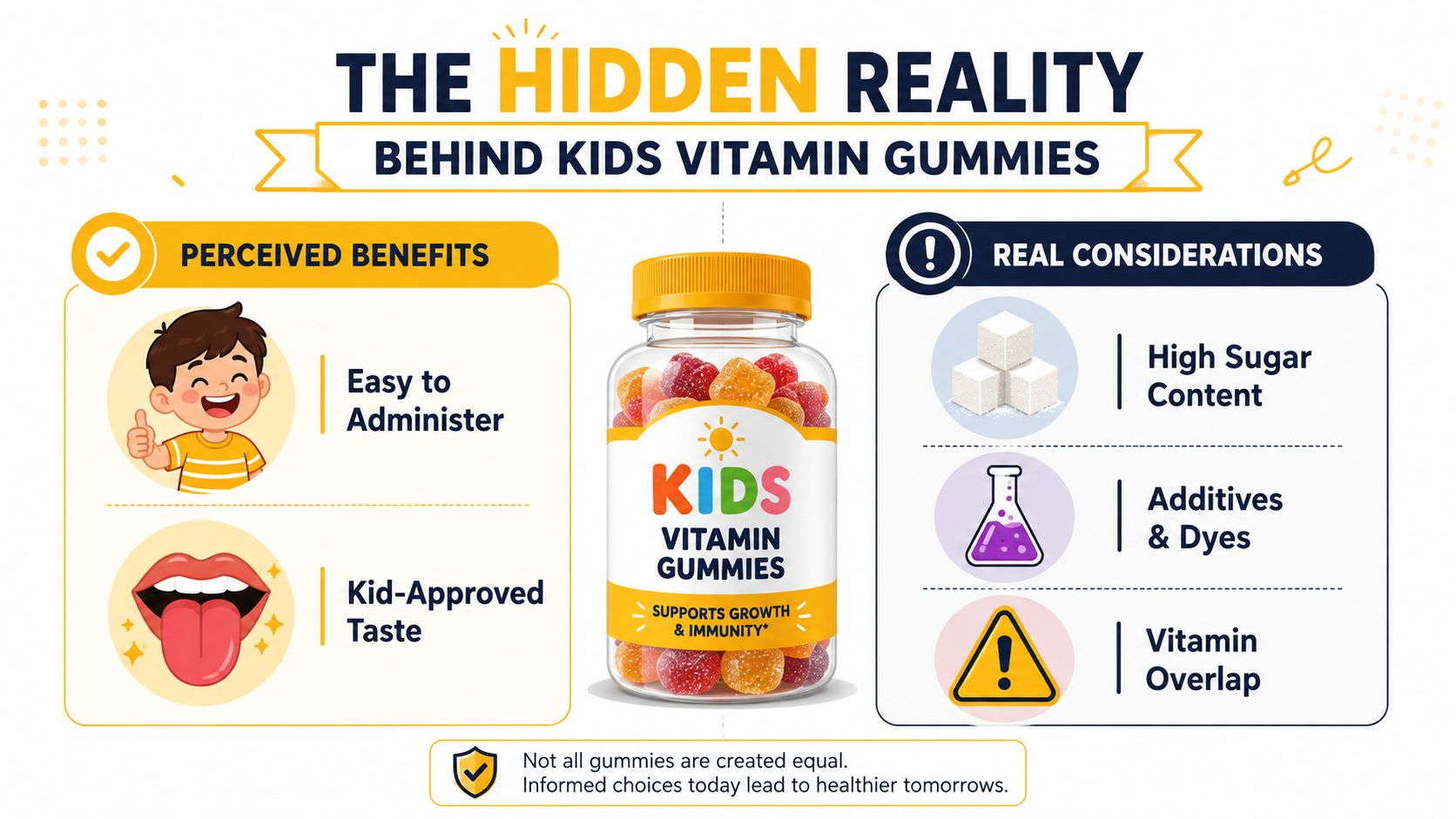
The marketing claim isn't the whole label
Sugar is another overlooked issue. UNSW commentary highlighted that 50% of Australian children aged 2–3 and 67% of children aged 4–8 were already getting more than 10% of total energy from free sugars in 2011–12, making added-sugar gummy formats an unnecessary extra burden for some children and a concern for dental health, as discussed by UNSW on children's vitamin gummies.
A sugar-free formula can remove one concern, but it doesn't remove the need to check dose, age suitability, allergens or overlapping ingredients from other supplements. Parents should read the bottle, supervise administration and store the product securely. A useful starting point is this guide to sugar-free multivitamins, but the same discipline applies to every brand.
Practical rule: If a child can reach the bottle, the product isn't being stored safely, whatever the label says.
Decoding the Ingredient List
A gummy label tells two different stories. The active ingredient panel lists the nutrients or compounds supplied. The formulation panel shows how the product gets its texture, flavour, sweetness and colour. Reading both helps reveal risks that the front label can hide, especially sugar and a serving size that is easy for a child to misunderstand.
Start with the serving size. One product may define one gummy as the daily serving, while another may require several. Recommended daily amounts vary widely, with some brands suggesting one gummy and others recommending up to fifteen gummies or tablets. Comparing bottles by price or gummy count can therefore mislead parents. Compare the nutrient amount delivered at the stated, age-appropriate serving instead.
Active nutrients in plain language
Vitamin D3 is commonly included to support normal bones and healthy development. Vitamin C is associated with normal immune function, while zinc contributes to everyday wellbeing and normal cognitive function. B-complex vitamins generally support energy metabolism and nervous system function.
These descriptions explain what nutrients do when a child needs them. They do not mean a gummy will treat tiredness, prevent illness or transform school performance. A supplement should address a specific dietary gap or support an agreed routine. It should sit alongside vegetables, fruit, legumes, grains, dairy and other nourishing foods, not replace them.
The formulation deserves equal attention. Traditional gummies may contain glucose syrup, sugar, gelatin, artificial colours, artificial flavours, acids, sweeteners or other texture agents. Sugar-free vegan products may use pectin and plant-based ingredients, but “natural” does not automatically mean suitable. Read the complete ingredient list and check the allergen information.
| Ingredient Category | Standard Gummies | High-Quality / Sugar-Free Gummies |
|---|---|---|
| Sweetener | Added sugar, glucose syrup or concentrated sweeteners may appear | No added sugar, with sweetness supplied by a suitable alternative |
| Gelling agent | Gelatin or other texture agents | Pectin or another clearly identified plant-based option |
| Colour and flavour | Artificial colours and flavours may be used | Natural fruit flavours and colours, or no artificial colours and flavours |
| Active nutrients | Nutrients may be present in a broad blend | Clearly stated nutrients with transparent amounts per serving |
| Allergens | Gelatin, nuts or other allergenic ingredients may be relevant | Ingredient and allergen details are easy to locate |
| Dose | Serving sizes differ across products | Age guidance and daily directions are explicit |
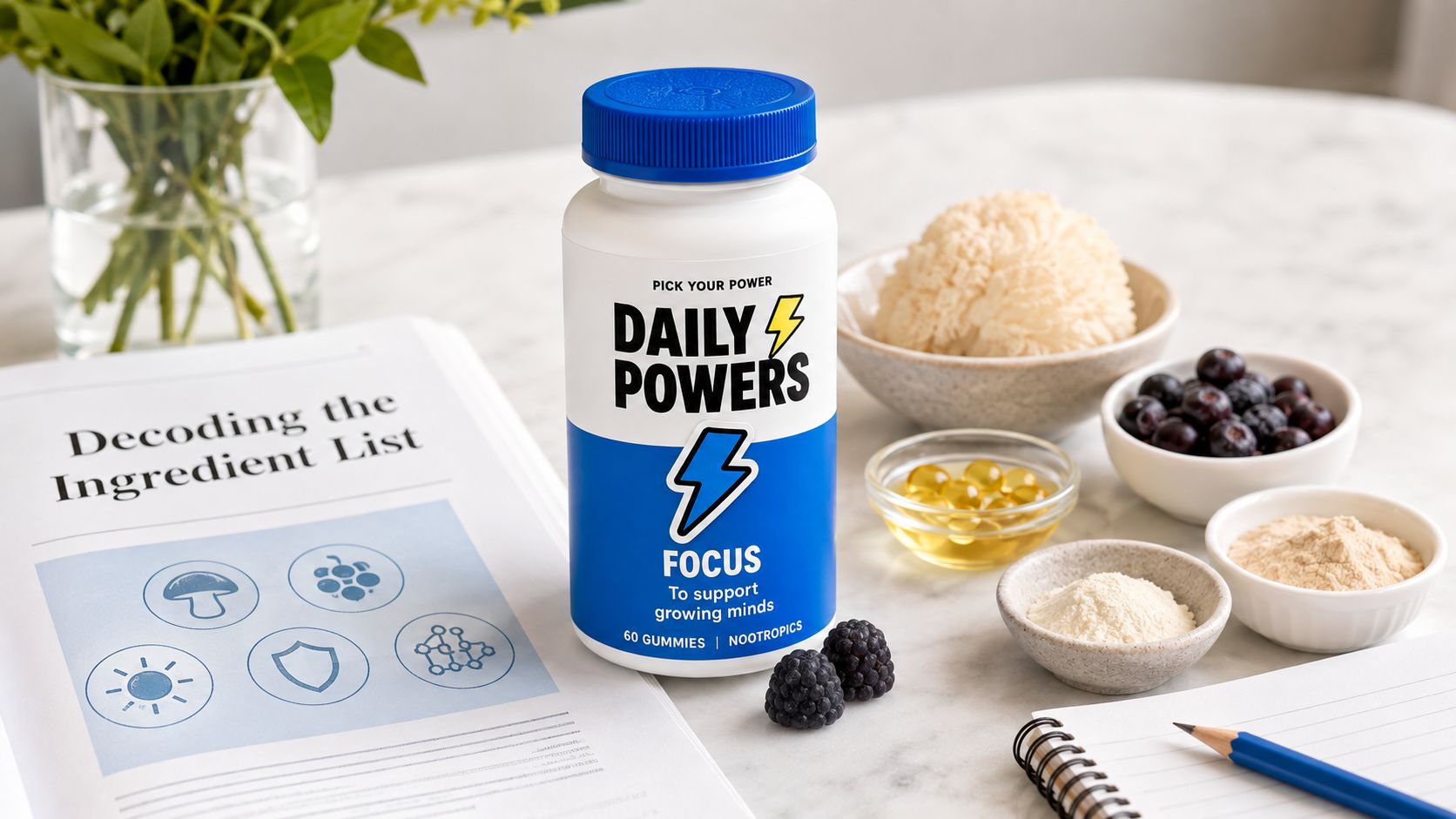
For example, Focus is described as a blueberry-flavoured, vegan, sugar-free gummy with no artificial colours or flavours. Its listed ingredients include mushroom polysaccharides, vitamin D3, zinc gluconate, elderberry fruit powder and prebiotic fructooligosaccharides. Directions state two gummies daily or as directed by a healthcare professional. This gives parents useful details to assess, while the child's overall diet and other supplements still need consideration.
For a closer look at one nutrient category, read this guide to calm magnesium gummy ingredients. Use the same habit with every product. Turn the bottle around, check the serving, active ingredients, sweeteners, allergens and warnings, then decide whether the gummy fits the child's routine.
How to Choose a High-Quality Gummy
Shopping becomes easier when you use the same filter every time. Don't begin with the cartoon character or the flavour name. Begin with the panel that tells you what the child will consume and how often.
Check the serving before the claims
Look for the amount of added sugar per gummy and per daily serving. The supplied checklist infographic uses less than 3g of added sugar per gummy as its benchmark, but parents should still consider whether a sugar-containing product fits the child's wider diet and dental needs. Sugar-free options may be useful for families trying to avoid making a supplement part of a daily sweet habit.
Then check the active ingredients. A long list isn't automatically better. Ask which nutrients relate to the child's actual dietary pattern, whether another supplement already contains them, and whether a healthcare professional has recommended a particular nutrient.
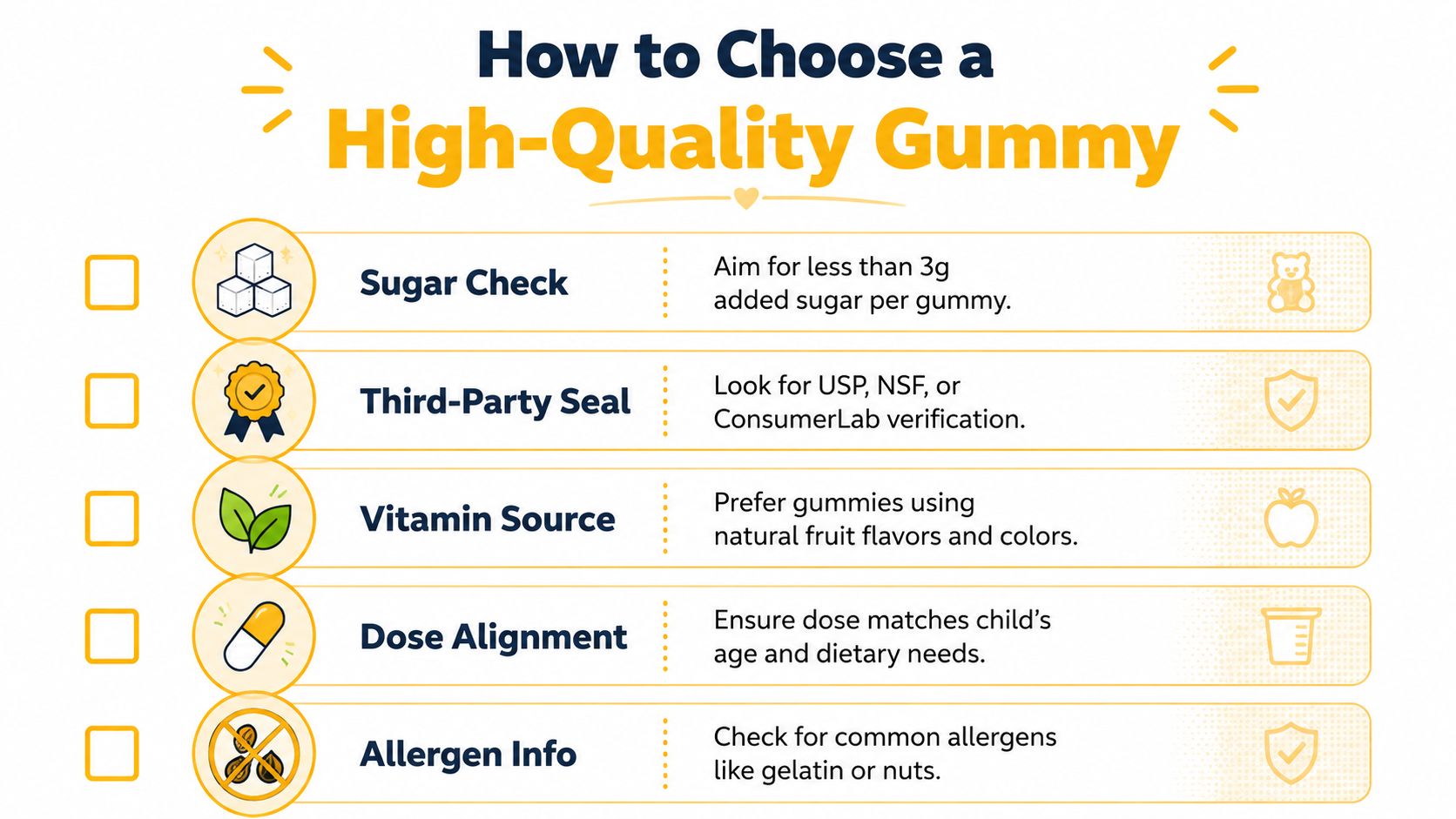
Use this buying checklist
- Sugar check: Read the grams of sugar per gummy and serving. Don't rely on phrases such as “healthy treat” or “naturally sweetened”.
- Quality verification: Look for transparent manufacturing information and independent verification where available, such as USP, NSF or ConsumerLab seals. A seal doesn't replace label reading, but it can provide useful quality information.
- Colour and flavour: Prefer clearly disclosed natural fruit flavours and colours if your family wants to avoid artificial additives.
- Dose alignment: Match the serving to the child's age and dietary needs. Never assume that a larger child should receive more than the label states.
- Allergen review: Check for gelatin, nuts and other ingredients that matter in your household.
- Texture and supervision: Make sure the child can chew the product safely and follow the age directions.
Australian product labels can be quite specific. One major retail listing directs children aged 2–12 years to chew 1 soft gummy once a day with food, under adult supervision, and says not to use it for children under 2, as shown by the Blackmores children's gummy directions.
Claims such as “immune”, “focus” or “energy” should be read as descriptions of intended nutritional support, not promises of a clinical outcome. If your child takes medication, has a diagnosed condition, follows a restricted diet or already uses supplements, ask a pharmacist, dietitian or doctor to review the choice.
Building a Daily Health Ritual
A gummy works best as a small part of a routine that already has meaning. The routine shouldn't make the supplement feel like a prize. It should give the child a predictable cue, a safe moment to take the product and a chance to practise responsibility.
A morning focus ritual might happen after breakfast. The child pours water, takes the labelled serving with adult supervision, takes a few slow breaths and then packs the school bag. The breathing and preparation are not ingredients in the gummy. They are ordinary habits that help the child move from sleep into the demands of the day.
For a child facing a test, a new classroom or a social event, parents might use a “bravery” cue that means, “We can prepare and have a go.” At night, a calm routine might follow screen time and include dimmer lights, a wash, a short conversation and a consistent bedtime. The gummy shouldn't be presented as a cure for anxiety, poor sleep or difficult behaviour.
Give children ownership without giving them access
A four-year-old can choose between two approved routine moments. An older child can place a sticker on a chart or say whether the routine happened. A child shouldn't control the bottle or decide the dose. Adults remain responsible for opening the container, checking the serving and putting it away immediately.
Avoid using a gummy as a reward for finishing dinner, completing homework or behaving well. That framing reinforces the idea that the supplement is a sweet treat. A neutral phrase such as “This is your daily health routine” keeps the message clear.
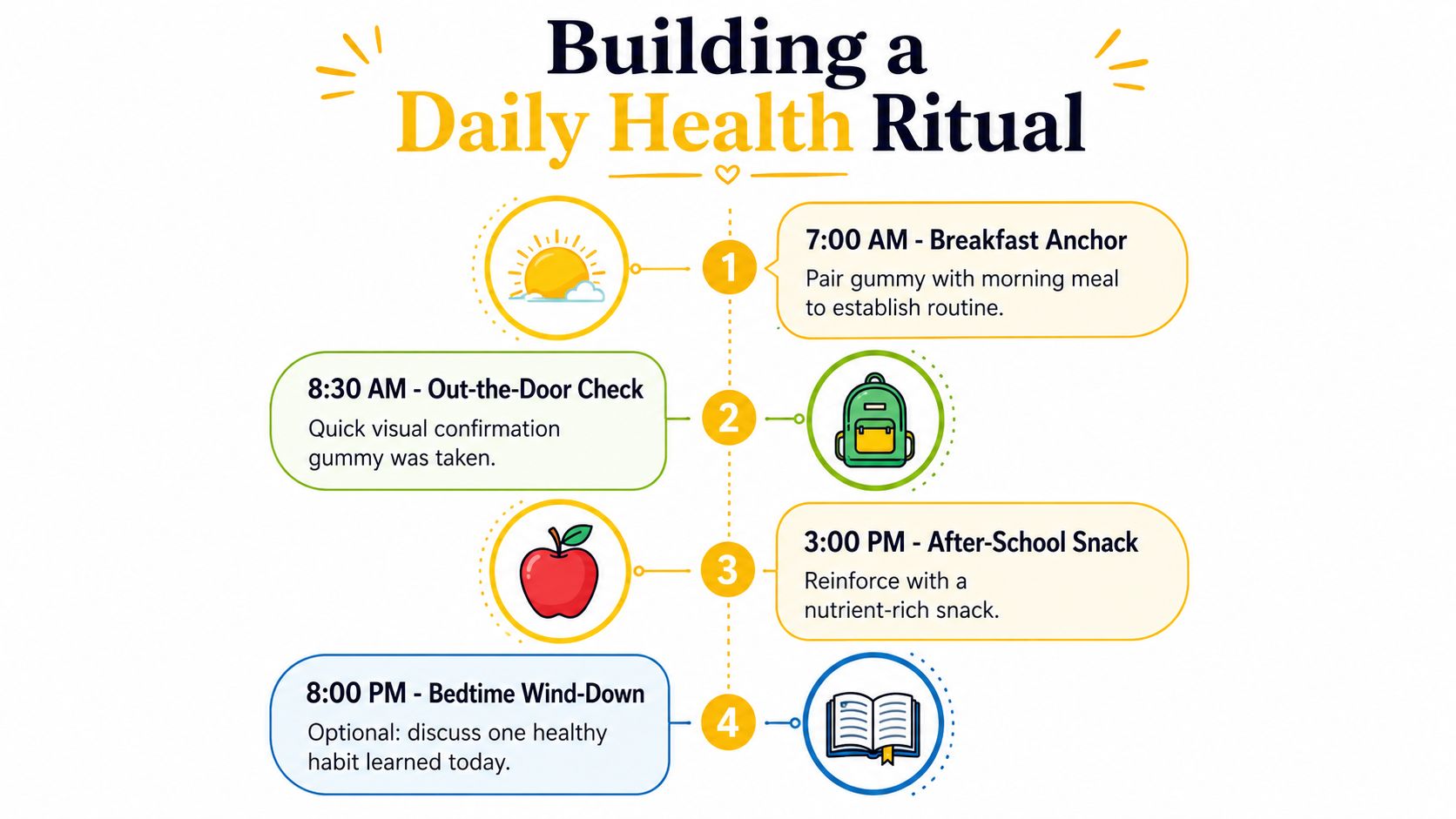
A flexible weekly rhythm might look like this:
- Younger children: Pair the labelled serving with breakfast, then let the child choose a song or pack one school item.
- Primary school children: Keep the bottle in an adult-controlled place and let the child mark a simple routine chart after taking it.
- Older children: Link the supplement to breakfast or school-bag preparation, while the adult still checks the dose and storage.
- Weekends: Keep the agreed routine consistent unless the label or healthcare professional says otherwise. Don't add a second serving after a missed day.
The publisher's guide to vitamins for fussy eaters is useful when the larger challenge is food variety. A gummy can support a routine, but the routine should also include meals, water, movement, sleep and a calm psychological environment.
Safety and Storage Essentials
A gummy bottle belongs with medicines in the household, even when its colour, shape and taste resemble confectionery. Australian poisons data recorded 10,944 vitamin and mineral supplement exposures in NSW across 2014–15 to 2018–19. Children aged 14 and under made up more than half of the cases, according to the Australian poisons exposure analysis.
The figures do not show that one particular brand is dangerous. They show why a sweet format needs firm household controls. A child who eats several gummies can receive more than the label intends, and the total becomes harder to judge if another product contains the same nutrients. Sugar also makes the bottle attractive, so access should be managed like access to any other medicine.
Store the bottle as a health product
Keep gummies in their original container, with the dosing panel, warnings and age guidance visible. Store it high and out of sight, close it properly, and return it immediately after an adult gives the serving. Do not transfer gummies to a kitchen jar, lunchbox or treat container. The original packaging is also the clearest reference if a serving is missed or a possible overdose occurs.
The TGA warns that soft gel products marketed to children may create a choking risk. It recommends extra care for children under five and supervision when children take medicines, with particular caution around soft gel capsules. Its safety alert on soft gel capsules marketed to children says sponsors were advised to restrict these products to children aged five years or older. Gummies differ from soft gel capsules, yet the same practical rule applies: follow the product's age guidance and consider whether the child can chew safely.
| Age Group | Storage Location | Supervision Level | Max Daily Dose Awareness | Key Risk Factor |
|---|---|---|---|---|
| Under 2 | Not used unless specifically advised by a healthcare professional | Direct adult control | Adult checks every serving | Unsuitable age guidance and ingestion risk |
| 2–4 | High, locked or otherwise inaccessible storage | Direct supervision while chewing | Adult gives the labelled serving | Candy-like appearance and choking concerns |
| 5–8 | Inaccessible adult-controlled storage | Adult present and confirms chewing | Child learns the rule, adult controls the dose | Self-serving or sharing |
| 9–12 | Secure storage, never freely accessible | Adult oversight remains | Child can help track routine, adult verifies serving | Assuming an extra gummy is harmless |
If accidental overconsumption happens, do not estimate the risk from the number of gummies or wait for symptoms. Keep the original packaging nearby and contact the Poisons Information Centre for immediate advice. If the child is seriously unwell, has trouble breathing, collapses or is difficult to wake, call emergency services immediately. Never induce vomiting unless a health professional specifically instructs you to.
Use calm, plain language: “These taste nice, but your body only needs the amount on the label.” A neutral explanation keeps the gummy in its proper category, a measured health product rather than a forbidden lolly or a reward.
Smart Supplementation for Modern Families
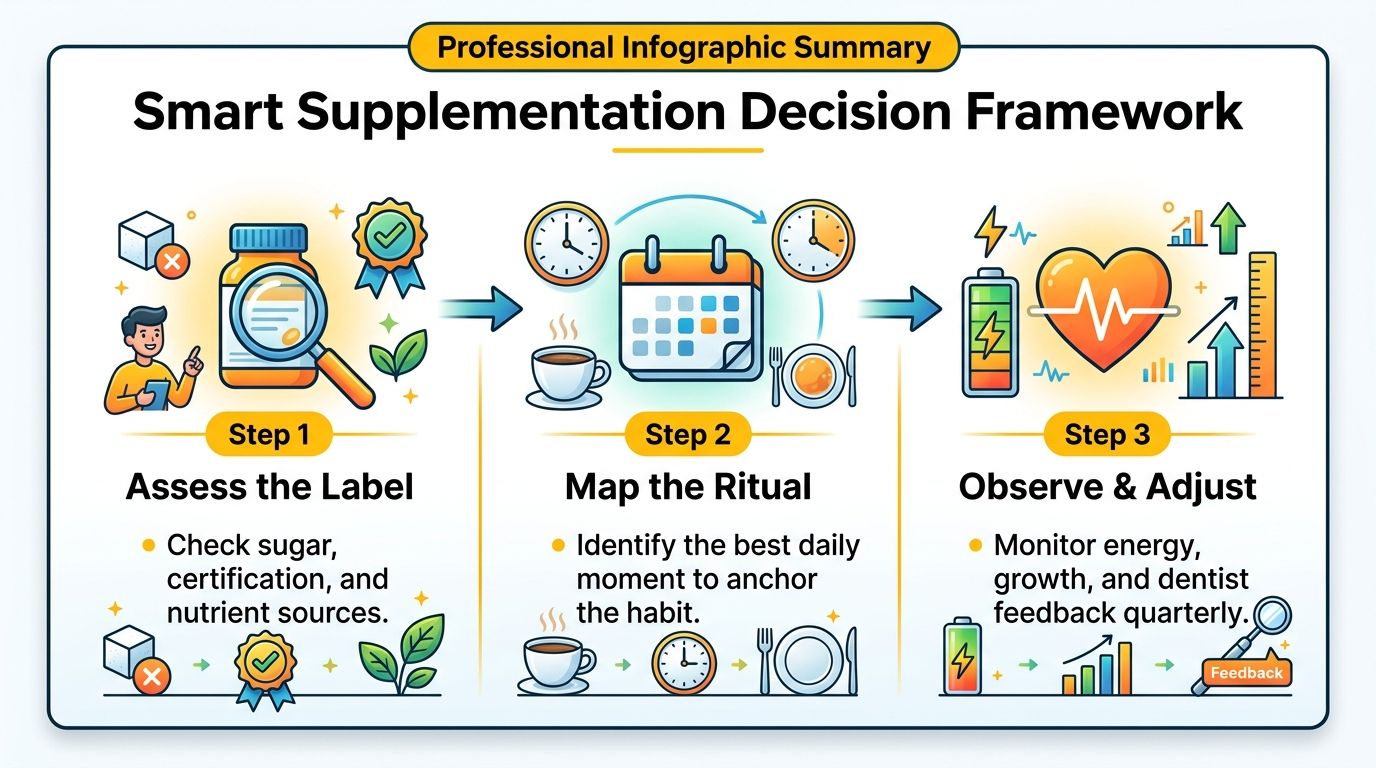
The safest kids vitamin gummies are not chosen by flavour alone. Use a three-part check that examines the label, the child and the household routine.
Start with the label. Confirm the active ingredients, serving instructions, sugar content, allergens and stated quality practices. A sugar-free, vegan product without artificial colours or flavours may suit your family, but those features do not replace checking the dose or the full ingredient list.
Match the supplement to the child. Gummies can fill a specific nutritional gap, but they do not replace a varied diet. Supplement use among Australian children is established, although that does not mean every child needs the same formula. Consider the child's diet, age, medication and health needs with a healthcare professional.
Build the routine around one adult-controlled moment. Link the serving to breakfast or another dependable habit, then let the child help mark it on a chart without handling the supply. This makes the routine feel like brushing teeth: predictable, visible and still guided by an adult. Review the choice when the child's circumstances change.
Daily Powers lists Australian-made Brave, Focus and Calm gummy formulations, with 0 sugar, vegan ingredients and no artificial colours or flavours across the range, according to its product information. Parents can compare each formula's ingredients and dosing guidance before deciding whether it suits the family.
A child-led ritual should support safe adult control, not turn a supplement into a lolly or reward. Keep the product in its proper category, check the serving each day, and reconsider it as the child grows.