

Your child is tired, but bedtime still feels miles away. After school, there may be screens, sport, homework and a rush of emotions, followed by a restless evening when everyone wants calm but nobody can find it. That's why many Australian parents start researching magnesium supplements, especially magnesium chelate, as part of a more manageable wind-down routine.
Magnesium can support normal nervous-system and muscle function, but a supplement isn't automatically necessary for every child. The most useful question is not just whether magnesium has benefits. It's whether your child has a genuine dietary gap, whether the product is appropriate for their age, and whether the chosen form is practical enough to use consistently.
Table of Contents
- The Evening Wind-Down Challenge
- What Is Magnesium Chelate
- Evidence for Sleep and Relaxation Benefits
- Understanding Child Dosage and Safety
- Choosing Quality Children's Magnesium Products
- When Is Supplementation Actually Needed
- Building a Sustainable Supplement Routine
The Evening Wind-Down Challenge
At 6.30 pm, eight-year-old Mia is still moving. She's finished dinner, but she's asking for another show, searching for a missing toy and arguing that she isn't tired. Her parent has already tried dimming the lights and starting the bedtime routine earlier. Nothing seems to make the transition easy.
This is a familiar pattern for families with primary-school children. A busy afternoon can leave a child physically tired but mentally activated. Magnesium often enters the conversation at this point because it contributes to normal nervous-system function and muscle function. Parents may also hear that chelated forms are easier to tolerate, so they begin comparing glycinate, citrate and oxide on the supermarket shelf.

A magnesium gummy won't replace a predictable bedtime, reduced evening stimulation or support for a child who may have anxiety, pain or a sleep disorder. It may, however, help fill an intake gap when food alone isn't providing enough magnesium. The Australian Bureau of Statistics found that 31.3% of Australians aged two and over, about 7.7 million people, had inadequate magnesium intake from food and beverages in 2023 (Healthdirect's magnesium guidance).
That national figure needs careful interpretation. Children were less likely than adults to have inadequate intake, and the strongest shortfall appeared later in adolescence rather than during the primary-school years (Australian Bureau of Statistics nutrient-intake data). So a tired or restless child isn't automatically magnesium deficient.
For parents, the practical starting point is a calm review of the whole routine:
- Look at the pattern: Is bedtime difficult every night, or mainly after screens, late activities or stressful days?
- Check the plate: Does your child regularly eat foods such as legumes, whole grains, leafy vegetables, nuts or seeds?
- Ask what the product provides: Is the label clear about elemental magnesium and age guidance?
- Keep the routine realistic: A product that causes resistance won't support consistent use.
You can also compare supplement decisions with broader ideas in this guide to a kids' bedtime routine. The aim isn't to sedate a child. It's to support healthy foundations and address a real nutritional gap where one exists.
What Is Magnesium Chelate
Magnesium chelate is magnesium attached to another molecule, often an amino acid such as glycine. The word can sound technical, but the basic idea is simple. Think of magnesium as travelling with a companion rather than moving through digestion alone. That companion can change how the compound behaves in the digestive tract.

Organic forms such as magnesium glycinate and magnesium citrate are generally considered more bioavailable than inorganic salts. Australian consumer-health guidance explains that forms such as glycinate can use amino-acid or dipeptide transport pathways, while magnesium oxide has lower bioavailability and is more likely to produce bowel effects (comparison of magnesium forms from Blackmores Australia).
That doesn't mean every chelate is automatically suitable for every child. “Chelated” describes how magnesium is bound. It doesn't tell you the dose, the quality of the rest of the formulation, or whether the product is appropriate for your child's age.
Comparing common forms
| Form | Practical distinction | What parents should check |
|---|---|---|
| Magnesium glycinate | Magnesium bound to glycine, often chosen for tolerability | Confirm the elemental magnesium amount |
| Magnesium citrate | An organic form that is generally well absorbed | Watch for bowel effects in sensitive children |
| Magnesium oxide | An inorganic salt with lower bioavailability | It may be more likely to cause digestive discomfort |
The useful distinction is absorption plus tolerance. If a form is poorly tolerated, a child may skip doses or refuse the product. If the label makes it difficult to identify how much elemental magnesium is present, parents can't confidently compare products.
Citrate can still be a reasonable choice. For example, Calm is a children's gummy containing magnesium citrate, with the label listing 30 mg of elemental magnesium in each daily serving, alongside vitamin B6, zinc and prebiotics. That product detail matters more than the word “chelate” alone because caregivers need to assess the actual magnesium amount and the complete ingredient list.
Magnesium isn't a substitute for food. Australian guidance recommends using magnesium-rich foods as the base of intake and speaking with a doctor or pharmacist before starting supplementation (Australian Prescriber's clinical overview). A plain-language explanation of what magnesium does can help families separate normal nutrient functions from broad marketing promises.
Evidence for Sleep and Relaxation Benefits
Magnesium's relationship with relaxation is biologically plausible, but that doesn't make every sleep claim proven. The mineral contributes to normal nerve signalling, electrolyte balance and muscle function. If a child's intake is inadequate, correcting that gap may support normal body processes involved in settling and physical comfort.
The important qualifier is baseline status. A child who already gets enough magnesium from food shouldn't be expected to gain a dramatic sleep benefit just by taking more. The Australian Sports Commission also describes evidence for performance benefits as equivocal when intake is already adequate, which supports a broader principle: supplementation is most defensible for correcting insufficiency, not pushing a well-nourished child beyond normal levels (Australian nutrient reference values).
What parents can reasonably expect
A chelated form may make sense for daily use because it's commonly selected for absorption and gastrointestinal tolerance. Better tolerance can make a routine easier to maintain, but it doesn't guarantee a particular bedtime result.
Potentially relevant areas include:
- Normal muscle function: Magnesium helps the body manage muscle contraction and release.
- Nervous-system support: Adequate intake supports normal nerve function rather than acting as a sedative.
- Dietary-gap support: A supplement can add magnesium when food intake is consistently limited.
- Routine comfort: A gentler formulation may be easier for a child to accept than one associated with loose stools or stomach discomfort.
Parents should be careful with symptom matching. Restless sleep, irritability, leg discomfort or difficulty winding down can have many explanations, including an inconsistent schedule, anxiety, iron deficiency, illness, breathing problems or insufficient sleep opportunity. Magnesium should be one part of a considered plan, not the first explanation for every difficult evening.
A useful boundary: Magnesium may support normal relaxation when intake is inadequate, but it shouldn't be presented as a treatment for behavioural, developmental or sleep conditions.
Australian clinical guidance also highlights why formulation and absorption deserve attention. Oral correction of magnesium deficiency can take substantially longer than intravenous treatment, with Australian Prescriber describing approximately six weeks versus seven days in the relevant clinical context (Australian Prescriber guidance). That comparison concerns diagnosed deficiency, not ordinary bedtime supplementation, but it reinforces the need for realistic expectations.
If sleep remains difficult, look beyond the supplement. Keep wake and sleep times predictable, reduce stimulating activities before bed and seek medical advice when snoring, breathing pauses, pain, persistent anxiety or marked daytime tiredness are present.
Understanding Child Dosage and Safety
A label can make a children's magnesium product look stronger than it is. The total weight may describe the entire compound, such as magnesium citrate or glycinate, rather than the magnesium itself. Elemental magnesium is the figure that shows how much magnesium the child receives, so check that line before comparing products.
Australian reference values offer age-based context. Children aged 4 to 8 have a recommended intake of 130 mg of magnesium per day, while children aged 9 to 13 require 240 mg per day. These amounts cover magnesium from food and supplements combined (Australian nutrient reference values).
The supplementary upper limit answers a different question. It refers to magnesium supplied by supplements, not the child's entire daily intake. Australian health guidance lists 110 mg per day for children aged 4 to 8 and 350 mg per day for children aged 9 to 13 (Healthdirect's magnesium information).
A safer label-checking process
- Confirm the child's age range. A product intended for an older child may not suit a younger child.
- Read the elemental magnesium amount. Do not use the total weight of the named magnesium compound for comparison.
- Check other products. Multivitamins, electrolyte drinks and some laxatives may also contain magnesium.
- Confirm the daily serving. Establish whether the stated amount means one gummy, two gummies or another quantity.
- Ask a professional if unsure. A pharmacist, GP or paediatric dietitian can help interpret the label.
A lower amount is not automatically appropriate for every child. Children under four, children with kidney problems and children taking regular medicines should receive individual advice before supplementation. Stop the product and seek guidance if persistent diarrhoea, abdominal discomfort or another unexpected symptom develops.
Food remains the foundation of magnesium intake. A varied diet may provide the recommended amount without a supplement. Restricted eating, very selective food choices or digestive symptoms call for professional assessment rather than guessing from an unsettled evening. Parents can also review these practical guidelines on magnesium supplements for kids when checking labels and planning a routine.
Choosing Quality Children's Magnesium Products
A suitable product needs more than an attractive flavour. Parents should compare the magnesium form, elemental dose, ingredient transparency, serving instructions and fit with the child's routine.
A capsule may provide a precise dose but be difficult for a young child to swallow. A powder may mix into food but be rejected if it changes the taste or texture. Gummies can be easier for some families, although parents still need to check the serving size, sweeteners and active ingredients.
A clear label should answer several questions without requiring guesswork:
- What form is used? Look for magnesium citrate, glycinate or another named form.
- How much elemental magnesium is supplied? This is the number to compare.
- How many units make a serving? Children may be directed to take more than one gummy.
- What else is included? Check vitamins, minerals, prebiotics, flavourings and allergen information.
- Does it suit your household? Sugar-free, vegan and no-artificial-colour or flavour options may matter to your family, but they don't remove the need to check dose and suitability.
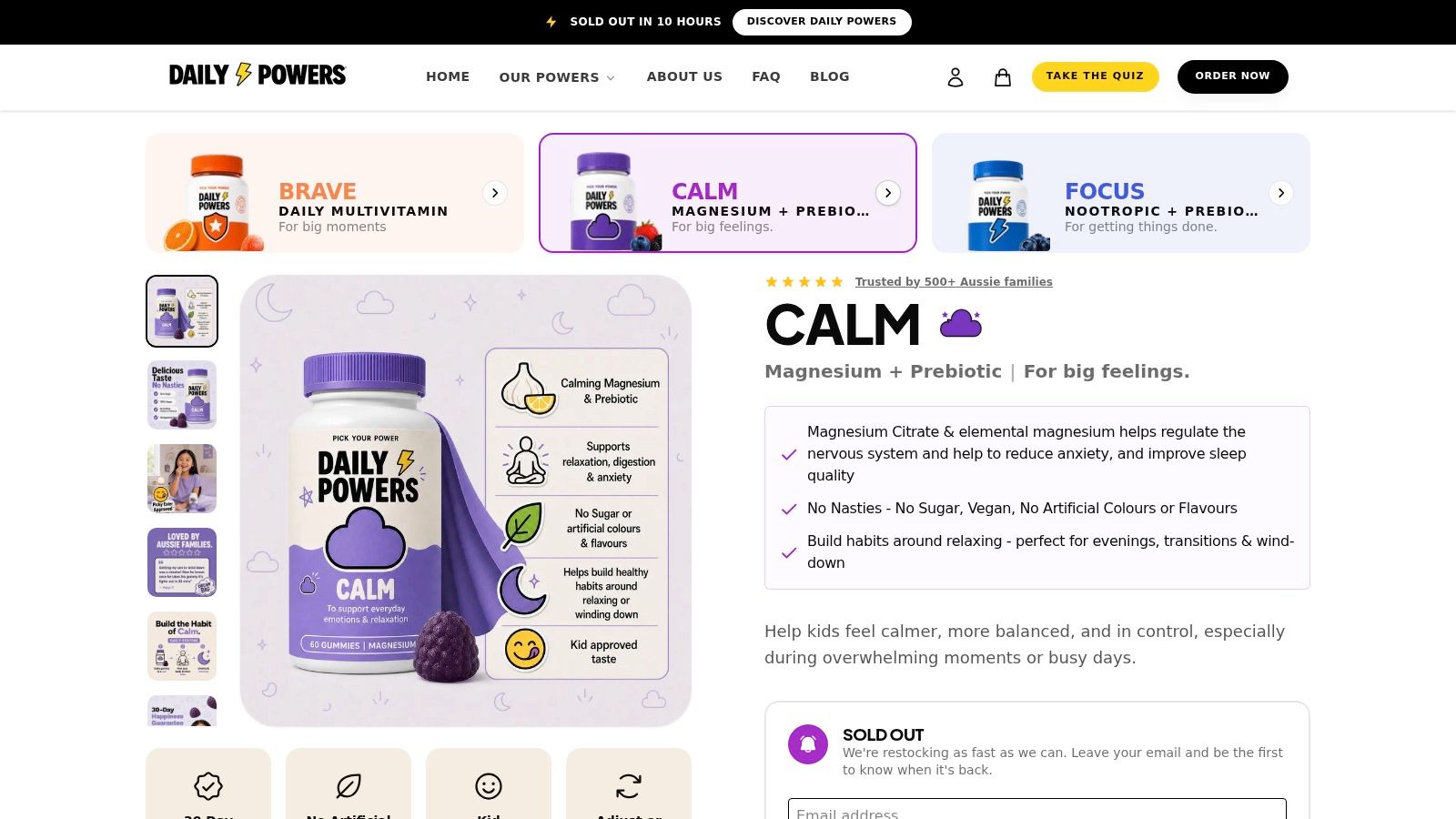
Daily Powers Calm is one example of a children's magnesium product. Its snapshot lists magnesium citrate, vitamin B6, zinc and prebiotic fructooligosaccharides, with 30 mg of elemental magnesium in the stated daily serving. The product information also describes a sugar-free, vegan gummy without artificial colours or flavours and gives directions to take two gummies daily, or as directed by a healthcare professional.
Read the serving instruction, not just the front of the packet. The front may name the compound, while the nutrition panel tells you the elemental magnesium amount.
TGA status and clear Australian labelling can provide useful reassurance, but approval doesn't mean a product is necessary for every child. It also doesn't replace checking contraindications or discussing supplementation with a healthcare professional. A product should earn a place in the routine because its ingredients and dose match the child's needs, not because the packaging makes a broad promise.
A gummy can support adherence when a child dislikes tablets, but it should still be stored safely and treated as a supplement, not a lolly. Keep it out of reach, follow the directions and don't increase the serving because a child is having a difficult week.
Here's a visual example of how a product page may present its ingredients and serving information:
When Is Supplementation Actually Needed
A child may not need magnesium supplementation at all. Australian national data found that 31.3% of people aged two and over had inadequate magnesium intake from food and beverages in 2023. Children were less likely than adults to have inadequate intake, and the largest shortfall occurred later in adolescence rather than during the primary-school years (Australian Bureau of Statistics usual nutrient intakes).
For a child aged four to twelve, the decision depends on the whole picture. Is magnesium-rich food appearing regularly? Is the diet restricted? Could a medical condition affect intake or absorption? Or is a supplement being considered mainly because bedtime has become difficult?
Start with the plate
Magnesium is found in legumes, whole grains, leafy vegetables, nuts and seeds. Young children often need help with familiarity and texture before they will accept these foods. Smooth nut or seed spreads, where appropriate, beans blended into sauces, wholegrain toast and finely chopped leafy vegetables can make the same nutrients easier to include in ordinary meals.
Supplementation may deserve professional consideration when:
- Dietary variety is persistently limited: A child avoids several food groups over an extended period.
- A health condition affects intake or absorption: Discuss this with the treating clinician instead of trying to identify the cause at home.
- A professional identifies a gap: A GP or dietitian can assess growth, eating patterns, symptoms and medical history together.
- The family needs a measured short-term trial: Agree on the purpose, duration and review point before starting.
Cramps, restless sleep and difficulty concentrating can occur alongside low magnesium, but none of these symptoms proves a deficiency. Poor sleep may call for a sleep assessment. Frequent cramps may relate to hydration, activity, pain or another nutrient. Concentration difficulties may involve sleep, learning, vision, hearing or emotional wellbeing.
The threshold matters more than the trend. Use supplementation to address a plausible nutritional gap, rather than copying another family's routine.
A brief record can make a clinical discussion more useful. Note the child's usual meals, bowel tolerance, sleep pattern and regular medicines. This helps the clinician judge whether magnesium is appropriate and keeps the supplement from replacing investigation of the underlying concern. For Australian parents, a chelated form may be convenient if a clinician recommends supplementation and the child tolerates that product, but the form alone does not establish a need for extra magnesium.
Building a Sustainable Supplement Routine
Consistency is practical, not glamorous. If a child refuses the product, forgets it or associates it with pressure, even a well-formulated supplement won't become a reliable household habit.
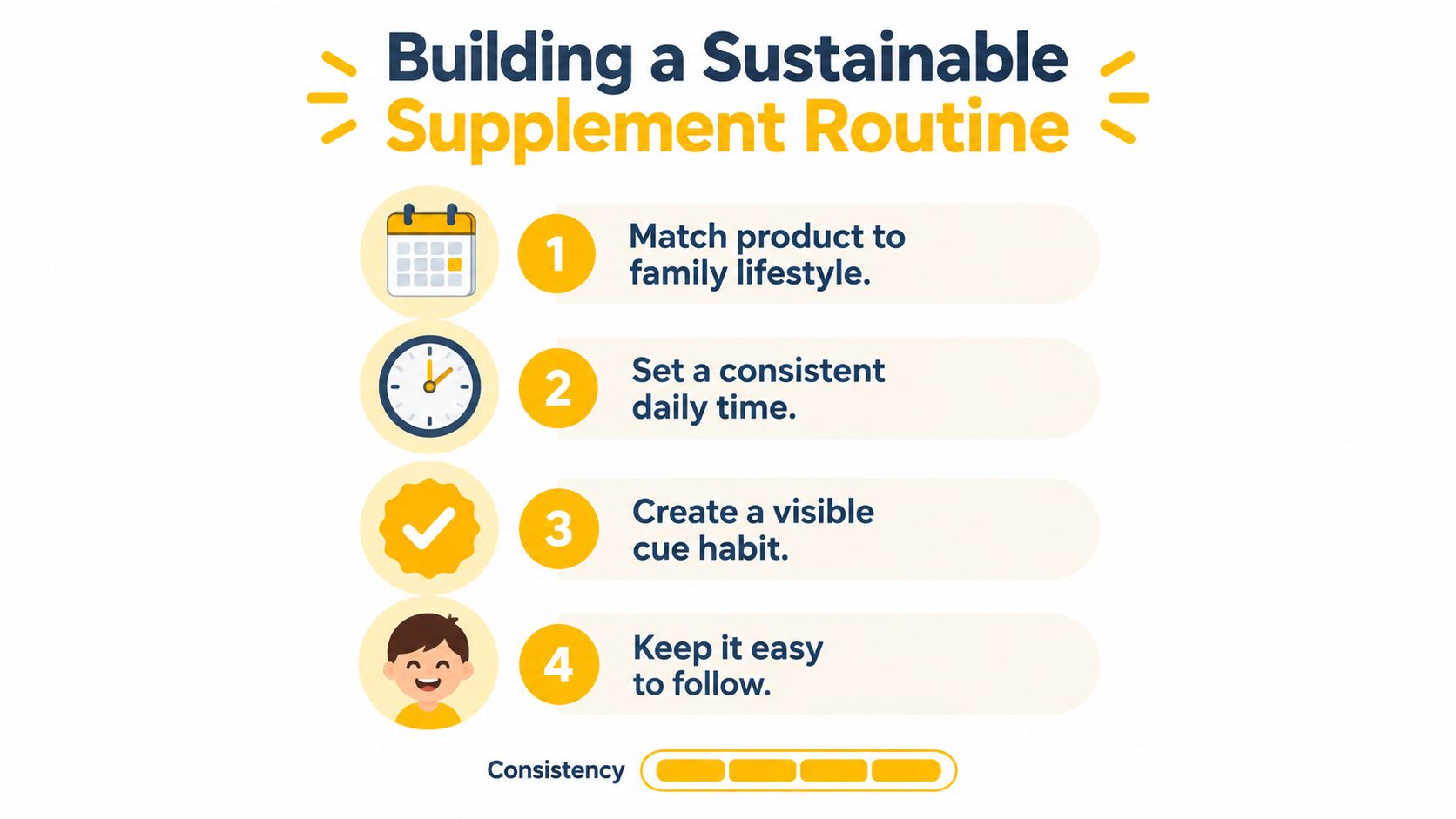
Choose a cue that already exists. After breakfast may suit a child who rushes less in the morning. After dinner may work for a family that begins the bedtime routine together. The best time is the one that fits the label instructions and your household's real schedule.
A simple family checklist
- Clarify the purpose: Write down whether the aim is to fill a dietary gap, support magnesium intake or follow professional advice.
- Check the label: Record the form, elemental magnesium and serving size.
- Use one visible cue: Keep the product with an adult-controlled routine item, not where a child can access it freely.
- Watch tolerance: Note stomach upset, loose stools or refusal.
- Review the reason: If the original concern changes, reassess whether the supplement still belongs in the routine.
A predictable ritual can also reduce conflict. Use neutral language such as “This is part of your evening routine” rather than promising that a gummy will make a child sleep. Pair it with a story, toothbrushing or another established activity, while keeping screens and stimulation separate from the supplement itself.
Look for gradual, observable changes rather than dramatic claims. You might track how easily your child settles, whether the product is tolerated and whether the family can follow the routine without daily arguments. If there's no clear reason to continue, speak with a healthcare professional instead of increasing the dose.
Magnesium chelate benefits are most relevant when the form is tolerated, the dose is appropriate and the child genuinely needs help meeting intake requirements. For many Australian children aged four to twelve, food quality and routine consistency deserve attention before supplementation becomes automatic.
Daily Powers offers children's gummy supplements designed around everyday routines, including Calm, a magnesium citrate product with vitamin B6, zinc and prebiotics. If you're comparing child-friendly options and want transparent product information to discuss with your pharmacist or healthcare professional, visit Daily Powers.