

It's 8:05 on Monday morning. One child can't find a shoe, another is still in pyjamas, the lunchbox is open on the bench, and you've already repeated “brush your teeth” enough times to lose your patience. The school routine chart is on the fridge, but nobody is looking at it.
The problem usually isn't that your child is lazy or that the chart is useless. The chart was probably designed around a generic list of morning jobs instead of your family's actual sleep needs, school start, homework, sport pickups and device boundaries. A useful chart should reduce your voice in the routine, not turn you into a louder alarm clock.
Australian guidance connects children's daily structure with sleep, screen use, homework and consistent timing. Children aged 5 to 13 should get 9 to 11 hours of uninterrupted sleep, while young people aged 14 to 17 should get 8 to 10 hours. Recreational screen time should be limited to no more than 2 hours per day, with consistent bedtimes and wake-up times encouraged by Victorian government homework and routine guidance. The right chart therefore starts at bedtime, not at the first frantic request to put on socks.
Table of Contents
- Why Most School Routine Charts Fail by Week Two
- The Five-Step Way to Teach Any New Routine
- Age-Specific Routines for Australian School Mornings
- Designing a Chart Kids Will Actually Look At
- Reward Systems That Build Habits Without Bribes
- Printable School Routine Chart Template
- Troubleshooting When the Chart Stops Working
Why Most School Routine Charts Fail by Week Two
The most common mistake is sticking a seven-step checklist on the fridge and expecting a child to follow it independently. A list might say wake up, get dressed, eat breakfast, brush teeth, pack bag, put on shoes and leave. It doesn't show what happens when bedtime drifted late, homework ran over, sport pickup was delayed or a screen had to be switched off before the next task.
That matters in Australian homes because the routine has to fit real school timing. One Australian adolescent sleep study reported later school starts, with an average start time of 8:32 am, compared with 7:45 am for U.S. peers, and Australian adolescents in that study got 47 minutes more sleep per school night. The finding supports a simple design decision: don't copy an overseas morning schedule. Build the chart around your child's actual school gate, travel time and bedtime. The kids' bedtime routine guide is useful background, but your chart still needs to reflect your household.
The three predictable breakdowns
First, you become the chart. You call every instruction from the kitchen, then call it again from the bathroom. Your child completes the task, but only after your verbal prompting, so the chart never becomes the cue.
Second, rewards become negotiations. If the reward changes whenever the morning goes badly, your child learns to argue for the reward rather than follow the sequence.
Third, the chart stops matching the week. Monday's plan might work until Wednesday sport, Thursday homework and a Friday excursion expose all the missing steps. A chart that ignores after-school congestion will fail even if its icons are attractive.
The blunt test: if you're still announcing every box after the chart has been displayed for several days, it hasn't been taught yet.
A school routine chart works when it is visible, predictable and practised. It must also contain fewer steps than your child can manage at their most tired, not their most cooperative. Fix those foundations and week three becomes a maintenance problem instead of a daily battle.
The Five-Step Way to Teach Any New Routine
A chart isn't an instruction manual that children absorb by walking past it. Australian Education Research Organisation guidance describes routines as recurring tasks that become automatic through explicit teaching. Its sequence is practical for home: introduce the routine, model it, practise with support, complete it independently, then reinforce it consistently in Australian classroom routine guidance.
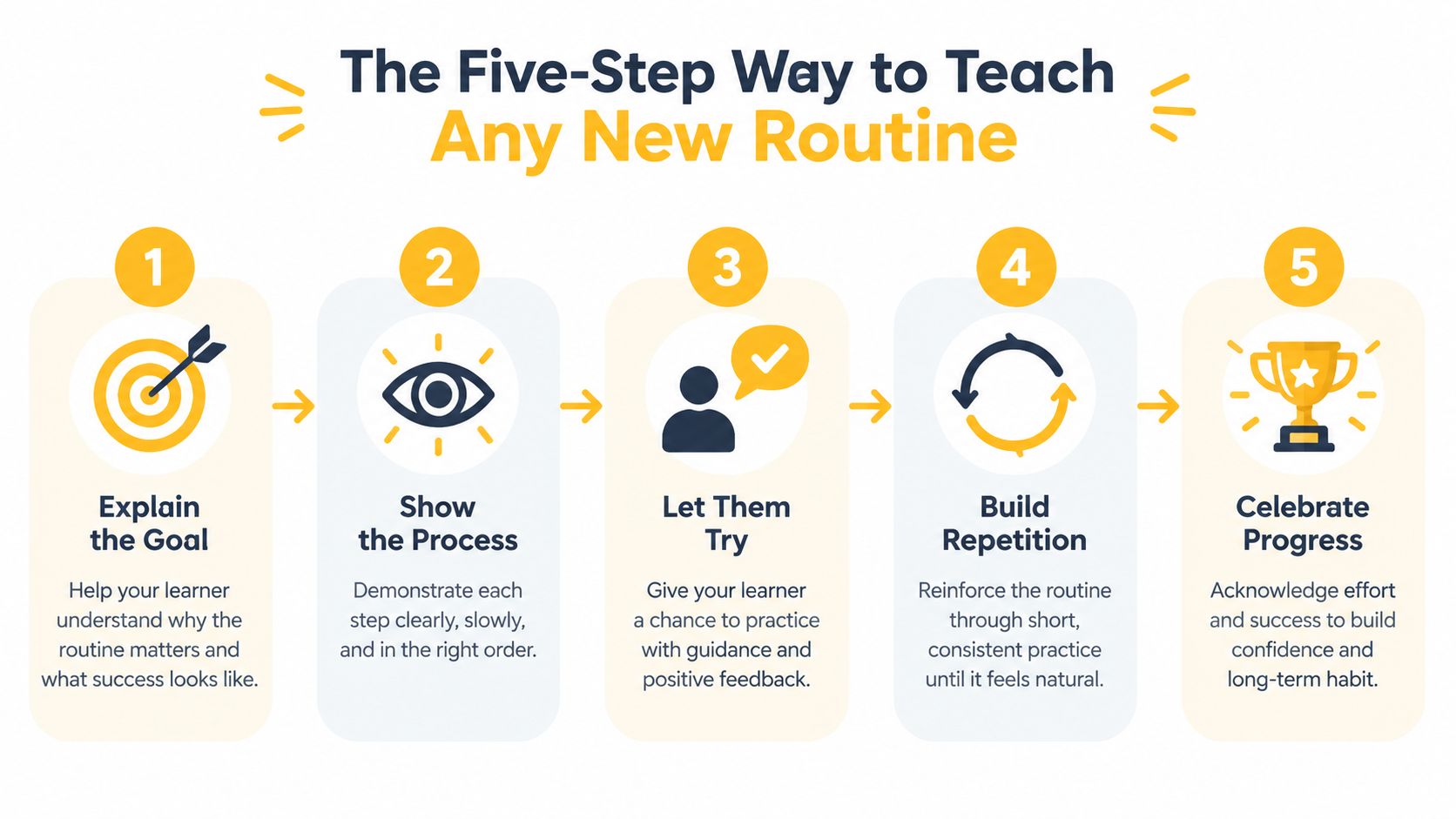
1. Introduce it
Choose Sunday, not the first school morning. Sit beside your child and name each picture, time block and completion marker. Explain what happens after the chart, such as leaving for school, starting play or beginning the bedtime story.
Let your child point to the images and tell you what they think each one means. Correct confusion immediately. If “bag check” includes the reader, lunchbox and hat, show those items rather than assuming the words are clear.
2. Model it
For the next couple of days, perform the sequence yourself while speaking aloud. “I look at the chart. I get dressed. I move the marker. I check the next picture.” This gives your child an audible script for self-management.
You don't need to make the demonstration theatrical. The value is in showing the transition between tasks, including how to mark a task complete and how to find the next one.
3. Practise together
Work alongside your child for several days. You might dress at the same time, check bags together or sit nearby while homework begins. Tick the chart together, but don't take over every job.
If the routine includes a positive daily ritual, such as Brave, place it after a clear completed action rather than using it to bargain with your child. The chart should show the order, while you provide calm coaching.
4. Hand it over
Once your child knows the sequence, stop standing over the chart. Stay close enough to observe, but point to the visual instead of repeating the instruction. If your child asks what comes next, guide them back to the chart and let them find the answer.
This is the stage many parents skip because it feels slower at first. Independence can't develop while the adult supplies every cue.
5. Reinforce it
Finish each day with a short review. Ask which step felt easy, where the sequence got stuck and whether anything needs changing. Keep the conversation brief and practical. Praise noticing, starting and recovering, not only perfect completion.
The same sequence works for a morning routine chart, a homework schedule or a bedtime chart. Displaying it is the smallest part of the job. Teaching it is what transfers ownership from parent to child.
Age-Specific Routines for Australian School Mornings
A four-year-old and a twelve-year-old shouldn't receive the same chart with different pictures. Their sleep requirements, attention, motor skills and capacity to recover from a delay are different. Start with the school's real arrival time, then work backwards from bedtime and wake-up rather than squeezing tasks into an arbitrary morning block.
For children aged 5 to 13, Australian guidance recommends 9 to 11 hours of sleep and no more than 2 hours of recreational screen time per day. Queensland guidance for prep-aged children gives a more specific anchor, at least 10 hours of sleep, a target bedtime around 7:30 pm to 8:00 pm, and devices away at least 2 hours before bedtime. These recommendations are summarised in NSW guidance on sleep and children's health.
Ages 4 to 6
Use a 60 to 75 minute wake window and four main morning tasks. A workable sequence is toilet, clothes, breakfast, teeth and shoes, with the bag already prepared the night before. Use pictures first and words second.
Aim for a 7:00 pm bedtime, with lights out by 7:30 pm, adjusting for your child's sleep needs and family travel. After a 4:00 pm pickup, offer a snack, allow outdoor movement, then begin dinner and the wind-down sequence before tiredness turns into refusal.
Ages 7 to 9
Keep the morning visual, but add responsibility. The child should check uniform, lunchbox, reading folder and hat rather than waiting for an adult to inspect each item. A parent can verify the final launch-pad check without owning every step.
For an after-school afternoon, try snack after pickup, a short movement break, homework at a regular time, then dinner and preparation for tomorrow. NSW guidance recommends regular times for dinner, homework and bedtime, while Victorian guidance recommends homework at the same time each day. Keep recreational screens out of the homework transition, and target around 7:30 pm lights out where that fits the child's sleep requirement.
Ages 10 to 12
Older primary children can manage a shorter, more independent morning, but they still need visible boundaries. Put the chart near the bedroom door or study area, not necessarily in the kitchen. Include a 4:30 pm homework start after sport when that reflects the family's timetable, then add bag preparation and device shutdown.
Use an 8:00 pm wind-down with screens off, reading or quiet preparation before sleep. Review the chart after daylight-saving changes in autumn and spring, after a new sport season begins and when school terms become more demanding. The clock may change, but the order should remain familiar.
| Age group | Morning block, start time | After-school block | Bedtime / lights-out |
|---|---|---|---|
| 4 to 6 | 60 to 75 minutes before departure, with picture cues | 4:00 pm pickup, snack, outdoor play, dinner preparation | 7:00 pm bedtime, lights out by 7:30 pm |
| 7 to 9 | Wake, dress, breakfast, self-check and launch pad | Snack, movement, regular homework, dinner, next-day check | Around 7:30 pm lights out, adjusted to sleep needs |
| 10 to 12 | About 45 minutes, with the child checking the sequence | Sport pickup, 4:30 pm homework start when suitable, pack for tomorrow | 8:00 pm wind-down, screens off |
The important point is calibration. A school routine chart should show the life your child lives, including sport pickups, tired afternoons and seasonal clock changes.
For a practical starting point, use this morning routine for kids as a prompt, then remove anything that doesn't belong in your own school run.
Designing a Chart Kids Will Actually Look At
A visual schedule works because it gives the child a stable cue for what happens next. Australian evidence reviewed by ASTRAD defines visual schedules as structured tools using photos, symbols, words or objects to show an activity sequence. In the review cited by ASTRAD's guide to visual schedules, 19 of 26 measured outcomes showed high efficacy, and 15 studies met evidence-based-practice criteria. A separate review covering 16 studies and 56 children and adolescents found visual schedules effective in traditional and digital formats.
That evidence doesn't mean any decorated checklist will work. It means the chart needs to function as a prompt. Make the next action obvious, make completion visible and avoid changing the order without warning.
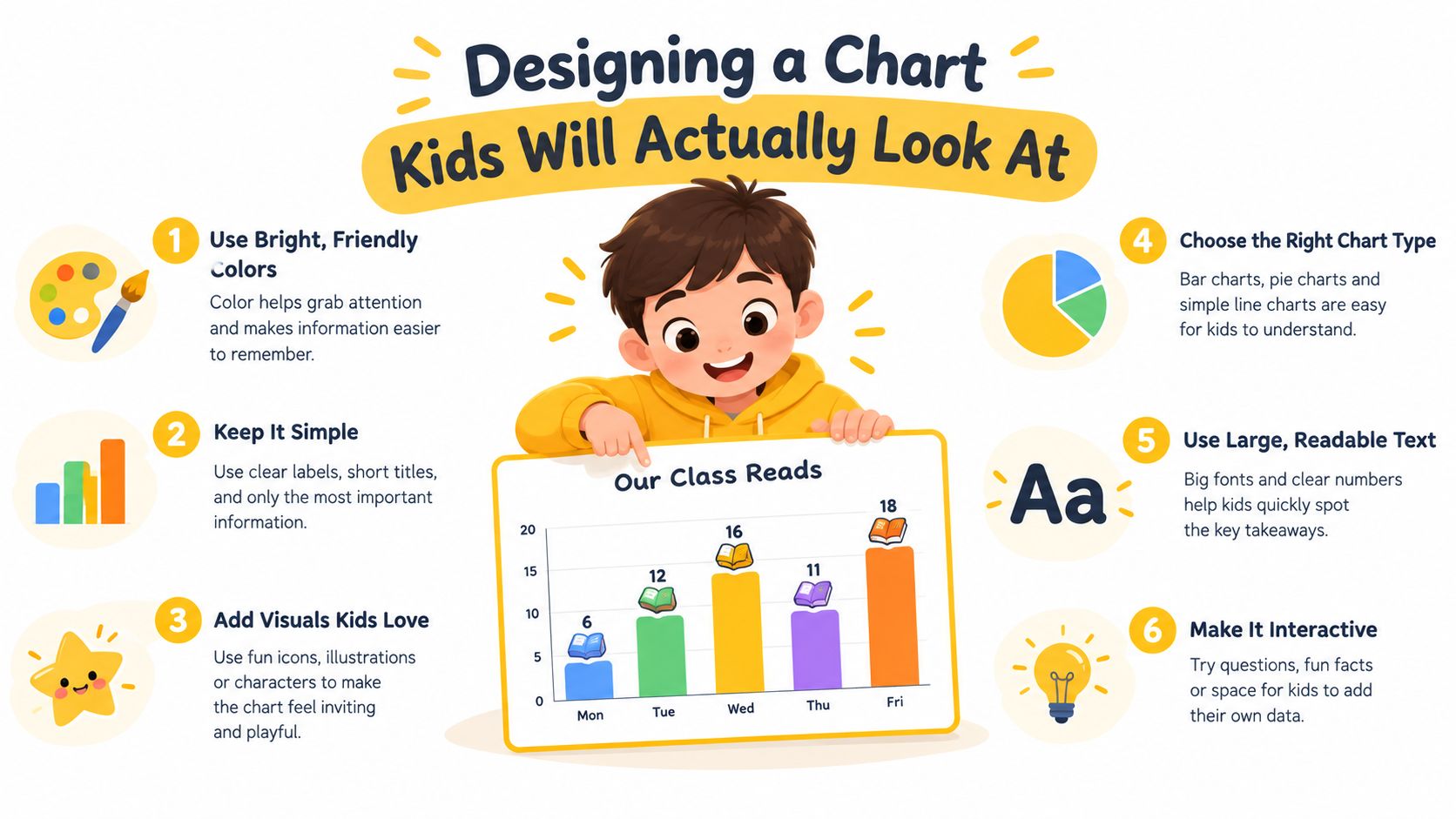
Use visual economy
For children under seven, use one clear symbol per task. A picture of a toothbrush is stronger than a sentence about oral hygiene. From around eight, pair the icon with a short label, such as “brush teeth”, so the chart supports reading as well as recall.
Keep the total visible workload manageable. Use fewer than eight task cells for a four-to-six-year-old morning, and fewer than twelve for an older child's full daily chart. If a block needs more detail, group tasks under one heading, such as “bag check”, rather than filling the page with tiny instructions.
Build three blocks, not one long list
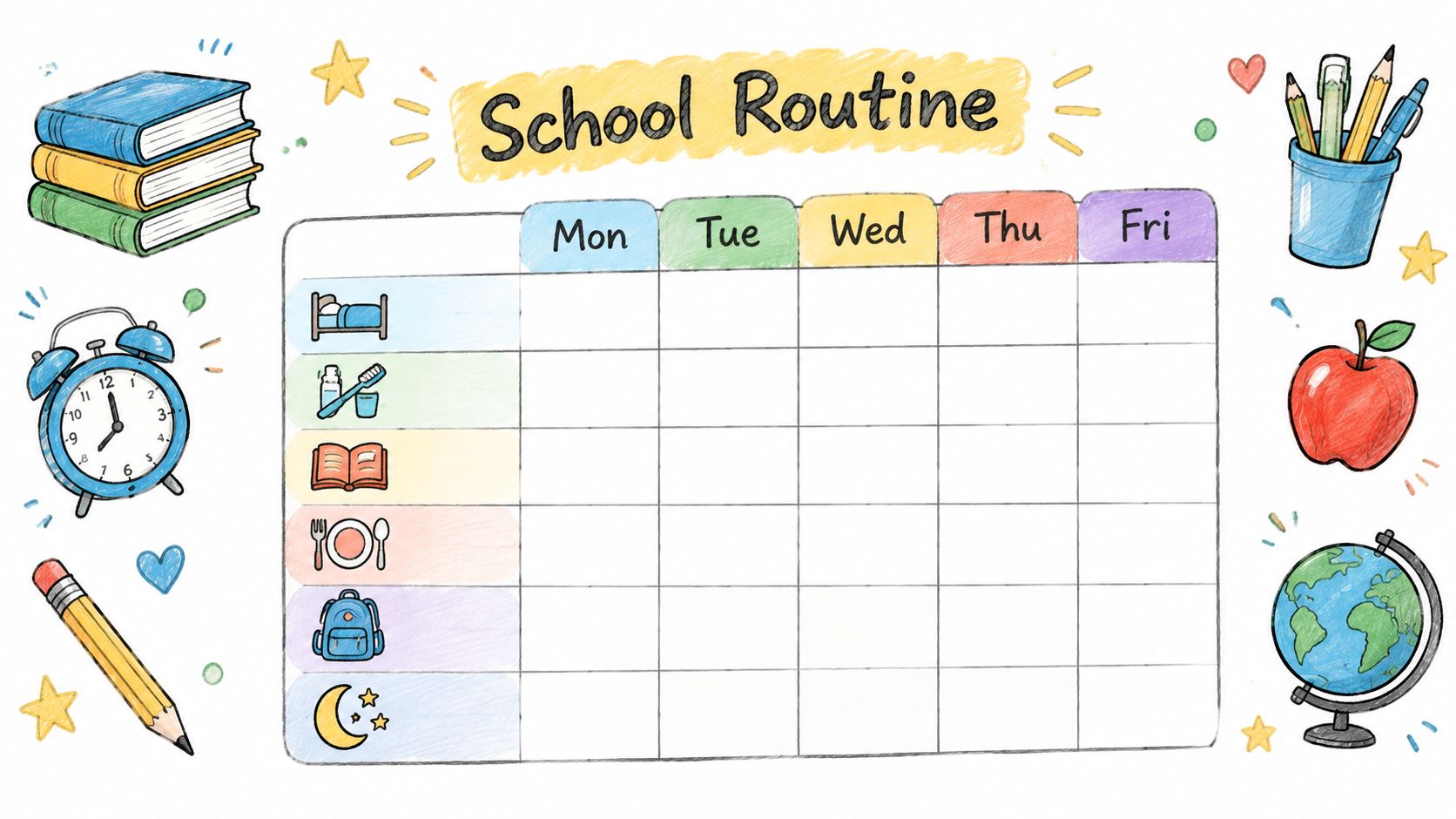
Use morning, after-school and bedtime modules on one A3 sheet or on magnetic strips. Sequence each block left to right or top to bottom in time order. Colour can provide a second cue:
- Yellow for self-care: waking, dressing, eating and teeth.
- Blue for school: bag, homework, reading folder and uniform.
- Green for wind-down: shower, pyjamas, book and lights out.
Make each task cell about 2.5 cm high so the icon can be read from across the room. Put the tick box, Velcro dot or movable marker at your child's eye height. Add a top-left ownership strip where the child writes their name and decorates the border.
A chart should be easy to update on a tired Thursday. If only an adult can edit it, it isn't flexible enough for family life.
Avoid two extremes. A wall of text forces a young child to decode the parent's language, while cartoon clutter competes with the actual cue. Use one strong image, one short label and one clear completion action.
Reward Systems That Build Habits Without Bribes
Rewards work best when the child knows the rule before the difficult moment. They should reinforce starting, following the sequence and recovering after a delay, not create a daily auction over whether a task deserves payment.
There are three useful structures, and each suits a different stage.
| Reward Type | Best Age | Typical Failure Point | Setup Rule |
|---|---|---|---|
| Sticker chart | 4 to 7 | Stickers lose novelty | Define exactly which completed routine earns one sticker |
| Token economy | 8 to 12 | The exchange rate keeps changing | Agree on the token value and reward before the week begins |
| Habit-cue reward | Any age with support | The cue gets separated from the action | Pair it with the same completed step every day |
Start simple, then reduce the scaffolding
For the first three weeks, a sticker can help a younger child learn the order. Don't award one for every tiny movement if that turns the chart into paperwork. Choose one meaningful checkpoint, such as completing the morning launch or beginning homework without a second reminder.
For older children, use a weekly token tally. The reward might be choosing the Saturday movie or selecting the family dessert activity, provided the exchange rule stays fixed. Don't remove tokens unpredictably. Consequences that change with your mood make the system feel unfair.
A habit cue runs underneath either system. Pair the desired action with a small, predictable payoff. After school, the sequence might be: sit down, open the folder, take the agreed daily gummy if it's part of your family's routine, then begin writing. The gummy isn't the prize for finishing homework. It's a consistent cue that marks the start.
Keep the reward calm
Announce the system in advance, use non-food rewards where possible and rotate the choice before it becomes stale. The goal is to move from external prompting to automaticity. When the child begins the sequence because the first cue is familiar, reduce the visible reward rather than increasing it.
For families considering supplements alongside broader food and health routines, vitamins for fussy eaters may help you think through acceptance and consistency. It shouldn't replace a varied diet or advice from your child's health professional.
Printable School Routine Chart Template
Print the chart in A4 and keep it plain enough to recreate when the week changes. The header should contain the child's name, the term dates and a small space for the child to colour or sign. Reprint it weekly if you're using pen, or laminate it if the same structure will last longer.
Use these column widths:
- 2 cm time column: one time or time range.
- 6 cm task column: icon space followed by a short task label.
- 1.5 cm tick column: one box or movable marker.
Create three blocks. Each block can contain five rows, but you don't have to fill every row. Blank space is better than a crowded chart that makes the child feel behind before the day begins.
Morning block from 6:30 am to 8:30 am
For a seven-year-old, use:
| Time | Task | Tick |
|---|---|---|
| 6:45 | Wake up | □ |
| 7:00 | Get dressed | □ |
| 7:15 | Eat breakfast | □ |
| 7:35 | Brush teeth | □ |
| 7:50 | Check bag | □ |
Adjust the wake time to your school travel and sleep plan. If your child needs more time, move the first row earlier. Don't squeeze the same tasks into a shorter window and then blame the chart when it fails.
After-school block from 3:30 pm to 5:30 pm
Use this sequence for a child whose sport or family schedule allows it:
| Time | Task | Tick |
|---|---|---|
| 3:30 | Eat snack | □ |
| 3:45 | Change clothes | □ |
| 4:00 | Start homework | □ |
| 4:30 | Pack sport items | □ |
| 5:00 | Free play | □ |
If sport pickup happens at 4:00 pm, move homework to the later suitable block rather than pretending it can happen before departure. A routine chart earns trust when it reflects the afternoon you have.
Bedtime block from 6:30 pm to 8:00 pm
Use:
| Time | Task | Tick |
|---|---|---|
| 6:30 | Put on pyjamas | □ |
| 6:45 | Read a book | □ |
| 7:15 | Prepare for bed | □ |
| 7:30 | Lights out | □ |
| Extra family step | □ |
Leave the final row blank for a family-specific task. For four-to-six-year-olds, blank out extra reading-folder and independent bag-check rows if they create overload. For ten-to-twelve-year-olds, replace simple “get dressed” prompts with self-checks, homework completion and device shutdown.
Add a footer labelled Weekly Reward with a space for the child to tally tokens. Before photocopying, screenshot or save the layout as a PDF so you can reproduce the same chart after it gets marked, folded or lost.
Troubleshooting When the Chart Stops Working
Most charts don't fail because the child suddenly refuses routines. They fail because the visual cue has become invisible, the workload no longer fits the time or the parent has reclaimed the prompting job.
Chart fatigue
If your child walks past the chart without looking, change the presentation rather than adding more instructions. Rotate the border or icon style every fortnight, keep the task sequence stable and move the chart to a more useful location. For older children, the bedroom door or study entrance may work better than the family fridge.
Don't redesign the whole system every few days. The child needs the order to stay predictable even when the appearance gets a small refresh.
Task overload
If mornings are rushed again, count the visible tasks in each block. Cap the chart at five tasks per block during a rescue week. Combine related jobs, such as “uniform and shoes”, or remove a low-value task entirely.
A task should be dropped when it doesn't affect leaving, learning, sleep or the next transition. Retrain a task when it matters but the child has forgotten the sequence. Re-teach it by modelling and practising rather than repeating the instruction louder.
Parent nagging
If you're still calling from another room, stop supplying the next verbal step. Stand beside the chart, point to the current box once and wait. Your child may take longer at first, but the pause is where ownership develops.
| Symptom you see | Most likely cause | First fix to try |
|---|---|---|
| Ignores the chart | It has become background decoration | Move it to the next transition point and refresh the border |
| Argues at bedtime | The wind-down starts too late or includes too many steps | Remove one task and begin the green wind-down block earlier |
| Rushed mornings return | The time window is too short | Move the wake-up row earlier or prepare one task the night before |
| Homework never starts | The cue is vague or follows an exhausting transition | Set one fixed start cue after snack, rest or sport |
| Weekend reset disappears | Saturday activities have crowded it out | Review the chart before the next school week, not late Sunday night |
Australian households also need seasonal troubleshooting. Daylight-saving changes can make a familiar bedtime feel suddenly early or late. Summer heat can delay breakfast and dressing, while sport Saturdays can remove the quiet reset you expected. Term-four fatigue may require fewer visible tasks and more preparation the night before.
Run this two-minute Friday audit:
- Which box was ignored most often?
- Was the problem timing, tiredness or unclear instructions?
- Which one task can be combined, moved or removed?
- What will the child practise on Sunday?
If evenings unravel, return to the first cue instead of adding consequences. A calm, consistent ritual can help mark the shift from activity to homework or wind-down, but it shouldn't be used as a bribe or a substitute for sleep, food or professional advice. Reintroduce the chart by modelling the sequence, practise it together, then step back again.
The school routine chart that lasts isn't the prettiest one. It's the one your child can understand when they're tired, that fits around a 4:00 pm sport pickup, that protects the sleep window and that saves you from saying the same thing twenty times.
Daily Powers offers child-focused gummy routines designed to fit into repeatable family habits, including Brave for a daily multivitamin ritual around big moments. Visit Daily Powers to explore the range and choose whether a simple daily cue belongs in your child's school routine chart.