

The lunchbox is half-packed, one child is looking for a missing shoe, and you're wondering whether the vitamin C gummy on the bench should be part of the morning routine. Perhaps your child has a narrow food list, has recently been unwell, or refuses anything that looks like a capsicum, kiwi fruit or broccoli. The question is understandable: do children need vitamin C supplements, or are they another product competing for space in a busy family cupboard?
For most Australian children, the answer isn't a blanket yes or no. Vitamin C supports important everyday functions, but Australian dietary guidance sets a relatively modest target, and many children can meet it through food. The more useful question is who may be falling short, what food-first nutrition looks like, and whether a supplement can fit safely into the household routine.
Table of Contents
- What Vitamin C Actually Does in a Child's Body
- Why Australian Kids May or May Not Need a Supplement
- Choosing the Right Form for Your Child
- Age-Appropriate Dosages and Safe Upper Limits
- Safety, Side Effects and Interactions to Watch For
- How to Choose a Quality Sugar-Free Option
- Building a Simple Daily Routine That Sticks
What Vitamin C Actually Does in a Child's Body
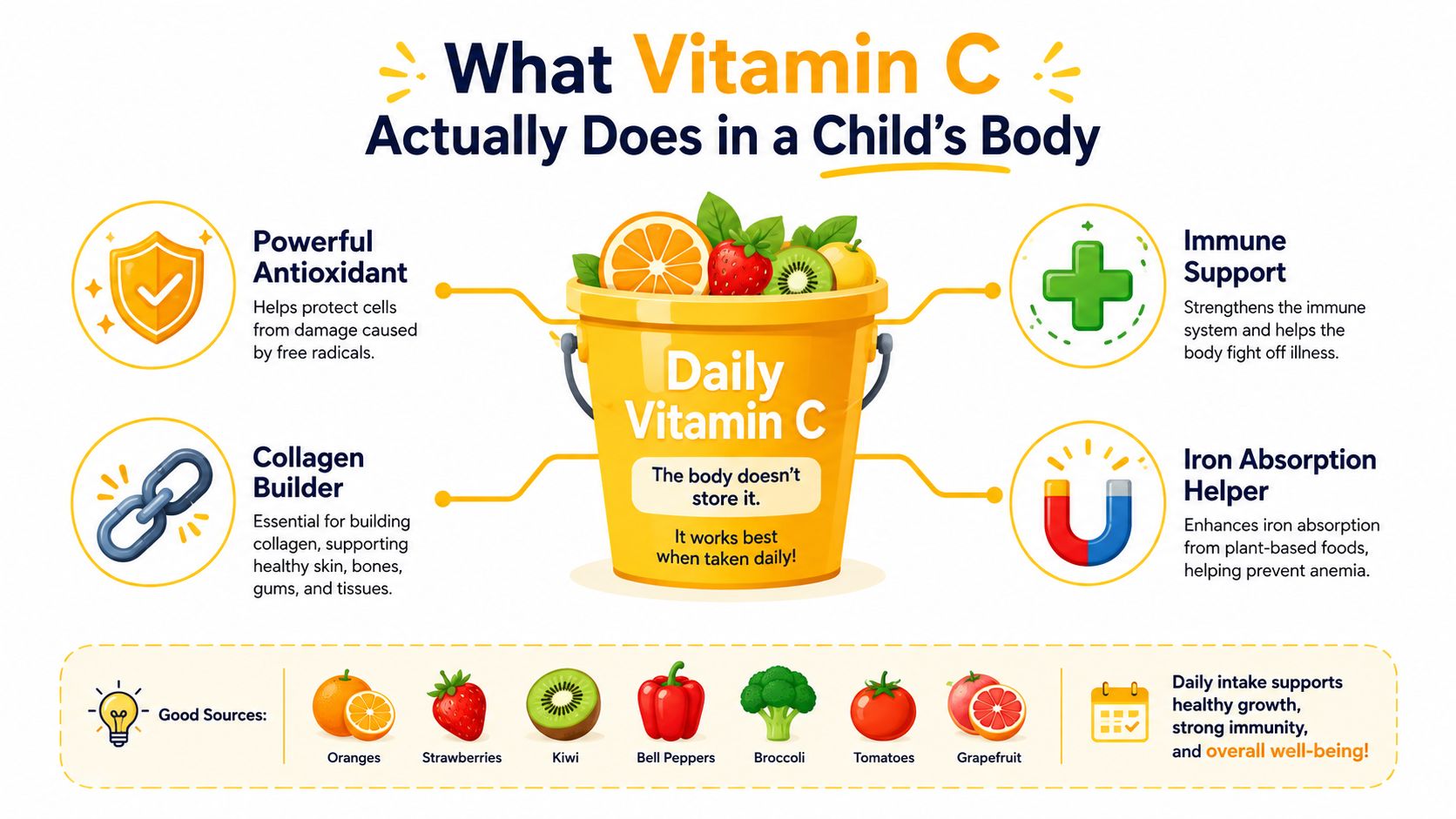
On a rushed weekday morning, vitamin C is easy to think about as just another item to tick off. Yet it isn't a magic shield against every cough or sniffle. It's a water-soluble nutrient that the body uses and regulates, with excess generally leaving through urine rather than being stored for later.
A helpful image is a small bucket that needs refilling regularly. Food adds vitamin C throughout the day. If a child eats fruit or vegetables at breakfast, lunch and dinner, the bucket receives several small top-ups. A large occasional dose may fill it quickly, but the body has limited use for an excess, and absorption becomes less efficient at high doses.
A quiet helper inside growing tissues
Vitamin C acts as an antioxidant. In plain language, it helps neutralise reactive molecules produced during normal cell activity, growth, physical play and minor infections. That doesn't mean a supplement prevents illness, but it does explain why vitamin C belongs in a balanced diet.
It also supports collagen production, which helps maintain skin, gums, blood vessels and connective tissue. For a parent, that biology appears in ordinary ways: healthy gums, skin that can repair after a scrape, and tissues that maintain their structure. Vitamin C also contributes to wound healing and neurotransmitter synthesis, both of which are part of normal development rather than signs that a child needs a high-dose product.
Another practical role is helping the body absorb non-haem iron, the form found in plant foods. A squeeze of lemon over lentils, strawberries alongside breakfast, or red capsicum in a sandwich can help the body access iron from that meal. This pairing matters particularly for children whose diets rely on beans, tofu, leafy vegetables or fortified plant-based foods.
A useful way to think about it: vitamin C supports the systems doing the work. It doesn't replace sleep, varied food, medical care or vaccination.
During an immune challenge, vitamin C supports normal white blood cell activity. It may be involved in how a child responds to an infection, but that role shouldn't be translated into a promise that supplements stop common colds. Australian evidence summarised by UNSW's review of vitamin C claims states that regular supplementation doesn't prevent common colds and offers, at most, a small, context-dependent effect on duration.
The practical conclusion is simple. Steady intake from food matters more than occasional megadosing. A supplement may help cover a dietary gap, but it can't turn an otherwise limited diet into a varied one.
Why Australian Kids May or May Not Need a Supplement
Australian parents often hear that children need a daily immune supplement, but the national context is more measured. The adult Australian RDI is 45 mg per day, while the EAR is 30 mg per day, according to the Australian nutrient reference values for vitamin C. These figures are adult benchmarks, not children's targets, but they show that the basic requirement isn't set at the large doses found in many products.
The 2025 Australian review of vitamin C status found only a small number of community studies, with four adult studies identified and sample sizes ranging from 11 to 80 participants. It also reported that less than 5% of the population had inadequate intake based on the EAR. That supports a food-first approach for most households, while still leaving room to identify children whose diets or health circumstances differ from the average.
Start with the plate
Use this three-part check before buying vitamin C supplements:
- Look at variety. Does your child eat any fruit or vegetables most days, even if the list is short?
- Look at appetite. Has illness, medication, sensory sensitivity or anxiety reduced food intake?
- Look at risk. Has a doctor or dietitian raised concerns about restricted eating, iron status or nutrient adequacy?
Fussy eating can create a genuine gap when a child rejects nearly all fruit and vegetables. Children with neurodevelopmental conditions may have strong sensory restrictions that make variety difficult. An adolescent who regularly skips produce, or a child recovering from illness with a reduced appetite, may also need a more individual assessment.
Food still offers more than isolated vitamin C. Fruit and vegetables bring fibre, water, texture, minerals and plant compounds that a gummy can't reproduce. Try a low-pressure swap rather than a battle: whole fruit instead of juice, berries stirred through yoghurt, tomato in a toasted sandwich, or red capsicum sticks alongside a familiar food.
The Australian market also reflects long-standing interest in supplements. ABS data show that vitamin or mineral supplements were taken by 29.7% of people aged two years and over in 2023, compared with 21.9% in 2011–12, as reported in the Australian Bureau of Statistics nutrition data. That figure describes supplement use, not proof that every child needs one.
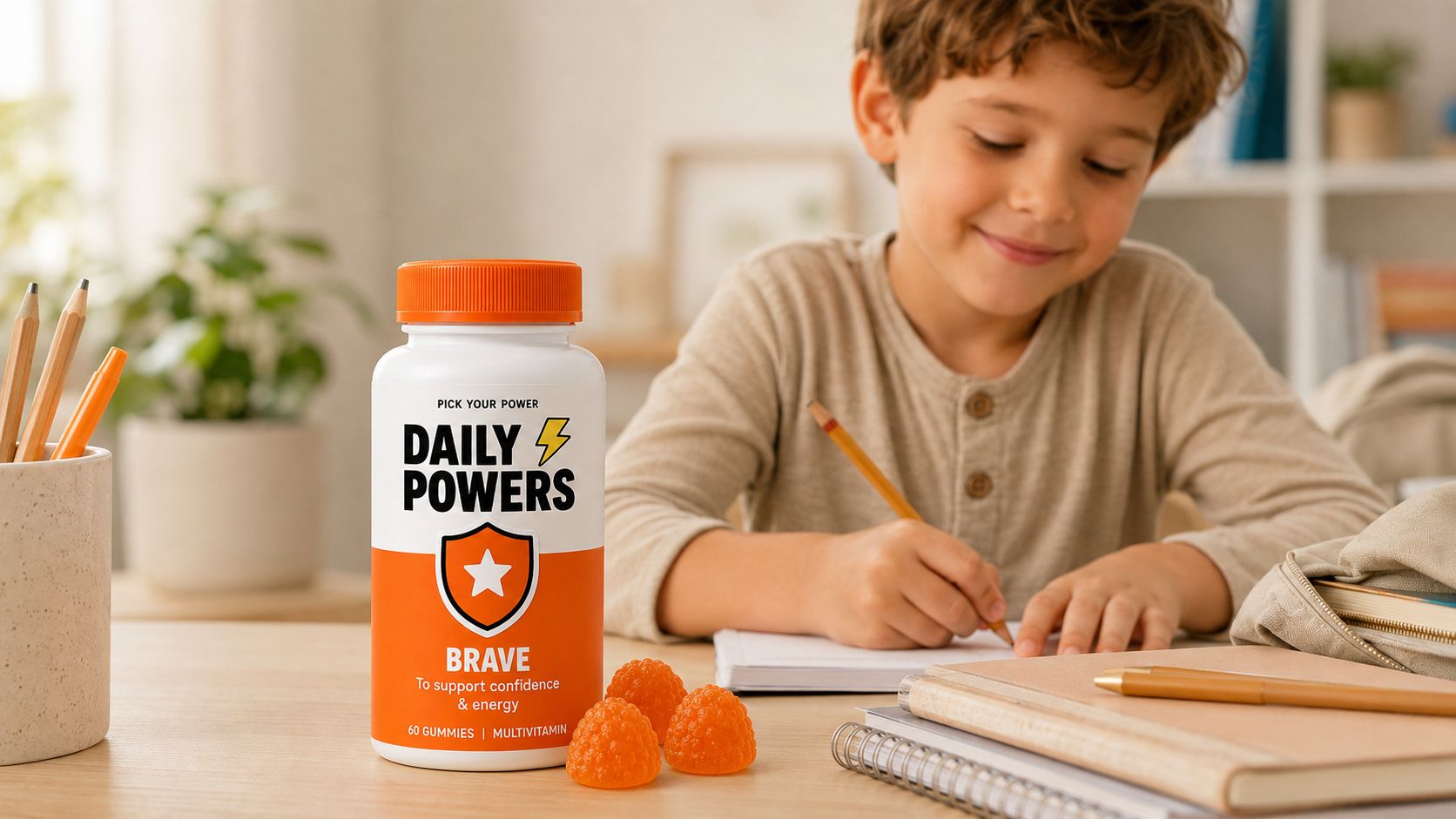
For families building a positive daily habit, Brave is described as a daily multivitamin gummy for children, with essential vitamins for general wellbeing, kid-friendly flavours and textures, no artificial colours or flavours, and a vegan-friendly formulation. It isn't a substitute for assessing a restricted diet, but a clearly labelled routine product may be considered alongside food and professional advice.
Parents looking for broader context on everyday immune routines can also read immune support supplements for children, while keeping expectations realistic. A supplement is nutritional insurance for a specific gap, not a cure-all.
Choosing the Right Form for Your Child
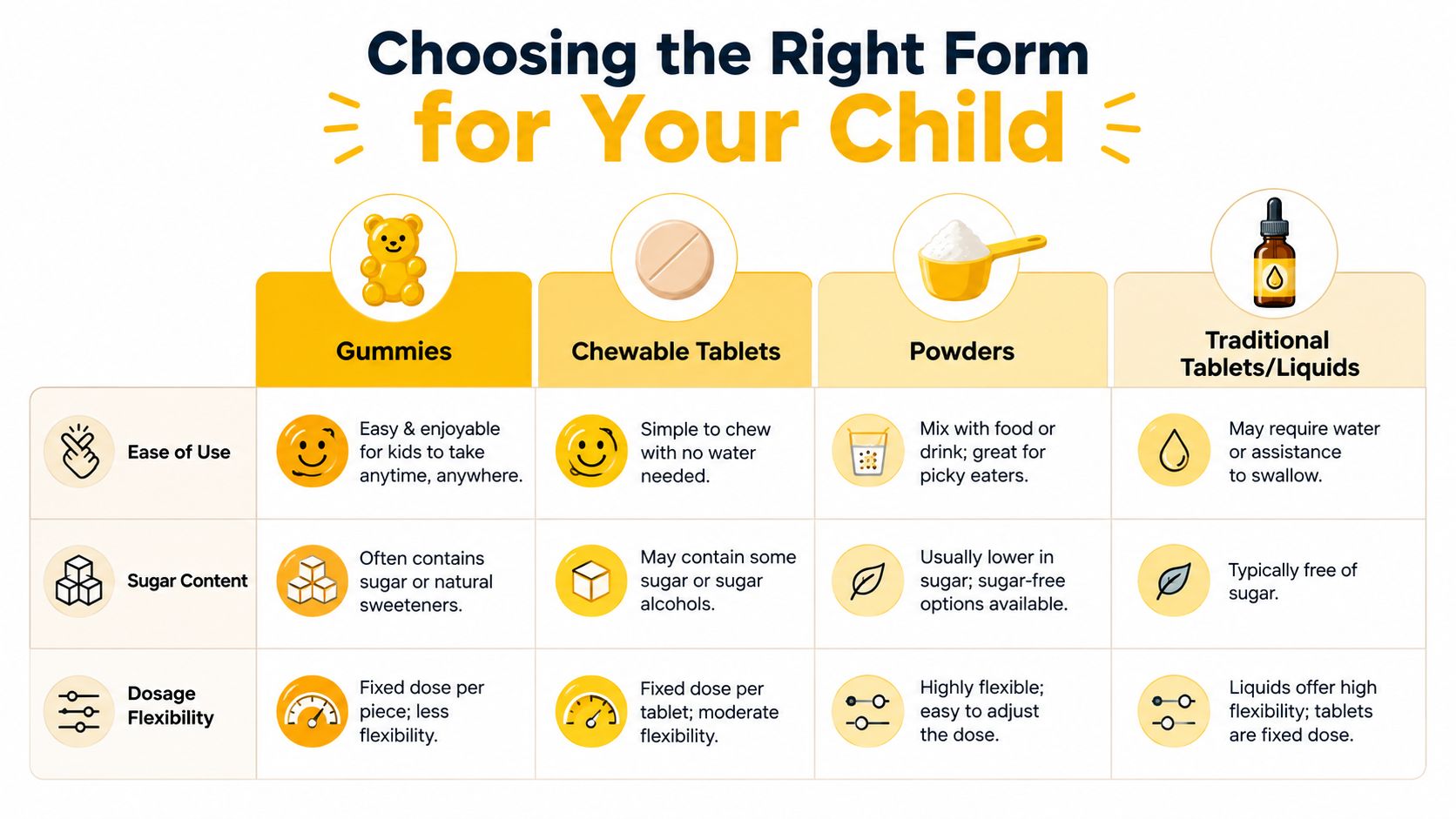
The best format is the one that delivers an appropriate dose without creating a new household problem. A gummy may be accepted happily but resemble a lolly. A powder may be nutritionally simple but fail if your child notices it in yoghurt. A liquid can suit a young child yet taste sharp enough to make every dose a negotiation.
Compare the formats honestly
| Format | Strengths | Points to check |
|---|---|---|
| Gummies | Easy to chew and often highly accepted | Sweeteners, dental contact, dose size and storage |
| Chewable tablets | Familiar, portable and often more dose-precise | Texture, chalkiness and artificial colours or flavours |
| Powders | Can mix into yoghurt, porridge or smoothies | Taste changes, measuring accuracy and whether heat affects the product |
| Traditional tablets or liquids | Tablets can offer precise dosing, while liquids suit some younger children | Swallowing ability, sharp taste and careful measuring |
Gummies work well for children who resist chalky tablets, but they need boundaries. Keep them with medicines and supplements, not in the lolly drawer, and don't allow grazing. Chewable tablets can be a useful middle ground when a child accepts a tablet-like texture and the label offers a modest serving.
Powders provide flexibility, especially for a child who already accepts smoothies or yoghurt. They can also avoid some of the texture and sweetener issues found in confectionery-style formats. Liquids may suit younger toddlers who can't chew or swallow tablets, but the serving must be measured with the supplied device rather than an ordinary kitchen spoon.
Does the form change absorption?
For routine supplementation, dose size and frequency matter more than a fashionable delivery format. Australia's guidance states that roughly 70–90% of usual intake is absorbed, but absorption falls to 50% or less above 1 g per day, as described in the Australian vitamin C reference guidance. This is why a moderate amount, or split dosing when clinically appropriate, can make more sense than one very large serving.
Ascorbic acid is the familiar standard form. Sodium ascorbate may be gentler for a child whose stomach reacts to acidity, but it isn't automatically better absorbed. The important household questions are whether your child can take the product consistently, whether the serving matches the label, and whether the formulation introduces unnecessary sugar or additives.
Age-Appropriate Dosages and Safe Upper Limits
Children's needs change with growth, but a supplement shouldn't be chosen by copying an adult serving. The Australian Nutrient Reference Values list an RDI of 35 mg per day for children aged one to eight years and 40 mg per day for children aged nine to thirteen years, according to the Australian vitamin C reference values. Infants usually receive vitamin C through breastmilk, formula and early solids, so parents should seek individual advice rather than adding a product automatically.
Read the label beside the child
| Age group | RDI | Upper limit | Typical supplement dose |
|---|---|---|---|
| Infants 0–12 months | Individual guidance is appropriate | Product and clinical guidance required | Do not assume a supplement is needed |
| Children 1–3 years | 35 mg/day | Check current Australian guidance and product label | Often a modest labelled serving |
| Children 4–8 years | 35 mg/day | 1000 mg/day | Common products may provide 50–100 mg |
| Children 9–13 years | 40 mg/day | Check the label and clinical guidance | Common products may provide 50–100 mg |
| Adolescents 14–18 years | Individual dietary assessment | 1800 mg/day | Depends on the product and reason for use |
The upper limit of 1000 mg per day for children aged four to eight and 1800 mg per day for adolescents aged fourteen to eighteen refers to total intake from food and supplements, not just the gummy in the cupboard. These limits are not targets. A child doesn't gain extra protection by moving towards them.
Many everyday products provide 50–100 mg per serving, but the precise product dose must be checked on the pack. Australian sports-nutrition guidance describes oral vitamin C products containing 200–2000 mg per capsule or tablet, far above the adult RDI, as summarised in the peer-reviewed vitamin C overview. Those products aren't automatically suitable for children.
Some gummies are formulated only for children over two, while others have different age instructions. Follow the product's minimum age, serving size and warnings, and treat high-dose or therapeutic use as a paediatric decision rather than a home experiment.
Safety, Side Effects and Interactions to Watch For
Vitamin C is water-soluble, which is reassuring because the body doesn't store excess amounts in the same way it stores fat-soluble vitamins. That doesn't make unlimited dosing sensible. A large supplement can still cause loose stools, nausea, stomach cramps or general gastrointestinal upset, particularly in a small child.
The Australian vitamin C reference guidance explains that renal regulation increases urinary loss when intake is high and that absorption becomes less efficient at large doses. A practical response to stomach discomfort is to stop the extra dose and discuss the product with a pharmacist or clinician, rather than pushing through.
Children who need individual advice
Seek professional guidance before using higher-dose vitamin C if your child has:
- Iron overload or haemochromatosis: Vitamin C can increase absorption of non-haem iron, which may be clinically important for children with iron-loading conditions.
- A history of kidney stones: Ask the treating clinician whether supplemental vitamin C is appropriate.
- Complex medical treatment: Disclose supplements when a child receives chemotherapy, statins, anticoagulants or other regular medicines.
- Upcoming care: Tell the clinical team about supplements before surgery or dental procedures.
These cautions don't mean ordinary food sources are dangerous. They mean a concentrated product should be considered in the context of the child's diagnosis and treatment plan.
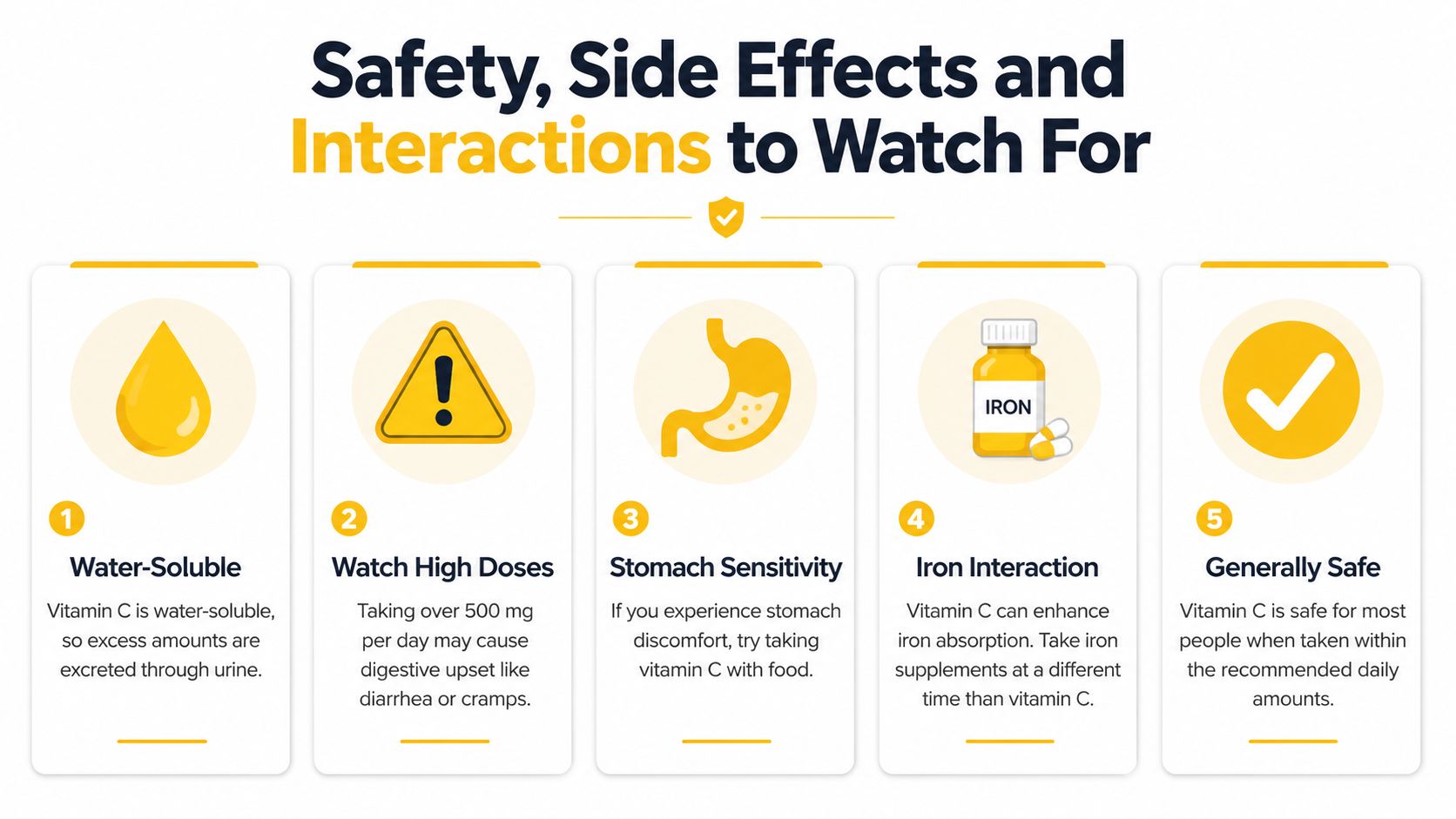
Gummies and chewables create another risk because children may mistake them for lollies. Store the container out of reach, close it after every use and keep the serving under adult control. If accidental overconsumption occurs, contact the Poisons Information Centre or seek urgent medical advice.
Australian clinical data also show why “everyone needs a supplement” is too broad. A cohort of 12,934 inpatients and outpatients reported 24.5% deficiency and 29.9% hypovitaminosis C, according to the Nutrition Reviews discussion of Australian vitamin C risk. That finding points towards targeted screening and care for higher-risk groups, not routine megadosing for every healthy child.
How to Choose a Quality Sugar-Free Option
A sugar-free label is only one part of the decision. Parents need to check the product's regulatory identity, active ingredient, serving size and storage instructions before judging whether it suits their child.
Use this shelf-side checklist
- Find the AUST number. Vitamin C products supplied as therapeutic goods in Australia appear on the Australian Register of Therapeutic Goods. The Therapeutic Goods Administration search tool can help you check an AUST L listing where the packaging provides one.
- Read the nutrition panel. Look for total carbohydrate, sugars and sweeteners. Sugar-free products may use polyols, monk fruit or stevia, and some sweeteners can cause digestive discomfort in sensitive children.
- Identify the active form. Ascorbic acid is the conventional option. Sodium ascorbate may be considered when acidity causes stomach irritation, but the form doesn't remove the need to assess dose.
- Check the child's age and serving. Avoid adult-strength products and don't assume “natural” means age-appropriate. The label should state how much vitamin C each gummy, tablet, scoop or measured liquid serving provides.
- Scan for additives and allergens. Artificial colours, artificial flavours, gluten, dairy and other allergens should be disclosed clearly. A short ingredient list isn't automatically superior, but unclear labelling is a reason to pause.
- Look for manufacturing transparency. Clear expiry dating, batch information, full ingredient disclosure and accessible dosing directions help you make a safer choice. Third-party testing can add useful reassurance when the manufacturer explains what was tested.
Traditional gummies can contain added sugar or syrups, so compare the actual panel rather than relying on front-of-pack phrases. “Natural flavouring” also doesn't tell you whether the product is sugar-free or whether it contains polyols.
The label is part of the product. If you can't work out the age, serving size, active ingredient or allergen information, choose a different product or ask a pharmacist.
A sugar-free formulation may help a family avoid adding another sweet food to the routine, but sugar-free doesn't mean children should self-serve. Dental contact, chewing habits and total supplement use still matter.
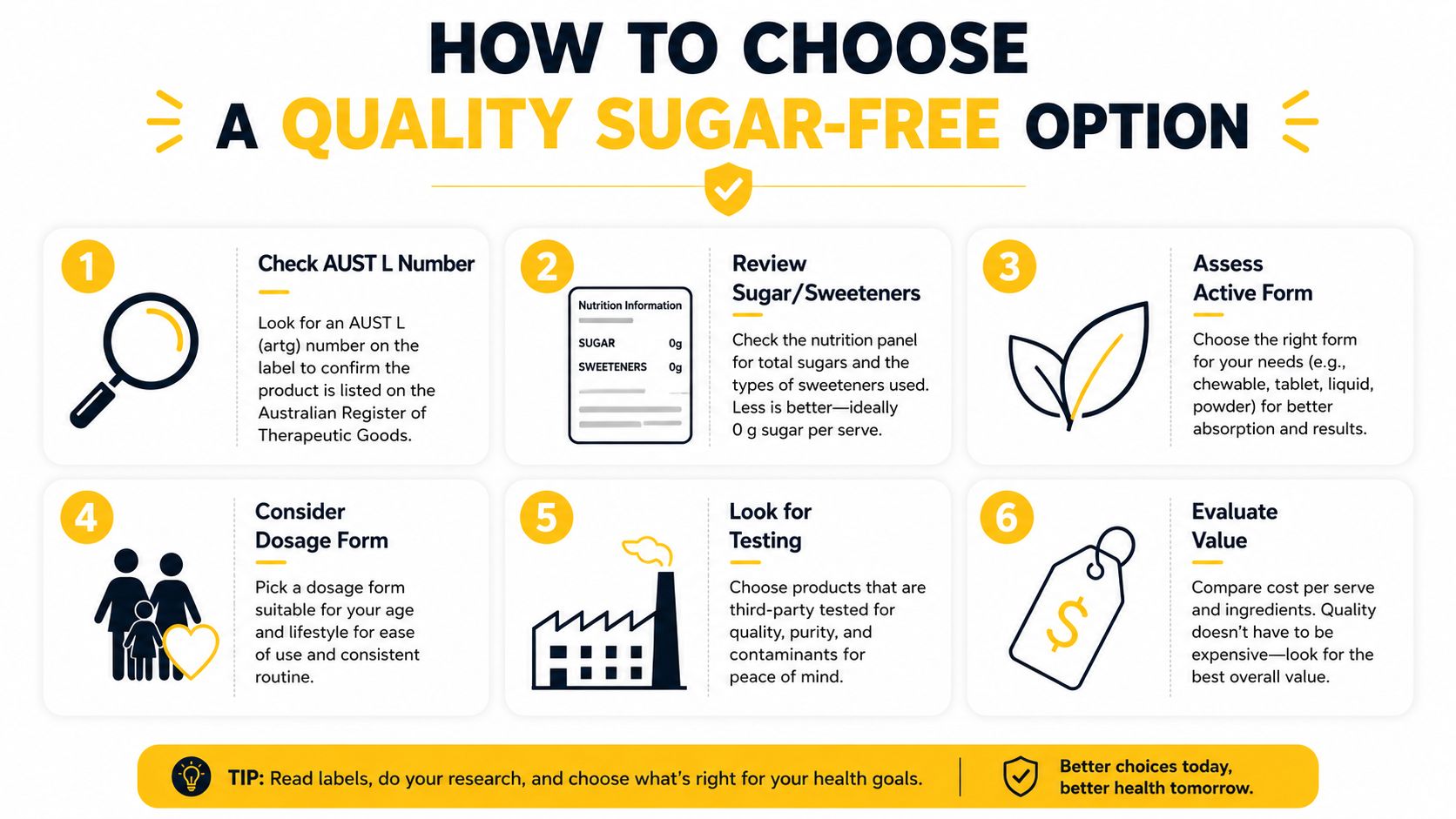
For a broader explanation of how to assess sugar-free children's products, see this guide to sugar-free multivitamins.
Building a Simple Daily Routine That Sticks
The most useful routine begins with food, not the container. Pick one vitamin C-rich food your child accepts and make it ordinary: whole fruit in the lunchbox, berries with yoghurt, tomato in a sandwich, or red capsicum beside crackers. Small, repeatable exposures are more realistic than asking a child to suddenly eat a plate of unfamiliar vegetables.
If a supplement is appropriate, attach it to an existing cue. Breakfast, packing the lunchbox or brushing teeth can work better than a vague instruction to “remember the vitamin”. Give the child a limited role, such as choosing between two acceptable foods or placing a sticker on a simple tracker, while an adult controls the product and serving.
A routine that protects safety
- Choose one daily cue: Use the same meal or household moment each day.
- Pair food with the supplement: Add a whole-food vitamin C option instead of presenting the gummy as the only source.
- Keep the product out of sight: Store gummies away from children, heat and humidity.
- Track without pressure: A small fridge chart can help younger children see consistency without turning food into a reward system.
- Review the need: Reassess after dietary variety, appetite or medical circumstances change.
A kids routine chart can make the habit visible, but it shouldn't become a reason to punish a missed day. Vitamin C doesn't need to be framed as a test of bravery or obedience. The routine should reduce friction, not add it.
Review the label every few months, especially after a child changes age bracket, starts another multivitamin or develops a new medical condition. Check that the serving still matches the product instructions and that your child isn't receiving the same nutrient from several products.
Most let the routine remain proportionate. A varied diet is the foundation, a supplement can cover a genuine gap, and high-dose products belong with professional guidance. This approach gives parents a clearer way to use vitamin C supplements without turning ordinary childhood sniffles into a reason for megadosing.
Daily Powers offers children's gummy products designed to support simple daily health habits, with sugar-free, vegan formulations and no artificial colours or flavours across its range. Visit Daily Powers to review the ingredient lists, age guidance and routine-focused options, then discuss any supplement choice with your child's healthcare professional when dietary or medical concerns are present.