

Prebiotics are specialised plant fibres that act as fertiliser for the beneficial bacteria already living in your child's gut, helping them thrive and produce compounds that support digestion, immunity and possibly broader brain function. In one Australian pregnancy study, 14.2 g per day of GOS/FOS increased maternal Bifidobacteria and changed parts of both maternal and infant microbiota, but that result doesn't mean every child needs that amount or will experience the same outcome (Australian research on prebiotic microbiome effects).
You may be standing in a supermarket or browsing a supplement website while your child complains about tummy pain, avoids the toilet or seems unable to settle into homework. Labels mention prebiotics, probiotics, fibre and gut health, but the practical question remains: what will prebiotics do for your child?
The most realistic answer starts with digestion. Prebiotics can help beneficial gut microbes grow and ferment fibre into substances that support the gut environment. They aren't a medicine, an instant constipation cure or a guaranteed focus enhancer. For children, the value usually sits within the bigger picture of regular meals, enough fluids, sleep, movement and a varied diet.
Table of Contents
- Understanding What Prebiotics Actually Do
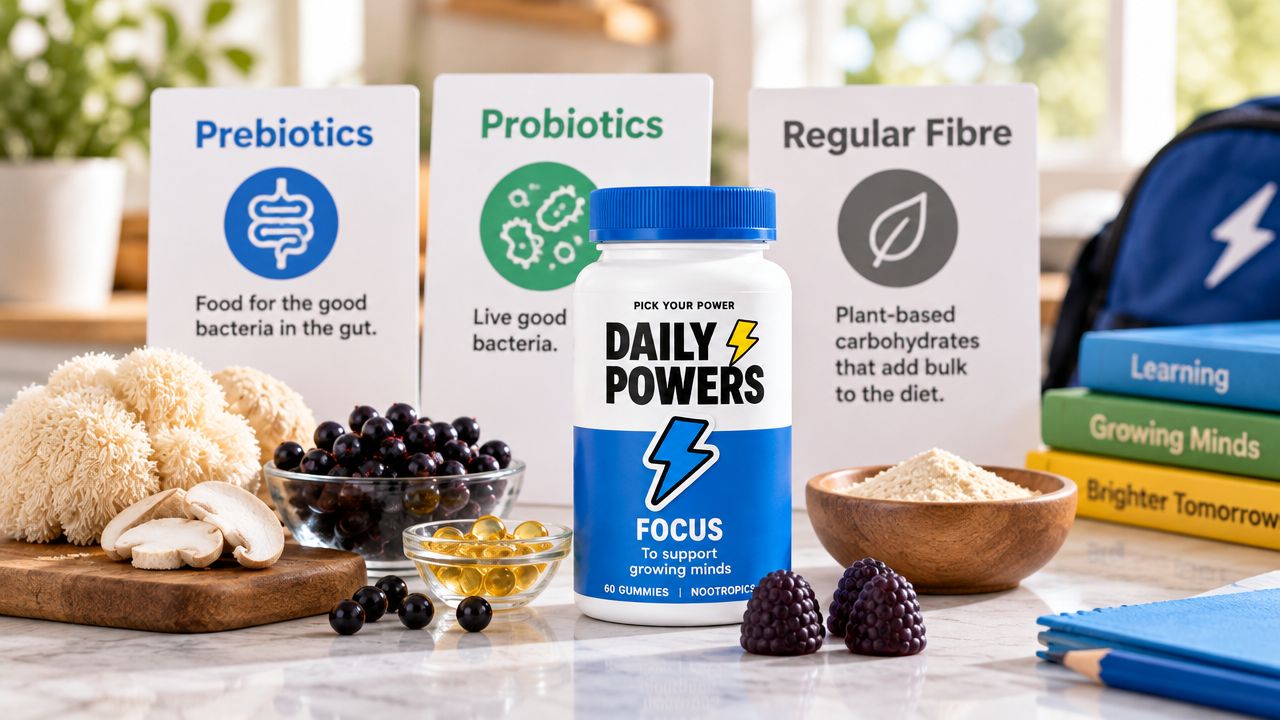
- Prebiotics vs Probiotics vs Regular Fibre
- The Science of How Prebiotics Work in the Gut
- Real Benefits for Children Digestion Immunity and Focus
- Best Dietary Sources and Smart Supplementation
- Safety Dosing and Building a Daily Routine
- Common Questions About Prebiotics for Kids
Understanding What Prebiotics Actually Do
Mia stood in a supermarket comparing three children's supplements. One listed probiotics, another prebiotics, and a third promised "fibre support". Her son was otherwise well, yet his bowel habits were unpredictable and he ate only a narrow range of foods. She needed to know what each option might change at home, not which label sounded most scientific.
The clearest starting point is that prebiotics feed helpful bacteria already present in the gut. Australian sport nutrition guidance defines a prebiotic as a “substrate that is selectively utilised by host microorganisms conferring a health benefit”. In everyday terms, it is material your child does not fully digest, allowing selected gut microbes to use it in ways associated with health benefits (Australian Institute of Sport prebiotics guidance).
A garden analogy for the gut
A child's gut microbiome works like a living garden, where the resident organisms respond to the conditions around them.
- Probiotics are like introducing seeds or living plants. They are live microorganisms supplied through certain foods or supplements.
- Prebiotics provide usable food for selected residents. Bifidobacteria can ferment these fibres into short-chain fatty acids, which may support the gut environment and contribute to softer, more regular stools.
- The surrounding conditions still matter. A varied diet, adequate fluid and regular meals help different organisms coexist.
This process explains why prebiotics do not act like conventional medicine. They do not switch off pain or force the bowel to move. Instead, they give selected microbes a food source. The resulting fermentation produces metabolites that can affect the gut and may influence other body systems.
Health guidance describes prebiotic fibre as supporting healthy gut bacteria and helping them grow (Better Health Victoria's gut health guidance). Parents may notice easier bowel movements or a change in stool consistency, although responses vary with the child, fibre type, diet and amount introduced. Changes in mood or focus are less predictable, so prebiotics should not be treated as a guaranteed concentration aid.
Practical rule: Treat prebiotics as support for the gut ecosystem, not as a quick fix for one symptom.
Prebiotics vs Probiotics vs Regular Fibre
The words sound similar because they describe related parts of gut health, but they do different jobs. A child who needs more fibre-rich food may not need a probiotic supplement, and a child taking a probiotic may still benefit from eating the foods that help beneficial microbes function.
All prebiotics are a form of fibre, but not all fibre is prebiotic. Some fibres mainly help add bulk and retain water in stool. Prebiotic fibres are selectively fermented by gut microorganisms. That fermentation is the feature that distinguishes them.
| Component | What It Is | Primary Job in the Gut | Common Sources |
|---|---|---|---|
| Prebiotics | Specialised, non-digestible or non-absorbed fibres | Feed selected beneficial microbes so they can grow and produce metabolites | Fruits, vegetables, whole grains, legumes and specific fibres such as FOS and GOS |
| Probiotics | Live microorganisms that can provide a health benefit when used appropriately | Add or support specific live microbial strains | Yoghurt with live cultures and selected supplements |
| Regular fibre | Plant material with different digestive and fermentable properties | Supports stool bulk, movement and overall dietary quality | Oats, fruit, vegetables, legumes, nuts and seeds |
Choosing the right category
If your child rarely eats plant foods, improving the family's food pattern may be the most useful first step. If constipation persists, a health professional can help assess the cause and recommend an age-appropriate plan. A probiotic may be relevant in some situations, but its effects depend on the particular strain and the reason for using it. The difference between probiotics and related gut-health terms can help parents avoid treating every microbiome product as interchangeable.
A supplement containing prebiotics doesn't automatically replace a probiotic, and a probiotic doesn't automatically provide the fibre its microbes need. Some products combine both, while others contain only one. Read the ingredient panel carefully rather than choosing based on the largest claim on the front.
For families considering a child-focused routine, Focus is listed as a blueberry-flavoured gummy containing prebiotic fructooligosaccharides alongside mushroom polysaccharides, vitamin D3, zinc and elderberry fruit powder. Its product information states that it contains no sugar, uses vegan ingredients and has no artificial colours or flavours. Those details describe the formulation, not a promise that every child will experience improved concentration.
The Science of How Prebiotics Work in the Gut
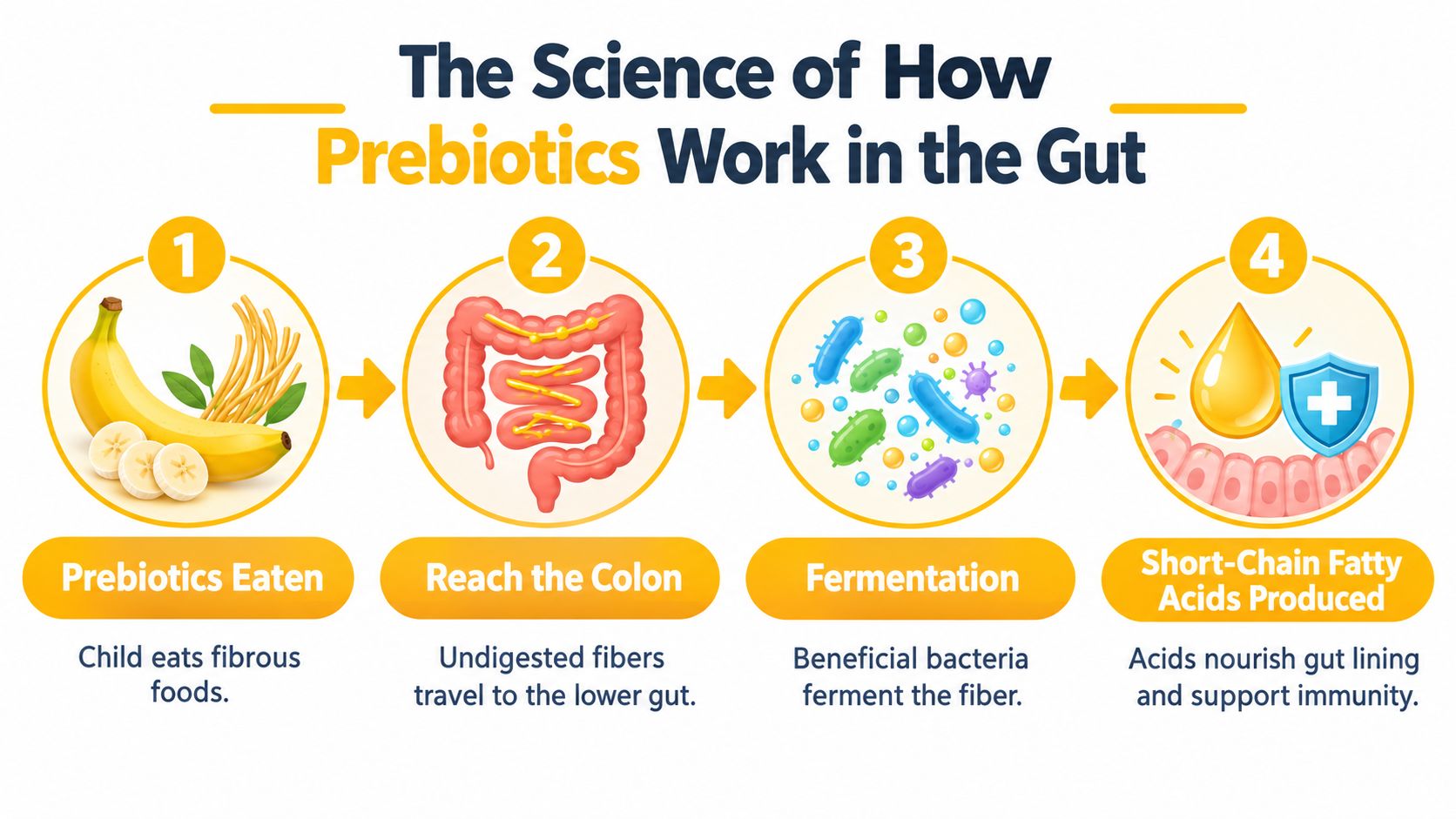
A child may eat a prebiotic fibre without fully digesting it. Some of that material passes through the small intestine and reaches the lower gut, where selected microbes can use it for fuel. The science matters because it helps explain changes parents may notice in the bathroom, rather than only describing what happens under a microscope.
The pathway has four linked stages:
- Fibre arrives. Non-digestible or non-absorbed material moves towards the lower gut.
- Microbes ferment it. Certain bacteria use the fibre as a substrate.
- Metabolites form. Fermentation produces short-chain fatty acids, including acetate, butyrate and propionate.
- The gut environment responds. These compounds influence the local gut environment and may contribute to wider physiological signalling.
The microbes do not leave the fibre unchanged. They process it into compounds that interact with the gut lining and the surrounding intestinal environment. That activity may support digestive changes, although it does not guarantee the same response for every child.
Why fermentation matters
Fermentation can produce both useful metabolites and gas. If a child suddenly eats much more fermentable fibre, parents may notice extra wind or bloating for a few days before stools become more regular. Increasing plant foods or a prebiotic product gradually is usually more comfortable than making a large change overnight.
A short period of gas does not automatically mean the fibre is harmful. Persistent pain, marked bloating or significant distress deserves advice from a health professional, especially if the symptoms do not settle.
These gut changes should not be presented as a direct route to instant concentration. A prebiotic does not travel straight to the brain and create an immediate focus effect. Researchers are examining how microbial activity may connect with immune, metabolic and nervous-system pathways, but observable digestive changes are easier to assess than claims about mood or attention.
For a visual explanation of the pathway, this short educational video can sit alongside the written description:
Real Benefits for Children Digestion Immunity and Focus
A parent may notice the first change at the toilet, not in a laboratory report. Their child may strain less, follow a more predictable bowel pattern or pass stools more comfortably. Those practical signs are easier to assess than promises about immunity, mood or school performance.
Digestion is the most observable area
An Australian randomised trial followed healthy adults with low fibre intake and functional constipation who took a prebiotic powder for three weeks, at 6 g twice daily. Compared with a capsule control, the powder significantly improved bowel movements, with p<0.001, and stool consistency, with p<0.01 (Australian prebiotic fibre constipation trial). The participants were adults, so the findings cannot be transferred directly to children. They do support the possibility that a suitable fermentable fibre can improve stool frequency and form.
Parents can track comfort, toilet regularity and how easily a stool passes. These observations provide a more useful measure than expecting an immediate, dramatic change. A prebiotic will not address every cause of constipation. Ongoing pain, blood in the stool, vomiting, poor growth or significant distress requires medical advice rather than self-treatment.
Immunity needs careful wording
Parents should not expect fewer colds. The observable benefit to track is stool regularity and comfort, not infection frequency. Gut microbes interact with the intestinal environment and immune system, so a healthier gut ecosystem may contribute to immune regulation, but a prebiotic does not replace vaccination, sleep or balanced meals.
Families wanting broader food and routine guidance can use this guide to gut health for kids. Keep supplement claims in proportion to the evidence.
Focus and mood remain an open question
A child who has less digestive discomfort may seem more settled, but that observation does not establish a direct effect on focus or mood. The gut and brain communicate through several biological pathways, and researchers continue to examine possible links with cognition, mood and sleep.
Australian work found microbiome and short-chain fatty acid changes in mothers and infants after maternal prebiotic supplementation. That result does not prove everyday behavioural benefits for school-age children (Kids Research Institute Australia information on maternal prebiotic research). Prebiotics may support gut health, while direct improvements in focus, mood or sleep are still being investigated.
Best Dietary Sources and Smart Supplementation
Food is often the gentlest starting point because it supplies more than one type of fibre and fits into an ordinary family meal. Kid-friendly options include oats, bananas, apples, onions, garlic, legumes and whole grains. A banana blended into a smoothie, oats stirred into yoghurt or apple slices served with a familiar snack can be easier than presenting a completely new meal.
The aim isn't to make a child eat every item on a list. A selective eater may accept one food in a particular texture but reject the same food prepared differently. Rolled oats in a muffin, softened apple in porridge or a small amount of onion cooked into a favourite sauce can make the change feel manageable.

Making food changes realistic
Try building the habit around foods your child already accepts:
- Breakfast: Add oats to porridge, overnight oats or a homemade slice.
- Lunch: Include fruit alongside a familiar sandwich or wrap.
- Dinner: Mix onion, garlic or legumes into a sauce if the texture is tolerated.
- Snacks: Offer banana or apple in the child's preferred shape and temperature.
The Australian guide to high-fibre foods for kids can help families turn the idea of “more fibre” into actual meals.
Where supplementation may fit
Some children eat very selectively, and some families need a consistent, measured routine while they work on food variety. A supplement can fill a specific gap, but it shouldn't be used to disguise a diet that lacks plant foods altogether. Check the product's fibre type, serving instructions, other active ingredients and suitability for your child's age.
For example, the Focus formulation lists 100 mg of prebiotic fructooligosaccharides per daily serving, along with other ingredients. That is a product detail, not evidence that the amount will produce a particular bowel, mood or concentration outcome in every child. A dietitian or paediatric healthcare professional can help decide whether a supplement is appropriate, especially when a child has a diagnosed gastrointestinal condition.
Safety Dosing and Building a Daily Routine
A child's gut may need time to adjust to a new fermentable fibre. Starting with the product's age-appropriate direction, rather than adding extra “to make it work faster”, helps you observe tolerance and reduces the chance of avoidable digestive discomfort.
Follow these steps:
- Check the label and age range. Use only the stated serving unless a healthcare professional advises otherwise.
- Introduce one change at a time. If you add several supplements or foods together, you won't know which one caused gas, loose stools or discomfort.
- Keep fluids and meals steady. Fibre works best within an otherwise supportive eating pattern.
- Watch the response. Note stool form, frequency, pain, bloating and your child's willingness to continue.
- Pause and seek advice if symptoms are significant. Persistent pain, diarrhoea, vomiting, blood in the stool or poor growth needs professional assessment.
The right dose depends on the fibre, the formulation, the child's age and their health history. The Australian constipation trial used an adult dose, so it should not be copied for a child without clinical guidance.
Turning supplementation into a habit
Children often respond better to a predictable cue than to repeated negotiation. Give the supplement at the same point in the morning or after school, store it safely and connect it with an existing routine such as brushing teeth or packing the school bag.
A neutral phrase can help: “Time for your Focus gummy.” It frames the action as a routine rather than a reward or a promise of better marks. Keep supplements out of reach, supervise use and remember that a gummy is still a supplement, not a lolly.
Common Questions About Prebiotics for Kids
A child taking antibiotics may sometimes use a prebiotic, but suitability depends on the illness, medicine, age, and ingredients. Ask a pharmacist, GP, or paediatrician before combining them. A prebiotic cannot replace prescribed antibiotics or medical care.
How quickly will we notice a change?
The answer varies. Some children notice easier stools or different bowel habits as their gut adjusts, while others notice no obvious change. An Australian adult trial reported bowel improvements over three weeks, but its timing and findings cannot be assumed for children (trial details). Keep a simple 7-day stool and fluid diary after any change. Record stool form, discomfort, bloating, and drinks. Discuss persistent pain, blood, or vomiting with your GP instead of increasing the dose.
Will prebiotics improve focus, mood or sleep?
Research is exploring gut-brain links, but these effects have not been established in children. Set expectations around digestive support rather than an immediate change in behaviour, concentration, or school performance.
Are prebiotics suitable for food intolerances?
It depends on the fibre and the child's condition. Fermentable fibres may increase gas or discomfort for some sensitive children. Check the ingredient list and seek individual advice from a dietitian or doctor.
Should I choose food or a supplement?
Offer tolerated, fibre-rich foods where possible. A supplement can add to a varied diet when it suits the child's needs, but should not replace meals.
Daily Powers offers children's gummy formulas for family routines, including Focus with prebiotic fructooligosaccharides and Calm with prebiotics plus magnesium-based ingredients. Review Daily Powers for ingredients and directions, then ask a healthcare professional if unsure.