

For most well-nourished Australian children and adults, gummies for hair growth are unlikely to make hair grow faster, and they can distract from a medical cause that needs proper care. 33.6% of Australians took at least one dietary supplement in 2023, but that kind of habit doesn't mean a hair gummy will change hair growth on its own.
A parent often reaches for a chewy vitamin because it feels simple, safe and practical. The catch is that hair is slow to respond, and a supplement only makes sense when it's correcting a real gap rather than promising a cosmetic shortcut.
Table of Contents
- Why a Hair Growth Gummy Is Rarely the Quick Fix
- The Active Ingredients Hiding Inside Hair Gummies
- What TGA Listed Actually Means for an Australian Shopper
- Safe Dosing for Kids and the Biotin Lab Trap
- When Hair Loss Signals a Medical Issue, Not a Nutritional Gap
- Real Alternatives That Move the Needle
- A Parent Friendly Checklist Before You Buy
Why a Hair Growth Gummy Is Rarely the Quick Fix
If your child's hair looks thinner, or you're noticing more strands in the shower drain, the instinct is to look for something gentle from the chemist. That's understandable. It's also why gummies for hair growth are marketed so heavily, they feel like an easy answer.
The problem is that hair doesn't work like a cold or a headache. A gummy can only help if the body is missing something it needs, and even then the change is usually gradual rather than dramatic. That's why a supplement is a poor stand-in for a proper check-up when the hair story looks unusual.
Hair-growth gummies are usually chewable supplements, often in a bear or pastille shape, built around vitamins, minerals, amino acids, or botanical ingredients. They're sold as a way to support thicker, longer, faster-growing hair, but the delivery format doesn't change the biology. It's still a supplement, not a treatment that can override hormones, inflammation, genetics, or scalp disease.
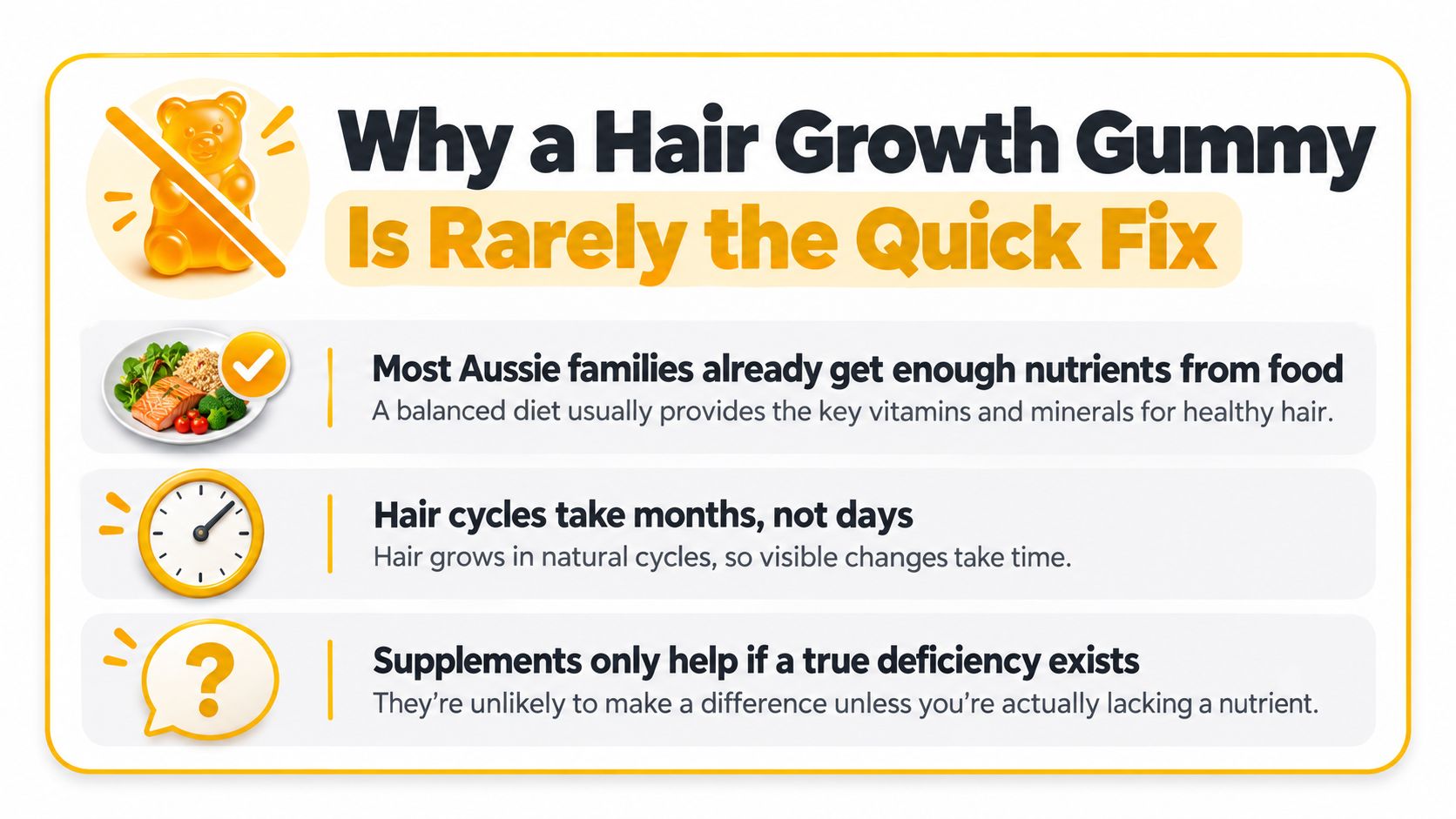
Practical rule: if the hair change is sudden, patchy, or accompanied by other symptoms, the gummy aisle is not the first stop.
Parents also need to separate nutritional support from cosmetic expectation. The Australian Bureau of Statistics notes that vitamin and mineral products are common in household use, with 29.7% of people aged 2 years and over using them in 2023, and 15.5% using a multivitamin or multimineral product as reported by the ABS. That tells us families are comfortable with supplements. It doesn't tell us hair gummies are the right tool for every hair concern.
For a clear, evidence-minded way to think about supplements, this guide on evidence-informed practice is a useful starting point. The main question is simple. Is there a documented deficiency, or are you hoping a sweet-tasting vitamin will fix a problem that needs a different solution?
The Active Ingredients Hiding Inside Hair Gummies
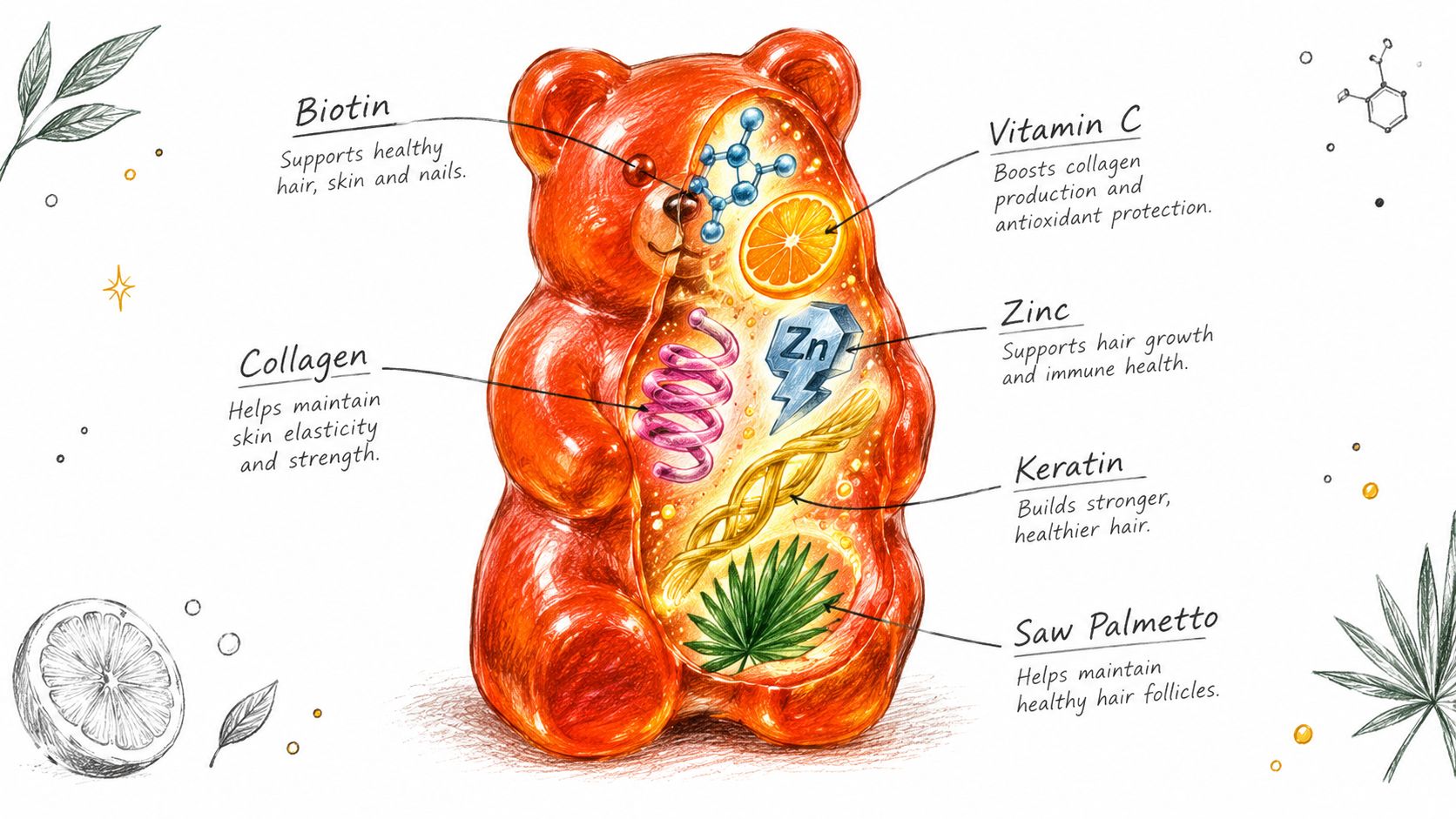
A hair gummy can look like one product, but it usually works as a mix of separate ingredients. Each ingredient has a different role, and some are more relevant to hair than others. The label should show whether the product is really aimed at nutrient replacement or mainly at marketing.
Biotin, zinc and the “building block” idea
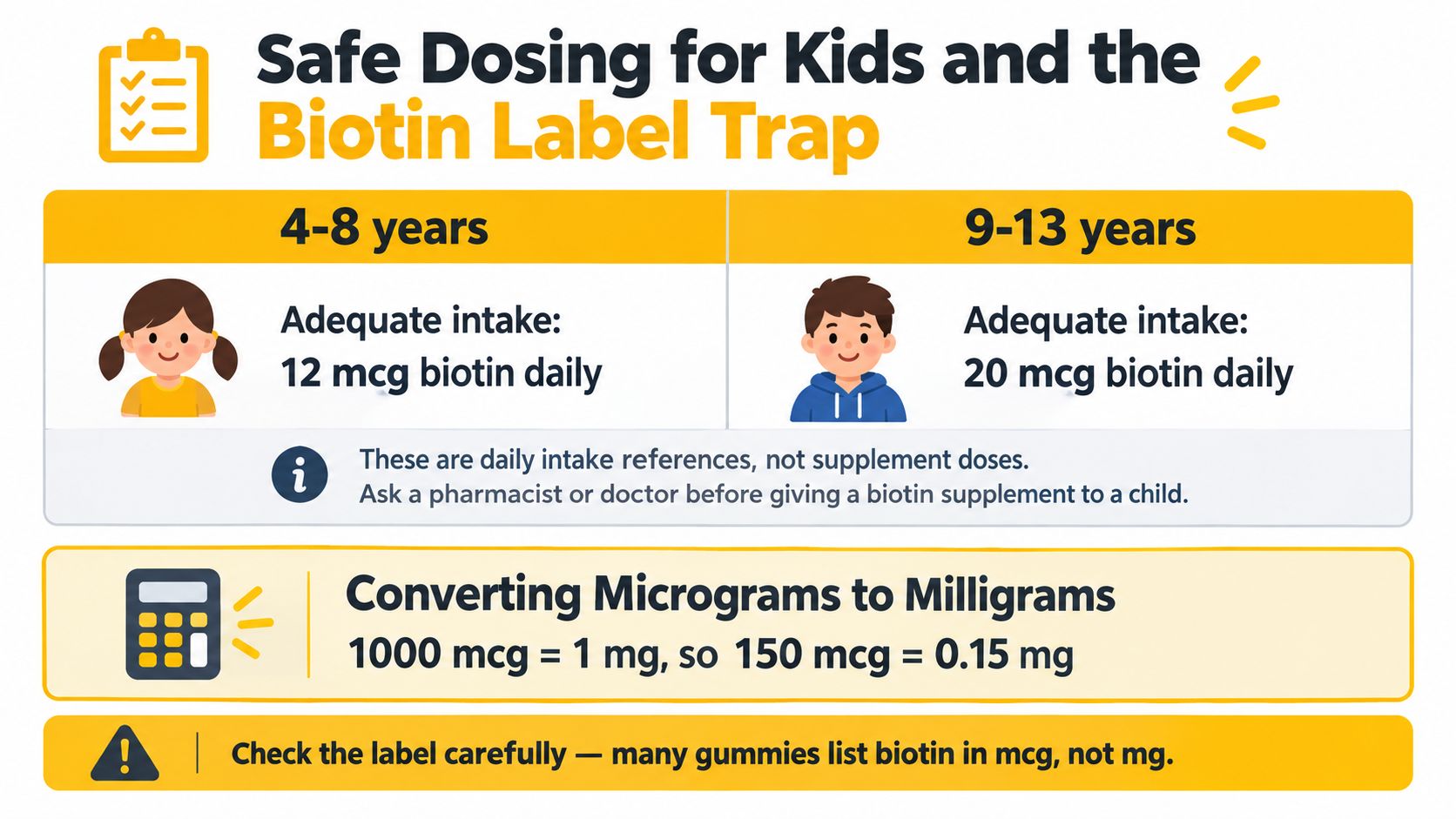
Biotin is the ingredient most often highlighted on hair-gummy front labels in Australian chemists. It plays a small but specific role in the body's wider machinery. If that machinery is already running well, more of the same part does not make it work better. For Australian children, the NHMRC lists biotin adequate intakes of 12 micrograms per day for ages 4 to 8 and 20 micrograms per day for ages 9 to 13 NHMRC nutrient reference values. That is the benchmark a children's product should be checked against, not a number chosen because bigger sounds more convincing.
Zinc works in a similar way. It supports many body processes, but hair support only makes sense if intake is short. A formula that combines zinc, biotin and a few other actives can look impressive, yet still tell you very little about whether the dose matches a real need.
Vitamins and the “more is better” trap
Vitamins A, C, D and E often appear on the same label because they sound credible together. A label full of vitamins does not prove the product is targeted or balanced. In practice, the body usually needs the right amount, not a bigger amount. A gummy is a poor place to chase a megadose mindset.
Plain-English check: if the label is long on buzzwords and short on exact amounts, you are buying reassurance more than evidence.
Collagen, keratin and the supplement imagination
Collagen peptides and keratin are common in beauty products because they sound structural, as if they can be patched straight into the hair shaft. That idea is cleaner on the packet than in the body. Hair is made through living follicles, not by sticking a protein into the strand like glue. If a product claims to rebuild hair from the inside, the claim needs careful reading, especially if the person using it is a well-fed child.
A parent reading a label should ask one question first. Does this product correct a plausible deficiency, or is it a beauty blend wrapped in a sweet chew?
For families comparing supplement styles, this note on vegan multivitamins is useful because it shows how ingredient choices and dietary preferences interact, even when the goal is not hair at all.
What TGA Listed Actually Means for an Australian Shopper
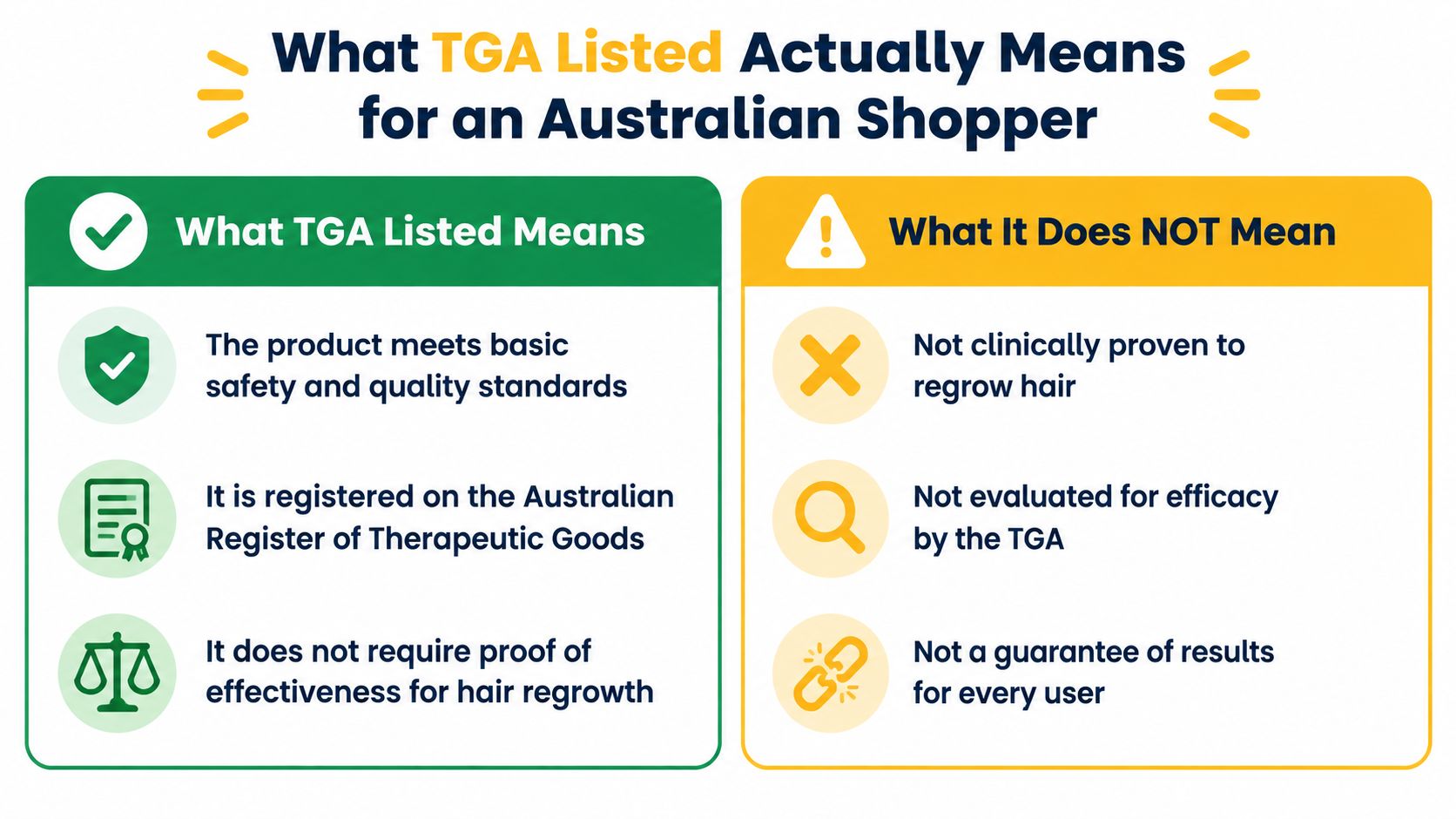
A packet marked TGA listed or AUST L can look reassuring, but the label does not mean a hair gummy has been proven to regrow hair. It means the product sits inside a regulatory pathway that looks at how it is made and how it is presented.
The Therapeutic Goods Administration explains that nutritional products may be regulated as foods or therapeutic goods depending on their ingredients, claims and presentation, and that vitamin and mineral supplements are often listed complementary medicines. That matters because a product can be legally listed without strong proof for every outcome printed on the front of the pack.
What the listing does tell you
The TGA's Australian Register of Therapeutic Goods includes a product called “Biotin Hair Supplement”, with ARTG identification 418352 and a registration date of 17 August 2023 ARTG entry. That shows a biotin-based hair product can sit inside Australia's formal therapeutic-goods framework.
It does not prove regrowth for every child or every pattern of hair loss, and it does not make a front-of-pack promise equal to clinical proof.
What the listing does not tell you
A listed product is not the same as a proven treatment. The TGA says medicines are assessed within the relevant pathway, but being “natural” or “healthy” does not automatically mean the product is safe or effective for the exact result being advertised. Parents need that distinction, because a packet can be compliant and still be a poor fit for a child with patchy loss, a suspected deficiency, or a medical cause that needs a doctor.
| Common Hair Gummy Claims vs What Evidence Supports | ||
|---|---|---|
| Claim on the Label | Evidence Strength | What It Means for You |
| “Supports hair growth” | Varies by ingredient and situation | Ask whether there's a documented deficiency |
| “Thicker, stronger hair” | Often marketing language | Don't assume cosmetic change will follow |
| “TGA listed” | Regulatory status only | It doesn't prove regrowth efficacy |
A simple evidence filter helps here. First, is there a documented deficiency? Second, does the dose match the need? Third, is the hair claim backed by good independent evidence? If the answer is unclear, the label is doing more work than the data.
A useful consumer habit is to separate regulatory status from clinical promise. If you want to compare how a children's gummy is framed against everyday routine support, the product page for Brave shows a different style of claim, with general wellbeing language rather than hair-regrowth marketing.
For a broader look at ingredient choices and family preferences, our guide to vegan multivitamins is a useful side note.
Safe Dosing for Kids and the Biotin Lab Trap
The first thing to check on a children's hair gummy is the actual dose, not the flavour or the front-of-pack promise. Use the 12 mcg and 20 mcg benchmarks from above, then check the label's units before you compare. A label may list biotin in micrograms (mcg) or milligrams (mg), and 1,000 mcg equals 1 mg. That matters because a product can look small in mg while still delivering a meaningful amount in mcg.
How to read the dose without getting tripped up
A child's gummy can be confusing because it looks like a lolly. That makes repeated dosing easier to slip into than with a tablet, especially in a busy house. Clear storage, clear instructions, and a quick check of the supplement facts panel all help reduce mistakes.
Practical rule: if you can't find the units quickly, don't guess. Put the packet down and read the label again.
The same care applies if you are comparing a child-specific product with paediatric dosing guidelines. Dose language should be easy to follow, because children's products rely on adults getting the measurement right.
The biotin blood test problem
High-dose biotin raises a separate issue that has nothing to do with hair growth. Australian pathology guidance notes that biotin doses above 5 milligrams per day can interfere with biotin–streptavidin immunoassays, and that biotin is generally cleared within about 72 hours, so it should be withheld for at least three days before susceptible blood tests pathology guidance.
That means a parent should tell the GP or pathologist about any biotin-containing gummy before blood work, especially if the child is having hormone or cardiac-marker tests. It is a small disclosure, but it can stop a test result from being misleading.
A label that looks harmless can still matter in the lab. If the child is due for blood tests, biotin is one of the first ingredients to mention.
When Hair Loss Signals a Medical Issue, Not a Nutritional Gap
A gummy is the wrong move when the hair change is acting like a warning light. Sudden loss, patchy loss, scalp redness, flaking, scarring, eyebrow loss, menstrual changes, persistent fatigue, or a rapid worsening pattern all deserve a proper medical review. Those signs point towards a problem that needs diagnosis.
Female-pattern hair loss is the most common cause of female alopecia in Australian primary care RACGP publication, but rapid loss can also reflect polycystic ovary syndrome, adrenal disease, or other hyperandrogenic disorders. A supplement will not sort out any of those.
The risk is delay. Hair changes can look cosmetic at first, so families may keep trying a supplement while the cause keeps going unchecked.
If the hair loss is patchy, sudden or paired with other body changes, a GP visit beats another bottle every time.
The main job of a parent is to notice the pattern. Cosmetic shedding and slow thinning can happen for benign reasons, but autoimmune, hormonal, inflammatory and medication-related hair loss need different answers. A care plan starts with the right cause, not with a guess from the supplement aisle.
Real Alternatives That Move the Needle
If hair change is the concern, the more useful options are usually the plain ones. Food first matters, especially enough protein and a varied intake of iron-containing foods. For adults with pattern hair loss, topical minoxidil is a recognised option. Gentle brushing, less heat styling and fewer tight hairstyles can also reduce breakage and traction.
For children, the aim is steadier wellbeing, not a hair-growth promise. A simple routine can help cover everyday nutritional gaps without suggesting the product will change hair biology.
One routine-focused example is Brave, a vegan, sugar-free daily multivitamin gummy for children aged 4-15, framed for general wellbeing rather than hair regrowth.
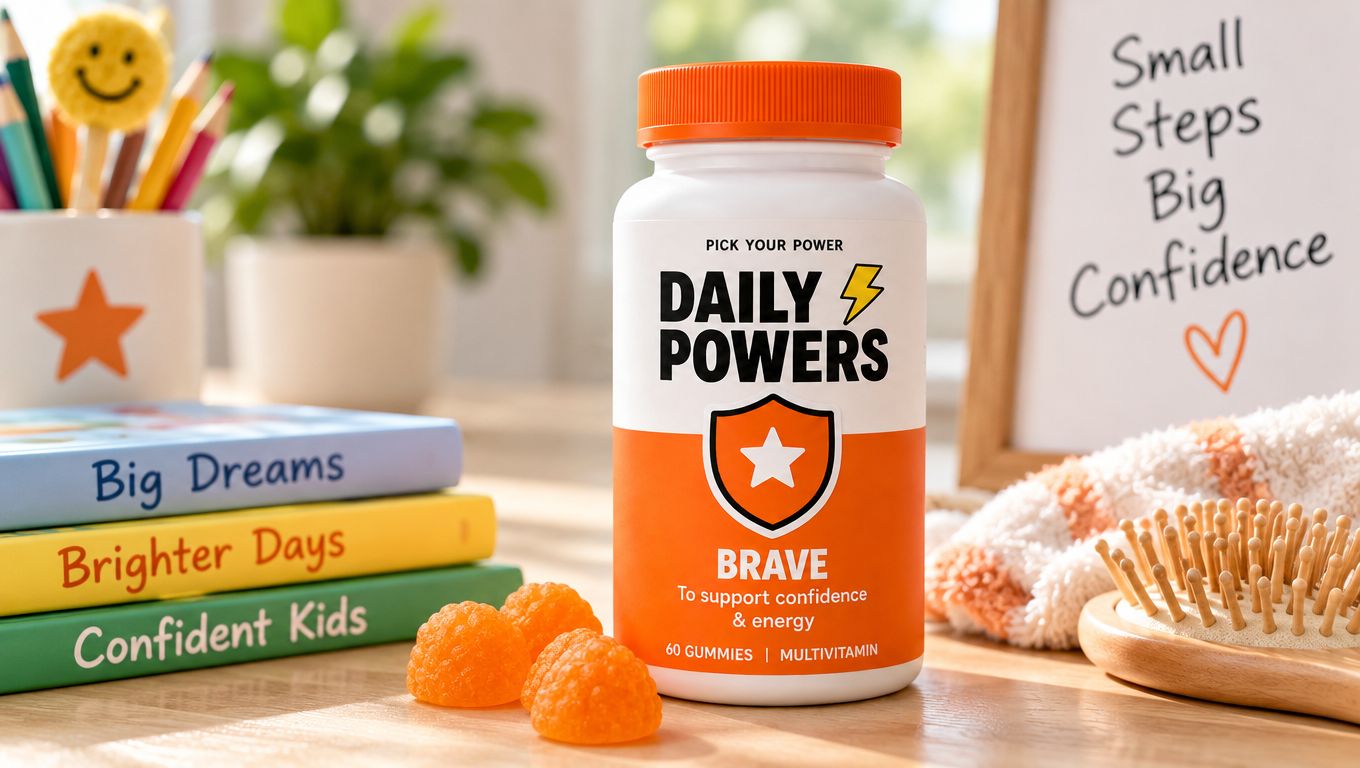
A simple rule helps. If the hair issue looks medical, start with a GP or dermatologist. If the concern is general family nutrition, choose a transparent, age-dosed supplement that does not claim more than it can deliver.
A Parent Friendly Checklist Before You Buy
Start with the label, not the mascot. Check the actual microgram dose, the age range, and whether the packet is talking about hair growth or just general wellbeing. If the biotin amount looks high, remember the blood-test warning and tell the clinician before any pathology.
Then ask three blunt questions. Is there a documented deficiency? Are there red-flag symptoms like patchy loss, scalp changes or fatigue? Would a medical review make more sense than another bottle?
If the answer points to a medical cause, book the appointment. If the issue is routine nutrition, choose the simplest age-appropriate option and keep expectations realistic.
If you want a children's supplement that's built around clear labelling, sugar-free gummy routines and age-aware dosing, explore the range at Daily Powers. If your main concern is hair loss, start with the cause first, then choose a supplement only if it fits the problem.