

You're standing in the supermarket aisle at 4.45pm, lunchbox fillers in one hand and a packet labelled sugar free in the other, wondering if that claim means it's a better choice for your child. The front of the pack looks reassuring. The ingredient list on the back tells a longer story, and you're not sure which one to trust.
That's a very common place for Australian parents to land. You don't need to ban every sweet food to make progress. You need a clearer way to judge what's being removed, what's replacing it, and how often your child eats it.
Table of Contents
- What Sugar Free Really Means for Kids
- Understanding Free Sugars and Daily Limits
- Health Benefits and Risks of Cutting Sugar
- Common Sugar Substitutes Explained
- Label Reading Tips and Practical Strategies
- Age-Appropriate Guidance for Ages 4 to 12
- Building Sustainable Sugar Habits That Last
What Sugar Free Really Means for Kids
A parent I often hear from describes the same moment. She stopped buying a favourite yoghurt pouch because it said no added sugar, then felt confused when the nutrition panel still listed sugars. Her child asked why plain milk tasted less sweet if it also contained sugar. Both questions point to the same misunderstanding about sugar free kids products.
Sugar isn't one single thing in practice. Picture it as fuel that arrives in different containers. Some arrives locked inside whole foods, alongside fibre, water, protein or fat. Some arrives loose and ready to pour, added during manufacturing or at the table. Your child's body and teeth experience those containers differently.
The visual below separates those ideas before you shop with them in mind.
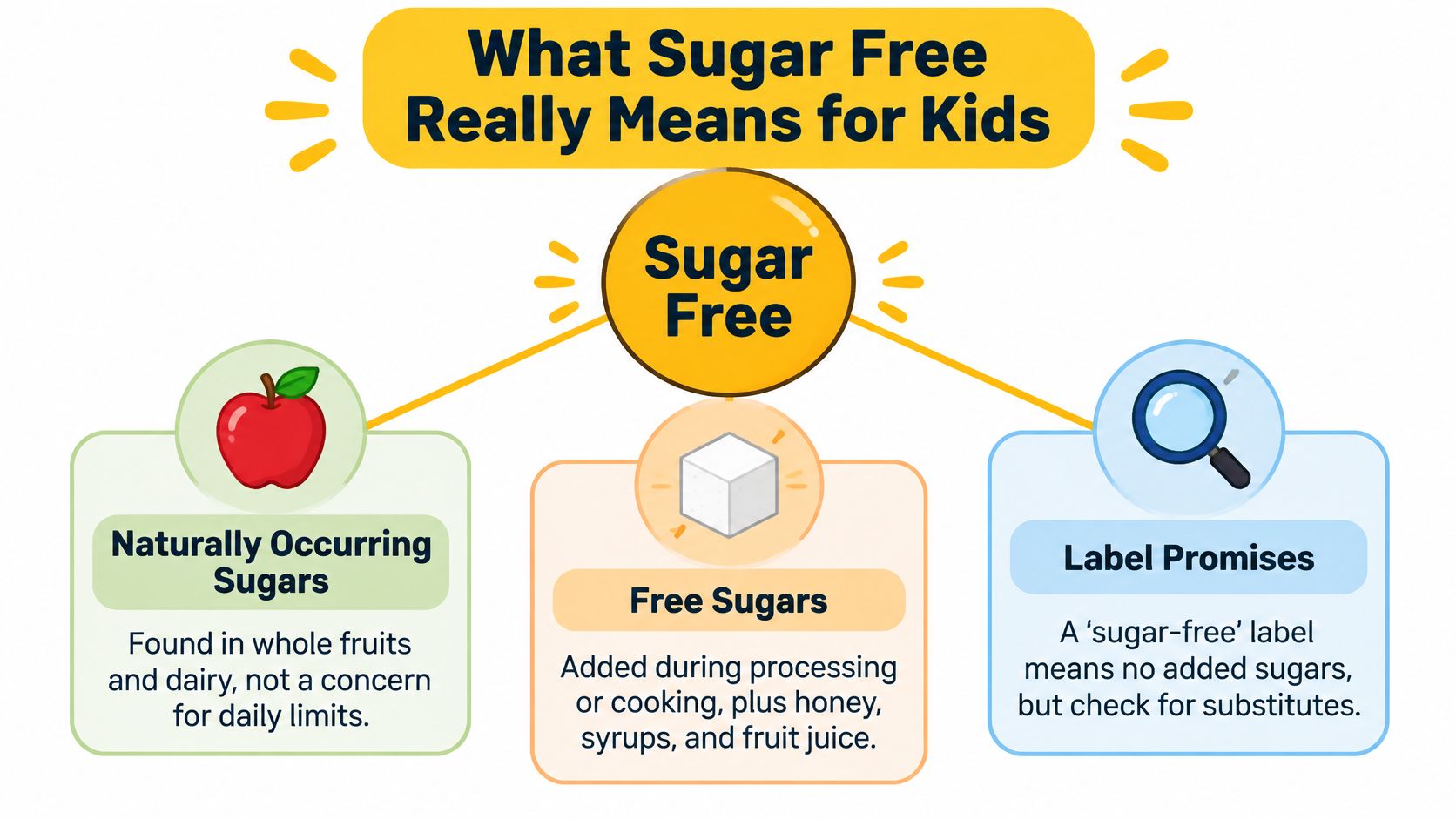
Naturally Occurring Compared With Added
Naturally occurring sugars are present in whole fruit and plain dairy foods as part of the food itself. An apple brings fibre and water with its sweetness. Plain yoghurt and milk bring protein and other nutrients. These sugars aren't the main target when families talk about cutting back.
Free sugars are different. They include sugars added during manufacture, cooking or consumption, plus sugars in honey, syrups, fruit juice and fruit juice concentrates. Fruit juice may sound wholesome, but once the fibre of whole fruit is mostly removed, the sugar is counted as free sugar.
What The Label Does And Doesn't Promise
A sugar free claim doesn't automatically mean unsweetened, nutrient rich, or gentle on teeth. A product may contain intense sweeteners or sugar alcohols instead of sucrose. It may also be acidic, sticky, low in fibre, or designed for frequent snacking.
- Check the sweetening system: Look past the front claim to the ingredient list.
- Check the serve: Compare sugars and sweeteners per recommended serve, not only per 100 grams.
- Check the role: Ask whether the product supports a routine or replaces one treat with another.
Australian guidance keeps this in perspective. The Australian Dietary Guidelines on limiting discretionary foods and drinks advise limiting confectionery, sugar sweetened soft drinks and cordials, fruit drinks, vitamin waters, energy drinks and sports drinks. Discretionary choices are high in kilojoules, added sugars, saturated fat, salt or alcohol and should be eaten only sometimes and in small amounts.
A sugar free label answers one question about ingredients. It doesn't answer whether the food belongs in an everyday routine.
That distinction is your working definition. You're not hunting for perfection on every label. You're learning to spot where free sugars come from, what replaces them, and whether the overall product still earns a regular place in your child's day.
Understanding Free Sugars and Daily Limits
Parents often ask for a number they can picture at the kitchen bench. Percentages feel abstract. Teaspoons feel real. The daily budget idea helps because it turns a vague goal like eating less sugar into a series of small, visible choices across breakfast, school, snacks and drinks.
Start with what counts. Free sugars include sugar stirred into porridge at home, sugar added to a cereal bar in a factory, honey drizzled on toast, syrups, fruit juice and fruit juice concentrates. They don't include the sugars naturally present in a whole piece of fruit or in plain milk.
The chart below gives you the benchmark in a simple visual form.
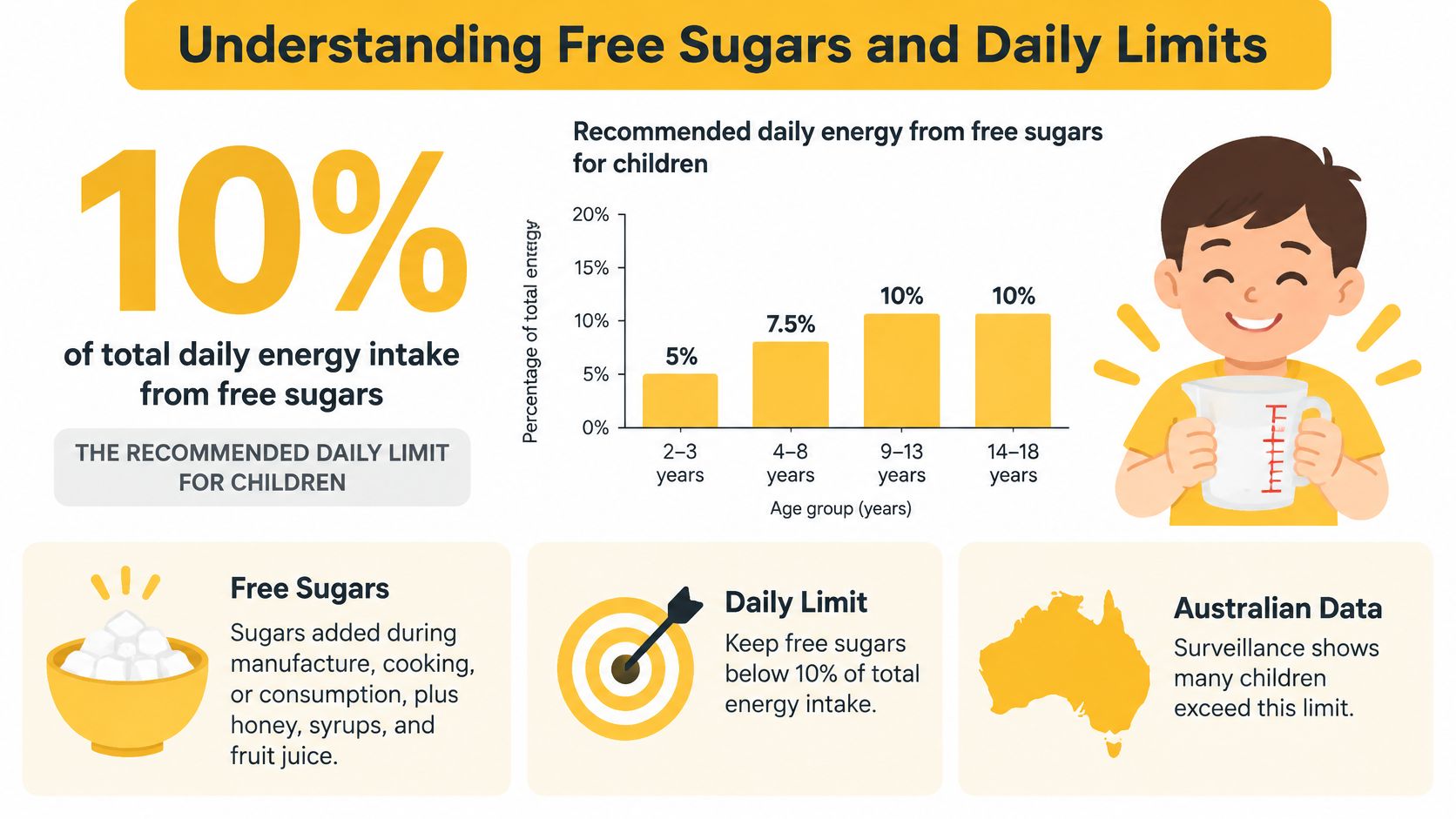
Turning Percentages Into Teaspoons
The AIHW summary of the World Health Organization free sugar recommendation states free sugars should stay below 10% of total energy intake, with additional benefit below 5%. For children, the 5% level corresponds to roughly 2 to 6 teaspoons per day depending on age and energy requirements.
That budget isn't a target to spend. It's a ceiling that helps you compare products. If a single drink, bar or flavoured yoghurt uses a large share of the day's budget, it leaves less room for everything else your child eats, including foods at parties or grandparents' homes where you have less control.
A Simple Way To Use The Budget
- Start with drinks: Check juices, cordials and flavoured milks first because liquid sugar is easy to consume quickly.
- Look at everyday repeats: Review foods eaten most school days before worrying about occasional birthday cake.
- Compare similar products: Choose between two yoghurts or two bars using sugars per serve and the ingredient list.
- Keep whole foods separate: Don't count a whole banana or plain yoghurt the same way you count juice or sweetened yoghurt.
The short video below is a helpful pause point if teaspoons and percentages still feel tangled. Watch it with your child's usual day in mind, then notice which items appear again and again.
You don't need to measure every gram to use this well. Most families get the biggest benefit from identifying two or three frequent sources and reducing those first. That's how a sugar free kids approach stays practical rather than turning every meal into maths homework.
Health Benefits and Risks of Cutting Sugar
Reducing free sugars has clear value, but the benefit depends on the replacement. Swapping a sweet drink for water is different from swapping it for another acidic drink consumed all afternoon. Swapping a sugary snack bar for cheese and fruit is different from swapping it for a highly processed bar that happens to carry a sugar free claim.
Australian data shows why drinks deserve attention. The AIHW report on poor diet in Australian children found 42% of children aged 5 to 14 consumed sugar sweetened drinks at least weekly in 2017-18, including 6.3% daily. Those drinks add kilojoules with little nutritional value, which can increase excessive weight gain risk.
The photo below reflects the calmer alternative many families build toward, whole foods on the table and a simple record of habits rather than strict rules.
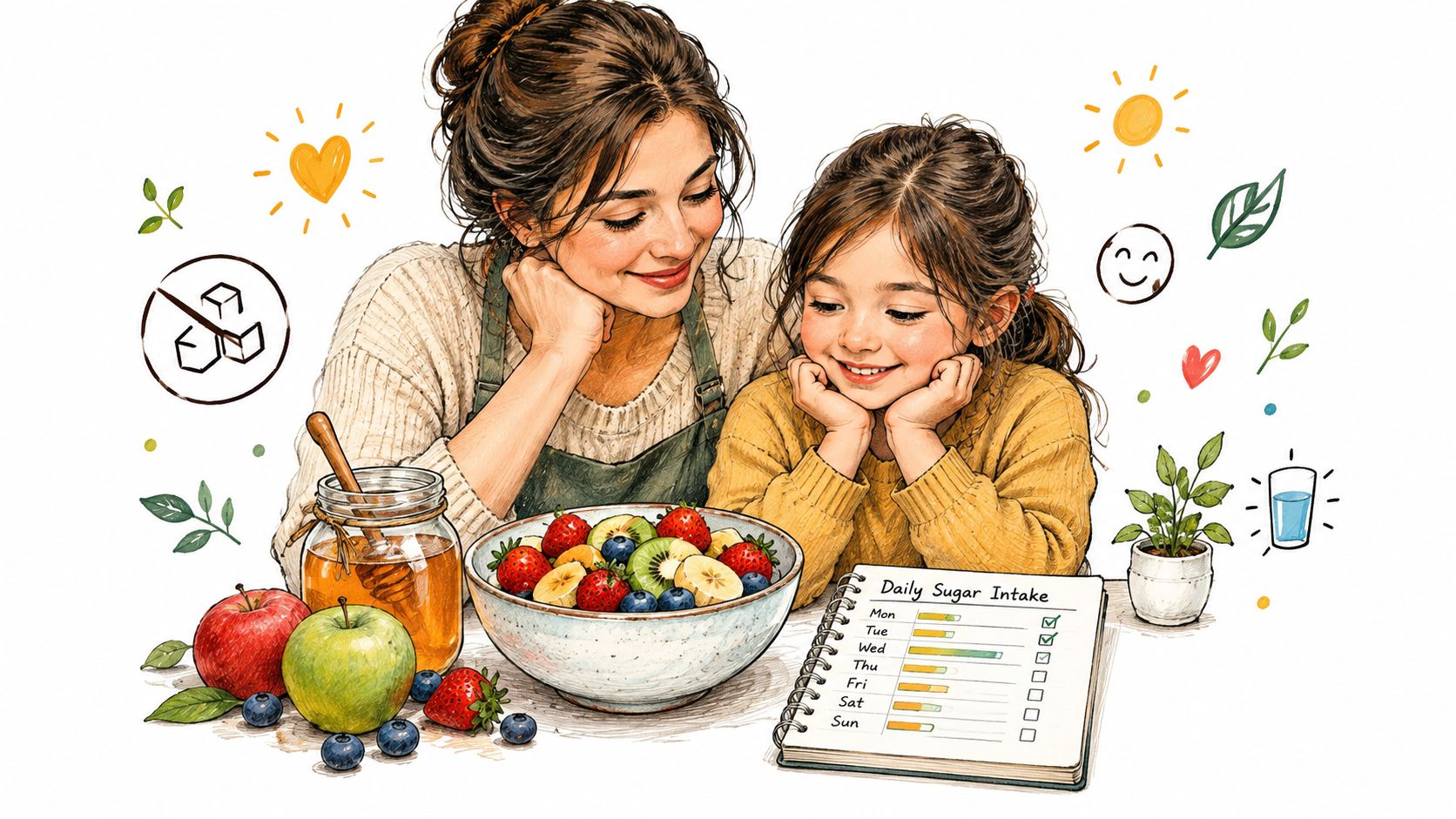
Where The Benefit Is Strongest
Teeth respond to frequency as well as amount. The same AIHW source explains repeated fermentable carbohydrate exposure supports acid production by oral bacteria and raises dental decay risk. Fewer sugary drinks and fewer grazing episodes mean fewer acid challenges across the day.
Energy balance also matters. Drinks and snacks high in free sugars can add kilojoules without helping a child feel full in the same way as foods containing fibre, protein or fat. Replacing them with water, plain dairy foods, whole fruit, vegetables, nuts where age appropriate, or other satisfying whole foods supports appetite regulation without moralising about treats.
Risks Families Often Miss
Sugar free doesn't remove every dental consideration. A product can be acidic, sticky, or eaten slowly over a long period. Those features can affect teeth independently of sugar content, especially when a child sips or nibbles between meals for hours.
- Acid exposure: Sour flavours and acidic drinks can soften enamel even without sugar.
- Sticky texture: Foods that cling to teeth extend contact time in the mouth.
- Frequent grazing: Repeated intake leaves less recovery time between eating episodes.
- Nutrient displacement: Filling up on sweet tasting processed products can crowd out fibre, protein and micronutrient rich foods.
Practical rule: Judge the replacement by its nutrition, acidity, texture and frequency, not only by its sugar line.
There's also a behaviour risk. If sugar free products become unlimited because the label feels safe, children may learn to expect constant sweetness and constant snacking. A better pattern is defined serves at predictable times, water afterwards, and regular meals that do the heavy nutritional lifting.
Cutting sugar works best as a substitution strategy. Remove unnecessary free sugars where they're frequent, replace them with foods and drinks that nourish, and keep occasional treats occasional. That balance protects health without teaching your child that food is a source of fear.
Common Sugar Substitutes Explained
When sugar leaves a recipe, manufacturers usually add something else to keep flavour, bulk or texture. Parents don't need a chemistry degree to compare those choices. You need to recognise the main families, know what questions to ask, and spot warnings that matter for your child.
The comparison below groups common options so you can see the trade offs at a glance.
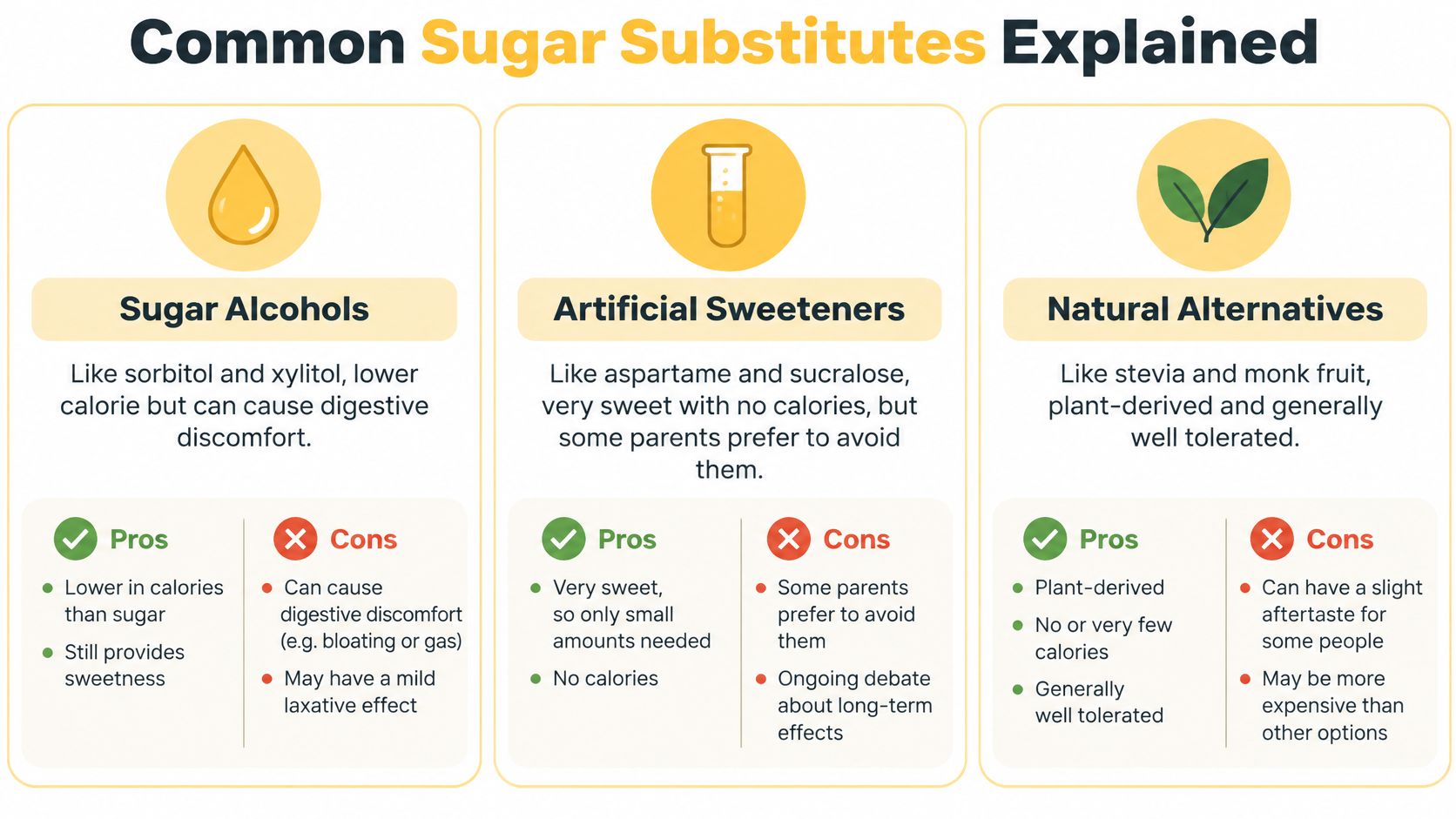
Three Families You'll See On Labels
Sugar alcohols include ingredients such as xylitol, erythritol and sorbitol. They provide sweetness and bulk, which is why they're common in gummies, mints and chewing gum. Some children tolerate larger amounts poorly and may experience digestive discomfort, so serving size and total daily intake matter.
Intense sweeteners include aspartame, sucralose and acesulfame potassium. They're used in very small amounts because they taste much sweeter than sugar. Families differ in their comfort with these ingredients, and they're not interchangeable, so naming the specific sweetener on the label helps you make a deliberate choice.
Plant derived sweeteners include stevia and monk fruit extracts. Many parents prefer the idea of plant origins, but origin alone doesn't tell you about flavour, aftertaste, processing, or how the finished product fits your child's routine. Read them with the same care you'd give any other ingredient.
Safety Checks And Flavour Expectations
One warning deserves specific attention. Food Standards Australia New Zealand labelling guidance on aspartame and phenylalanine identifies specific labelling requirements because aspartame contains phenylalanine, which matters for people with phenylketonuria. If that condition affects your family, seek professional guidance and check advisory statements carefully.
Parents also ask whether non sugar sweetness shapes taste preferences. It's a reasonable household question even without a simple yes or no answer. If most drinks and snacks taste intensely sweet, plain water and less sweet whole foods can seem dull by comparison. Keeping everyday foods moderately flavoured helps protect acceptance of those plainer staples.
- Sugar free: Doesn't mean unsweetened. Check which sweetener is used.
- No added sugar: May still contain naturally occurring sugars or fruit juice concentrates.
- Low sugar: Signals reduction, not absence. Compare the actual serve.
If you're comparing supplements as part of this decision, our guide to choosing a sugar free multivitamin for children walks through label checks in more detail. Use it alongside the ingredient list, allergen statements and age directions on any product you're considering.
The goal isn't to memorise every additive number. It's to slow down long enough to identify the sweetener, respect the serving guidance, and decide whether the product supports the taste habits you want at home. That confidence makes the next supermarket trip much easier.
Label Reading Tips and Practical Strategies
Front of pack claims are designed to be read in seconds. Ingredient lists and nutrition panels take a little longer, but they reveal whether a product deserves a regular spot in the lunchbox. Once you practise on a few familiar items at home, the process becomes quick in store.
Start with products your child eats often. Australian intake data shows where attention pays off. The Obesity Evidence Hub summary of children's free sugar sources reports children aged 2 to 17 obtained an average of 9.3% of daily energy from free sugars in 2023, with 7.4% among 2 to 5 year olds and 10.1% among 12 to 17 year olds. Cakes, biscuits and cereal bars were leading sources, followed by sweetened milk products, especially yoghurt, and desserts.
A Five Step Label Check
- Find the serve size: Confirm whether your child would eat one serve or the whole packet.
- Read ingredients in order: Early ingredients make up more of the product.
- Spot free sugar names: Look for honey, syrups, fruit juice and concentrates alongside sugar.
- Compare sugars per serve: Use the daily budget idea rather than chasing the lowest possible number.
- Review the whole product: Check fibre, protein, sweeteners, allergens, acidity cues and age guidance.
Common Hidden Sugar Sources in Kids' Foods
| Food Category | Examples | Why It Adds Up |
|---|---|---|
| Snack bars and biscuits | Cereal bars, filled biscuits, mini cakes | Eaten often and easy to pack daily |
| Sweetened dairy | Flavoured yoghurt, sweetened milk drinks | Healthy image can hide added sugars |
| Breakfast products | Sweetened cereals, flavoured instant oats | Starts the day with a large budget share |
| Drinks | Juice, cordial, fruit drinks, sports drinks | Liquid serves are consumed quickly |
| Sauces and spreads | Sweet chilli sauce, some nut spreads | Small amounts appear across many meals |
Use substitution rather than subtraction alone. Swap flavoured yoghurt for plain yoghurt with whole fruit your child helps choose. Swap juice for water with a reusable bottle they like carrying. Swap a daily cereal bar for popcorn, cheese and cucumber, leftover roast vegetables, or another filling option with texture and variety.
Fibre deserves a place in that swap thinking. Removing sugar from one product doesn't compensate for a diet low in fibre, protein or micronutrient rich foods. If lunches feel repetitive, explore these high fibre foods for kids and easy family swaps and add one option at a time.
Shop for the week your child actually lives, not an ideal week. Frequent foods matter more than rare treats.
Keep treats visible and honest. A biscuit at a party doesn't undo a generally balanced pattern, and calling every sweet food bad can make it more exciting. Neutral language, predictable snack times and satisfying meals reduce the power struggle. Your child learns that everyday foods help them grow and feel well, while discretionary foods are smaller and less frequent.
Age-Appropriate Guidance for Ages 4 to 12
A four year old and an eleven year old don't need the same conversation about sugar. Younger children rely almost entirely on adults for what's available. Older children buy, trade and choose more independently, so skills matter as much as pantry contents.
Age also changes exposure. The ABS National Health Survey data on children's sugar sweetened drink consumption reports daily consumption rose from approximately 4% among 2 to 3 year olds to 12% among 14 to 17 year olds. Among daily consumers, average intake was 2.4 cups per day, equivalent to about 1.6 cans of soft drink or one 600 mL bottle.
Ages 4 To 6
Smaller bodies have smaller energy needs, so their free sugar budget is tighter. Focus on environment rather than explanations. Keep water accessible, serve plain versions of dairy foods where accepted, and offer sweet foods in child sized portions at planned times.
Simple language works. You might say, we drink water when we're thirsty and we have juice sometimes. Avoid using dessert as a reward for eating vegetables, because that can raise the status of the sweet food. Let your child choose between two acceptable snacks to build autonomy safely.
Ages 7 To 9
School canteens, parties and friends' lunchboxes widen the food world. Teach label spotting as a game, not a test. Practise finding serve size, identifying honey or syrup in ingredients, and packing a lunchbox with something crunchy, something filling and something fresh.
After school is a vulnerable snack window. Hunger is real at that hour, so plan for it. A substantial snack soon after arrival home reduces grazing until dinner and makes sweet requests easier to manage calmly.
Ages 10 To 12
Older children can understand budgets and trade offs. Invite them to compare two drinks or plan one lunchbox swap for the week. Talk about teeth, energy and feeling full rather than weight or appearance. Those neutral reasons support decision making when you're not present.
Supplements, if used, should sit inside that routine rather than replace meals. For example, Brave is described as a daily multivitamin gummy for kids with essential vitamins, kid friendly flavours and textures, no artificial colours or flavours, and a vegan friendly formulation. Position any gummy as a once daily ritual at a set time, follow age directions, store it out of snack reach, and offer water afterwards.
That framing matters. A sugar free kids routine shouldn't teach a child that nutrition comes from a lolly shaped product alone. Meals remain the foundation, while a supplement, where parents choose one, supports consistency without adding another treat occasion.
Building Sustainable Sugar Habits That Last
Dramatic pantry clear outs rarely survive busy school terms. Gradual changes do, because children have time to adjust and parents aren't relying on willpower at every snack request. Pick the repeat habit with the biggest payoff first, usually drinks, breakfast or the daily lunchbox bar.
Make the preferred choice easy. Fill water bottles the night before. Keep plain yoghurt and fruit ready to combine. Put planned snacks where your child can reach them and occasional foods out of the everyday line of sight.
- Change one routine: Start with drinks for a fortnight before tackling snacks.
- Keep serves defined: Avoid open packets and unlimited sugar free grazing.
- Review together: Notice what's working without turning food into a report card.
Avoid using sugar free products as permission to over consume. The label can support a lower sugar routine, but it doesn't make a diet balanced on its own. Fibre, protein, vegetables, whole fruit, plain dairy or suitable alternatives still need to appear across the day.
If energy and routine are part of your wider family goals, read more about a daily boost for kids through consistent habits and choose one idea to test this week. Tomorrow morning is soon enough. Fill the water bottle, pack one familiar food plus one better swap, and let progress build from repetition.
Daily Powers offers Australian children's gummies formulated with no sugar and no artificial colours or flavours, designed to fit simple daily rituals around confidence, focus and calm. If you're building a sugar free routine that still feels enjoyable and consistent for your child, visit Daily Powers to explore the range and read the full ingredient and dosing information.