

"Just swap to sugar free and you don't need to worry" is the advice many parents hear. It's too simple. Sugar free lollies remove one ingredient, but they can still be sticky, acidic, energy containing and hard on a child's stomach. A calmer approach is to judge each lolly by its sweetener, portion size, texture and how often it's eaten.
Table of Contents
- What Sugar Free Lollies Are and Why Parents Check Them
- Common Sweeteners Used in Sugar Free Lollies
- Digestive Effects and Safe Portions for Kids
- Dental Effects Beyond the Sugar Label
- Healthier Treat Swaps for Family Lunchboxes
- Reading the Label and Choosing a Sugar Free Lolly
What Sugar Free Lollies Are and Why Parents Check Them
Sugar free doesn't mean harmless, and it doesn't mean a lolly is now a healthy snack. It usually means the maker hasn't added sucrose, glucose or fructose syrup, and has sweetened the product instead with polyols such as sorbitol or maltitol, or with intense sweeteners such as stevia, sucralose or aspartame. Phrases such as sugar free and no added sugar describe that sweetener choice. They don't describe the whole product.
Think of removing sugar as locking one door. The lock helps, but acidity, stickiness, portion size and the replacement sweetener are still other entry points. A sour, chewy lolly eaten slowly all afternoon is a different exposure from one small mint eaten after lunch, even if both packs carry the same front of pack claim.
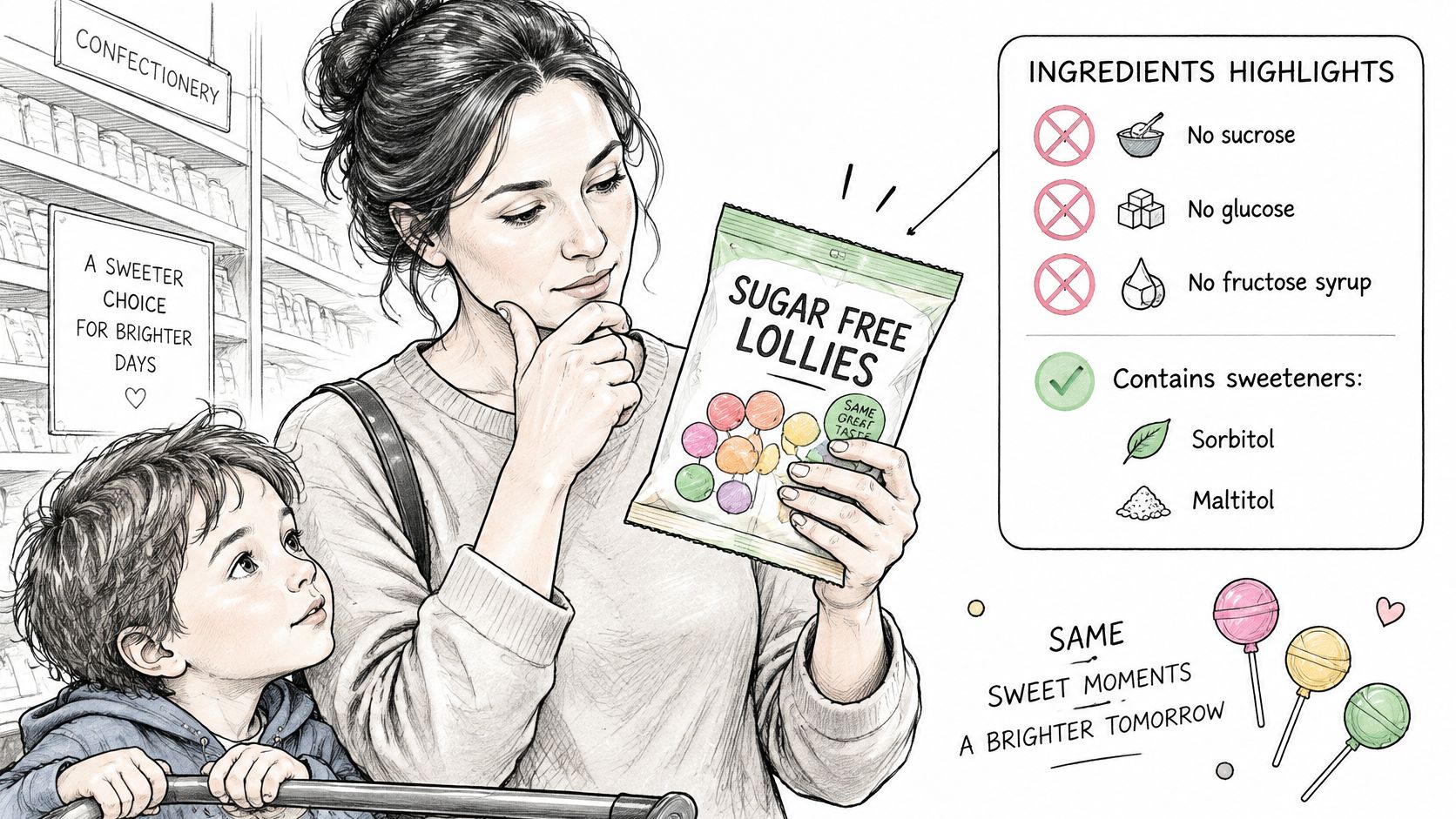
Parents have good reason to check. The Australian Bureau of Statistics report on the 2011–12 Australian Health Survey found that almost three-quarters of Australians aged 9–13 and 14–18 usually obtained at least 10% of their dietary energy from free sugars, above the World Health Organisation recommendation to limit free sugars to less than 10% of total energy. Confectionery accounted for 8.7% of free-sugar intake, equal to cakes and muffins.
Three Common Misunderstandings
- Sugar free isn't calorie free: Polyols still supply some energy, so a large serve still counts.
- Sugar free isn't tooth proof: Acid, stickiness and other fermentable ingredients can still affect teeth.
- Sugar free isn't unlimited: Eating several pieces can upset digestion, especially for a smaller child.
Replacing a conventional lolly with a sugar free one can reduce the sugar in an occasional treat. It doesn't turn confectionery into a staple food. The useful questions are which sweetener is used, how it affects the gut and teeth, and whether the label supports the front of pack impression.
Common Sweeteners Used in Sugar Free Lollies
Sweeteners fall into two broad groups, and parents feel the difference mainly through digestion. Polyols provide bulk as well as sweetness, so they're common in products that need the body and chew sugar would normally provide. They're also the sweeteners most often linked with bloating or loose stools when children eat too much.
Intense sweeteners work differently. Manufacturers use very small amounts because these ingredients are much sweeter than sugar. They add sweetness without providing the bulk of a polyol, so a product may combine an intense sweetener with other ingredients for texture.
Common Sweeteners in Sugar Free Lollies
| Sweetener | Type | Where You Will Find It | Digestive Effect |
|---|---|---|---|
| Sorbitol | Polyol | Chewy and gummy lollies, mints | Bloating and loose stools at higher doses |
| Maltitol | Polyol | Sugar free chocolate and hard lollies | Strong laxative effect; label advisory at 10 g per 100 g |
| Xylitol | Polyol | Sugar free gum, mints and some lollies | Dose-dependent bloating and cramping |
| Isomalt | Polyol | Hard-boiled sugar free lollies | Mild laxative effect at high intake |
| Lactitol | Polyol | Sugar free chocolate and confectionery | Label advisory at 10 g per 100 g |
| Mannitol | Polyol | Chewing gum and dusting powders | Osmotic laxative effect at high doses |
| Stevia | Intense sweetener | Some sugar free lollies and drinks | Generally well tolerated at permitted levels |
| Aspartame | Intense sweetener | Diet drinks and some lollies | Not suitable for people with phenylketonuria |
| Sucralose | Intense sweetener | Some sugar free lollies | Generally well tolerated at permitted levels |
Read the ingredient list from left to right and find each sweetener in the table. A product led by maltitol or sorbitol needs closer portion control than one sweetened only with a small amount of stevia or sucralose. If your child has phenylketonuria, avoid aspartame.
"Natural" doesn't mean risk free. A polyol can come from plant material and still ferment in the bowel.
Claim wording also matters. Unsweetened is stricter than a simple no added sugar message because the product must avoid several named sweetening substances, not just added sugar. That distinction explains why two packs can sound similar while containing quite different sweetener systems. Start with the ingredient name, then decide whether that sweetener and serve suit your child.
Digestive Effects and Safe Portions for Kids
Polyols are poorly or incompletely absorbed in the small intestine. The part that isn't absorbed draws water into the bowel through osmotic activity and is then fermented by bacteria in the colon. That simple process explains most tummy symptoms parents notice after sugar free lollies.
The Food Standards Australia New Zealand assessment document on polyols notes that polyols have negligible toxicity at permitted uses but can produce an osmotic laxative effect at higher doses. It also states that Australian labelling rules require an advisory that excess consumption may have a laxative effect when a food contains at least 10 g per 100 g of certain polyols, including lactitol, maltitol and maltitol syrup.
Symptoms and Portions
Symptoms are dose dependent and can include bloating, abdominal cramping and loose stools. Several servings eaten quickly make them more likely, and the same number of pieces represents a larger load for a four year old than for a twelve year old. Work out the limit from the pack's stated serve before the first piece is given, rather than letting both children help themselves from the same bag.
Try a cautious introduction. Offer one piece, watch over the following day, and only consider another serve if your child stays comfortable. Our guide to gut health for kids can help you place an occasional reaction in the context of your child's usual digestion.
Practical rule: Treat sugar free lollies as an occasional food with a serve limit, not as a free snack.
See a GP or paediatrician if symptoms keep recurring, stools are repeatedly watery, or your child loses weight. Sugar free doesn't mean gastrointestinally neutral. Tolerability comes down to the specific sweetener, concentration, serving size and your child's individual sensitivity.
Dental Effects Beyond the Sugar Label
Sugar free doesn't automatically mean tooth safe. Removing sucrose addresses one pathway, but decay is driven by acid produced when bacteria ferment carbohydrates on the tooth surface. If a lolly still contains fermentable ingredients, stays stuck to teeth, or is sucked for a long time, the risk picture is less straightforward.
The Australia New Zealand Food Standards Code legislation allows a confectionery or chewing gum product to make the "contributes to dental health" claim only when it contains no more than 0.2% starch, dextrins, mono-, di- and oligosaccharides or other fermentable carbohydrates, or when testing shows bacterial fermentation doesn't lower plaque pH below 5.7 during the 30 minutes after consumption. That test is considerably more demanding than merely printing sugar free on the front.
Dental Risk Factors Compared
| Factor | Sugar Lolly | Sugar Free Lolly | What to Check |
|---|---|---|---|
| Fermentable carbohydrate | High | Lower, but syrups and starch can remain | Ingredient list for syrups, starch and fruit concentrate |
| Plaque pH after eating | Falls sharply | Should stay above 5.7 for 30 minutes if the dental claim is made | Dental health claim on the pack |
| Stickiness | Often high | Varies with gelling agents and texture | Chewy textures stay on teeth longer |
| Exposure time | Minutes to hours | Hard lollies can take a long time to dissolve | Eat at set times, not all day |
Check beyond declared sugars. Syrups, fruit concentrates, starch based texturisers and residual sugars can all contribute fermentable carbohydrate. A soft, sticky sugar free chew that lodges in molar grooves deserves more caution than its sugar line suggests.
Keep the habits simple. Serve lollies at a set time rather than allowing grazing, finish with water, and keep brushing as normal. A long lasting hard lolly still prolongs oral exposure, even when its sweetener is less cariogenic than sucrose.
Healthier Treat Swaps for Family Lunchboxes
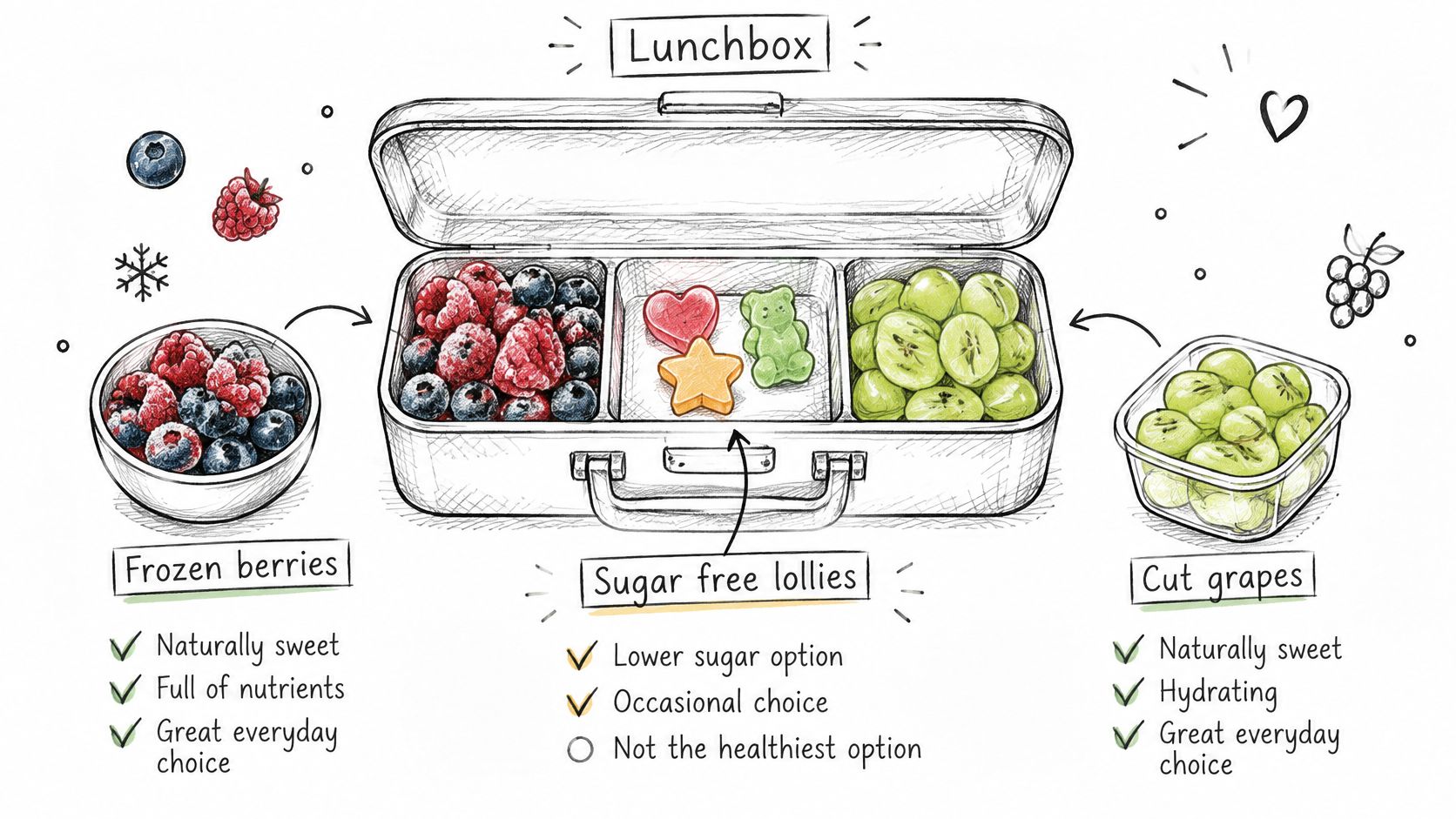
Sugar free lollies sit in the middle. They can be a useful occasional swap for conventional confectionery, but they aren't the strongest everyday lunchbox choice. Fruit and dairy based treats keep sweetness in a more familiar food form and avoid relying on polyols or intense sweeteners.
The lunchbox example below shows how colourful, cold and sweet tasting options can sit together without making lollies the main event.
Healthier Treat Swaps Compared
| Swap | Sugar or Sweetener Load | Best For | Watch For |
|---|---|---|---|
| Frozen berries or grapes cut small | Natural fruit sugar | Everyday snacks | Cut grapes lengthwise for children under four |
| Plain yoghurt freezer pops | Lactose and fruit sugar | Lunchboxes | Check the label for added sugar |
| Diluted fruit ice blocks with no added sugar | Lower fruit sugar | Hot afternoons | Choose no added sugar varieties |
| Water with frozen fruit pieces | None added | Daily drinks | Keep fruit portions sensible |
| Sugar free lollies | Polyols or intense sweeteners | Occasional treats | Portion limits and digestive effects |
Frozen berries work well straight from a small insulated container. Plain yoghurt freezer pops feel like a treat, but read the label because flavoured yoghurt can contain added sugar. For more practical everyday ideas, see our guide to sugar free snacks for kids.
The short video below adds another way to think about building a lunchbox around foods children will eat.
Diluted fruit ice blocks suit hot afternoons, while water with frozen fruit pieces is an easy daily drink. Sugar free lollies still have a place, provided you've checked the label, serve size and your child's tolerance.
Reading the Label and Choosing a Sugar Free Lolly
Turn the pack over first. The front is designed to sell a simple message, while the back shows what you'll feed your child. Food Standards Australia New Zealand's guidance on sweeteners states that most packaged foods sold at retail must display a Nutrition Information Panel listing total sugars, and ingredient statements generally must identify each ingredient. It also explains that aspartame is more than 200 times sweeter than sugar, which is why intense sweeteners appear in much smaller quantities.
Start with total sugars per 100 g. That figure lets you compare packs of different sizes and stays useful even when the front says sugar free. Then work through the six checks below in order, because each one answers a different question.
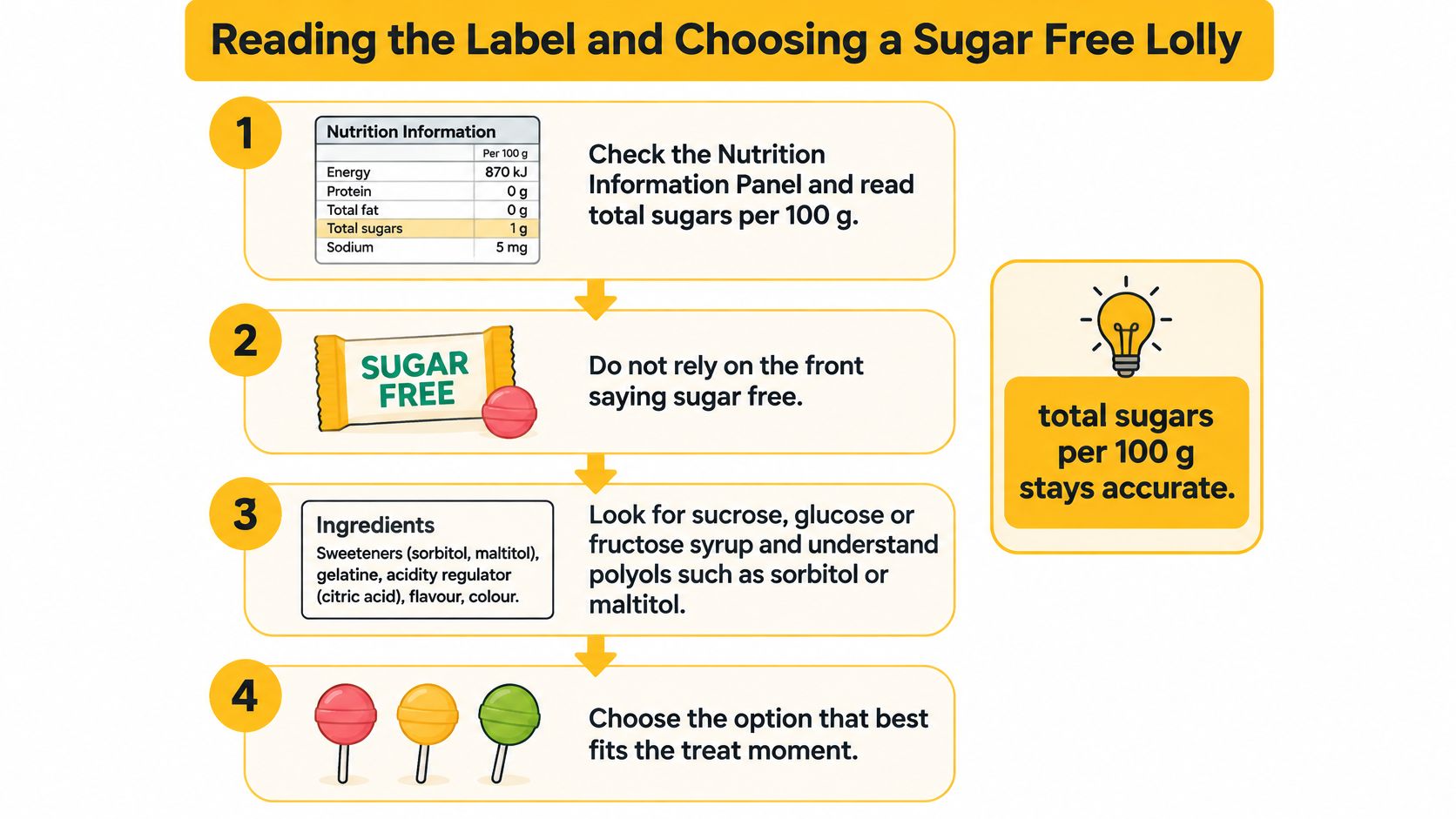
Six Label Checks
- Find every sweetener: Scan for sorbitol, maltitol, xylitol, isomalt, lactitol and mannitol, and note how high each appears. Ingredients near the start generally contribute more to the product.
- Look for the laxative advisory: Treat the warning about excess consumption as a portion signal, not as fine print you can ignore.
- Read the exact claim: Under the Code, unsweetened means the food meets the conditions for a no added sugar claim and contains none of several sweetening substances, including intense sweeteners, sorbitol, mannitol, glycerol, xylitol, isomalt, maltitol syrup or lactitol.
- Check for a dental health claim: If the claim isn't there, don't assume the product has met the plaque pH test.
- Convert the serve into pieces: Note the serve size, count how many lollies that represents, and set a daily limit for your child's age.
- Make intake visible: Record the product name and serve in a note on your phone if lollies come from school, sport and home in the same day.
The claim check prevents a common mistake. A parent may choose a pack marked unsweetened expecting no sweetness at all, or assume no added sugar means no sweetener. FSANZ generally limits intense sweeteners to uses such as low- or reduced-joule foods, no-added-sugar foods, or specifically permitted categories, so the ingredient list remains the reliable place to confirm what's present.
Buy only when the label gives you a clear sweetener list, a stated serve size and enough information to set a limit before your child eats.
A Simple Purchase Decision
Choose a sugar free lolly when you can identify the sweetener, the serve is realistic, a dental claim is present, and your child has tolerated that sweetener before. Put it back if the sweetener system is unclear, the serve is hard to translate into pieces, or the only reassurance is a large sugar free banner.
Be specific about exceptions. Avoid aspartame if your child has phenylketonuria. If bloating or loose stools persist after small serves, stop that product and speak with a GP or dietitian rather than trying progressively larger amounts.
Our broader guide for sugar free choices for kids applies the same label first habit beyond lollies. It's also the standard we use for our own range. Daily Powers gummies contain no artificial colours or artificial sweeteners. For example, Brave is a daily multivitamin gummy for kids, made with essential vitamins to support general wellbeing, with no artificial colours or flavours and a vegan friendly formulation.
Do one thing today. Take the lolly your child eats most often, turn it over, and apply all six checks before it goes into the trolley or lunchbox again. You'll know the sweetener, the realistic serve and the dental evidence behind the claim in under two minutes.
If you're applying the same ingredient checks to your child's daily routine, Daily Powers makes sugar free gummies for bravery, focus and calm, with no artificial colours or flavours and clear ingredient and dosing information. Explore the range and choose the routine that fits your family at Daily Powers.