

The most popular advice about sugar free snacks for kids is to start by finding a sugar-free replacement. That's only half the job. A snack helps when it takes the place of a less nourishing choice, passes a quick label check and fits a planned eating routine, not when it becomes another sweet item in an already full day.
At school pickup, a hungry child may head straight for the cupboard and reach for a muesli bar before you've had time to cut up fruit. You don't need a perfect snack every afternoon. You do need a practical way to choose what goes in the lunchbox, what to buy in a hurry and how often to offer it.
Table of Contents
- Why Sugar Free Snacks Still Matter
- Sugar Free Snacks Worth Packing This Week
- How to Read a Sugar Free Claim
- Sweeteners, Teeth and How Often Kids Eat
- Homemade Snacks Compared with Shop Packs
- Pair Snacks and Set This Week's Habit
Why Sugar Free Snacks Still Matter
A sugar-free badge answers one question about a snack, what went into it, and leaves the bigger one open. The bigger question is what the snack pushes off the day's eating, because that decides whether buying it helped at all.
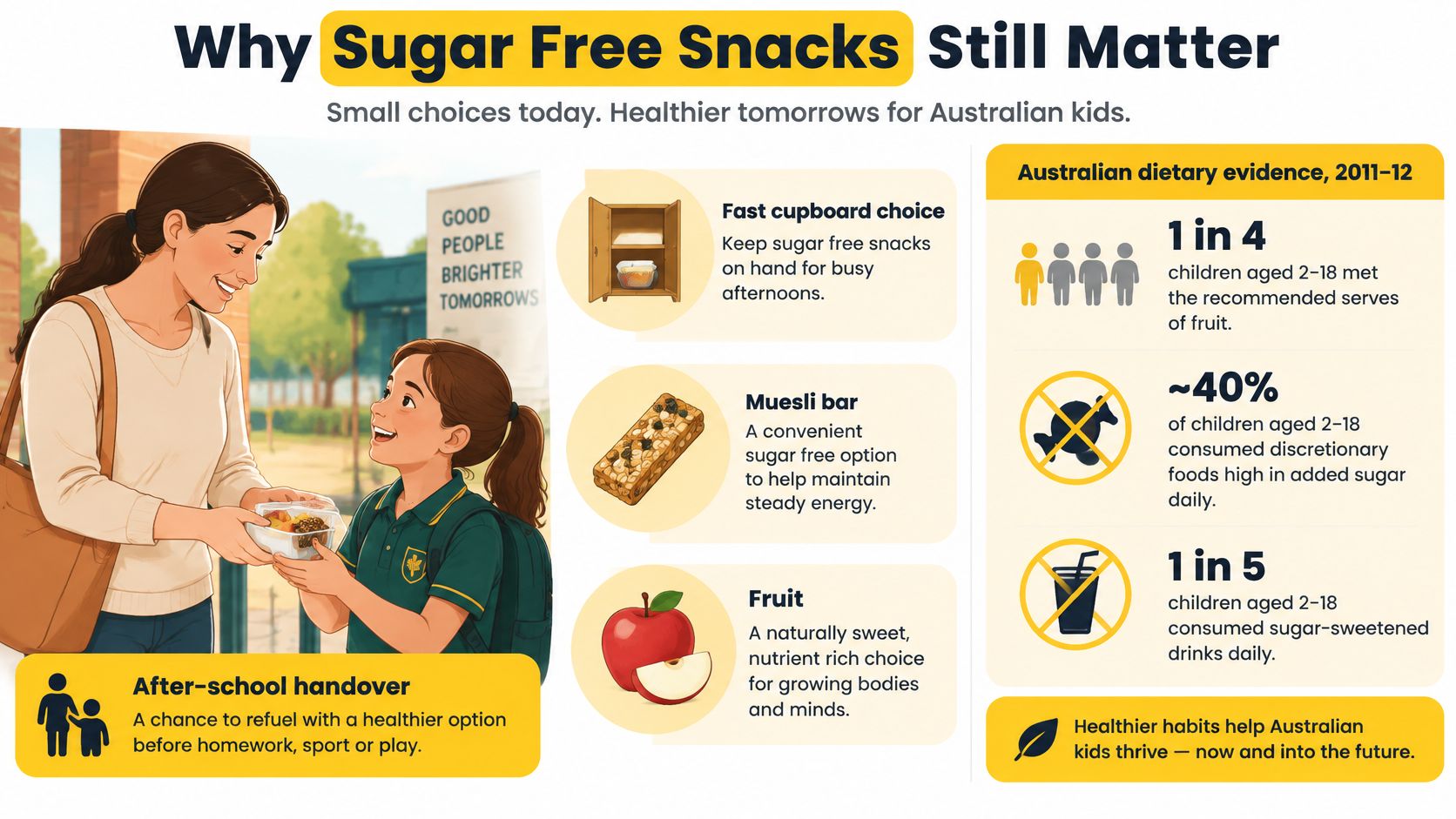
Australian children draw a sizeable share of their daily energy from discretionary foods, and the ABS puts real numbers on the habit: its media release Fewer Australians drinking sweetened beverages reported that in 2011–12, discretionary foods supplied 29% of energy for boys aged 2–3 and 32% for girls aged 2–3 (roughly three serves a day), climbed to 41% of energy or about six to eight serves daily for boys and girls aged 14–18, and put free sugars at 8.2% of total energy intake, inside the World Health Organization recommendation of less than 10%, with sweetened beverages accounting for 25.4% of all free sugars consumed.
The foods behind those figures will sound familiar: sweet biscuits, cakes and muffins, potato and corn chips, pastries, ice cream and fried potato. On the added-sugar side, soft drinks, fruit and vegetable juices and drinks, cordials, cakes and sweet biscuits were among the leading contributors across age groups.
The replace-not-add rule
Taken together, the numbers set a working rule: a sugar-free snack earns its place when it takes over from a discretionary food. Fruit and cheese landing where the after-school biscuit used to go is a real swap. Fruit arriving beside a biscuit that stayed put is one more item in the day.
The rule still works when the replacement carries some sugar. What changed the diet is the biscuit leaving, and the badge on the incoming snack is one fact about it, weighed alongside the ingredients list, the nutrition panel and the time of day it gets eaten.
Anything in a wrapper sits inside the same test. A sugar-free bar slipped into an already full snack schedule behaves like the food it resembles, while the same product swapped in for chips at lunch earns its keep. So run the check in order: what does it replace, what else is in it, and when will it be eaten. The badge starts the check, and the swap finishes it.
Sugar Free Snacks Worth Packing This Week
Use this table before your next shop. Pick three rows that each replace a sweet item already in your home, then give each snack a time and place.
| Snack | Best moment | Replaces | Check first |
|---|---|---|---|
| Apple or pear with cheese | After school | Sweet biscuit | Cut age-safe pieces; make it a planned snack, not all-afternoon grazing |
| Plain yoghurt with berries | Morning tea | Flavoured yoghurt pouch | Choose plain yoghurt and check the panel for added sugar |
| Vegetable sticks and hummus | Lunchbox | Potato or corn chips | Check the hummus sodium; make vegetables the larger share |
| Wholegrain crackers and cheese | Lunchbox | Sweet muesli bar | Compare fibre per 100 g and salt; pack one labelled serve |
| Boiled egg | Before sport | Pastry or cake | Keep it cool until eaten; peel at home if that makes the meal quicker |
| Unsalted nuts or seeds | Afternoon, if allowed | Chocolate | Check school allergy rules; avoid whole nuts for children under five |
| Air-popped popcorn | Weekend | Sweet biscuits | Skip sweet coatings and serve a bowl, not the bag |
| Oat bite with mashed banana | Weekend bake | Commercial muesli bar | Banana still adds carbohydrate; keep the piece small |
| Water or plain milk | With every snack | Juice, cordial or soft drink | Make water the default; milk is food too, not an extra sweet |
The Australian Dietary Guidelines for children and teenagers recommend building snacks around foods such as fruit, vegetables, plain yoghurt, cheese, wholegrain foods, legumes, eggs and unsalted nuts where age-appropriate. These choices offer more than a low sugar number: they can contribute fibre, protein and other nutrients, while frequent discretionary snacks may displace foods from the Five Food Groups.
A quick check for packaged choices
For packaged options, compare the Nutrition Information Panel per 100 g rather than relying only on the serving column. Check total carbohydrate and fibre, then read the ingredients for glucose syrup, maltodextrin, honey and fruit concentrates. A product can have a low sugar figure and still be refined or low in fibre.
Naturally occurring sugars in whole fruit, vegetables and milk aren't the same dietary concern as sugars added as sweeteners, flavour enhancers or preservatives. “Sugar-free” also doesn't automatically mean a snack is nutritious; a product may still be energy-dense or contribute little from the core food groups.
Make the swap visible: circle three snack rows for this week, then name the sweet item each one will replace.
For more ways to build snacks around fibre-rich foods, see this guide to high-fibre foods for kids.
How to Read a Sugar Free Claim
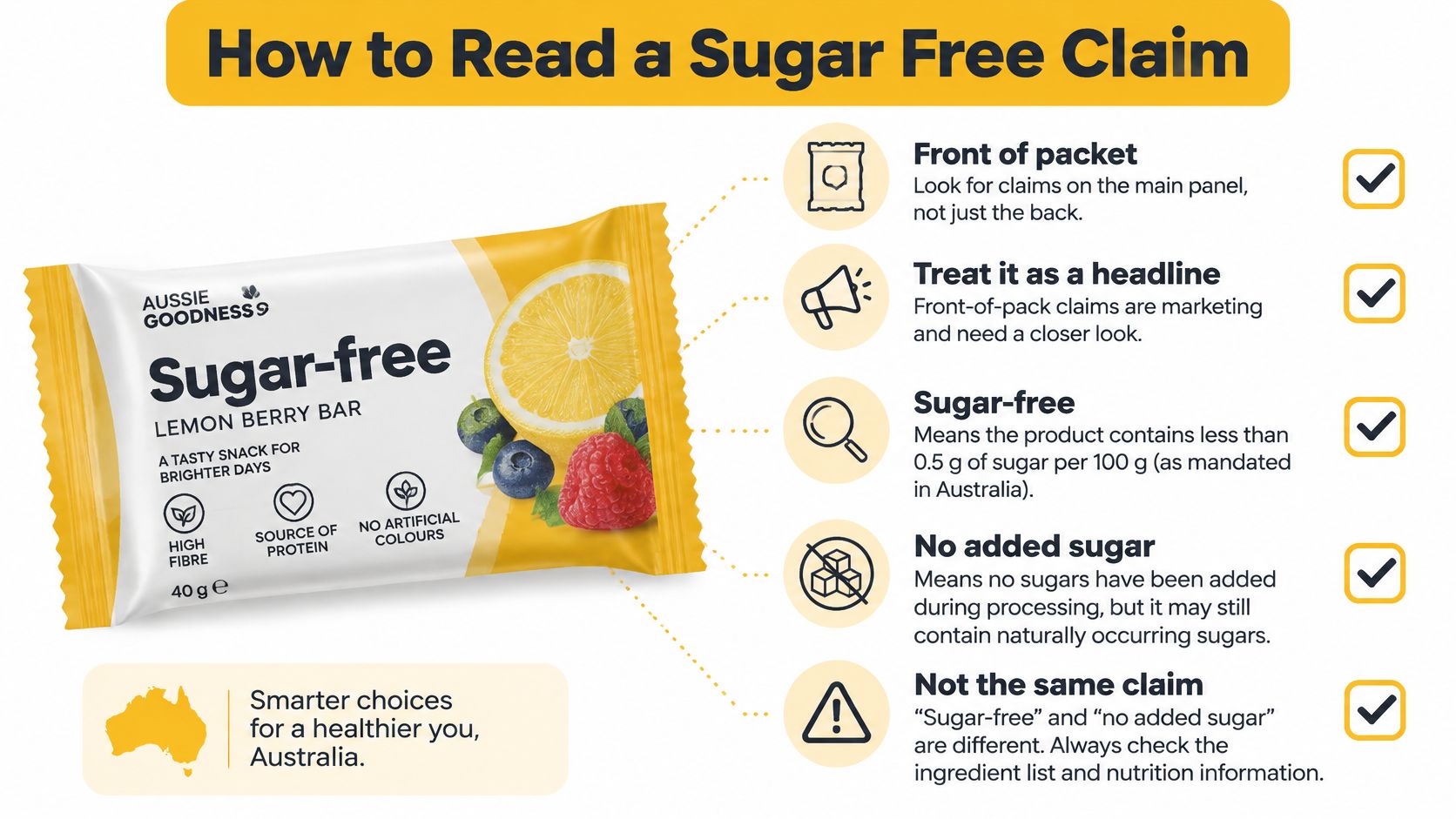
Read the front of the packet as a headline, then check the back for the detail. "Sugar-free" and "no added sugar" describe different things, even though shoppers often treat them as the same promise. Australian food standards research found that "no added sugar" claims are actively sought by roughly 40–60% of consumers, with the claim's influence varying by product and consumer group, according to the Food Standards Australia New Zealand summary of no-added-sugar claims.
Each term tells you something narrower than it suggests. A sugar-free product may still taste sweet because it uses an intense sweetener or another substitute. "No added sugar" says nothing about fruit concentrates, purée or a generous serve of dried fruit sitting in the list. "Unsweetened" works as plain-language shorthand for a food with no added ingredient intended to make it taste sweet, but the ingredient list still deserves a look.
Work through one packet
Take two muesli bars off the shelf and read the back of each in this order:
- Start with the ingredients. Ingredients appear in order of weight. Look for glucose, fructose, maltodextrin and concentrates, especially near the top of the list where the amounts are largest.
- Compare per 100 g. Serving sizes differ between brands, so the 100 g column is the only fair comparison between the two bars.
- Read sugars next to carbohydrate, fibre and protein. The sugar line alone won't show whether the bar is filling or mostly refined starch.
- Check the serve against the actual bar. A packet may hold more than one stated serve, so compare the panel with what your child will really eat.
- Name the food group. Decide whether the bar contributes to a core food group or counts as a discretionary snack wearing a different badge.
The stronger choice comes from the whole product and the job it does at snack time. A sweet-tasting processed bar can still be a weaker everyday option than fruit, yoghurt or a wholegrain snack, even when the claim on the front looks appealing.
If the ingredient list wouldn't make sense in something you'd cook at home, the front-of-pack claim hasn't rescued it.
Finish with a keep, swap or drop call. Keep the packet for an occasional or convenience role if the label holds up. Swap it when the ingredients or food-group contribution fall short of a more nourishing option. Drop it when it would add another sweet snack to the cupboard. A sugar-free badge earns its place only when the snack replaces a discretionary food and slots into planned snack times, rather than stretching a pattern of constant sweet grazing.
Watch the same packet test worked through on screen:
Sweeteners, Teeth and How Often Kids Eat
A sugar-free label settles one question and leaves several others open. A snack can contain little or no sugar and still be an acidic drink, a sticky food, or one more bite in a pattern of constant nibbling.
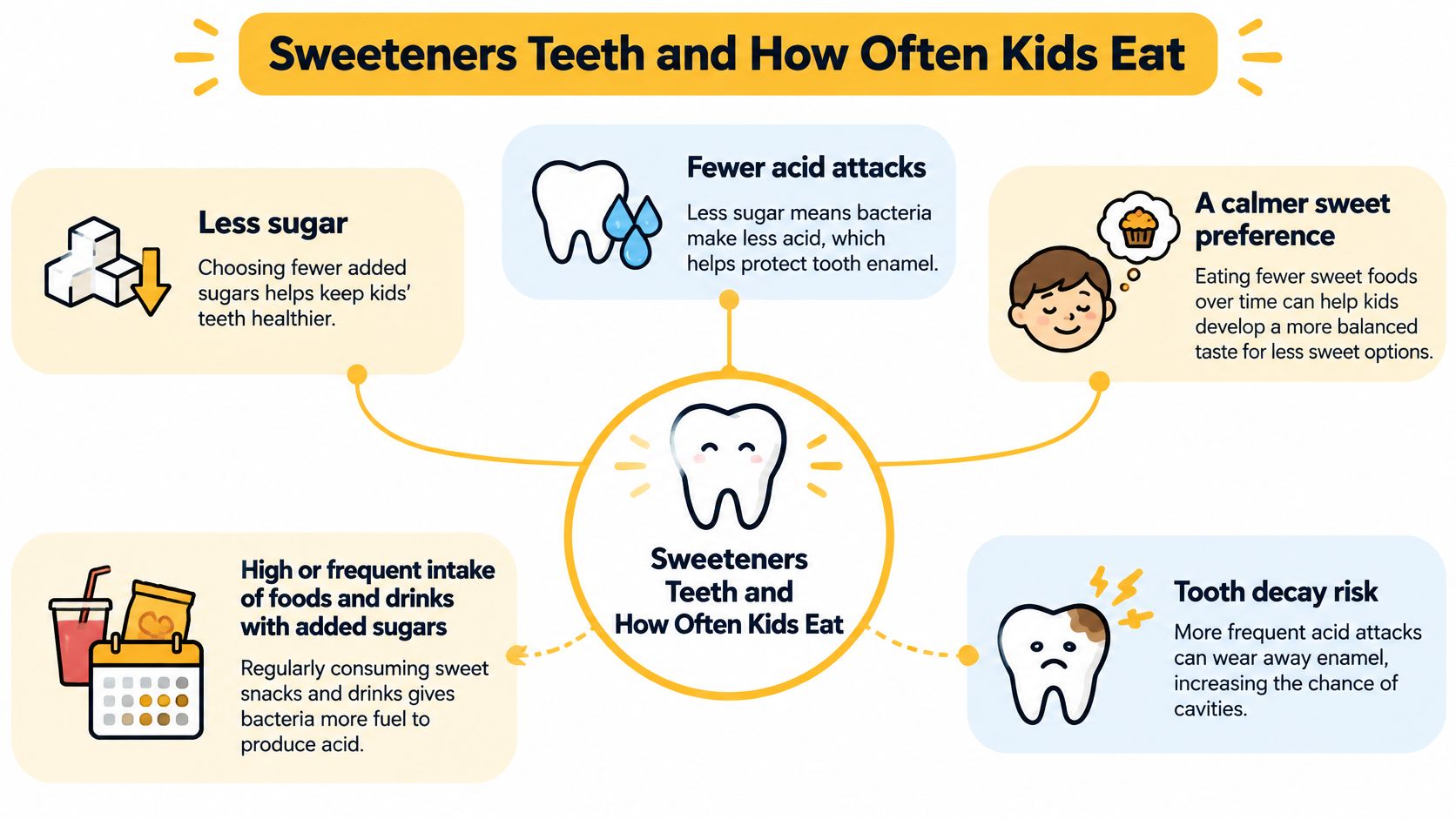
The Australian dietary guidance for educators explains that frequent intake of foods and drinks containing added sugars can contribute to tooth decay, and that sugar-sweetened drinks are associated with excessive weight gain in children. The tooth mechanism is worth understanding. Oral bacteria turn fermentable carbohydrate into acids, so every separate snack or sip between meals gives teeth another acid exposure. Five small sweet moments spread across an afternoon can challenge teeth more than a single serve eaten alongside lunch.
Look beyond the sweetener
Water is a practical routine drink. It has no kilojoules, and its low acidity makes it a better everyday choice for teeth than fruit juice or artificially sweetened soft drinks. Plain milk is another recommended drink for children. Soft drinks, cordials, fruit drinks, energy drinks and sports drinks are best avoided or strongly limited, and continuous sipping is a habit worth changing even when a drink is labelled sugar-free.
Intense sweeteners are additives used in very small quantities because they are many times sweeter than sugar. On a label, you might see stevia, monk fruit or sucralose. Some products use sugar alcohols such as sorbitol instead, which can cause digestive discomfort if a child eats a large amount. The sweetener itself is only one line of the check. Acidity, fibre, saturated fat, sodium, portion size and how often your child eats the food all shape whether it earns a regular spot.
Set a simple pattern: offer snacks at planned times, put water alongside them, and keep discretionary foods for special occasions in small portions. A planned snack that replaces a lolly or a sweetened drink does real work. The same snack added on top of constant sweet grazing just delivers another acid challenge and more kilojoules. The badge matters less than the pattern around it.
A useful boundary: “No added sugar” isn't permission to graze all afternoon.
Homemade Snacks Compared with Shop Packs
A lunchbox works best when the format matches the day. Home prep gives control over ingredients and portions. A shop pack can cover a tight schedule, as long as it passes a label check and still fits a planned snack pattern.
| Format | Sugar control | Time | Best use | Main leftover risk |
|---|---|---|---|---|
| Fruit and plain yoghurt pot made at home | High | About 10 minutes | Fridge morning tea | Fruit carbohydrate; needs a cold pack |
| Weekly oat and seed slices | High | About 30 minutes | Repeated lunchboxes | Sticky texture if very moist |
| Home-packed cheese and crackers | High | About 5 minutes | Ordinary school day | Salt and an over-large serve |
| Packaged no-added-sugar bar | Low | None | Travel or sport day | Concentrates or maltodextrin |
| Sugar-free packaged sweet | Low | None | Rare small treat | Sweet taste and little food-group value |
A fruit and plain yoghurt pot suits a fridge-friendly morning tea, but fruit still contributes carbohydrate and the pot needs to stay cold. Batch-baked oat and seed slices can cover several lunchboxes, though a very moist slice may cling to teeth. Home-packed cheese and crackers travel well on an ordinary school day, so check salt and portion size before packing.
Packaged bars can fill a gap on a travel or sport day when there is no time to assemble a snack. Check the ingredients for fruit concentrates or maltodextrin, and judge the whole packet instead of assuming “no added sugar” makes the bar balanced. Sugar-free packaged sweets sit best as a rare small treat: the sweet taste remains, and they may contribute little from the food groups.
Choose for the day you have
School rules can narrow the options. Check for nut bans, whether the food will last in a warm bag until lunch, and allergen information if someone else packs the lunchbox. For value, compare the cost per serve, since a cheaper multipack can still mean a dear snack.
A simple rule keeps the choice manageable: cook when you will use the same snack several times this week; buy when the day is irregular. The badge helps only when the snack swaps out a sweet item, survives the ingredient list, and arrives at a set time instead of stretching into afternoon grazing. For ideas that accommodate different preferences, browse these lunch ideas for picky eaters.
Pair Snacks and Set This Week's Habit
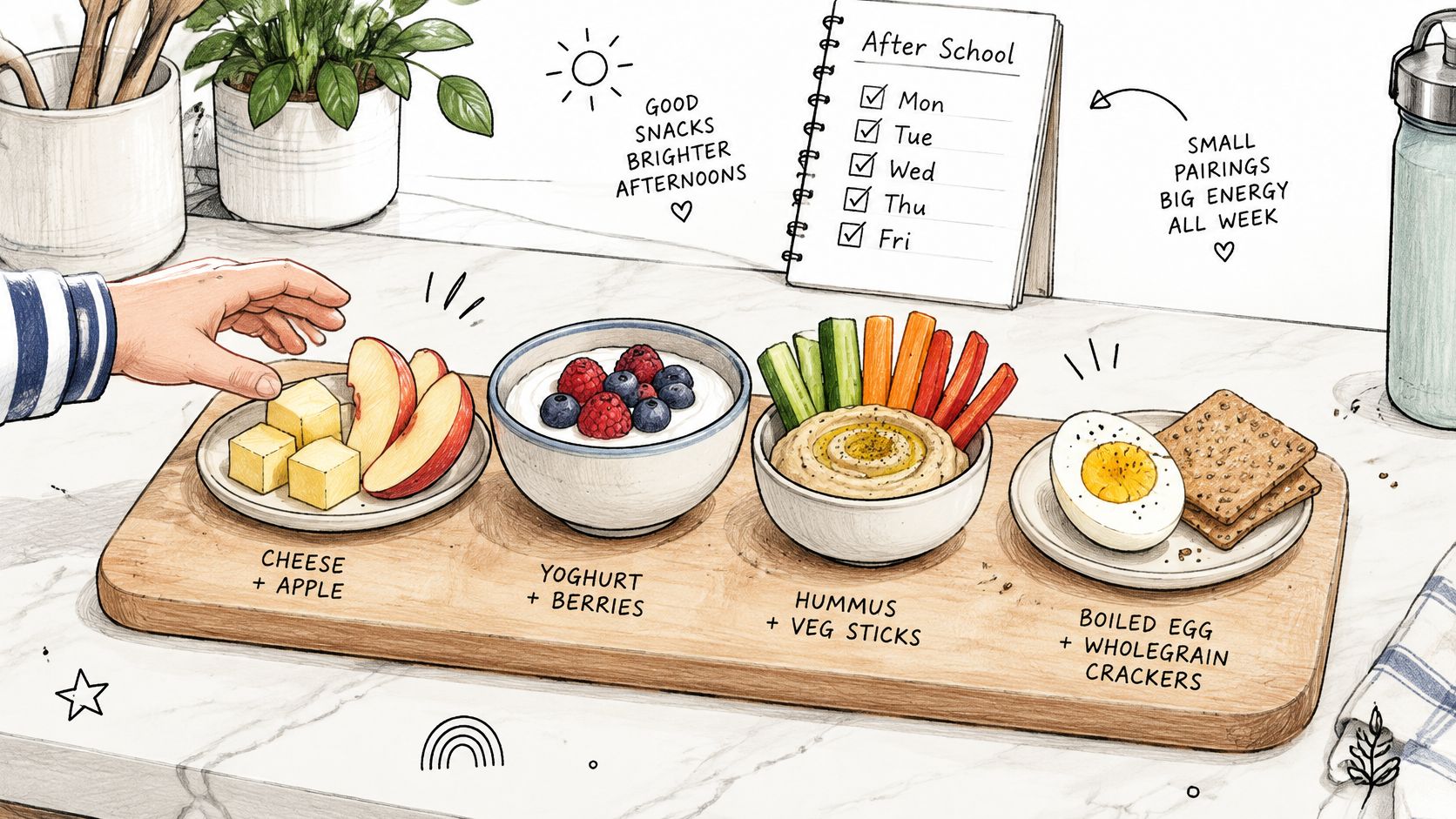
A slice of cheese with apple keeps a child fuller than apple alone. Pairing foods is the simplest upgrade to a snack that already passes the label check: try cheese with apple, plain yoghurt with berries, or hummus with vegetable sticks. A boiled egg with wholegrain crackers works when a child needs something that feels more substantial.
Each pairing brings carbohydrate together with protein or fibre. That combination can hold appetite steady until the next meal, instead of sending a child back to the cupboard twenty minutes later.
Match the pair to the moment
Morning tea can be a useful slot before classwork or homework. Offer a familiar pair, such as yoghurt with berries, rather than a flavoured pouch. After school is the refuelling moment for many families: apple and cheese or vegetable sticks with hummus are easier to manage than a large sweet snack in the car that leaves little appetite for dinner.
The Australian Dietary Guidelines summary connects three goals that often get lumped together: reducing sugar, protecting teeth and shaping children's taste preferences. A sugar-free badge supports those goals only within a planned routine. Without a set time and place, the same snack can become permission to graze, or an expectation of something sweet at every gap.
For a fussy eater, keep the familiar side of the pairing and change only one part at a time. If your child accepts crackers but rejects hummus, start with crackers and cheese, then offer one new vegetable separately. Portions matter too: a low-sugar food can still be eaten in a quantity that spoils appetite for the next meal.
Make a simple plan for the week
- Map the week's gaps. Note which days need a morning tea, lunchbox extra or after-school snack, since not every day calls for all three.
- Name what each will replace. For example, swap the flavoured yoghurt pouch, juice popper or sweet biscuit already in the routine.
- Set up the drink. Make water the default in the drink bottle, and use plain milk when it suits the snack or meal.
- Choose eating times. Set two planned snack occasions that suit your day, then put the chosen food pairs where whoever packs lunch can see them.
- Keep one convenient option. Save a packaged choice for irregular days, but check the ingredients and serve size before adding it to the routine.
For ideas on how food can fit into a child's learning-day routine, read more about food that's healthy for the brain. If your family uses a supplement alongside meals and snacks, keep it separate from the food choices: Focus is a blueberry-flavoured gummy supplement with no sugar, vegan ingredients and no artificial colours or flavours. It isn't a snack replacement; check its ingredients and directions as you would for any product your child takes.
The pickup test is simple: your child reaches the next meal hungry but not frantic, and the snack hasn't become a second round of sweets.
Daily Powers offers children's gummy supplements made without sugar, with vegan ingredients and no artificial colours or flavours. If a simple routine like that would suit your household, visit Daily Powers to explore the range and ingredient information.