

The most popular advice about vitamins for concentration starts in the wrong place: choosing a supplement before asking why a child can't settle. A child struggling with reading might be tired, hungry, worried, finding the task difficult or missing an important nutrient. A gummy can't tell you which. For Australian families, the useful starting question is whether the gap is iron status, food across the school day or the support around learning.
Table of Contents
- What Vitamins Can and Cannot Do for Focus
- Nutrients Tied to Concentration Compared
- When Poor Focus Points to Iron
- Do Healthy Children Need These Vitamins
- Doses Interactions and Safety Limits
- A School Day That Feeds Attention
- Decide on Food a GP Visit or a Habit
What Vitamins Can and Cannot Do for Focus
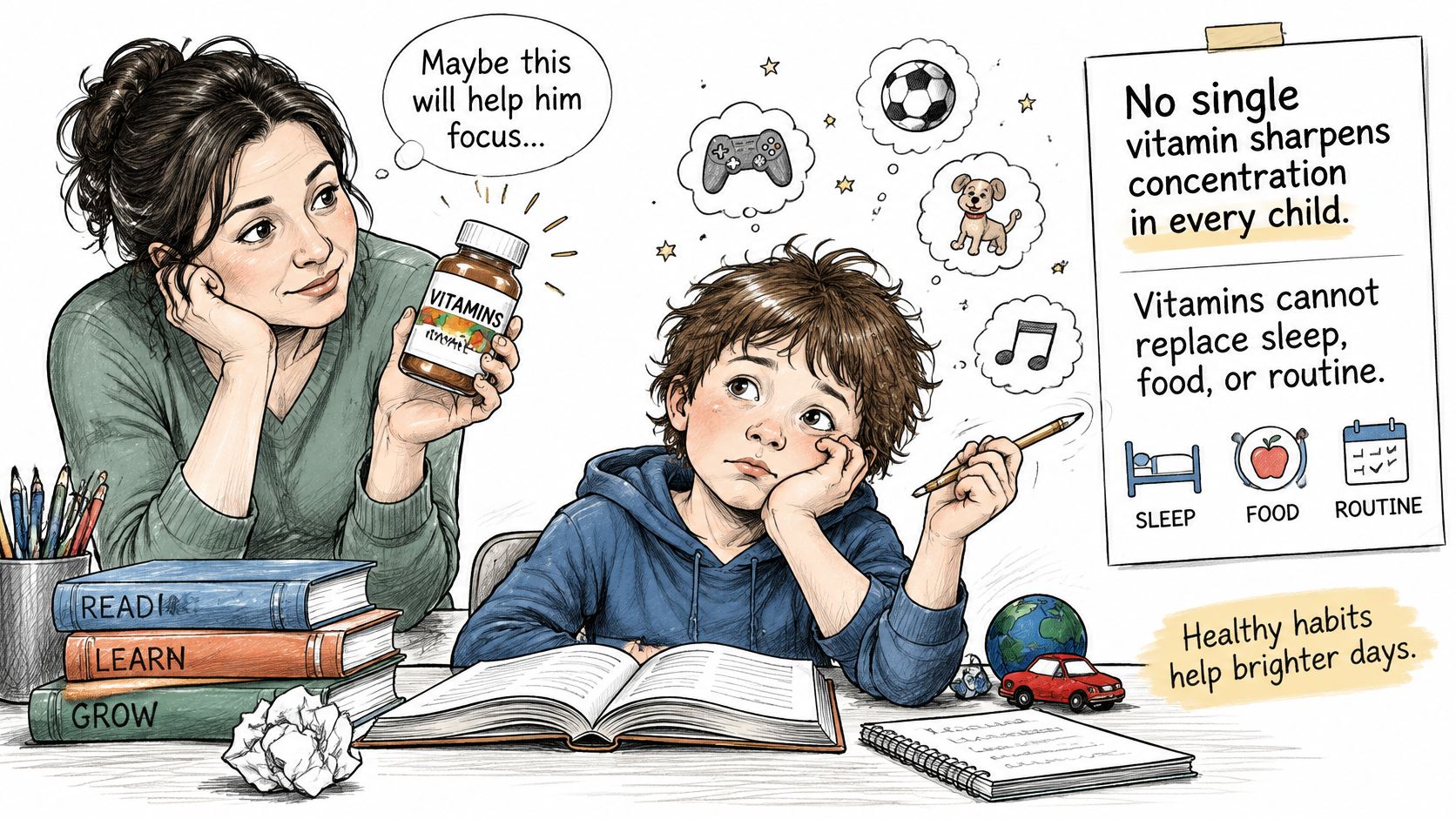
It's a school morning. Your child is staring at a reading page, and you're wondering whether a vitamin could switch their attention on. No single vitamin sharpens concentration in every child. Correcting a nutritional shortfall is different from improving attention in a child who already gets enough.
Think of nutrients as materials for the body's fuel systems and wiring. Sleep, meals, movement and the classroom environment influence how well a child can use those systems. Supplying extra materials doesn't automatically make the whole system work better.
That distinction matters when a difficult homework session sends you shopping.
What Australian intake figures actually tell us
The Australian Bureau of Statistics reported that children aged 2–11 generally had adequate intakes of most vitamins and minerals, with calcium the main exception, while one in eight Australians aged 2 and over had inadequate usual iron intake from food in the 2011–12 Australian Health Survey.
Those are intake estimates, not diagnoses. They don't mean every child needs iron, or that a child with adequate reported intake can never develop a deficiency.
The useful distinction: Meeting a genuine nutrient need supports normal functioning. Adding more after that need is met isn't automatically an attention treatment.
Families often hear about B vitamins, iron, zinc, magnesium, omega-3 fats and vitamin D together. They aren't interchangeable, and some aren't vitamins at all. Persistent fatigue, pallor or a very limited diet deserves a GP assessment, not a stronger version of a general supplement.
Nutrients Tied to Concentration Compared
A child who avoids animal foods may need a reliable source of vitamin B12. Meat, eggs and dairy supply B12, while legumes and leafy vegetables provide folate; these nutrients have different food sources and roles. A plant-based diet alone doesn't show whether B12 intake is adequate. The guide to food sources of vitamin B explains which foods contribute different B vitamins.
| Nutrient | Link to concentration | Evidence in children | Food sources | Supplement rule |
|---|---|---|---|---|
| B vitamins including B6, B12 and folate | Support nerve function, neurotransmitter processes and red blood cell production | Consider dietary gaps rather than assuming extra B vitamins improve attention | Meat, eggs, dairy, legumes and fortified cereals, with different foods supplying different B vitamins | Vegan children need a reliable B12 plan; address identified gaps rather than a focus score |
| Iron | Supports oxygen delivery and brain function | Deficiency can contribute to fatigue and poor concentration | Lean meat, poultry, fish, legumes, tofu and fortified cereals | Use supplemental iron after professional assessment |
| Zinc | Found in brain tissue and involved in normal body functions | Meat, shellfish, legumes, nuts and seeds can contribute zinc to a child's diet | Meat, shellfish, legumes, nuts and seeds | Check overlapping ingredients before adding a separate product |
| Magnesium | Involved in nerve and muscle function | A relaxation claim doesn't establish a homework benefit | Leafy greens, legumes, nuts, seeds and dairy | Address a shortfall with professional advice |
| Omega-3 including DHA and EPA | Provides fats used in brain cell membranes | A biological role doesn't establish a reliable attention benefit from supplements | Oily fish such as salmon and sardines | Discuss restricted fish intake rather than choosing a high-dose oil for school performance |
| Vitamin D | Supports general development | Not a general concentration supplement for healthy children | Oily fish and fortified foods; sunlight exposure also affects status | Higher-risk children need individual advice |
Food exclusions can change which nutrients need attention. For a vegan child, check that fortified foods or an appropriate supplement plan provide B12. A child avoiding several food groups may benefit from a dietary review to identify specific gaps.
Zinc and magnesium appear in products promoted for thinking, calmness or sleep. Consider the outcome being addressed: settling more easily at bedtime and sustaining attention during reading are different concerns. Food sources such as legumes, nuts and seeds can contribute zinc, while leafy greens, legumes, nuts, seeds and dairy provide magnesium.
Choose fish at dinner as a food option; consider concentrated fish oil separately, especially if a child eats little fish. A nutrient's role in brain-cell membranes alone doesn't show that a supplement will improve classroom attention.
- If tiredness and pallor are present: Arrange an assessment for possible iron problems.
- If food exclusions are the concern: Identify which nutrients those exclusions may affect.
- If the child eats broadly: Look at when concentration difficulties occur, the task involved and the daily routine before buying a supplement.
A specific food or professional assessment may be more useful than choosing a product by the length of its ingredient list.
When Poor Focus Points to Iron
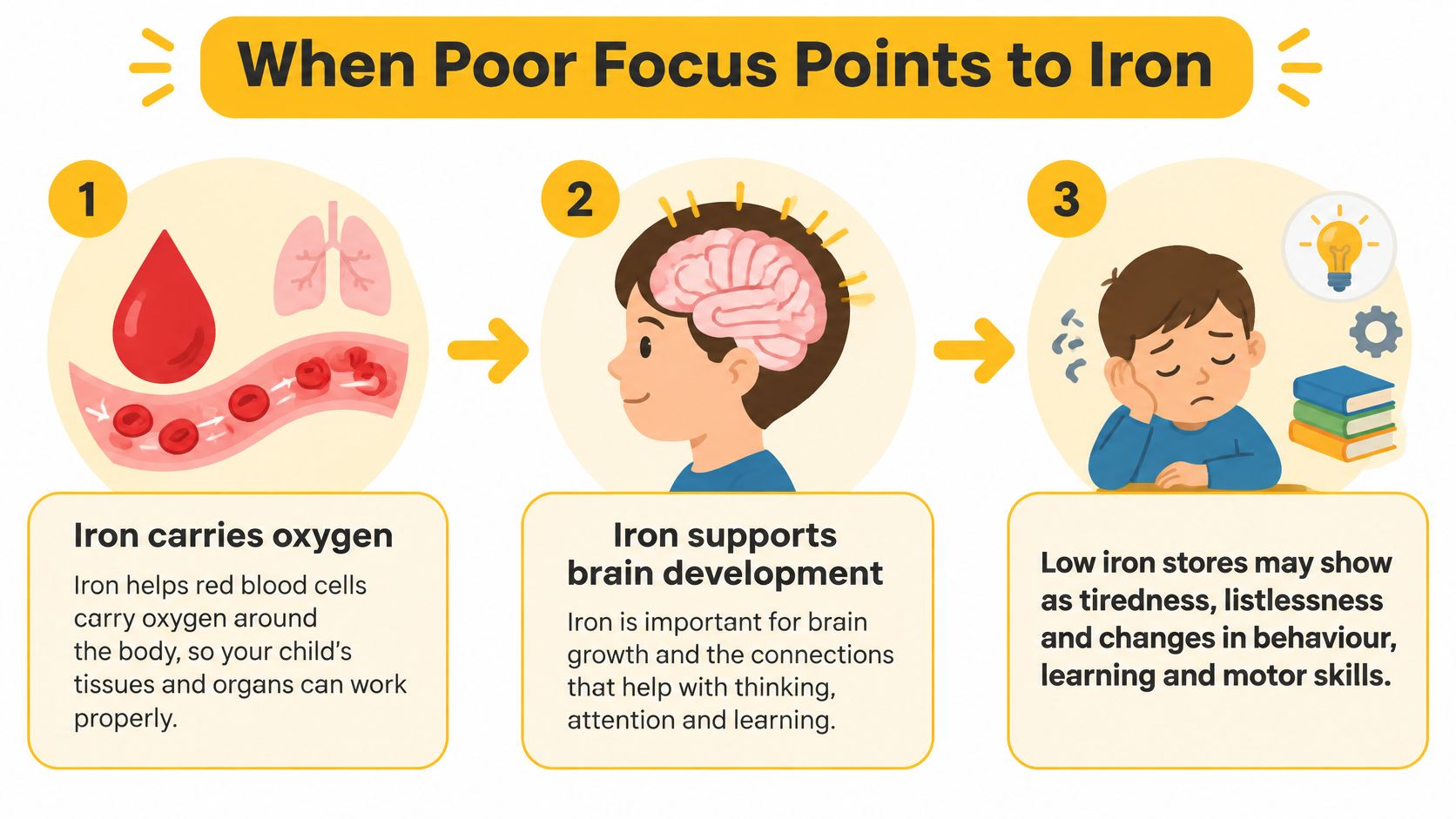
Iron helps carry oxygen around the body and supports brain function. When iron is inadequate, a child may look tired or listless, with changes in behaviour, learning or motor development. That doesn't produce a distinctive pattern that caregivers can reliably diagnose at home.
The Australian Institute of Health and Welfare's nutrition summary indicates that approximately one in ten Australian girls aged 4–8 and one in five girls aged 9–11 have inadequate iron intake. These figures identify groups worth paying attention to, not children who automatically need treatment.
This visual connects iron's normal jobs with the signs that can prompt an assessment.
Read the whole pattern, not a single symptom
A child who eats little meat or legumes, drinks milk in place of meals and has become unusually tired needs a different response from a child who struggles only with a particular worksheet. Neither pattern proves its cause. Diet history and the circumstances around the difficulty help a clinician decide what to investigate.
School food is worth examining closely. A nationally representative analysis of Australian children's school-hour eating found that children aged 5–12 consumed about 32% of their daily iron during school hours, while 44% of school-hour energy came from discretionary foods.
Concentration clues and the next step
| What you notice | Possible driver to consider | Next step |
|---|---|---|
| Pale, often tired, poor appetite | Possible iron shortfall or another health problem | GP assessment; don't start high-dose iron |
| Little meat or legumes, or a diet mostly of milk | Risk of inadequate iron and other nutrients | GP or paediatric dietitian, alongside suitable iron foods |
| Fades after a biscuit-heavy lunch | Hunger or an unbalanced school meal | Add a substantial food, including an iron source and vitamin C produce |
| Short sleep and big evening feelings | Insufficient or disrupted sleep | Review bedtime and wind-down |
| Eats widely, sleeps well, still off-task at school | Learning difficulty, stress or classroom needs | Seek teacher input and appropriate assessment |
What to do while waiting for advice
Offer familiar iron foods without turning meals into a test. Lean meat, poultry, fish, tofu, legumes and fortified foods can all contribute. Pair plant iron sources with vitamin-C-rich foods, such as capsicum, citrus or berries, to support absorption.
Bring the GP a description of accepted foods, milk intake, tiredness, sleep, appetite and any gastrointestinal symptoms. For an older child, heavy menstrual loss is also relevant. The GP can decide whether examination or blood testing is appropriate, while a paediatric dietitian can help make restricted eating more nutritionally complete.
For a further explanation alongside professional advice, the following video may be useful.
Don't use an iron trial as a home diagnostic test. Unnecessary iron can be harmful, and a general multivitamin neither confirms nor rules out deficiency.
Do Healthy Children Need These Vitamins
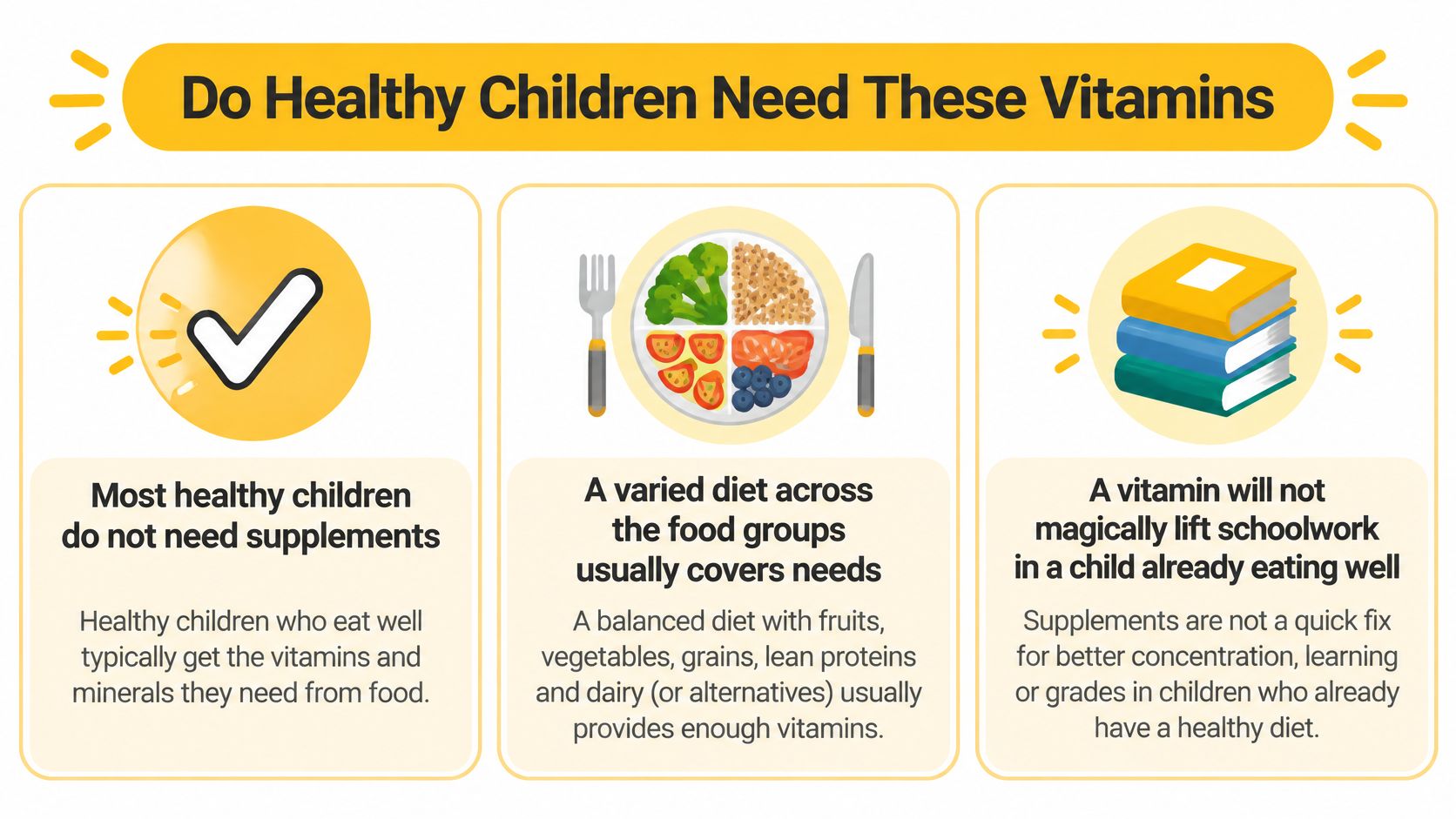
A child can eat a varied diet and still struggle to concentrate. That difficulty alone doesn't show that a vitamin is missing, or that a supplement will improve schoolwork. For healthy children who eat a varied diet, supplements are generally not needed, according to the University of Sydney's explanation of children's vitamin supplements. The article also explains why routine vitamin D testing isn't recommended for healthy children and why supplementation should reflect relevant risk.
Measure what you want to change
“Better focus” can mean different things at home and school. Starting homework without repeated prompts differs from reading accurately, sitting still or coping with frustration. Record one or two specific behaviours so you can tell whether they change.
Use the same kinds of tasks and similar conditions during a short observation period. This scorecard can organise what you notice. It cannot diagnose a deficiency or prove that a product works.
| What to record | A useful observation |
|---|---|
| Time on task | How long the child works before needing help or redirection |
| Teacher feedback | Whether the difficulty occurs across subjects or in particular situations |
| Sleep | Bedtime, settling and morning tiredness |
| Appetite | Meals eaten, skipped food and changes in hunger |
| Unwanted effects | Tummy discomfort, altered sleep or behaviour changes after something new |
A specific note, such as “needed help understanding the instructions,” gives a teacher or clinician more to respond to than “poor focus today.”
Convenience isn't evidence of effectiveness
A gummy may be easier for a child to take than a tablet, and a sugar-free product may suit a family's preferences. Neither feature shows that its ingredients improve attention. An enjoyable daily routine is not the same as treatment.
A supplement is not an ADHD treatment, and a response to a supplement is not an ADHD assessment.
If concentration difficulties persist, affect learning or cause distress, speak with the teacher and GP rather than waiting for vitamins to work. If the observations remain unchanged and there are no health warning signs, try a concrete adjustment, such as changing the homework environment or meal timing. Adding another product can make it harder to identify what your child needs.
Doses Interactions and Safety Limits
A label can show several amounts for the same ingredient. Check whether each figure describes one gummy or the full recommended serving, then confirm the unit and nutrient form before comparing products.
| Nutrient | Ages 4 to 8 | Ages 9 to 13 | Caregiver rule |
|---|---|---|---|
| Iron | Assess total diet and individual need | Assess total diet and individual need | Use supplemental iron only after a GP or other health professional has assessed the child |
| Zinc | Review food coverage and existing products | Review food coverage and existing products | Check for zinc in other products before adding a separate supplement |
| Magnesium | Prioritise food sources | Prioritise food sources | Check the label and other products for overlapping magnesium |
| Vitamin D | Assess risk rather than concentration | Assess risk rather than concentration | Seek individual advice for children with higher risk |
| Omega-3 | Include suitable fish meals where accepted | Include suitable fish meals where accepted | Discuss concentrated fish-oil products with a clinician if the child takes regular medication or has a bleeding disorder |
Check the amount per serving
For example, if a label says a serving is two gummies, read the nutrient amounts listed for that serving rather than treating each figure as the amount in one gummy. Check whether the label uses milligrams (mg) or micrograms (μg). These units are not interchangeable. Also check whether an amount refers to the nutrient itself or to a compound that contains it.
Set out all products the child takes, including multivitamins, mineral gummies and prescribed supplements. Products sold for different purposes can still contain the same nutrients. Ask a pharmacist or GP to review possible overlap or interactions with medicines. Paediatric dosing guidance for children can help you prepare questions; individual treatment instructions should come from the child's clinician.
Check the product's age directions, stated serving and intended use. Adult products are not a substitute for a child-specific recommendation, and a general gummy should not replace a clinician-selected treatment.
Keep treatment timing individual
Beans on toast with capsicum strips or fruit is one way to pair plant iron with vitamin C in a meal. For prescribed iron, ask a pharmacist how to time the dose around meals, milk, other supplements and medicines. Don't change the schedule or combine products based on general advice.
Household safety rule: Keep supplements locked away and out of sight, even when they look and taste like sweets.
Don't double a missed serving. If a child develops vomiting, a rash or worsening symptoms after taking a product, stop it and seek advice. Suspected accidental iron ingestion needs urgent poison advice or emergency care, even if the child initially seems well.
A School Day That Feeds Attention
Consider a typical Tuesday for a primary-school child who fades after lunch. The aim isn't to construct a perfect menu. It's to find the point where the day becomes difficult and make a workable change.
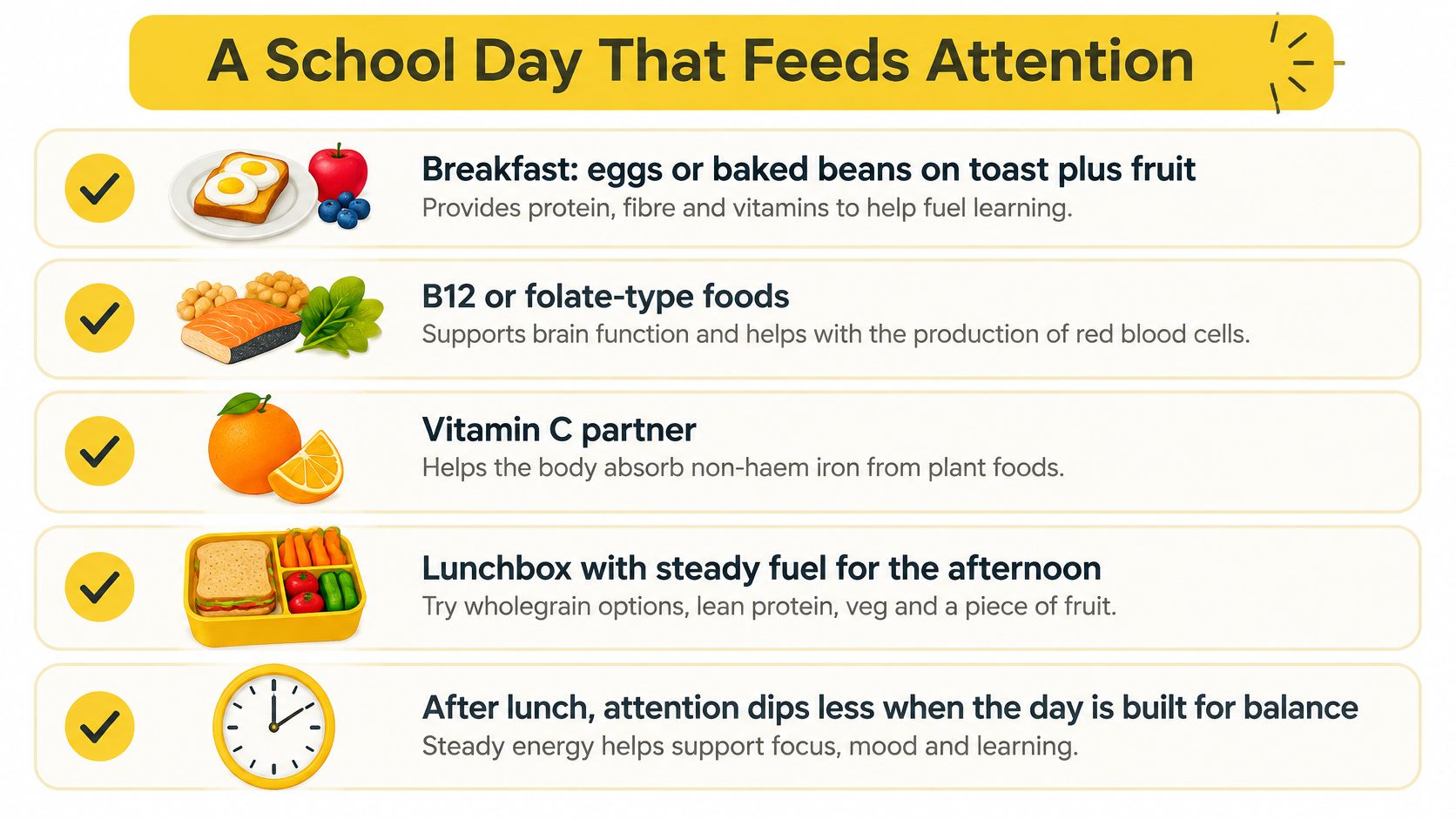
At breakfast, offer eggs or baked beans on toast with fruit. Eggs contribute B12, while beans contribute folate and plant iron. Use a food the child accepts, and leave enough time to eat rather than making breakfast another rushed instruction.
This checklist shows how meals and routine can fit together without centring the day on supplements.
Pack for the afternoon, not just the lunchbox
For lunch, try a chicken, beef or tofu roll, capsicum strips and yoghurt. Keep portions manageable and ask what gets eaten. A nutritionally balanced lunch that returns untouched doesn't help the afternoon.
If the child prefers foods separately, pack the filling, bread and vegetables in different compartments. Biscuits don't need to become forbidden, but they shouldn't replace the substantial part of lunch. Our guide to foods for a healthy brain offers another way to think about food variety.
After school, offer water and a snack before asking for homework. Allow outdoor play or another movement break, then choose a manageable task. A child who needs help getting started may benefit from an adult reading the instructions with them, rather than repeated reminders to concentrate.
Finish with dinner and a predictable evening
Rotate familiar protein foods at dinner, including fish where accepted or lentils and other legumes. A vegan household needs a deliberate B12 plan through appropriate fortified foods and professional guidance. Don't assume a varied plant-based dinner automatically covers it.
Keep the evening predictable rather than introducing a new product after a difficult day. If the child accepts almost no protein foods and few other foods, arrange dietary support. If they eat broadly and seem rested but consistently struggle with classroom tasks, ask the teacher about learning demands and support.
Use a simple checklist for the school week:
- Breakfast eaten: Record what the child managed.
- Lunch substance: Include an accepted iron-containing food.
- Water available: Check that the bottle is accessible and used.
- Evening settled: Keep the bedtime routine consistent.
These observations help identify practical barriers. They aren't a promise that attention will improve immediately, or a judgement on a caregiver whose child finds eating difficult.
Decide on Food a GP Visit or a Habit
Choose the next step according to the child's pattern, not the promise on a bottle. Food and routine, clinical assessment and an optional household cue are different decisions. They shouldn't be treated as competing versions of the same solution.
Make the next step match the concern
- Choose food and routine when skipped meals, an uneaten lunch or disrupted evenings explain when difficulties appear. Make a manageable change and record what happens.
- Choose a GP visit when pallor, ongoing tiredness, poor appetite, a very narrow diet or developmental concerns are present. Ask whether a paediatric dietitian should also review intake.
- Consider an optional habit cue only after checking nutritional needs, safety and the reason attention is difficult. A product name doesn't establish effectiveness for an individual child.
For families considering that last option, our Focus is a sugar-free, vegan children's gummy containing mushroom polysaccharides, vitamin D3, zinc, elderberry and prebiotics. We position it for children needing extra help concentrating at school and recommend consistent daily use for at least 30 days before judging the intended benefits. That is our product guidance, not proof of a concentration improvement or a reason to delay assessment.
Judge any optional product against observable changes and unwanted effects, not enthusiasm for the flavour. Have overlapping ingredients checked before adding it to an existing supplement.
This week, inspect the lunchbox, make bedtime more predictable and book a GP appointment if the health clues apply. The right first step answers a specific concern.
We offer sugar-free, vegan children's gummies designed to fit into repeatable daily routines, with ingredient information to help caregivers make an informed choice. Visit Daily Powers to review the range and usage guidance, and discuss suitability with your child's health professional before adding a supplement.