

It's 4.30 pm, the homework sheet is open, and your child has sharpened three pencils, asked for a snack, and remembered something urgent about a sock. You're not looking for perfection. You're wondering, quite reasonably, whether nutrition is part of what's making concentration feel so hard today.
Table of Contents
- Why Parents Ask About Focus Vitamins
- What Australian Nutrition Data Really Shows
- Key Nutrients That Support Concentration
- When a Supplement Is Worth Considering
- Safe Dosing and How to Read Labels
- Building a Daily Routine That Works
- Common Misconceptions About Focus Vitamins
- Frequently Asked Questions
Why Parents Ask About Focus Vitamins
That after school scene is familiar in many Australian homes. A child who can focus for ages on building, drawing, or a favourite game may drift within minutes of sitting down to maths. Parents then search for vitamins to help kids focus, hoping there's a simple gap they can fill.
The question makes sense because food does affect how children feel and function. A child who skipped breakfast, slept poorly, or hasn't moved much all day will often find sustained attention harder. Nutrition sits alongside sleep, routine, screen habits, emotional state, and normal development, rather than operating as a separate switch for concentration.
Why the Answer Is Rarely One Nutrient
Think of attention like a classroom with many things happening at once. The brain needs energy, oxygen, and chemical messengers, but your child also needs a task that feels manageable and an environment that isn't competing for their attention. If one part of that system is under strain, adding a single vitamin won't automatically fix the whole picture.
That's where confusion often starts. Product labels group very different ingredients together under words like focus, learning, or brain support. A multivitamin, iron, magnesium, zinc, and omega-3 don't do the same job, and they shouldn't be treated as interchangeable.
- Ordinary distractibility: Your child is tired, hungry, bored, or overstimulated, and attention improves after food, rest, movement, or a break.
- A possible nutritional gap: Your child avoids whole food groups, follows a restricted diet, or has a clinician identified deficiency.
- A concern needing assessment: Inattention is persistent, affects learning or daily life, or comes with impulsivity, sleep problems, or emotional difficulties.
Poor concentration is a signal to look more closely, not a diagnosis of a vitamin deficiency.
Keeping those categories separate protects you from two unhelpful extremes. You don't need to dismiss nutrition, and you don't need to assume every wobbly homework session requires a supplement. The practical path is to check the foundations first, understand what each nutrient does, and use a supplement only where it fits your child's eating pattern, age, and professional advice. That balanced approach gives you something more useful than a yes or no answer. It gives you a way to decide.
What Australian Nutrition Data Really Shows
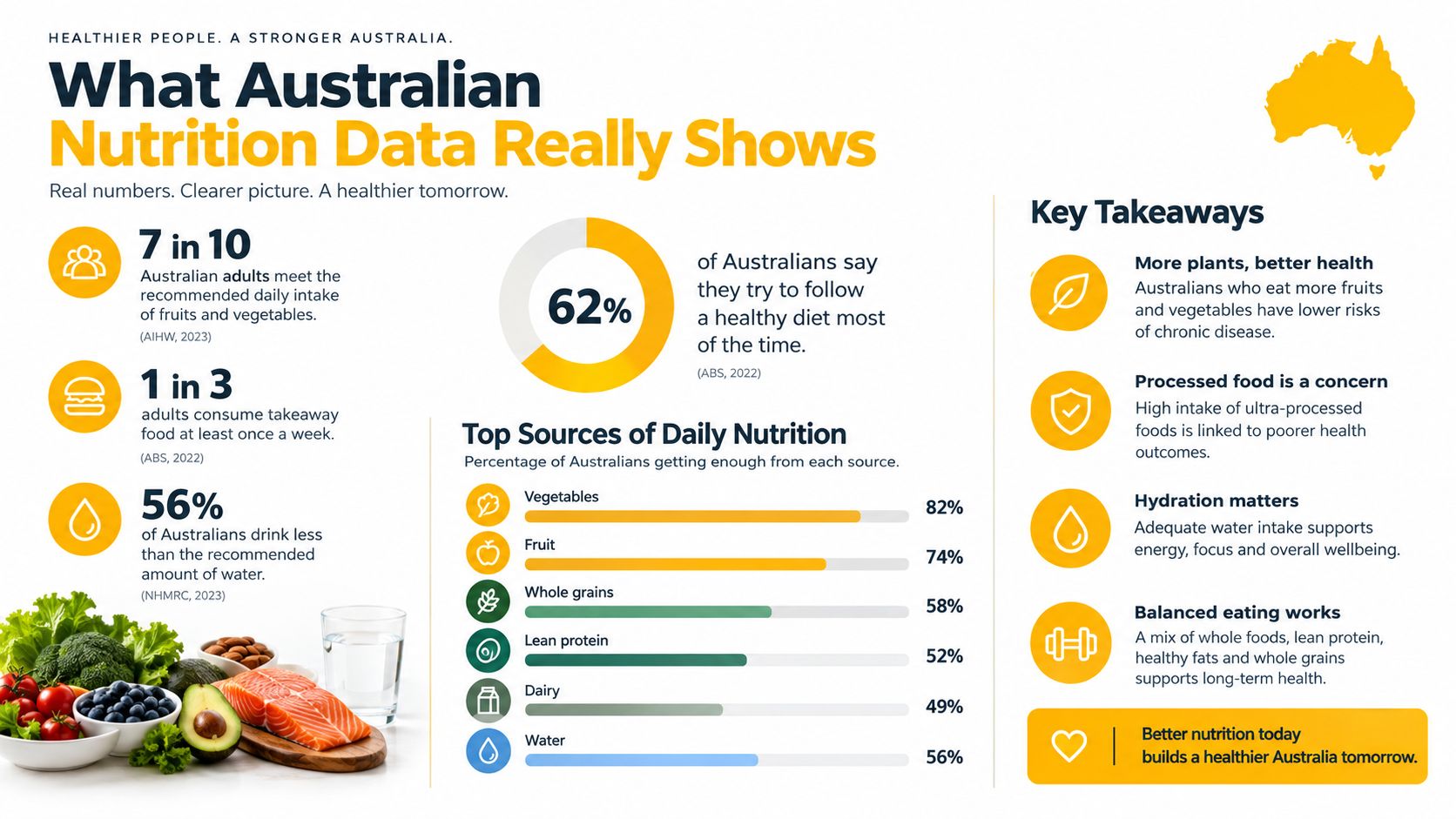
Australian data gives parents a calmer starting point than marketing claims do. The Australian Bureau of Statistics 2023 National Nutrition and Physical Activity Survey on usual nutrient intakes found that children aged 2 to 11 generally had adequate intakes of most vitamins and minerals, but calcium was a notable exception.
That finding matters because it changes the likely story. For many well nourished children, routine supplementation isn't correcting a proven shortfall. It's adding nutrients on top of an already adequate diet, and Australian evidence doesn't establish that doing so alone improves focus.
Where Gaps Do Appear
The same national picture isn't perfect for every nutrient or every age group. Across everyone aged 2 years and over, 22.9%, approximately 5.7 million people, had an inadequate vitamin A intake from food and beverages, while among children aged 2 to 17 the rate was 14.8%, compared with 25.0% among adults, according to the survey linked above. Calcium was a broader concern, with 63.7% of Australians aged 2 and over, about 15.7 million people, having inadequate calcium intake in that data set.
Earlier national data for school aged children also showed that calcium and iron could be exceptions even when most other requirements were met. For families, the useful lesson isn't to buy one product for every possible gap. It's to look at your child's actual pattern of eating over weeks, not one beige dinner.
What This Means for Concentration
Attention difficulties are common enough that parents shouldn't feel they're overreacting by asking questions. They also shouldn't automatically be attributed to missing vitamins. A child can eat well and still struggle to concentrate because of sleep, anxiety, learning needs, hearing or vision issues, or a developmental condition that needs proper assessment.
A helpful way to use the data is as a sorting tool:
- Varied diet, growing well: Start with sleep, breakfast, movement, and homework routines before assuming a supplement is needed.
- Restricted or very selective diet: Ask a GP or accredited practising dietitian to review likely gaps.
- Persistent functional problems: Seek assessment rather than trialling product after product.
A balanced diet remains the foundation. Supplements make most sense when they're aimed at a specific, plausible shortfall, not when they're used as a guaranteed concentration booster.
Key Nutrients That Support Concentration
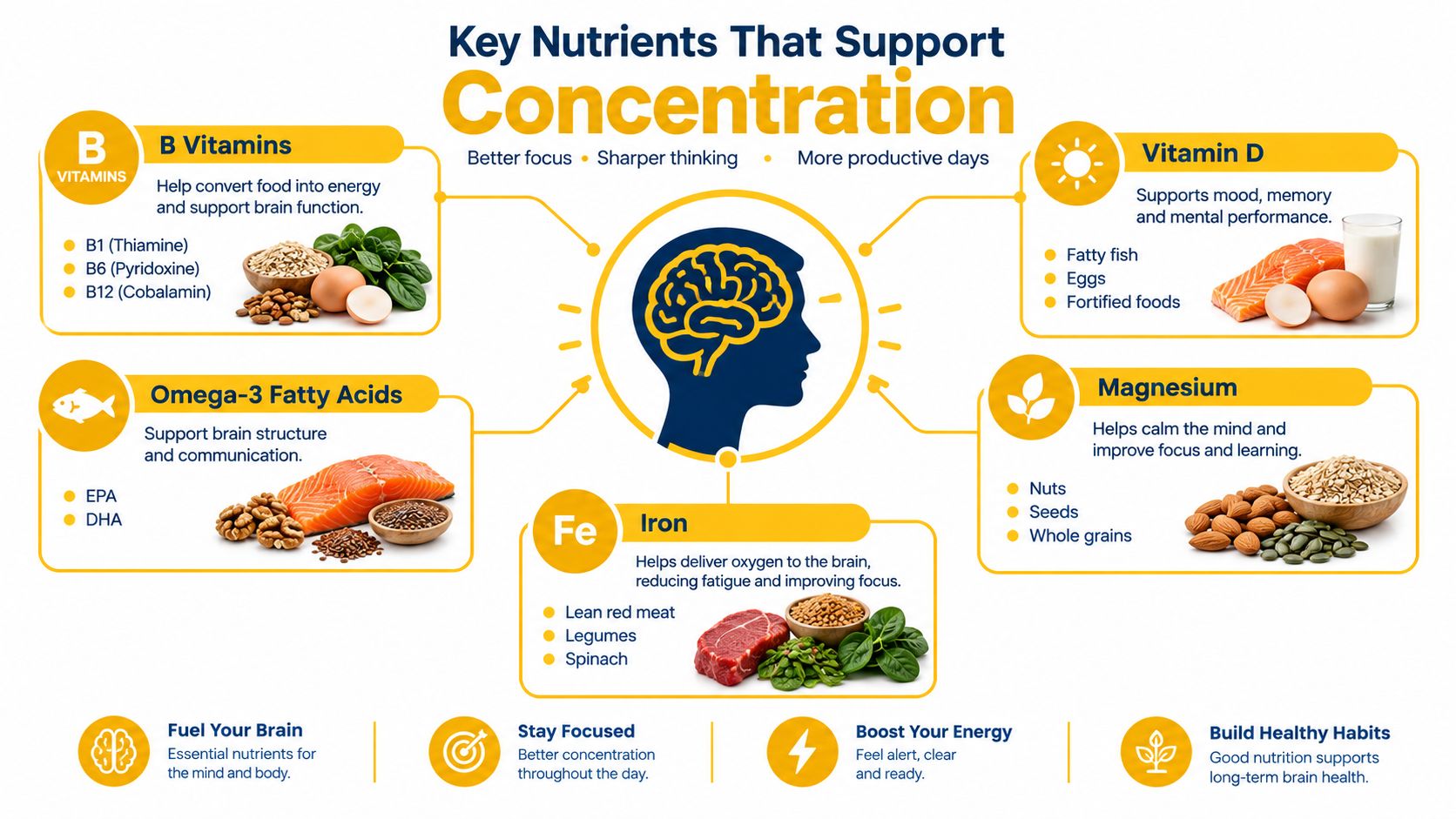
Nutrients support the systems attention depends on, but they work more like a team than solo performers. Understanding each role helps you judge whether food, testing, or professional advice should come before a product.
The visual below groups the nutrients parents ask about most often.
Iron Helps Deliver Oxygen
Iron is like a fleet of delivery trucks carrying oxygen around the body, including to the brain. When iron is low, learning, memory, and concentration can suffer, which is why deficiency deserves medical attention rather than guesswork.
The Australian Nutrient Reference Values for iron set the recommended dietary intake at 10 mg per day for children aged 4 to 8 years and 8 mg per day for ages 9 to 13 years for both sexes, rising to 15 mg per day for girls aged 14 to 18 because of menstrual losses.
Food sources include red meat, legumes, tofu, eggs, and iron fortified cereals, ideally paired with vitamin C rich foods such as capsicum, citrus, or berries. Don't start iron just because your child seems distracted, since excess iron can be harmful and a clinician may first check dietary history, a full blood count, and ferritin.
Zinc and Magnesium Support Everyday Brain Work
Zinc and magnesium help with enzyme activity, neurotransmission, energy metabolism, and cellular signalling. If intake is inadequate, fatigue, mood, or cognitive performance may plausibly be affected, but that doesn't prove extra amounts sharpen focus in a child who's already meeting their needs.
For context, the NHMRC nutrient reference dietary intakes summary lists 4 mg per day of zinc and 130 mg per day of magnesium for ages 4 to 8, and 6 mg per day of zinc and 240 mg per day of magnesium for ages 9 to 13.
| Nutrient | Everyday food ideas |
|---|---|
| Zinc | Meat, dairy foods, legumes, whole grains, seeds |
| Magnesium | Whole grains, legumes, nuts or seeds where age appropriate, leafy greens |
| Omega-3 fats | Oily fish, or plant sources discussed with a dietitian |
Parents exploring omega-3s often also read about DHA for kids and its role in children's nutrition, while remembering that associations with attention aren't the same as proof that a supplement treats inattention. B vitamins and vitamin D also support normal development and energy processes, but they're best assessed as part of overall dietary adequacy.
This short video offers another plain language walk through of brain supporting nutrients before you apply the ideas at home.
When a Supplement Is Worth Considering
A supplement is most defensible when you can name the gap you're trying to address. It's less convincing when the only reason is a hard week at the homework table.
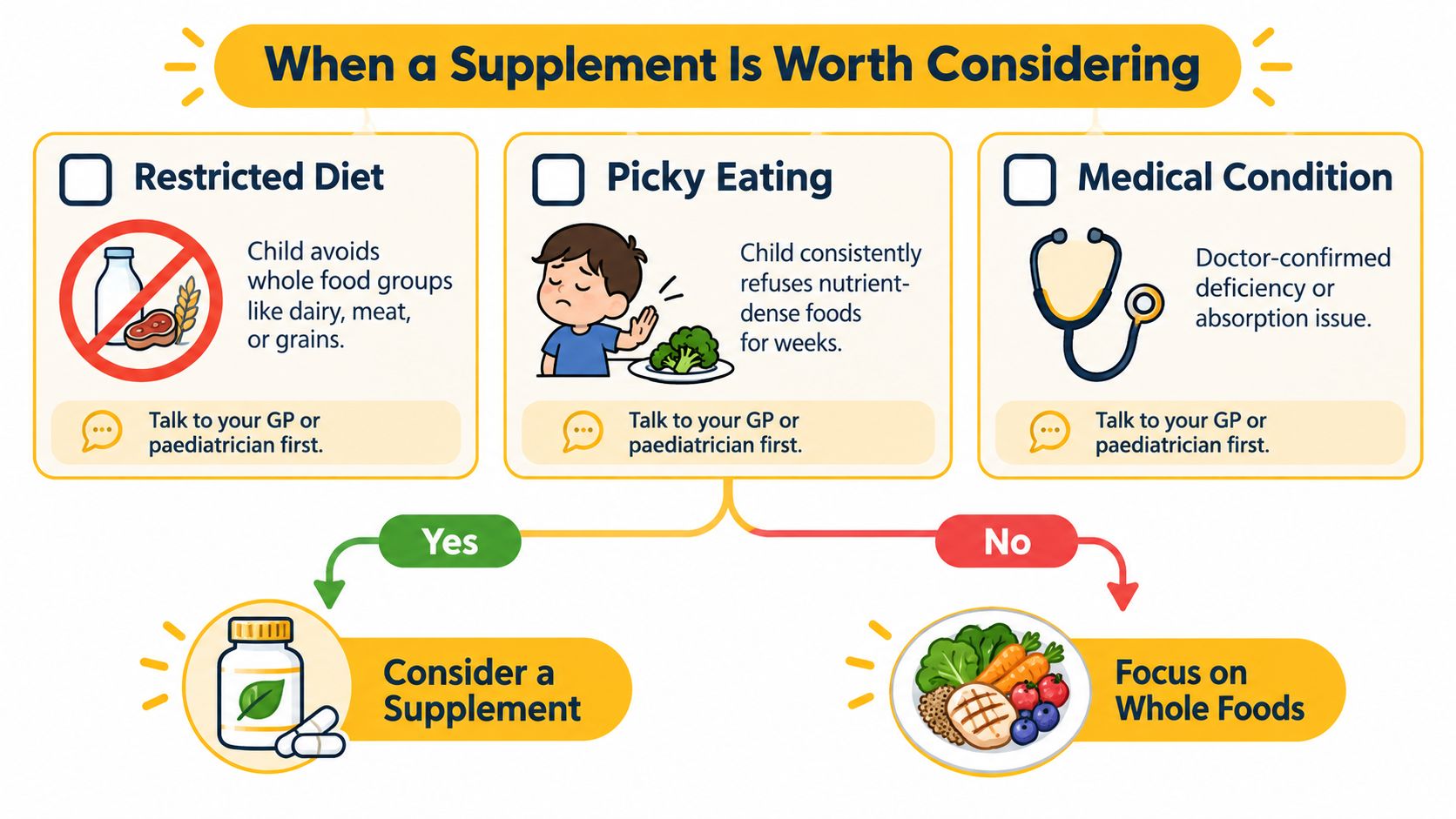
Use the decision guide below as a prompt for reflection, not as a substitute for medical or dietetic advice.
Two Very Different Situations
Consider a child who eats meat, dairy or fortified alternatives, grains, fruit, and vegetables across the week, but loses focus after a late night. Compare that with a child who avoids whole food groups, drinks large amounts of milk instead of eating varied meals, follows a vegan diet without planning, or has gastrointestinal disease. The second child has clearer nutritional risk and deserves a professional review first.
Australian guidance discussed by Better Health Channel on ADHD therapies and dietary approaches supports that distinction, because dietary changes aren't routinely recommended as ADHD treatment and supplements shouldn't replace assessment or established supports. More ingredients don't necessarily mean more concentration support.
Questions to Ask Before You Buy
- Diet range: Does your child regularly miss entire food groups, or is this a short picky phase within an otherwise varied diet?
- Duration and impact: Has poor concentration persisted across settings and started affecting learning, friendships, or family life?
- Other explanations: Could sleep, screens late at night, hunger, stress, vision, hearing, or an unsuitable homework setup be involved?
- Professional input: Has a GP, paediatrician, pharmacist, or dietitian reviewed growth, diet, medicines, and possible deficiency risk?
Practical rule: Correcting a genuine shortfall is more plausible than layering a broad supplement over an already adequate diet.
Some families who've worked through those questions choose a simple daily multivitamin gummy such as Brave, which is described as a vegan friendly daily multivitamin gummy with no artificial colours or flavours and a routine based ritual for children. Treat that kind of product as nutritional support within a broader plan, not as evidence that your child was deficient or as a replacement for assessment when concerns persist.
Safe Dosing and How to Read Labels
Safety deserves as much attention as ingredients, especially with gummies that look and taste like lollies. Australian poisons centre data found that toddlers aged 1 to 4 accounted for 41.5% of reported vitamin and mineral supplement exposure cases, representing 4,546 cases in the study period, as reported in the British Journal of Nutrition analysis of Australian poisons centre supplement exposures.
That doesn't mean children's products can't be used safely. It means storage and supervision aren't optional details.
A Label Check You Can Do in Two Minutes
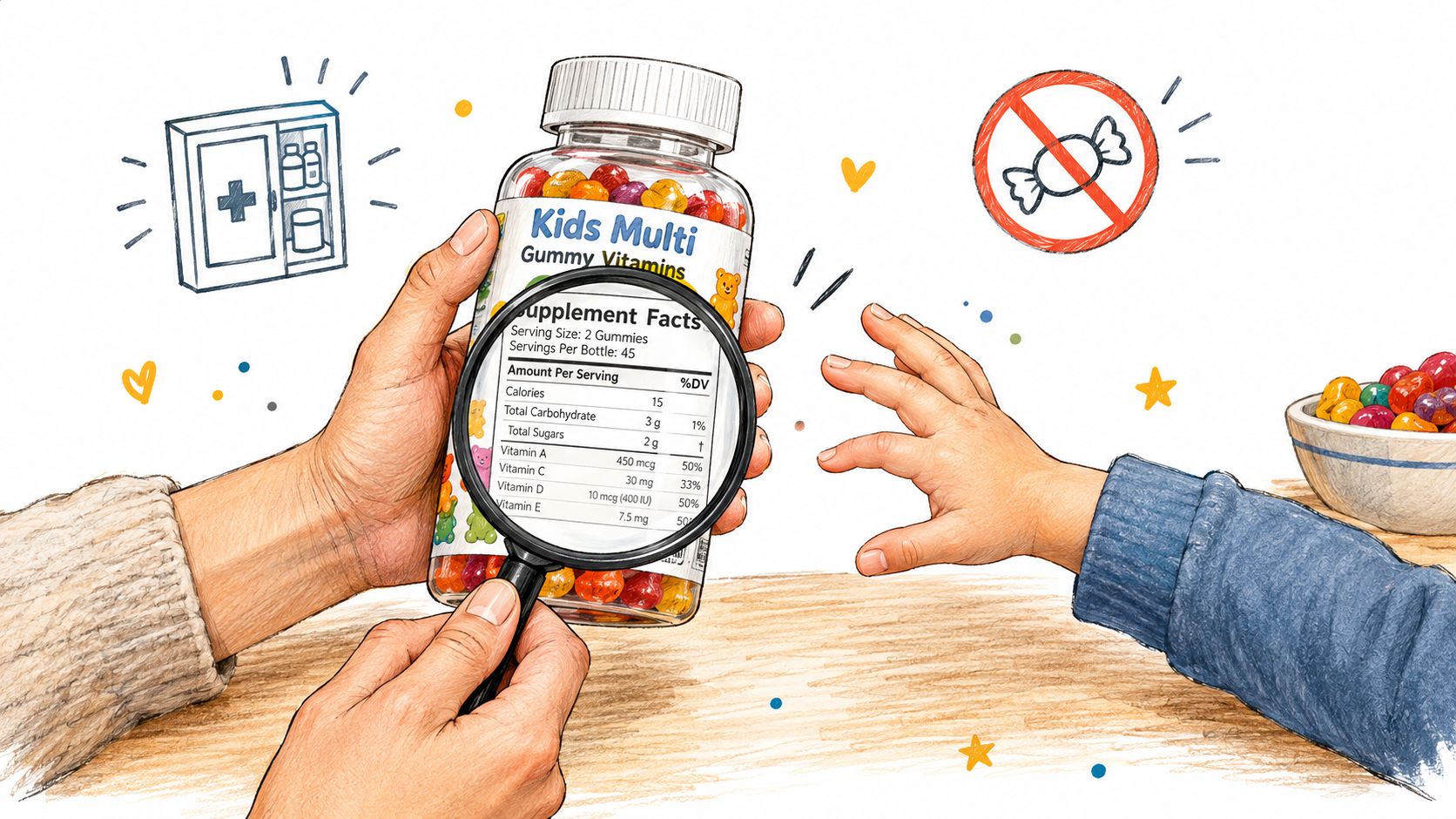
Start with the age range and serving size, then compare each nutrient amount with the Australian recommended dietary intake for your child's age. Check what's already coming from fortified foods and any other supplements, because duplicate iron, zinc, magnesium, or vitamin A can stack up.
- Confirm the child dose: Never give an adult supplement or double a dose to catch up after a missed day.
- Scan for overlap: Line up every multivitamin, focus, energy, and immune product in the house and compare ingredient panels.
- Check warnings: Look for allergens, swallowing guidance, medicine interactions, and instructions to seek professional advice.
- Ask before combining: A pharmacist can help you review totals and upper limits, and resources on paediatric dosing guidelines for children can support that conversation.
Storage and Regulatory Reality
Store gummies locked away and out of sight, keep them in their original container, and teach children that they're medicines given by an adult. Convenience helps routines stick, but easy access also raises the risk of unsupervised repeat dosing.
Parents also need a clear view of regulation. Australian listed medicines are generally not evaluated by the TGA before market entry, despite being regulated for safety and quality. A listed product may make a supplementation claim when it provides at least 25% of the relevant Australian nutrient reference value, but that threshold shows nutrient provision, not proof that the product improves attention. Read focus wording as a claim to question, not a promise.
Building a Daily Routine That Works
Even a well chosen supplement won't help much if it's taken three times one week and forgotten the next. Routine is the quiet mechanism that turns good intentions into something your child can follow.
Anchor the habit to something that already happens, such as breakfast, teeth brushing, or unpacking the school bag. Keep the sequence short enough that a tired parent and a distracted child can still complete it on a busy morning.
Make the Cue Positive and Specific
Children respond to identity cues. Saying "time for your Focus gummy" frames the moment around readiness to learn rather than around a problem that needs fixing. Pair that cue with one tiny action, such as placing homework materials on the table or choosing the first task, so the routine points toward behaviour as well as nutrition.
Families sometimes ask where a product like Focus fits. It's described as a blueberry flavoured nootropic and prebiotic gummy containing mushroom polysaccharides, vitamin D3, zinc, elderberry, and prebiotics, with directions to take two gummies daily or as directed by a healthcare professional. Discussed factually, it's one example of a product designed around a repeatable school day ritual rather than a tablet a child resists.
Build the Rest of the Focus Environment
A gummy shouldn't carry the whole routine on its own. The surrounding habits often do more visible work.
- Morning fuel: Offer breakfast with protein, whole grains, and fruit where possible, rather than sending your child to school hungry.
- Movement breaks: Use short bursts of outdoor play or stretching between homework tasks to reset attention.
- Sleep consistency: Keep wake times fairly steady and wind down screens before bed.
- Gut friendly meals: Include fibre rich plant foods across the week to support general wellbeing alongside any prebiotic product.
Parents comparing broader routine based options may also explore Boost for kids and daily habit support, but the principle stays the same whichever path you choose. Pick one clear cue, supervise dosing, store products safely, and review after a reasonable period whether the routine is helping family life feel smoother. If concentration problems remain persistent or worrying, the next step is professional assessment, not adding another product.
Common Misconceptions About Focus Vitamins
Parent communities share helpful experience, but they also circulate shortcuts that sound more certain than the evidence allows. Sorting myth from mechanism helps you spend money and attention where they're most likely to matter.
Myth One More Ingredients Means Better Focus
A long ingredient list can look impressive while telling you very little about your child's needs. If your child already meets requirements for most nutrients, extra ingredients may add cost, overlap, and safety questions without adding meaningful concentration support. A targeted approach based on diet or clinician advice is easier to justify.
Myth Two a Focus Claim Proves a Deficiency
It doesn't. Poor concentration is nonspecific, meaning it can occur with tiredness, stress, illness, learning difficulties, low iron, or an environment full of distractions. A label can't diagnose which explanation fits your child, and improvement after starting a routine may reflect better sleep, breakfast, or structure rather than the supplement itself.
"Nutritional support and medical treatment are different categories, even when marketing language blurs them."
Myth Three Supplements Can Replace Assessment
The Australian ADHD Clinical Practice Guideline information on ADHD prevalence and care reports that ADHD affects an estimated 8.2% of Australian children aged 4 to 11 years, and that dietary changes are not routinely recommended as ADHD treatment, with any benefits from omega-3 supplementation appearing small and inconsistent. A Western Australian data linkage study summarised in Australian guideline materials also found learning impacts can be substantial, which is another reason persistent difficulties deserve proper support.
That guidance doesn't mean nutrition is irrelevant to a child with ADHD. It means food and supplements sit beside, not instead of, assessment, school supports, behavioural strategies, and medical care where recommended. The same caution applies if your child doesn't have ADHD but is struggling across settings.
A multivitamin also isn't automatically a harmless insurance policy. Excess iron or vitamin A can be harmful, products can interact with medicines, and unsupervised gummy access creates real household risk. Treat vitamins to help kids focus as a question to investigate, not a category to buy from uncritically.
Frequently Asked Questions
Can I Give a Focus Supplement With a Multivitamin
Only after checking both labels for duplicate nutrients and total amounts. Ask a pharmacist or GP if you're unsure, especially where iron, zinc, magnesium, or vitamin A appear in more than one product.
How Long Before I Notice a Difference
There's no reliable promise of a timeline, particularly if your child wasn't deficient to begin with. Review the routine, sleep, breakfast, and school feedback together, and don't keep escalating products if nothing meaningful changes.
Are Gummies as Good as Tablets
Format matters mainly for safety, acceptance, and consistency. A gummy your child will take under supervision may support adherence, but it must be stored like a medicine and shouldn't be offered as a treat or reward children can access themselves.
When Should I Talk to a Doctor
Book a GP appointment if inattention is persistent, affects learning or daily functioning, or comes with impulsivity, sleep problems, mood changes, poor growth, or a highly restricted diet. Bring a brief food pattern summary, a list of medicines and supplements, and examples from home and school.
What Should I Do First This Week
Start with regular sleep, breakfast, outdoor movement, and a calmer homework setup. Then review dietary variety before deciding whether targeted supplementation belongs in your family's plan.
If you're building a simpler morning ritual around school readiness, Daily Powers offers Australian children's gummy supplements designed around everyday needs such as bravery, focus, and calm, with transparent ingredient and dosing information for parents. Explore the range, read the labels carefully, and choose only what fits your child's diet, age, and professional advice.